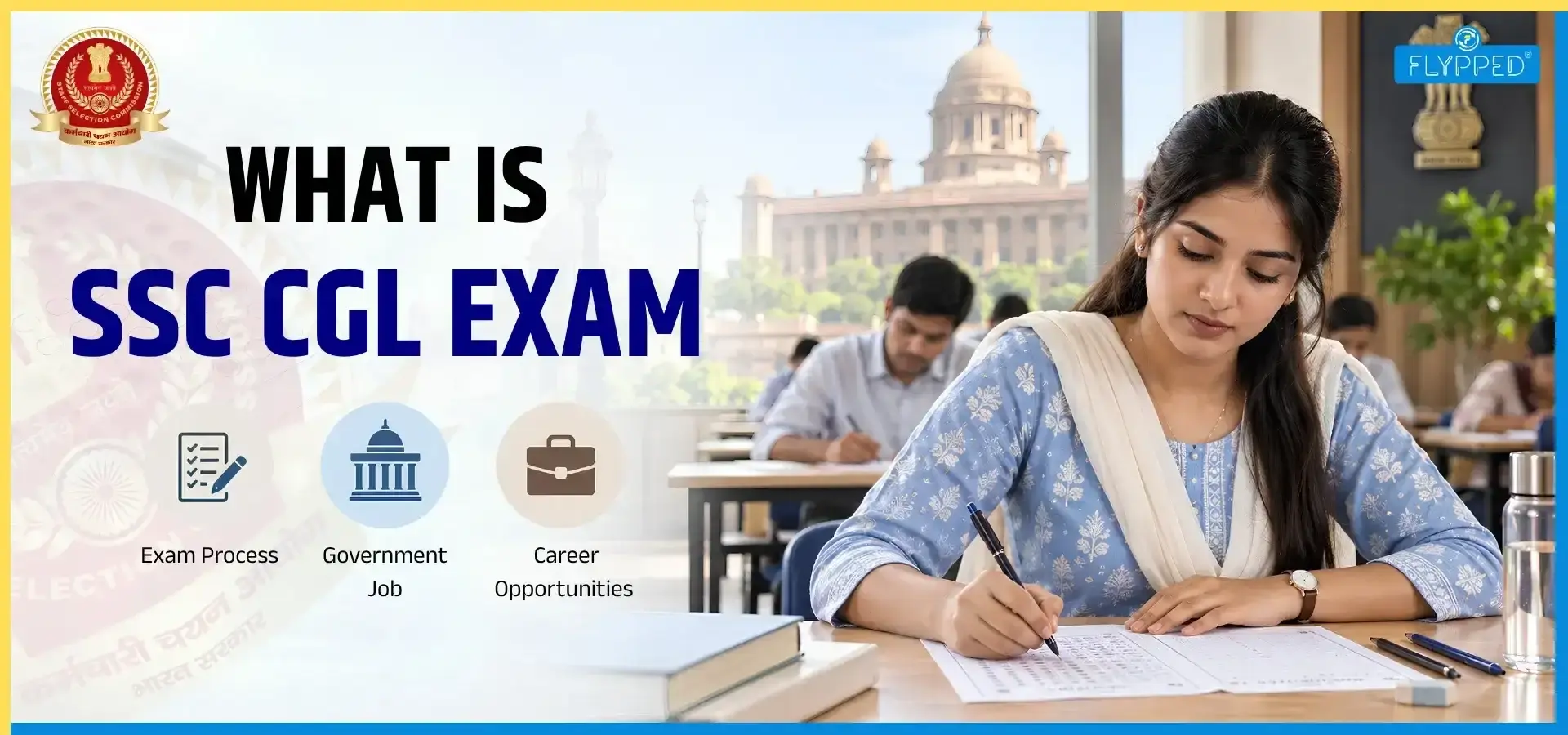
What is SSC CGL Exam? Know Its Syllabus, Process & Career Options
The SSC CGL Exam, short for the Staff Selection Commission Combined Graduate Level Examination, plays a crucial role in India’s competitive landscape.
It recruits candidates for a variety of government positions, making it an essential opportunity for graduates seeking roles in central government ministries, departments, and organisations.
Organised by the Staff Selection Commission (SSC), this exam tests candidates' analytical skills, comprehension, and general knowledge.
The SSC CGL Exam has multiple tiers, each designed to evaluate different skill sets and competencies.
Often referred to as a "Mini IAS," the SSC CGL Exam opens the door to prestigious roles similar to those available through the Indian Administrative Service.
Positions include roles in significant departments such as the Income Tax Department, Central Excise, and the Ministry of External Affairs, to name a few.
Clearing this exam comes with benefits like job security, competitive salaries, and career growth prospects.
It’s no surprise that the SSC CGL Exam draws a vast number of candidates each year.
SSC CGL Exam Structure
Examination Phases
The SSC CGL Exam has four phases, each designed to assess different skill sets.
- Tier I: This preliminary exam features objective-type questions that gauge basic skills. Think of it as the screening stage to filter candidates.
- Tier II: Building on Tier I, this main examination dives deeper into more advanced topics. Here, candidates' analytical and quantitative abilities are tested.
- Tier III: In this phase, candidates tackle a descriptive paper. They showcase their writing skills through essays and comprehension tasks.
- Tier IV: The final stage includes skill tests and document verification, ensuring that candidates meet the qualifications for their selected roles.
Exam Pattern and Syllabus
The exam pattern centres on objective-type questions across a variety of subjects. Here are the key areas you’ll encounter:
- General Intelligence: This section tests your logical reasoning and problem-solving skills.
- General Awareness: This section tests your knowledge of current events and general knowledge.
- Quantitative Aptitude: This part focuses on your mathematical skills and ability to solve numerical problems.
- English Comprehension: This evaluates your reading skills and understanding of English.
Keep in mind that while the scoring system rewards correct answers, there's also negative marking. Incorrect answers lead to point deductions.
Understanding this exam framework is essential for candidates preparing for the SSC CGL Exam, as it guides strategic preparation and effective time management during the test.
Conducting Authority of SSC CGL
What is the Staff Selection Commission?
The Staff Selection Commission (SSC) is the key organisation that oversees the SSC CGL Exam.
Founded in 1975, the SSC plays a crucial role in hiring individuals for various government roles in India.
Its responsibilities include setting recruitment policies, organising examinations, and selecting candidates based on their performance.
By ensuring a transparent and fair selection process, the SSC upholds the integrity of government hiring.
The SSC's significance in recruitment can't be overstated. It acts as a vital link between job seekers and government employment, providing a structured avenue for aspiring candidates to land stable jobs.
The commission’s assessments are designed to identify candidates with the right skills and qualifications, ultimately improving public-sector efficiency.
Recent Changes and Updates
In recent years, the SSC has made several enhancements to streamline the examination process.
One notable change is the evolution of the exam pattern, which now includes new formats and question types designed to evaluate candidates’ abilities better.
These updates aim to keep the exam content relevant and aligned with contemporary educational standards.
The COVID-19 pandemic brought significant challenges to examination schedules, causing delays and adjustments for the SSC CGL Exam (more on that below).
The commission has responded by implementing safety measures and keeping candidates informed about rescheduled dates and procedures.
These adaptations highlight the SSC’s commitment to a smooth examination experience while prioritising the health and safety of everyone involved.
SSC CGL Eligibility Criteria
The SSC CGL (Staff Selection Commission Combined Graduate Level) exam is a vital stepping stone for many individuals aiming for government positions in India.
To navigate this process successfully, it’s important to understand the SSC CGL Eligibility Criteria.
This guide covers the essential qualifications you need to meet, including nationality, age limits, educational requirements, and physical standards.
Understanding the Nationality Criteria
Who Can Register?
To be eligible for the SSC CGL exam, candidates must fulfil specific nationality requirements. Here’s who can apply:
- Indian citizens
- Subjects of Nepal or Bhutan
- Tibetan refugees who arrived in India before January 1, 1962
- Persons of Indian origin who have migrated from other countries
Necessary Documents
When submitting your application, you'll need to provide valid proof of your nationality. If you're a non-Indian candidate, you must also include relevant certificates to confirm your eligibility.
Age Limit for SSC CGL Candidates
Age Parameters
The age limit for candidates participating in the SSC CGL exam is as follows:
- Minimum Age: 18 years
- Maximum Age: 27 years for certain positions
- There’s relaxation available for reserved categories (SC/ST/OBC)
How Age Is Calculated
Age is determined based on the application closing date. Ensure your documents accurately reflect your current age.
Educational Qualification for SSC CGL
What Degrees Are Required?
Candidates must hold a bachelor’s degree from a recognised university. Certain positions may have additional educational requirements.
Acceptable Areas of Study
The SSC CGL accepts degrees from a range of fields, which include:
- Arts
- Science
- Commerce
- Engineering
- Other specified areas mentioned in the official notification
Quick Reference: Qualifications for Various Positions
- Assistant Audit Officer: Master’s degree in relevant fields
- Junior Statistical Officer: Bachelor’s degree with Statistics as a subject
- All other posts: Any bachelor’s degree
Physical Eligibility Criteria
General Standards
Physical standards vary by position. Some roles require candidates to pass medical evaluations to ensure they can meet job demands.
Importance of Physical Standards
Meeting these physical requirements is essential, as it ensures candidates can perform their responsibilities effectively.
Regular health check-ups are advisable before you apply.
Inspirational Quote
"Success usually comes to those who are too busy to be looking for it." - Henry David Thoreau
Comparison Table: SSC CGL Eligibility Breakdown
| Criteria | General Category | OBC Category | SC/ST Category |
| Age Limit | 18-27 years | 18-30 YRS | 18-32 YRS |
| Educational Qualification | Any Recognised bachelor’s degree | Any Recognised bachelor’s degree | Any Recognised bachelor’s degree |
| Nationality | Indian | Indian or eligible other | Indian or eligible other |
Posts Offered Through SSC CGL Exam
Types of Positions Available
The SSC CGL Exam opens up a wide range of opportunities in various government departments. Here are some of the most popular roles you can aim for:
- Income Tax Inspector: Tasked with collecting taxes and enforcing tax laws.
- Central Excise Inspector: Manages the collection of central excise duties.
- Assistant Section Officer: Engages in administrative tasks across different ministries.
- Auditor: Performs audits for various government entities.
- Tax Assistant: Supports tax-related operations in multiple departments.
Salaries for these roles vary by position and department. Typically, starting salaries range from $30,000 to $50,000 per year, and many positions include additional perks like health insurance, pension plans, and paid leave, making them appealing to job seekers.
Career Growth Opportunities
One standout benefit of taking the SSC CGL Exam is the clear path to career advancement.
Employees often enjoy regular promotions based on their performance and years of service, which can lead to higher-ranking positions with greater responsibilities.
Job stability is another major plus. Government jobs usually provide a secure work environment, minimising the uncertainties that often come with private sector employment.
Many of these roles also promote a healthy work-life balance through regular hours and official holidays, making them ideal for those who value both stability and quality time outside of work.
Process of SSC CGL Exam
The SSC CGL Exam is a major competitive assessment in India that recruits candidates for various positions in government departments and ministries.
For those hoping to land a government job, understanding the SSC CGL exam process is crucial.
This guide will walk you through each stage of the exam, including the preliminary, main, and descriptive tests, as well as the skill test and document verification.
What Are the Stages of the SSC CGL Exam?
Exam Structure Overview
The SSC CGL Exam comprises four key tiers: Tier-I, Tier-II, Tier-III, and Tier-IV.
Each stage plays an essential role in narrowing down candidates based on their performance.
- Tier-I: Preliminary Examination - This initial stage tests basic knowledge through objective questions.
- Tier-II: Main Examination - This tier goes deeper, focusing on job-relevant subjects.
- Tier-III: Descriptive Paper - Candidates demonstrate their writing skills through essays and comprehension tasks.
- Tier-IV: Skill Test / Document Verification - This final stage includes practical tests for certain positions and verifies important documents.
Importance of Tier-I: Preliminary Examination
Tier-I is a screening test that helps shortlist candidates for the next level. It evaluates your general intelligence, reasoning ability, quantitative aptitude, and English comprehension.
- Exam Format: Typically consists of multiple-choice questions.
- Subjects Covered: Key areas include General Intelligence and Reasoning, General Awareness, Quantitative Aptitude, and the English Language.
Preparation Tips:
- Practice with mock tests to get comfortable with the exam format.
- Focus on time management to improve your speed and accuracy.
Moving on to Tier-II: Main Examination
Successfully clearing Tier-I allows you to advance to Tier-II, which is more specialised and thorough.
- Exam Format: This stage includes multiple papers, primarily concentrating on quantitative and English skills.
- Subjects and Topics: Candidates should prepare for Mathematics, English Language and Comprehension, Statistics, and General Studies.
Preparation Strategies:
- Develop a study plan that allocates sufficient time for each subject.
- Use past papers and sample questions to familiarise yourself with the exam patterns.
A Closer Look at Tier-III: Descriptive Paper
Key Features of the Descriptive Paper
In Tier-III, you’ll showcase your writing ability, demonstrating your command of language and your capacity to articulate thoughts clearly.
- Exam Format: Includes essay writing, letter writing, and comprehension tasks.
- Evaluation Criteria: Candidates are assessed based on clarity, coherence, and grammatical accuracy.
Preparation Strategies for Tier-III
To excel in the descriptive paper, it’s vital to improve your writing skills.
- Recommended Resources: Utilise writing guides and practice papers to enhance your abilities.
Practice Techniques:
- Write essays on various topics regularly to build fluency.
- Seek feedback from peers or mentors to refine your writing style.
Final Steps: Tier-IV Skill Test and Document Verification
What to Expect in the Skill Test
The Tier-IV stage includes role-specific skill assessments, such as typing or data entry.
- Overview: Each position may have different skill requirements, so familiarise yourself with what’s needed for your particular role.
- Tips for Success: Regular practice and mock tests can greatly enhance your performance in this stage.
The Document Verification Process
Document verification is a vital step to confirm candidates' eligibility.
Importance: This stage ensures that the information and qualifications you provide match official records.
Essential Documents:
- Identity proof (Aadhaar, PAN, etc.)
- Educational certificates
- Caste certificate (if applicable)
- Any other relevant documents specified in the notification.
Syllabus of SSC CGL
The Syllabus of SSC CGL (Staff Selection Commission Combined Graduate Level) is crucial for candidates gearing up for this competitive exam.
Understanding the syllabus helps you craft effective study plans and concentrate on the most important topics.
In this article, we'll walk through the essential elements of the syllabus, covering both the Tier-I and Tier-II sections, to provide you with a comprehensive roadmap for your preparation.
Exam Structure: What to Expect
Breakdown of Exam Tiers
The SSC CGL exam has two primary tiers: Tier-I and Tier-II. Each tier plays a unique role in the selection process.
Tier-I serves as a screening test, while Tier-II tests candidates' skills in greater depth. Together, they contribute to the final merit list.
Format of Assessment
Each tier features different question types. Tier-I consists of multiple-choice questions (MCQs) that assess general aptitude, whereas Tier-II includes more complex questions and papers.
Remember, both tiers use negative marking, deducting 0.25 marks for each incorrect answer.
A Closer Look at the Tier-I Syllabus
Subjects Included in Tier-I
The Tier-I syllabus encompasses four main subjects:
- General Intelligence and Reasoning
- General Awareness
- Quantitative Aptitude
- English Comprehension
Key Areas to Focus On
To shine in Tier-I, concentrate on these key topics:
- Logical Reasoning Patterns: Get familiar with different reasoning question types.
- Current Affairs and Static General Knowledge: Stay updated on recent events and essential historical facts.
- Fundamental Mathematical Concepts: Grasp topics like percentages, averages, and ratios.
- Grammar and Comprehension Skills: Improve your command of English and reading skills.
Preparation Tips in Bullet Points
- Regularly Practice Mock Tests: Simulating exam conditions can boost your confidence.
- Review Previous Years' Question Papers: This insight helps you understand the exam structure and question types.
- Draft a Study Schedule: Focus on areas where you need the most improvement to enhance your overall performance.
An In-Depth Look at the Tier-II Syllabus
Subjects and Their Significance
Tier-II is made up of three main papers:
- Paper I: Quantitative Abilities
- Paper II: English Language and Comprehension
- Paper III: Statistical Analysis (if applicable)
Each paper is vital for gauging the candidate's proficiency in advanced topics.
Comparison of Tier-I and Tier-II Syllabi
| Feature | Tier-I | Tier-II |
| Subjects | 4 Subjects | 3 Papers |
| Number of Questions | 100 Questions | 200 Questions |
| Total Marks | 300 Marks | 400 Marks |
| Duration | 60 Minutes | 120 Minutes |
Why SSC CGL is Called a “Mini IAS” Exam
The SSC CGL Exam often earns the nickname "Mini IAS" because it closely resembles the esteemed UPSC IAS exam. Both assessments attract a large number of candidates and are highly competitive.
The SSC CGL Exam evaluates candidates on various fronts, such as analytical abilities and general knowledge, much like the IAS exam does.
Positions available through the SSC CGL, including Income Tax Inspectors and Auditors, come with significant responsibilities and a level of prestige that rivals the Indian Administrative Service.
Similarities to UPSC IAS Exam
- Level of Competition: Both exams attract thousands of hopefuls vying for a limited number of spots, creating a tough landscape that demands commitment and thorough preparation.
- Job Prestige and Responsibilities: Roles secured through the SSC CGL Exam carry substantial respect and accountability, akin to IAS positions, making them appealing to job seekers.
Perception Among Aspirants
Many candidates lean towards the SSC CGL Exam over other competitive tests for various reasons.
This exam provides a structured route to respected government positions without the extensive study time often needed for the IAS.
Aspirants value the clear guidelines and the chance to secure stable jobs in diverse government sectors.
Testimonials from successful candidates reveal their contentment with the exam process and the fulfilling nature of their roles.
Many express gratitude for the opportunity to serve the public and make a positive impact on society.
This mix of job security, prestige, and opportunity makes the SSC CGL Exam a popular choice for many graduates. Sound familiar?
Advantages of Clearing SSC CGL Exam
Job Security and Benefits
Clearing the SSC CGL Exam brings a wealth of benefits, with job security topping the list.
Government positions offer stable income, comprehensive health insurance, retirement plans, and generous paid leave.
These perks make such jobs particularly attractive for those seeking long-term career stability.
Government roles also often promote a healthy work-life balance, allowing individuals to juggle personal and professional commitments effectively.
Personal and Professional Growth
The advantages don’t stop at financial security. Clearing the SSC CGL Exam paves the way for both personal and professional development.
Government jobs often offer training and development programs that equip employees with the skills they need to excel in their roles and prepare for future opportunities.
Additionally, public-sector work offers valuable networking opportunities. Building relationships with colleagues and other professionals can lead to collaborative projects and insights into various initiatives.
"Success is where preparation and opportunity meet." - Bobby Unser
The benefits of clearing the SSC CGL Exam extend far beyond a paycheck, offering a fulfilling career filled with growth, stability, and overall satisfaction.
Comparison of SSC CGL Exam with Other Competitive Exams
To understand where the SSC CGL Exam fits among competitive tests, it helps to compare it with other key exams like the UPSC IAS and IBPS PO. Knowing these differences can help you make a well-informed career choice.
| Exam Name | Level of Competition | Job Type | Preparation Time | Salary Range |
| SSC CGL | Moderate | Government Jobs | 6-12 months | $20,000 - $40,000 |
| UPSC IAS | High | Administrative | 1-2 years | $40,000 - $100,000+ |
| IBPS PO | Moderate | Banking Sector | 3-6 months | $25,000 - $50,000 |
The SSC CGL exam is moderately competitive compared to the highly competitive UPSC IAS exam.
Typically, candidates preparing for the SSC CGL need about 6 to 12 months, making it a more attainable choice for those who might not want to commit years to studying.
In terms of job types, the SSC CGL focuses on various roles in the government sector (more on this below).
Meanwhile, the UPSC IAS leads to administrative positions with greater responsibilities and higher salaries.
IBPS PO offers competitive roles in banking but usually requires less preparation time.
Ultimately, the choice between these exams hinges on your career goals, the time you can dedicate to preparation, and the type of job you’re aiming for.
Each exam has its unique advantages, and understanding these differences can help steer you toward the right path for your future.
Conclusion
The SSC CGL Exam opens up a world of exciting career opportunities within the Indian government sector.
It's more than an exam; it's a gateway to stable, respected positions that can shape your future.
By understanding its format and the roles it offers, candidates can prepare effectively for this important test.
The conducting authority of SSC CGL maintains a transparent and fair examination process, enabling a diverse group of candidates to vie for numerous positions.
By successfully passing the SSC CGL Exam, you can secure roles such as Inspectors, Auditors, and Tax Assistants, all of which come with job security and appealing benefits.
Many aspirants choose this exam because its preparation time is often more manageable than other exams, like the UPSC IAS exam.
SSC CGL roles are often regarded as prestigious and fulfilling, offering opportunities to serve the public in meaningful ways.
To wrap up, understanding what the SSC CGL Exam involves is vital for anyone eyeing a career in the government sector.
The benefits of clearing this exam are considerable, offering not just a job but a stable career filled with growth potential and a chance to make a meaningful difference in society.
Frequently Asked Questions
Find answers to common questions about this topic
The SSC CGL (Staff Selection Commission Combined Graduate Level) Exam is a competitive examination conducted to recruit graduates for various Group B and Group C posts in central government departments, ministries, and offices.
Candidates generally need a bachelor’s degree from a recognized university. The age limit varies depending on the post, usually ranging from 18 to 32 years, with age relaxations for eligible categories as per government rules.
SSC CGL recruitment primarily involves Tier-I and Tier-II examinations. Tier-I is a computer-based objective test, while Tier-II includes multiple papers and modules depending on the post and eligibility requirements.
The exam covers subjects such as General Intelligence and Reasoning, General Awareness, Quantitative Aptitude, and English Comprehension. Tier-II also includes relevant papers and modules depending on the post.
SSC CGL is considered competitive because of the large number of applicants. However, consistent preparation, a clear understanding of the syllabus, regular mock tests, previous-year papers, and effective time management can significantly improve the chances of success.