
Global Food Sustainability
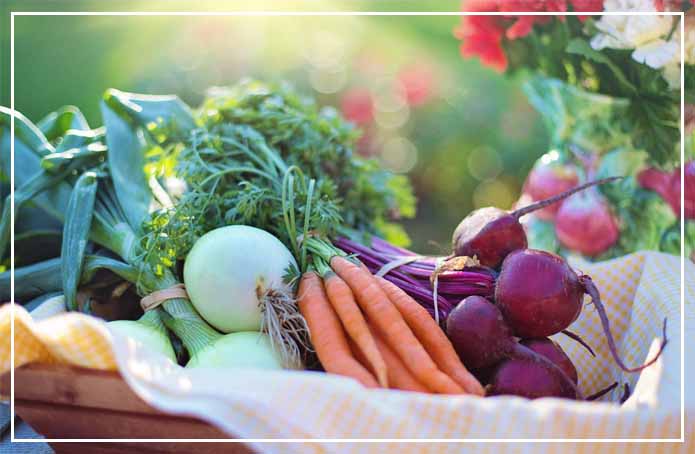
Humanity’s Biggest Challenge: Sustainable Diet for 10 Billion
Recently, scientists claimed that one of humanity's biggest challenges, feeding 10 billion people by 2050, can be solved with a nutritious and sustainable diet. A strategy will be created that avoids depletion of natural resources, maintains food sustainability, and ensures accessibility for all. This approach includes small dietary changes, better agriculture technology, and reduction of food waste.
Currently, over three billion people are malnourished, including both undernourished and overnourished individuals. The global food sustainability system must undergo a complete transformation to overcome climate change, biodiversity loss, pollution, and unsustainable land/water use. Present-day diets are pushing the planet beyond safe limits.
The EAT-Lancet Commission has presented the world's first scientific targets for a healthy diet that works within planetary boundaries. If ignored, both people and the planet remain at high risk.
Plant-Based Diets Prove Healthier & More Sustainable
A report made public on July 31 reveals that diets rich in plant-based foods, fruits, vegetables, legumes, nuts, with lower intake of animal-based foods, sugar, and refined grains are healthier for humans and the planet.
Human dietary habits strongly influence environmental sustainability. As the global population grows (expected to reach 10 billion by 2050), food systems must change drastically. The consumption of animal-based foods is projected to rise, worsening sustainability issues.
To meet this challenge, dietary changes must be combined with improved food production and reduced waste. Experts insist that unprecedented international cooperation is needed, alongside immediate steps such as producing nutrient-rich crops and improving governance of land and ocean resources.
Global Collaboration Needed for Food System Transformation
Dr. Tim Lang from City, University of London, one of the commission authors, says the transformation must be massive, unlike anything seen before, and must be adapted to each country’s situation. He adds that scientific dietary targets will strengthen the global change.
The Commission includes 37 experts from 16 countries, bringing together expertise in nutrition, sustainability, economics, food systems, and political governance.
Scientific Targets for a Healthy Diet
✔ Reduction Targets
- Red meat and sugar consumption must decrease by more than 50% compared to current diets.
✔ Increase Targets
- Intake of nuts, fruits, vegetables, and legumes must increase more than two-fold.
✔ Health Benefits
- Increased sustainable food production will boost life expectancy.
- Hunger, child mortality, and global poverty have already seen improvements from such measures over the past 50 years.
These scientific targets aim to replace unhealthy diets rich in calories, sugar, processed foods, and animal proteins with healthier, balanced alternatives.
Global Imbalanced Food Distribution
The report highlights food imbalance worldwide:
- North Americans eat 6.5 times the recommended red meat.
- South Asians consume only half the recommended red meat.
- Starchy vegetable intake (potato, cassava) exceeds recommendations everywhere—
▸ 1.5 times more in South Asia
▸ 7.5 times more in Sub-Saharan Africa
Harvard’s Walter Willett says, “More than 800 million people don’t get enough food, while many consume unhealthy diets that cause premature death and disease.”
Environmental Damage from Red Meat Production
Red meat production is one of the biggest contributors to:
- Land-use change
- Biodiversity loss
- Freshwater consumption
- Greenhouse gas emissions (¼ of total)
As nations develop, traditional diets are being replaced by resource-intensive Western-style diets high in protein, meat, dairy, refined wheat, and rice.
Globally:
- 820 million people are hungry
- Nearly 2 billion people are obese
This reflects major inefficiency and imbalance in diet and food production systems.
Preventing 11 Million Deaths Per Year
The EAT-Lancet Commission states that:
✔ Cutting global red meat and sugar consumption by half
✔ Increasing consumption of nuts, fruits, vegetables, legumes two-fold
…can prevent at least 11 million premature deaths annually.
The EAT diet includes:
- 35% calories from whole grains and tubers
- High protein from plant sources
- 500g of vegetables and fruits daily
- 14g of red meat per day
India’s Position: A Mostly Healthy Diet, But Changing Fast
South Asian nations, including India, consume only half the recommended meat amount.
Dr. Willett (Harvard) notes:
- India’s traditional diet is healthy
- But it is rapidly shifting to Western-style diets high in refined grains, meat, and dairy
- Small changes can restore balance—adding local millets, legumes, seeds, vegetables
- India needs to reduce starchy grains/potatoes and improve nutrient fortification like Vitamin B12
He emphasizes that global targets must be applied locally.
Food Transformation Is as Critical as Energy Transition
Rockström states that transforming global food systems is as urgent as the shift to clean energy if we want to save the planet.
“If we act now, we can make it happen,” he adds.
Click to read the full article