Why Lakshman Stayed Awake for 14 Years: The Untold Story
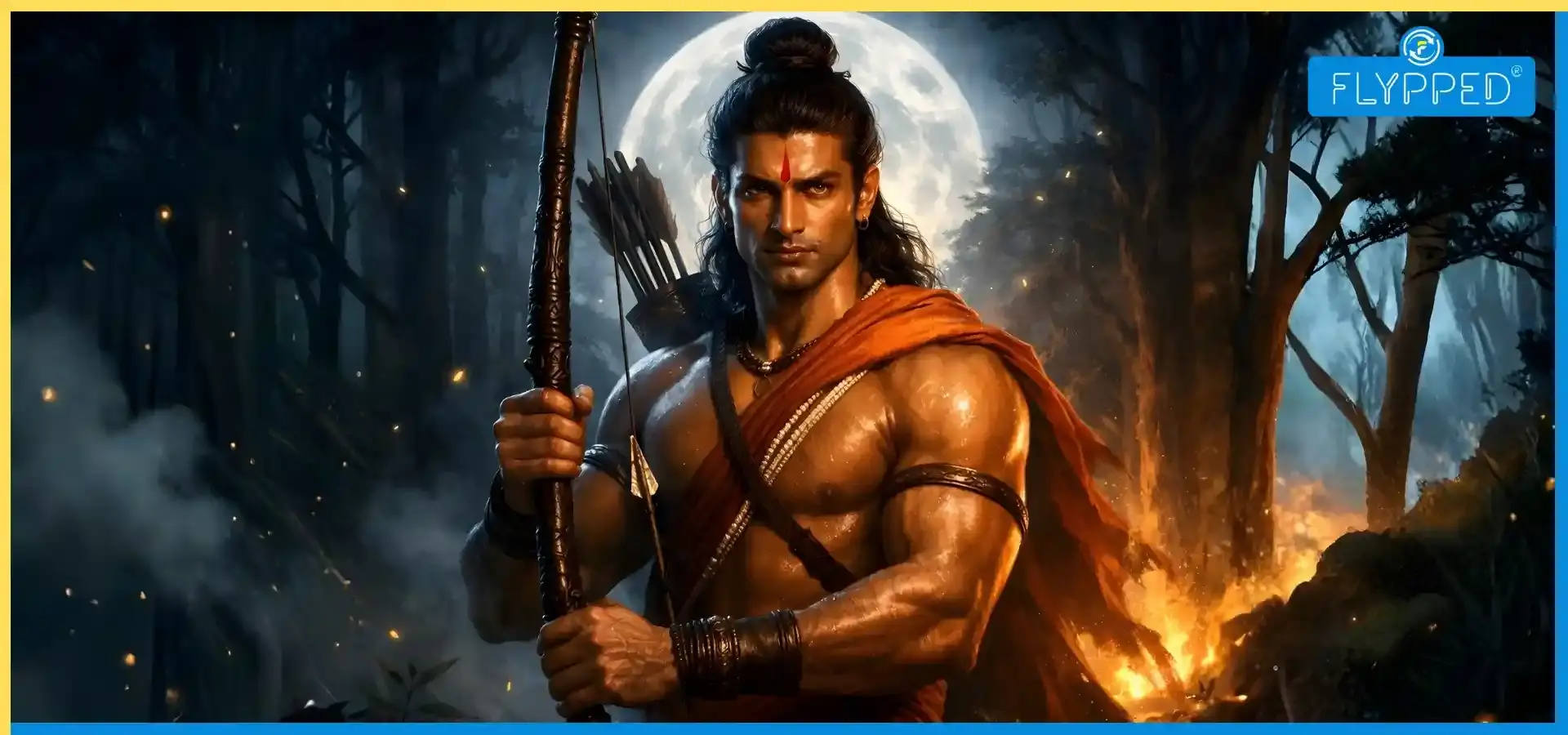
In the epic Ramayana, Lord Rama is not the only character to be the focus.
Besides him, his consort Sita and brother Lakshmana also faced hardships during their 14-year exile.
Well, a lot is written about Rama, but somewhere the contribution of his younger brother, Lakshmana, often goes unnoticed.
Key Facts Behind Lakshmana’s Awakeness in Exile
Have you ever wondered why he stayed awake for all 14 years? Today, we reveal this intriguing mythological detail.
Like Rama, even Lakshmana had to wander through the jungles without his wife, Urmila.
His power derives from qualities such as martial sacrifice, yogic discipline, divinity, cosmic symbolism, and his moral duty to serve his elder brother in need.
Below is a clear, well-structured explanation of this mystery, presented as a series of points.
Divine Pact with Nidra Devi
If we refer to our holy scriptures, especially the Ramayana, we will find that before Lakshmana joined his brother and sister-in-law for exile, Nidra Devi appeared to him on the first night.
He requested her to wake him so that he could serve as the guardian of his elder brother, Rama, and his wife, Sita, without any disturbance.
After accepting his request, Nidra Devi transferred his share of sleep to some other source.
This granted him the power to remain awake for 14 years, protected from physical deprivation.
Transfer of Lakshman's sleep to his wife, Urmila
The sleep transferred to another source was none other than his wife, Urmila, one ofKing Janaka's daughters.
Known as the overlooked figure of the Ramayana, she spent years in sleep to help her husband fulfill his purpose.
Her contribution bore fruit for Lakshmana, who never experienced sleep deprivation.
Scholars note his sleeplessness was possible only because Urmila bore his fatigue and dreams.
His Divine identity of Shesh Naag
If Rama was the seventh incarnation of Lord Vishnu, Lakshmana, his younger brother, was the manifestation of Shesh Naag on whose coiled bed Narayana rests.
Since the quality of the cosmic serpent is constant awakening, this divine identity got transferred to him in his human form (Lakshmana).
So with this, we can understand that just as Sheshnaag protects Vishnu, Lakshmana performed the same duty towards Lord Rama.
Strict Brahmacharya Helped Him Reduce His Physical Fatigue
Among the other qualities that helped Lakshmana remain awake throughout the exile period was his strict Brahmacharya, which curtailed his physical fatigue and enabled him to maintain his mental and physical strength.
His disciplined lifestyle played a pivotal role in sharpening his senses, and he was free from unwanted distraction.
His self-control proved a boon for his natural alertness.
Role of Night Guardian to Rama and Sita
As described in the Valmiki Ramayana, the Dandakaranya forests were occupied by dangerous demons and sorcerers who were always ready to strike during the night.
Hence, after sunset, it became impossible for the exiled trio to sleep safely.
With Lakshmana as night guardian, Rama and Sita were safe. He shielded them from every threat.
Countering Kumbhkarna’s Excessive Sleepiness
Among the more interesting facts behind Lakshmana’s awakeness was his sleeplessness, which countered Ravana’s brother Kumbhakarna’s excess sleep.
While Lakshman stayed awake with his devotion towards Rama and self-discipline, Kumbhakarna took a nap because of his deformed boon.
These qualities of Lakshmana and Kumbhkarna depicted the positive energies of awareness and ignorance and of duty versus luxury.
Slept After Winning the Lankan War
Now you may wonder: with these qualities, did Lakshmana never sleep during the exile?
The answer to this question is no. Lakshmana did sleep, but after Rama’s victory over the tyrant Lankan king Ravana.
His sleep marked the fulfillment of his duty after 14 years.
Bottom Line
So now you know the real reason behind Lakshmana’s awakeness. These were the reasons he was able to prevent physical fatigue and sleepiness.
Instead, he achieved his goal through self-discipline, strict brahmacharya, and alertness.
Lakshmana truly excelled in his brotherly duties and in his devotion to his elder brother, Rama, and his wife, Sita.
This is why parents often compare a caring younger brother to Lakshmana. After all, he is the symbol of brotherhood.
For more interesting spiritual facts, follow the Flypped Side of Spiritual News in English.
Frequently Asked Questions
Find answers to common questions about this topic
No, Lakshmana was younger to Rama and Bharata, but was elder to Shatrugana.
People compare a caring younger brother to Lakshmana because he had set the moral example of being a dutiful sibling to his elder brother Rama in exile.
Lakshmana is the avatar of divine serpent Sheshnaag. Lord Vishnu sits and rests on his coil.
Lakshmana killed Meghnaad, also called Indrajeet. He was the son of Ravana.
Lakshmana was married to Urmila, one of the daughters of King Janaka.
Nidra Devi transferred the sleep to Lakhsmana’s wife Urmila.
Yes, according to Hindu mythology, Shesh Naag requested Lord Vishnu to make him an elder brother. So in Dwapar yug, he became Balram the elder sibling of Lord Krishna (eighth avatar of Lord Vishnu).