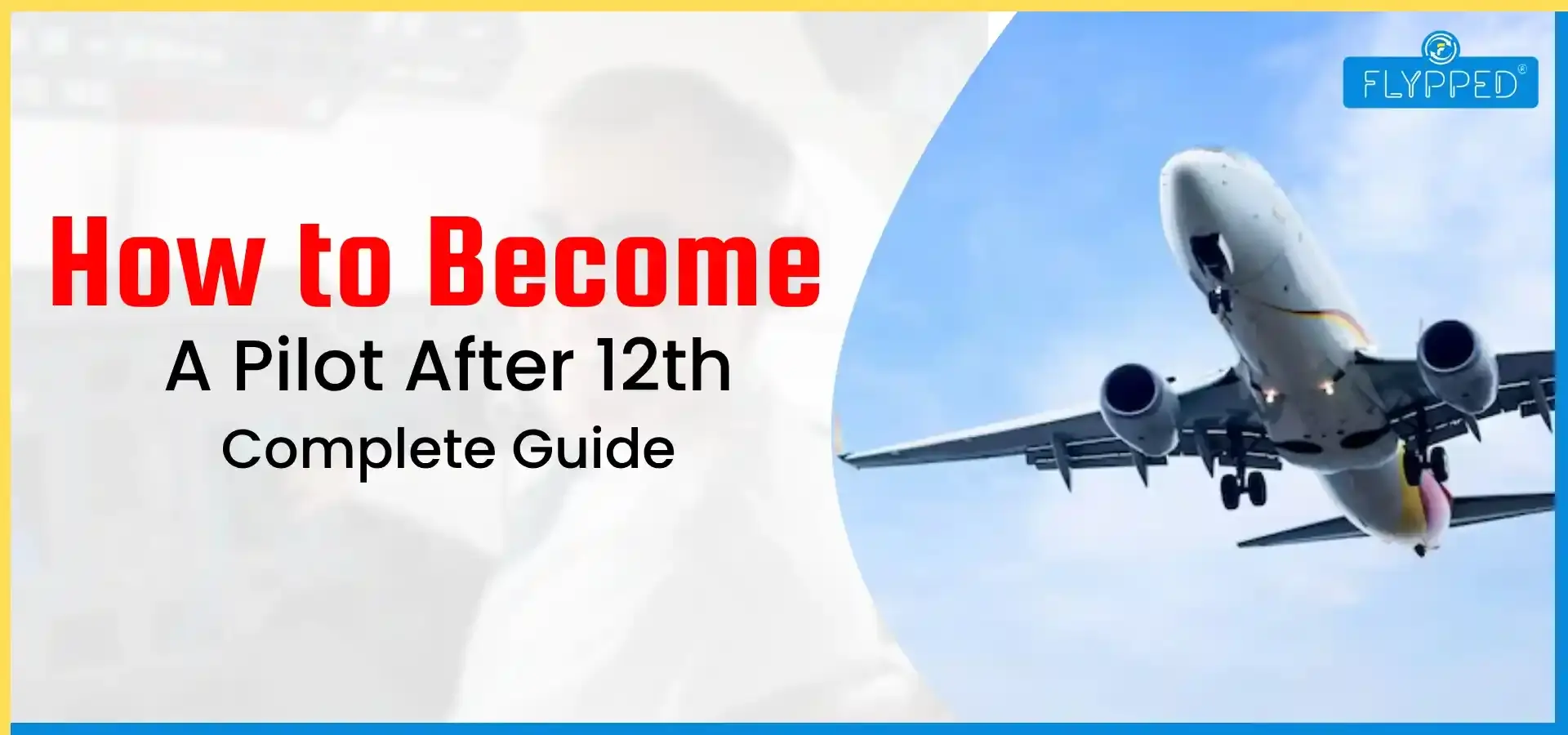
Pilot Course After 12th: Training, Fees & Career Salary
A pilot career is both exciting and prestigious. If you have completed 12th and are wondering where to go from here, then this article will guide you about the next step. We’ll talk about the right pilot course, the exams involved, and the fee structure. We’ll also discuss the lucrative salary packages the pilots get.
How to Become a Pilot After 12th?
If you want to enrol in a pilot program after 12th, then the following roadmap will help you:
1. Choose the Right Stream
To become eligible for the commercial pilot course ahead, pick Physics and Mathematics for 10+2.
Also, make sure you achieve a minimum 50% marks. However, the cut-off marks vary from one flight school to another.
In case you didn’t take the science stream in school, you can still apply by completing Physics or Maths through open schooling.
2. Get a Medical Certificate
You must be medically fit. To get a valid certification, you must pass a DGCA-approved medical test. Two tests need to be cleared, namely:
- Class 2 Medical: This is the initial stage and is required before starting flight training.
- Class 1 Medical: This one is required before the CPL (Commercial Pilot License).
The purpose of these tests is to ensure you’re physically fit for flying.
Step 3: Enrol in a Pilot Course
There are three main stages for the pilot course.
You start with the ‘Student Pilot License (SPL)’. This is the entry-level license and requires basic aviation knowledge. You might have to clear both oral and written exams for this stage.
The second stage involves a ‘Private Pilot License (PPL)’. There will be a written exam that must be cleared to get this license. After completing this, you are eligible to fly solo. This takes about 6-12 months.
The third stage is the Commercial Pilot License (CPL), which allows you to become a professional pilot and fly for airlines. It is also the most lucrative profession as a pilot. To get this license, you must have a minimum of 200 flying hours under your belt. This lasts for about 18-24 months.
To complete the commercial pilot course, you can either apply to government flying schools or join private flying academies.
Step 4: Clear DGCA Exams
As a pilot aspirant, you also need a firm theoretical foundation and must pass subjects like:
- Air Navigation
- Meteorology
- Air Regulations
- Technical General
Step 5: Complete Flying Training
You must also finish your flying training. This lasts for 18-24 months. Also, you must fly for a minimum of 200 hours.
These flying hours include solo, cross-country, and night flying.
This training hones your decision-making skills and ability to stay calm under pressure. Also, your technical knowledge is tested, and your communication skills are refined along the way.
All this gives you enough hands-on experience to take on the real pilot job.
Step 6: Apply for Jobs
After you have got your Commercial Pilot License (CPL), it's time to apply for jobs.
You can directly apply to airlines and become a first officer. After staying on the job and gaining experience for years, you can also become a captain.
Pilot Salary in India Per Month
One of the most appealing things about an aviation career is the handsome salary.
The commercial pilot salary in India starts at ₹1.5 lakh and can reach ₹3 lakh per month. With more experience, you can get even more. In India, experienced pilots make ₹5 lakh to ₹10 lakh per month.
If you work as an Indian Air Force pilot, then you can expect to get ₹50,000 to ₹1 lakh per month in addition to allowances. Wing commanders can get up to ₹2.5 lakh per month.
You can also fly charter airlines, for which you can get up to ₹1.5 lakh per month. The charter pilot's salary can increase to ₹5 lakh per month with high experience.
Pilot Course Fees in India
The cost of pilot training in India depends on the license type you’re pursuing, such as SPL, PPL, or CPL. It also depends on the school you are enrolling in. The cost of becoming a pilot is high, but that is compensated for by the salary you get once you become a pilot. You can recover the costs of the program within the first two years of your pilot ship.
Here’s the structure of pilot training fees in India:
1. Student Pilot License (SPL)
The fees are about ₹50,000 – ₹2 lakh. The duration for this course is a few weeks. Obtaining this license requires completing basic training and excelling on the student pilot license exam questions.
2. Private Pilot License (PPL)
The fee for this one is considerably higher. The total cost of getting this license is ₹8 lakh – ₹25 lakh. You also need to get in 40–50 hours, which will make you eligible for private flying.
3. Commercial Pilot License (CPL)
This is the most important pilot course as it makes you eligible to become a professional pilot. You need to have at least 200 hours of flying experience, though. The typical fees range from ₹35 lakh to ₹60 lakh.
In a nutshell, the total cost of pilot training in India ranges from ₹44 lakh to ₹80 lakh.
Conclusion
If you want to make a career in flying, then start with a pilot course after 12th. Although training fees run into lakhs, this is a rewarding career with high returns.
If you are wondering how to become a pilot after 12th, start with the Student Pilot License, clear the private pilot written exam, and then go for the commercial pilot course. With sufficient dedication and discipline, you can turn your dream of flying into reality.