Whey Protein Powder: Benefits, Uses & Best Time to Take
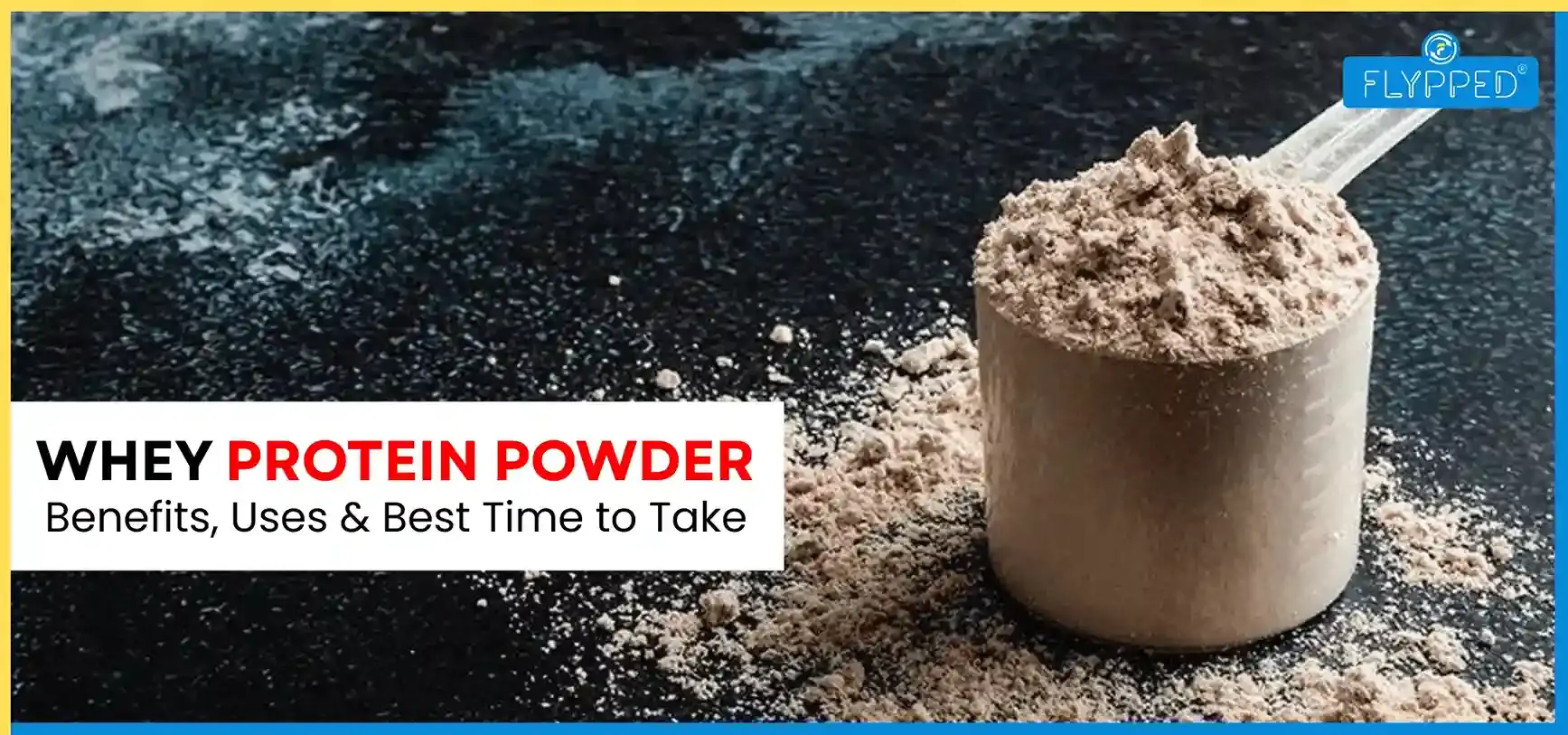
If you’re someone who works out regularly or wants to build muscles, then whey protein powder is not a choice, it’s a need! These are popular supplements that can help with post-exercise muscle recovery and muscle growth in the biceps and other areas! It has many benefits when taken in moderation.
Read on to find all about it.
Types of Whey Protein Powder
There are various kinds of protein powders available in the market. Which one to go for?
Understanding the differences between them will help you pick the best whey protein in India for your needs.
1. Whey Protein Concentrate
As the name suggests, this one is quite concentrated. It contains about 70-80%of protein, and the rest of it is made up of fats and carbs.
And the good thing is that it’s readily available and quite budget-friendly.
Also, if you’re new to the whole ‘protein for fitness’ idea, start with this protein type.
2. Whey Protein Isolate
More than 90% of its content contains protein. It gets absorbed quickly and is your best bet for fat loss. It also helps with building lean muscle.
Those with lactose intolerance can also choose this option because of its lower lactose content.
3. Hydrolyzed Whey Protein
This one is really light on your tummy. To facilitate faster absorption, it’s pre-digested. If you have a sensitive stomach, then this is a great choice. Also, if you want quick muscle recovery after workouts, this would be right up your alley.
However, do not start your protein intake with this variant. It’s often used for advanced fitness journeys or when recommended by medical professionals.
One Scoop of Whey Protein: Calories and Nutrition
Wondering how much your once scoop contains? Well, one standard scoop of whey protein powder is about 25–30 grams. With this, you get:
- Calories: 100–130 kcal
- Protein: 20–25g
- Carbs: 1–3g
- Fats: 1–2g
Well, the exact values, of course, depend on the brand and the type of protein you choose.
Nonetheless, the above nutritional profile is quite standard for 1 scoop of whey protein calories and other nutrients.
Whey Protein for Weight Gain
While whey protein powder can assist with weight loss, it can also support weight gain if you take it with a calorie surplus. In fact, many people consume it to bulk up!
To help whey protein support your weight-gain process, it’s best to take it with milk. You can also pair it with calorie-rich foods like bananas, peanut butter, and oats.
For best results, it’s ideal to consume it after a workout or between meals.
Unflavoured Whey Protein: Is It Better?
Unflavoured whey protein is completely free of artificial flavours and contains no added sugar. For that reason, it’s also called the cleanest form of whey protein. Also, with sweeteners and additives out of the way, you get more protein content per scoop!
This is also the best option for those who have a sensitive stomach, as many digestive issues are caused by additives.
Moreover, you can freely add it to your smoothies or other recipes without worrying about its flavour interfering with other ingredients’ tastes.
Unfavoured protein, therefore, makes for a versatile option, and is a better option than the flavoured one.
That said, it requires more effort on your part to make it consumable. Without any flavours, the powder tastes quite bland and chalky. It needs to be added to smoothies and other dishes to make it bearable.
If your morning routines are hectic, and you can’t find time to make smoothies or anything, then flavoured protein powders are more suitable for you.
Whey Protein Side Effects
While whey protein has many benefits, it can also cause side effects if consumed in excess or improperly. Here are a few of them:
Digestive Discomfort: This is one of the most common issues reported with protein intake. Some common symptoms include bloating and gas. Diarrhoea can also be caused in some cases.
Acne: Whey protein sometimes increases insulin and IGF-1 levels, which can lead to excessive oil production. This can cause breakouts.
Unwanted Weight Gain: This mainly occurs when protein intake is not paired with exercise. It worsens if you consume a calorie-rich diet.
Kidney Stress: High protein intake over a long time period can stress the kidneys. If you already have kidney issues, then stick to low dosages.
Allergic Reactions: People allergic to milk may experience skin rashes and swelling. For them, it’s best to switch to plant-based protein.
Best Whey Protein in India
There are so many quality protein brands you can pick from, such as:
- MuscleBlaze Biozyme Performance Whey Protein – Comes with enhanced absorption formula (Biozyme technology)
- Optimum Nutrition Gold Standard 100% Whey – Has a high-quality blend (isolate + concentrate)
- MuscleBlaze Raw Whey Protein Concentrate – Clean, budget protein choice
- Avvatar Whey Protein – High protein quality with commendable lab-test scores
- Nakpro Gold Whey Protein – Good for beginners
While Optimum Nutrition Gold Standard 100% Whey is a trusted brand worldwide, Avvatar Whey Protein is India’s homegrown product.
Final Thoughts
Whey protein powder is one of the most convenient ways to increase your protein consumption. It’s effective whether you want to lose fat, gain muscle mass, or improve your overall health. It simply makes for a great addition to your diet.
Just consume it in moderate amounts to avoid side effects.
Frequently Asked Questions
Find answers to common questions about this topic
Whey protein powder is a protein source that is derived from milk. It helps with supporting muscle growth and recovery.
Whey protein is extracted from milk. It is made by separating liquid whey from carbohydrate and fat content. After that, it’s dried into a powder form.
Yes, whey protein is quite good for health. It increases your protein intake, which supports muscle health and metabolism. However, consume it in moderation to get the best results.
There’s no strong scientific evidence suggesting a connection between protein intake and hair loss. Hormonal changes and poor-quality protein products may cause side effects that lead to hair loss.
To make protein powder at home, you need to extract whey from curdling milk. However, keep in mind that homemade proteins are not as concentrated as store-bought varieties.
Yes, whey protein powder can help you gain weight if consumed with a calorie-rich diet. In fact, bodybuilders use protein just to bulk up.
Since it’s derived from milk, whey protein is not vegan.
Individuals with dairy sensitivity or other issues may experience a negative hormonal response to whey protein, which can cause acne. However, it’s not super common.
If you're a vegan, then plant protein is a great choice. However, whey protein is more beneficial owing to its amino acid content. It is also absorbed better.
If you consume the protein powder in moderate amounts, then it’s safe. However, excessive intake can cause kidney problems.