Study Less, Rank Higher: 7 Science-Backed Hacks to Master Any Subject
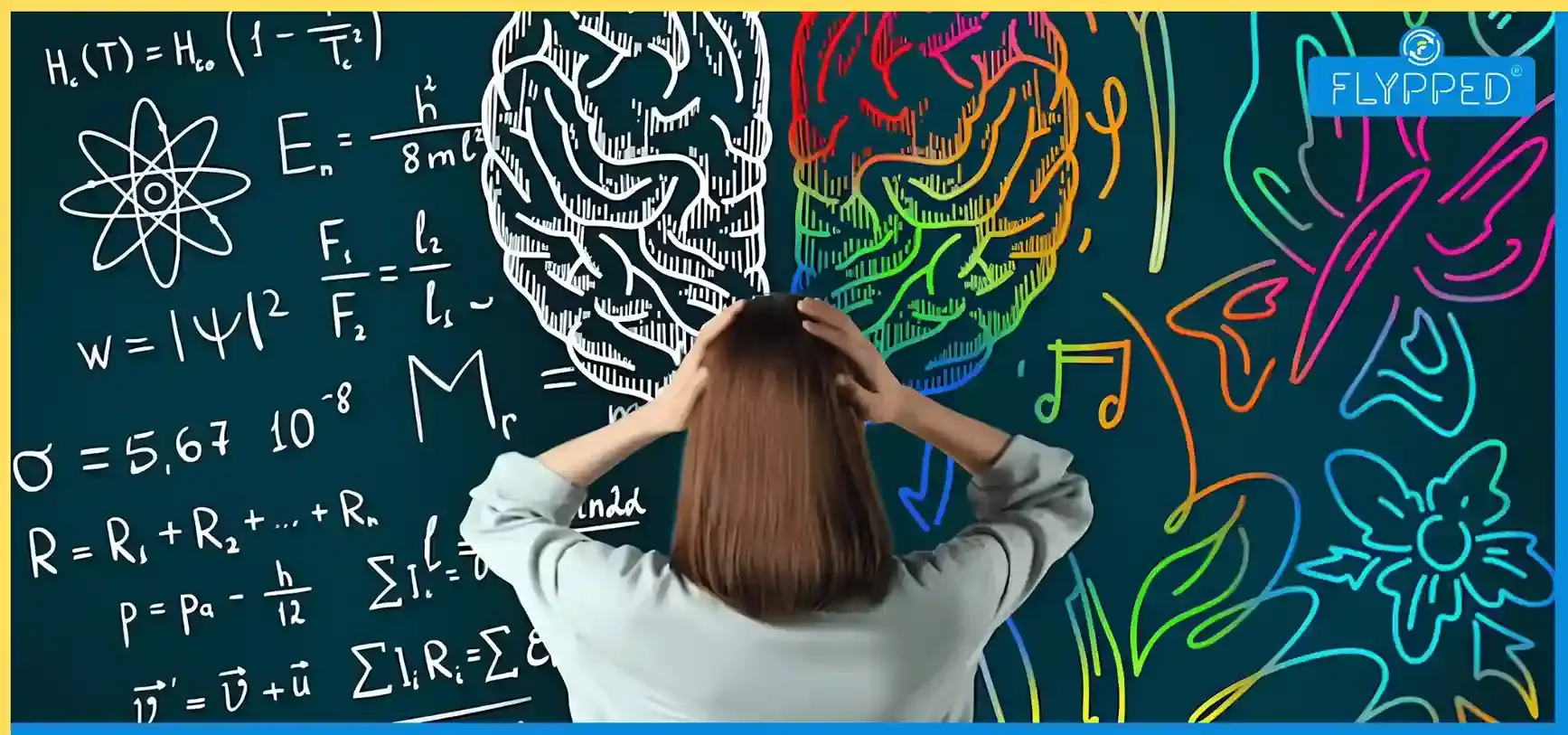
In our lives, working hard obviously pays off, but what truly makes you stand out is working smartly rather than working hard.
We have all heard the quote “work smart, not hard” in our childhoods. Some think it's a hoax; some believe it's true. Everyone has their own interpretation of it, but one thing that remains true is that someone who works smartly can manage and focus their energy on what truly matters.
Studying is something many people shy away from. Don't we all remember the stressful time of board exams? Being hit with all sorts of studying technique suggestions. Your seniors, parents, and friends are telling you what’s right or wrong with you, having no control. You just had to listen. That pressure builds to the point where you just want to quit studying and lie down, defeated.
Thinking of studying as a rigorous activity stresses one out, but truth be told, learning doesn't always have to be hard. Studying harder never guarantees better grades. We live in an era where digitalisation has opened the gates to an overload of information and distraction. For a student, just their textbooks are not sufficient; to truly master the act of studying, you need to leverage how your brain actually encodes, decodes, and retrieves information.
Here are seven high-impact, brilliant study hacks designed to help you learn more in less time:
1. The Feynman Technique: Teach to Learn
Named after Nobel Prize-winning physicist Richard Feynman. This technique is the ultimate “BS detector” for your own knowledge. If you can't explain a concept simply, you don't understand it well enough.
- How it works: Choose a concept that you need to learn. Imagine you are teaching it to a 10-year-old. Write out your explanation or say it aloud, acting as the teacher.
- The Hack: When you find yourself struggling to explain further or start using jargonwords, that is where your knowledge gap is. Revise that said part, practise the technique over and over to nail efficiency.
- Why it works: It forces you to simplify complex ideas, which requires deep cognitive processing rather than just memorising definitions.
2. Active Recall over Passive Review
Most students spend hours re-reading notes or highlighting books as they deem these methods as a sly way to force information into their minds. You think you know it all, but actually, you are just recognising words rather than actually learning the material.
- How it works: Instead of just reading over and over again, test yourself. Close the book and write down everything you remember. You can even use flashcards or answer practice questions at the end of a chapter to test yourself.
- The Hack: Before even starting a chapter, find the important questions from the chapter. Look for answers as you read the material; this will help you remember better.
- Why it works: The effort of "retrieving" information strengthens the neural pathways associated with that memory, making it much harder to forget during an exam.
3. Spaced Repetition: Beating the Forgetting Curve
The forgetting curve shows that we forget about 50% of new information within 24 hours unless we review it.
- How it works: Instead of pulling an all-nighter and cramming up all the information, study for one hour over eight different days.
- The Hack: Use a schedule like this-
- 1st Review: 1 day after learning.
- 2nd Review: 3 days later.
- 3rd Review: 1 week later.
- 4th Review: 1 month later.
- Why it works: Each time your brain is on the verge of forgetting, you force it to recall the information, which resets the forgetting curve and pushes the knowledge into your long-term memory.
4. The Pomodoro Technique (with a Brain-State Twist)
The most popular method is using a timer while studying. Among the younger generation, attention spans have declined significantly. The brain is no longer wired to concentrate on a single task for three hours straight.
- How it works: Use the classic 25 minutes of focused work followed by a 5-minute break.
- The Hack: After 4 full sessions, take an extended 20-minute break.
- Non-Sleep Deep Rest (NSDR) or a "gap effect" break. Research from the NIH suggests that taking short, 10-second breaks during a task allows the brain to replay the neural patterns of what it just learned at 20x speed.
- Why it works: These breaks allow for "offline consolidation," where the brain "files" the information you just took in.
5. Interleaving: The "Mixed Practice" Strategy
Many students use blocked practice, which basically means taking a subject, for instance, maths, and doing 20 geometry problems, then 20 algebra problems. This might seem productive, but it doesn't prepare you for a test where the questions are randomised.
- How it works: Mix up your subjects or types of problems you are solving in one session. If you are starting with maths, follow up with chemistry, and end with history.
- Why it works: Interleaving forces your brain to constantly figure out which strategy to use for a problem, rather than just mindlessly applying the same formula over and over.
6. Dual Coding: Visualising Information
Visual learning always supports your brain's retention. We process images and words through different channels. When we combine them, we give our brain two ways to remember the same thing, giving us an essential “Safety net”
- How it works: Don't just take linear text notes. Convert your notes into mind maps, timelines, or crude sketches.
- The Hack: Use Memory Palaces. Imagine a house you know well. "Place" different facts in different rooms. To recall the facts, mentally walk through the house.
- Why it works: Spatial memory is one of the strongest human faculties. We evolved to remember where the "poisonous berries" were in the woods, not definitions in a book. Leveraging spatial and visual cues taps into this evolutionary strength.
7. Optimise Your "Biological Prime Time"
You have seen all sorts of people. Some say they study well in the morning, while others always wait for the night clock to strike. Not all hours are equal, and not all of us are the same. Some people are “larks” (morning people), and some are “owls” (night people).
- How it works: Firstly, identify your focus period. Where does your brain activity peak? Use that time for the most complex, most analytical subjects like Math or Physics. Use your slump times, usually after lunch, for administrative tasks like organising notes or writing work.
- The Hack: Use the 90-Minute Rule. Work in 90-minute blocks to align with your body’s ultradian rhythms.
- Why it works: Trying to solve complex calculus when your body is in its natural "rest" phase is an uphill battle. Working with your biology reduces the amount of willpower required to stay focused.
Before applying any of these techniques, what's really important is to know yourself. Self-awareness can help combat the hardest of obstacles. You should know what interests you or what might help you while studying.
Some people prefer playing soft music in the background or eating snacks while solving questions. We are all different, and though these techniques can help you build a study routine and study smartly.
It is, after all, you who has to decide and open your mind to learning and being active.