Online vs offline education which is better
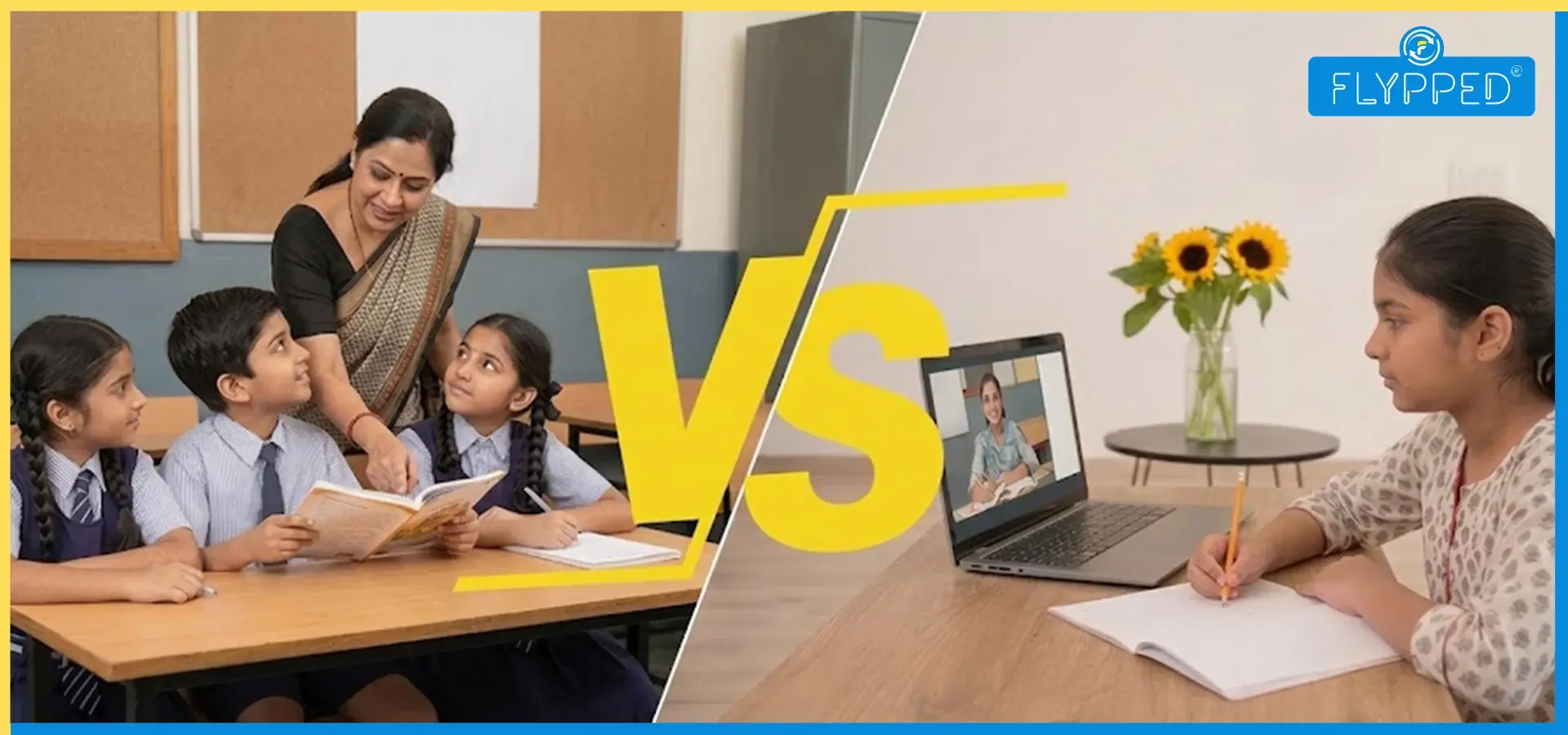
COVID has taught us a lot, left us with a new outlook on life, and one such aspect was the debate over online vs offline education. The debate has shifted from a matter of necessity to a choice of lifestyle and learning efficiency. Gone are the days when a classroom was the only place to gain knowledge. Today, the digital frontier offers a parallel universe of learning.
But as we navigate this, the new change raises a question we overlook. What are the pros and cons of online classes, and which one can truly prepare us for the future?
Why are offline classes better?
While technology has advanced, there is a distinct reason why offline classes are better for many than online ones. The human brain is wired for connection, and the physical presence of a mentor and peers creates an energy that a screen simply cannot replicate.
10 Advantages of Offline Classes
- Face-to-Face Interaction: Real-time body language and eye contact deepen understanding.
- Structured Discipline: A fixed routine helps students build lifelong habits.
- Active Peer Learning: Spontaneous debates and group study sessions happen naturally.
- Minimal Distractions: A dedicated study environment keeps the mind away from social media pings.
- Hands-on Practice: Laboratories and workshops are irreplaceable for science and the arts.
- Instant Doubt Clearance: You don't have to wait for an email reply or a "raised hand" icon.
- Social Development: Navigating social dynamics in person builds essential soft skills.
- Teacher Supervision: Educators can sense when a student is struggling just by looking at them.
- Extra-curricular Growth: Physical sports and drama clubs foster holistic growth.
- Mental Health: Reducing screen time and increasing human interaction fights the isolation many feel today.
Disadvantages of Offline Classes
Despite the benefits, traditional systems have their hurdles. The disadvantages of offline classes often centre around logistical and financial constraints.
High tuition fees, daily commuting stress, and the rigid nature of fixed schedules can be draining. For a student living in a remote area, the cost of boarding and travel can make quality education feel like an unreachable luxury.
Why are online classes still preferred?
On the other hand, the importance of online education has skyrocketed. In 2026, we see that digital classes are superior to regular education in terms of accessibility and the integration of modern skills. If you are a working professional or a student in a tier-2 city, the digital world is your gateway to Ivy League-level content. Offline learning is now seen as a limiting format.
Pros and Cons of Online Classes
The pros and cons of online classes are two sides of the same digital coin.
- The Pros: You get unmatched flexibility. You can learn at 2 AM or 2 PM. It is highly cost-effective, eliminating the need for expensive textbooks and fuel. Moreover, the ability to re-watch recorded lectures means you never truly "miss" a class. The biggest pro is most definitely how convenient it is for people who might not be able to afford expensive fees. The importance of online education is that it makes learning accessible.
- The Cons: The biggest hurdle is self-motivation. Without a teacher physically present, it’s easy to procrastinate. Additionally, the "digital divide" still exists, and an unstable internet or a power cut can halt a learning session instantly.
Online Education vs Offline Education
When comparing online education vs offline education, it’s clear that neither is a "one-size-fits-all" solution.
Offline learning creates a stable, focused environment. It’s a sanctuary for those who need external structure to thrive. For younger children, the social and emotional milestones reached in a physical school are non-negotiable. This might be why many people consider offline classes better than online ones.
However, for the modern adult or the specialised researcher, online education provides a level of autonomy that is liberating. It allows for a personalised learning path where you can skip what you know and deep-dive into what you don't. Digital classes are superior to regular education because they open the gates to knowledge without worldly constraints.
As we look ahead, the most successful learners are those who don't choose sides but instead blend both. The consensus in 2026 is that a hybrid model utilising the convenience of digital tools for theory and the depth of offline sessions for practical application is the most effective way forward.
Education is no longer just about where you sit, but about how you engage with the world. Whether you are walking into a brick-and-mortar hall or logging into a virtual portal, the goal remains the same: to stay curious, stay disciplined, and never stop growing.
For Hindi Reader, Please Click for aaj ki khabar
Explore the latest education insights on Flypped
- Education: How to Choose the Right Career Path After 12th
- The Reader’s Compass: 10 MUST-READS to widen your library
- Study Less, Rank Higher: 7 Science-Backed Hacks to Master Any Subject
For more news updates, follow the Flypped Side of English News