Bollywood Art Movies: From Underrated Stories to Films That Shaped Indian Cinema
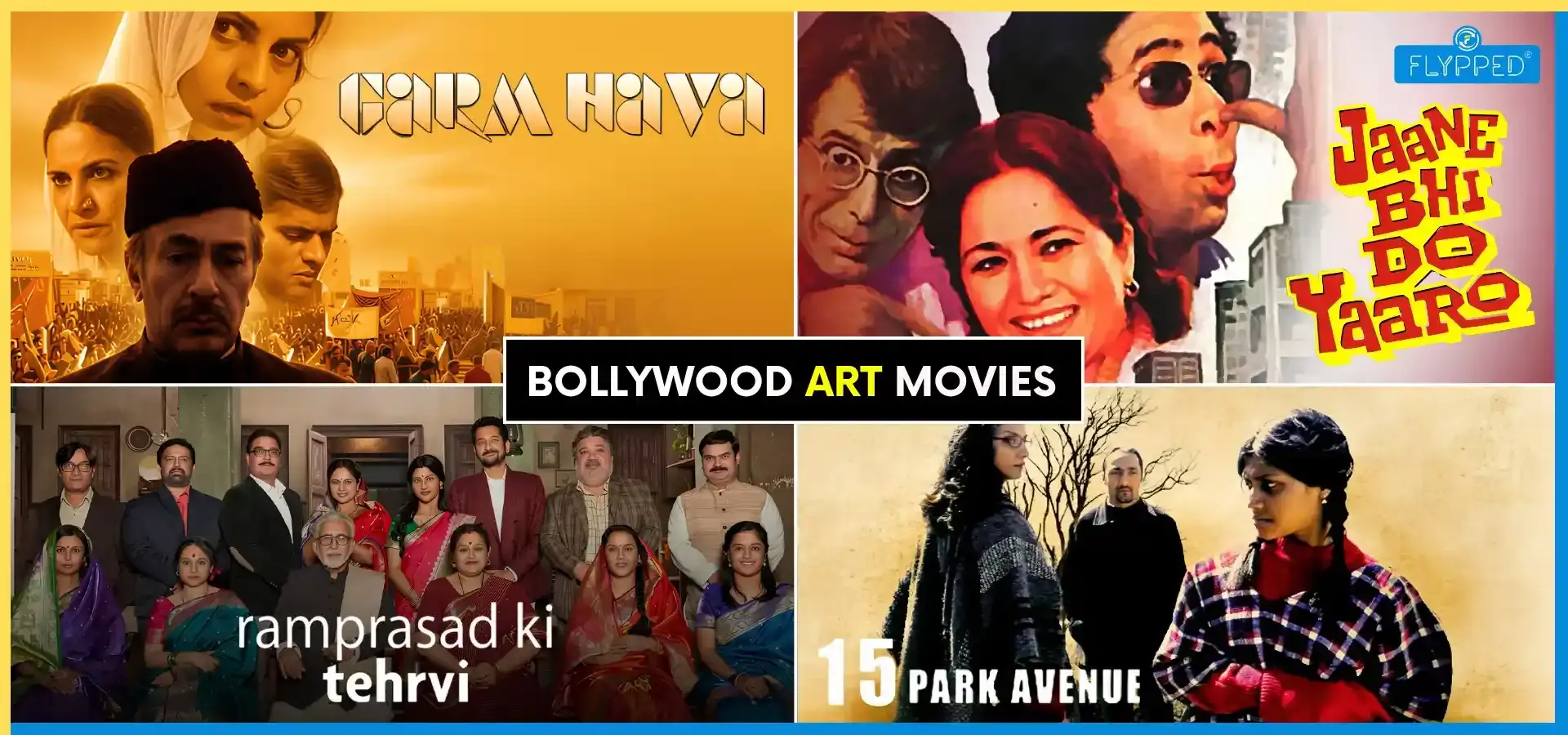
Have you ever watched a “low-profile” movie which had a lasting impact on you? Bollywood is celebrated for its vibrant storytelling and grand productions, but there's a captivating niche within this realm, that is, bollywood art movies. These films enchant audiences with their distinct narratives and artistic flair, often pushing the boundaries of conventional cinema. They provide a richer, more nuanced take on life that can outshine mainstream offerings.
What sets bollywood art movies apart is their focus on complex characters and intricate storylines that strike a chord with viewers. Unlike typical commercial films, these narratives look at societal issues, human emotions and personal journeys, making them resonate on a deeper level.
Take "Masaan" and "The Lunchbox," for example as both films beautifully portray the essence of daily life while tackling the challenges posed by societal expectations.
Many of these underrated Bollywood movies have garnered significant acclaim, earning awards and recognition both in India and abroad. They embody the spirit of Indian parallel cinema, standing distinct from the usual box office fare. Once you immerse yourself in the profound storytelling of these Hindi art films, you may find it hard to appreciate conventional cinema's predictable plots and clichés. Experiencing these movies not only entertains but also broadens your understanding of cinematic storytelling.
What are Bollywood Art Movies: Understanding Indian Parallel Cinema
Unlike typical mainstream Bollywood films, which often follow predictable formulas, these art films embrace realism. They look at the intricacies of human experiences, social issues, and the complexities of relationships.
These films take an artistic approach to storytelling, prioritizing thought-provoking content over star power and commercial appeal. You’ll often find ambiguous endings, nonlinear narratives and a more leisurely pace that encourages viewers to engage more deeply with the material. What does this mean for the audience?
The impact of these films on how we perceive cinema is significant. Once you’ve experienced the rich layers and emotional depth of bollywood art movies, conventional films can seem shallow and formulaic. The stark contrast is evident; art films challenge societal norms and prompt viewers to reflect on their own lives, making it harder to enjoy traditional cinematic offerings.
If you're a film enthusiast, indulging in art movies is a must for several reasons.
- First, these films offer emotional complexity often absent in mainstream cinema. Characters are developed with intricate backstories, allowing viewers to connect with their journeys. The storytelling in these films is often unique and innovative.
- Art films make use of symbolism, metaphors and literary devices to portray complex themes. Their narrative structures can be unconventional, leading to a more immersive experience.
- The use of natural light, creative framing and vibrant colours often brings scenes to life in ways that mainstream films rarely achieve. The sound design and music further enrich the experience, enhancing the emotional weight of each moment.
Origins and Influences: History of Indian Parallel Cinema
The roots of Indian parallel cinema can be traced back to Bengal, particularly through the influence of Satyajit Ray's landmark film Pather Panchali (1955). Heavily inspired by Italian Neorealism, the movement traded escapist song-and-dance routines for low-budget realism, naturalism and serious sociopolitical commentary. This film set the stage for a movement that prioritised realism and social commentary over commercial success.
The 1970s and 1980s witnessed a new wave of filmmakers such as Shyam Benegal, Mrinal Sen, Govind Nihalani and Mani Kaul, who contributed significantly to the evolution of Indian parallel cinema. Their films often reflected pressing social issues and the complexities of contemporary Indian life.
Prominent directors who have shaped Indian parallel cinema include Satyajit Ray, Shyam Benegal, Mani Kaul, Govind Nihalani, Adoor Gopalakrishnan and Girish Kasaravalli. Their distinctive styles and thematic explorations have left an indelible mark on the industry.
The establishment of the National Film Development Corporation (NFDC) in 1975 provided much-needed support for independent filmmakers, promoting the growth of parallel cinema. Additionally, the rise of film festivals created a platform for these films to gain visibility and recognition.
In recent years, there has been a modern revival of bollywood art movies, spurred by the independent film boom and the emergence of streaming platforms. This resurgence has allowed these films to reach a wider audience further solidifying their place in the cinematic landscape.
These films have garnered recognition at international film festivals such as Cannes, Venice and Berlin, as well as receiving accolades at the National Film Awards. This recognition highlights the global significance and artistic merit of bollywood art movies. These art movies can be found on various OTT platforms, as well as on YouTube through channels like NFDC and Film Heritage.
Hindi Art Films: Must-Watch Bollywood Art Movies
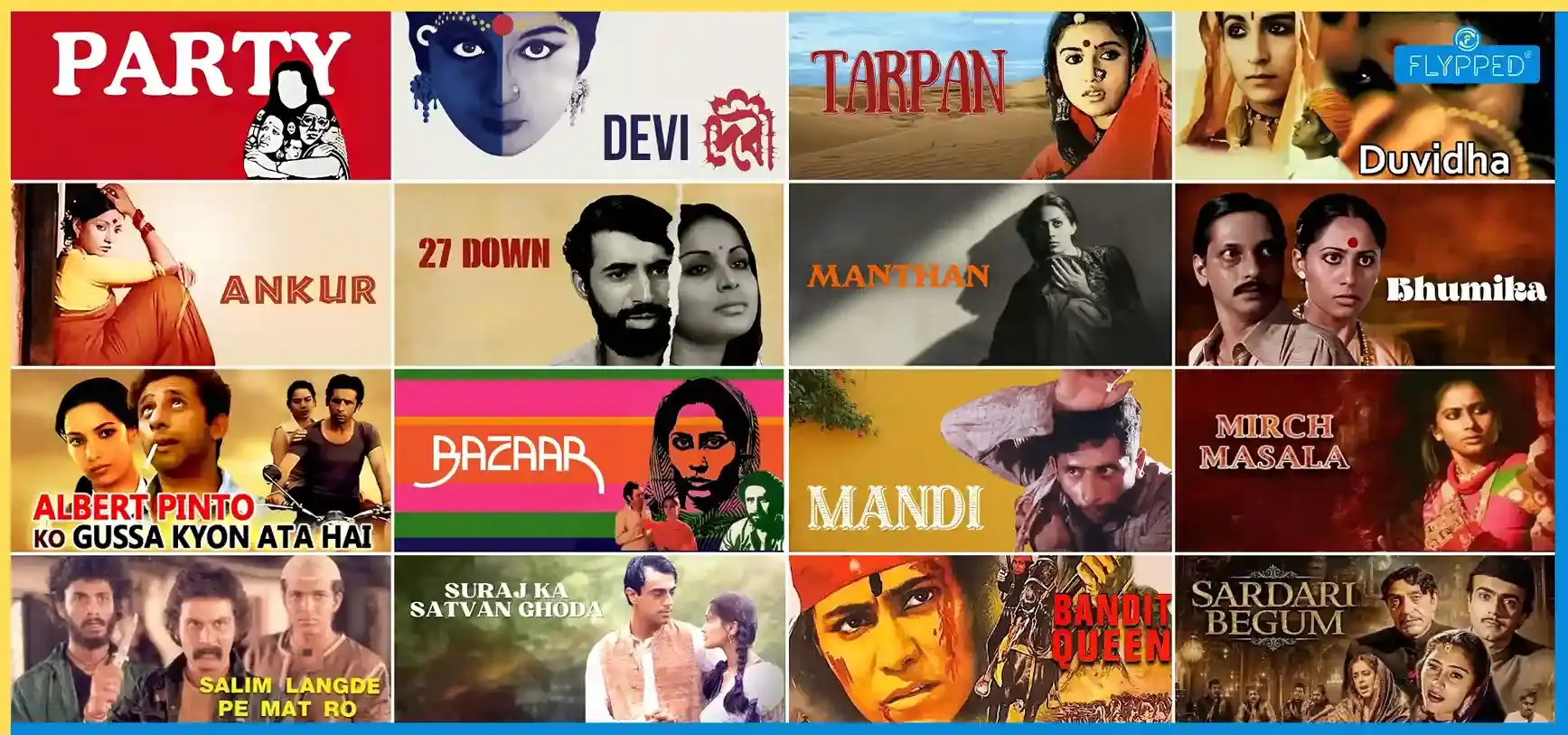
A sea could be made if all the existing art movies produced in India would be put in a single space. Below mentioned are notable Indian art movies you must watch once in a lifetime.
Title | Year | Language | Director | Genre/ Theme | Why It’s a must watch | Awards/Recognitions |
| Garm Hava | 1973 | Hindi/Urdu | M.S. Sathyu | Partition Drama | Balraj Sahni leads a family torn between Pakistan and staying in India, in a script by Kaifi Azmi | National Award for national integration; Filmfare Best Story; Cannes Palme d'Or nominee |
| Tarpan | 1994 | Hindi | K. Bikram Singh | Social drama; caste oppression, gender injustice, communalism | It has no songs or star mannerisms, and a critic notes its hard-hitting, unrelenting treatment of caste and gender injustice | Screened at the Moscow, Montreal, Chicago and Cairo international film festivals. |
| Party | 1984 | Hindi | Govind Nihalani | Political satire / ensemble drama; elitism, art vs. politics, hypocrisy | Nihalani directed and wrote the film, which is based on a play by Mahesh Elkunchwar and produced by NFDC. A party is held to honour a writer who has won a literary award | Vijaya Mehta won Asia-Pacific Film Festival; Rohini Hattangdi won National Film Award for Best Supporting Actress |
| Devi | 1960 | Bengali | Satyajit Ray | Period drama; religious superstition, faith vs. reason, women's oppression | Adapted from Prabhat Kumar Mukhopadhyay's story, with Chhabi Biswas and Soumitra Chatterjee. It's a visually striking film that critiques blind faith without mocking belief itself | National Film Award recognition (Certificate of Merit); screened at international festivals including Edinburgh; often cited among Ray's finest works |
| Duvidha | 1973 | Hindi | Mani Kaul | Folk Fable | A hypnotic, formally radical film in a stylised, painterly way | Filmfare Critics' Award†; check other awards |
| Ankur | 1974 | Hindi | Shyam Benegal | Rural drama; caste, feudal power | Benegal's debut and Shabana Azmi's first film, and it launched the Hindi New Wave | National Award, Best Feature Film in Hindi; Best Actress (Azmi) |
| 27 Down | 1974 | Hindi | Awtar Krishna Kaul | Drama; alienation, family expectation | A poetic, low-budget story told in flashbacks on a train journey to Varanasi | National Award, Best Feature Film in Hindi |
| Manthan | 1976 | Hindi | Shyam Benegal | Social drama; White Revolution, cooperatives | A young doctor (based on Verghese Kurien) helps farmers set up a milk cooperative. Partly funded by the farmers themselves | National Award, Best Feature Film in Hindi; Best Screenplay; India's Oscar submission |
| Bhumika | 1977 | Hindi | Shyam Benegal | Drama; identity, self-fulfilment | Smita Patil as an actress who grows from a lively girl to a wounded, wiser woman | Smita Patil won National Award for Best Actress; Best Screenplay |
| Albert Pinto Ko Gussa Kyun Aata Hai | 1980 | Hindi | Saeed Akhtar Mirza | Social drama; class aspiration, anger | A Christian mechanic believes hard work and imitating the rich will lift him up | Cult classic |
| Bazaar | 1982 | Hindi | Sagar Sarhadi | Social drama; bride-buying in the Gulf | Handles a social evil with restraint and subtlety | Critically acclaimed |
| Jaane Bhi Do Yaaro | 1983 | Hindi | Kundan Shah | Satirical comedy; corruption | Two hapless photographers uncover a scam in an NFDC cult comedy | Nargis Dutt Award for national integration |
| Mandi | 1983 | Hindi | Shyam Benegal | Satire; a brothel and bureaucratic hypocrisy | A brothel is pushed out of the city centre in a sharp, funny take on politics and moralit | Acclaimed |
| Mirch Masala | 1987 | Hindi | Ketan Mehta | Period drama; women's resistance, colonial-era oppression | A village woman stands up to a lecherous tax collector, and the women around her rally behind her. Smita Patil is at her best | Critically Acclaimed |
| Salaam Bombay! | 1988 | Hindi | Mira Nair | Drama; street children, Bombay's underworld | A young boy struggles to survive among drug dealers and pimps in Bombay's alleys | Caméra d'Or at Cannes; Oscar nominee for Best Foreign Language Film; National Award |
| Ek Doctor Ki Maut | 1990 | Hindi | Tapan Sinha | Drama; medical breakthrough, professional jealousy | Pankaj Kapur's superb performance as a doctor ostracised for discovering a leprosy vaccine | Acclaimed; National Award recognition |
| Salim Langde Pe Mat Ro | 1989 | Hindi | Saeed Akhtar Mirza | Social drama; communal tension, minority neighbourhood | Made Pawan Malhotra a name in parallel cinema, and depicts a Mumbai Muslim locality | National Award, Best Feature Film in Hindi |
| Suraj Ka Saatva Ghoda | 1992 | Hindi | Shyam Benegal | Experimental drama; storytelling, relationships | Among Benegal's most abstract films, told through a narrator's encounters with three women | National Award, Best Feature Film in Hindi |
| Bandit Queen | 1994 | Hindi | Shekhar Kapoor | Biographical crime drama; caste, gender violence, survival | Tells the story of Phoolan Devi, unflinching and controversial, and made Seema Biswas a star | 2 Filmfare awards and 1 National Award per the list; Seema Biswas won National Award for Best Actress |
| Sardari Begum | 1996 | Hindi | Shyam Benegal | Mystery drama; courtesan culture, women's lives | Police investigate the death of a singer and courtesan killed in a riot, and her past unfolds through the inquiry | Kirron Kher won National Award for Best Supporting Actress; Nargis Dutt Award |
| 15 Park Avenue | 2005 | English/Hindi | Aparna Sen | Psychological drama; schizophrenia, family | Konkona Sen Sharma plays a woman who believes she lives in an imaginary home, in a sensitive study of mental illness | National Award, Best Feature Film in English |
| Mr. & Mrs. Iyer | 2002 | English/Hindi | Aparna Sen | Drama; communal riots, unlikely companionship | A Tamil Brahmin woman and a Muslim photographer travel through a riot-hit region, in a tender, humane love story | Nargis Dutt Award for national integration; Konkona Sen Sharma won National Award for Best Actress |
| Firaaq | 2008 | Hindi | Nandita Das | Ensemble drama; the aftermath of the 2002 Gujarat riots | Nandita Das's debut follows ordinary people a month after the violence, with restraint | International Film Festival Awards & Mentions |
| Fire | 1996 | English/Hindi | Deepa Mehta | Drama; same-sex love, marriage, domesticity | A landmark, controversial film about two sisters-in-law who fall in love, and it triggered protests on release | Festival wins at LGBT festivals; a landmark case for Indian censorship debates |
| Earth | 1998 | Hindi/English | Deepa Mehta | Period drama; Partition, communal violence | Adapted from Bapsi Sidhwa's novel Cracking India, it shows Lahore tearing apart through a child's eyes | India's Oscar submission; acclaimed performances from Aamir Khan and Nandita Das |
| Black Friday | 2004 (released 2007) | Hindi | Anurag Kashyap | Crime docudrama; 1993 Bombay blasts | gritty, documentary-style retelling based on S. Hussain Zaidi's book, which was held up in court for years | Grand Jury Prize for Best Feature Film at the Indian Film Festival of Los Angeles; nominated for the prestigious Golden Leopard at the Locarno International Film Festival |
| Pinjar | 2003 | Hindi | Chandra Prakash Dwivedi | Period drama; Partition, abduction of women | Adapted from Amrita Pritam's novel, with Urmila Matondkar and Manoj Bajpayee | Nargis Dutt Award for national integration; Special Jury National Award for Manoj Bajpayee |
| Mammo | 1994 | Hindi | Shyam Benegal | Drama; Partition, displacement, belonging | An elderly Muslim woman who stayed in India after Partition fights to remain, in a warm, human story | National Award, Best Feature Film in Hindi; Surekha Sikri won Best Supporting Actress |
| Margarita with a Straw | 2014 | Hindi/English | Shonali Bose | Coming-of-age drama; disability, sexuality | Kalki Koechlin plays a young woman with cerebral palsy who explores love and identity | NETPAC Award at Toronto†; Kalki Koechlin won a Special Mention National Award |
| Aligarh | 2015 | Hindi | Hansal Mehta | Biopic; Section 377, privacy, LGBTQ+ rights | Manoj Bajpayee plays Professor Ramchandra Siras, suspended for his sexuality, in a sensitive, understated drama | Filmfare Critics Best Actor (Manoj Bajpayee) |
| Newton | 2017 | Hindi | Amit V. Masurkar | Political satire; democracy, Naxal region | A young election official insists on following the rules in a conflict zone, in a dry, witty comedy | National Award, Best Hindi Film; Special Mention for Pankaj Tripathi; India's Oscar submission; Berlinale Art Cinema Award |
| Love, Soniya | 2018 | Hindi/English | Tabrez Noorani | Drama; human trafficking, sisterhood | A young woman searches for her sister across the sex-trafficking trade, told with powerful, heartbreaking performances | Festival screenings; check awards |
| Aankhon Dekhi | 2013 | Hindi | Rajat Kapoor | Comedy-drama; truth, perception, a family patriarch | A man decides to believe only what he sees, in a gentle, philosophical film with a superb Sanjay Mishra | Filmfare Critics Best Actor (Sanjay Mishra) |
| Mukti Bhawan | 2016 | Hindi | Shubhashish Bhutian | Drama; ageing, death, father–son bond | An old man travels to Varanasi to die and his son goes with him, in a gentle film about family and mortality | Premiered at Venice Days 2016†; festival awards |
| The Lunchbox | 2013 | Hindi/English | Ritesh Batra | Romance; loneliness, letters, Mumbai | A misdelivered dabba links a lonely housewife and a widower, with Irrfan Khan and Nimrat Kaur | Grand Rail d'Or (Viewers' Choice) at Cannes Critics' Week; BAFTA nominee |
| Masaan | 2015 | Hindi | Neeraj Ghaywan | Drama; caste, love, grief in Varanasi | Two intertwined stories in a small city, set against the ghats | FIPRESCI Prize and Promising Future Prize, Cannes Un Certain Regard; Filmfare Best Debut Director |
| Court | 2014 | Marathi/English/Hindi | Chaitanya Tamhane | Courtroom drama; justice system, caste, satire | A quiet, observational take on a folk singer's trial, with deadpan realism | National Award, Best Feature Film (Golden Lotus); Venice Orizzonti Best Film; India's Oscar submission |
| Gandu | 2010 | Bengali | Qaushiq Mukherjee | Experimental drama; urban youth, rebellion | raw, black-and-white cult film, notorious for its explicit content and anti-establishment mood | Festival-circuit cult film |
| Paan Singh Tomar | 2012 | Hindi | Tigmanshu Dhulia | Biopic; a steeplechase champion turned rebel | The true story of an army athlete forced into dacoity, with a career-best turn by Irrfan Khan | National Award for Best Feature Film; National Award for Best Actor (Irrfan Khan) |
| A Death In The Gunj | 2016 | Hindi/English | Konkona Sen Sharma | Period drama; a family holiday, bullying, masculinity | Sharma's directorial debut is a slow-burning, atmospheric 1979 tale set in McCluskieganj | Filmfare Best Debut Director |
| Ramprasad Ki Tehrvi | 2019 | Hindi | Seema Pahwa | Drama, Dysfunctional Family, Funeral | Seema Pahva’s Directorial Debut and notable star cast and plot. | Seema Pahwa won a Filmfare debut director recognition; festival screenings. |
The themes portrayed in these films often mirror the complexities of contemporary Indian society, sharply contrasting with the simplistic narratives typical of mainstream cinema. By engaging with these underrated gems, viewers can gain deeper insights into the human experience, enriching their appreciation for the art of filmmaking.
Why Bollywood Art Movies Deserve More Recognition?
Bollywood Art Movies go beyond mere entertainment; they offer deep insights into the human experience. These films often tackle intricate themes such as class disparity, love, loss, and societal norms, pushing against the boundaries set by mainstream cinema.
Mainstream films often adhere to familiar storytelling techniques, prioritising commercial success over depth. In contrast, art cinema invites you to engage with complex characters and rich narratives. This shift in perspective can reshape your understanding of storytelling, making conventional narratives feel predictable and uninspired. Directors in Bollywood's art scene make bold choices that encourage audiences to examine not just the film, but also their own views and beliefs.
Indian art films have thrived across various languages, often outshining Hindi parallel cinema in critical reception. The legacy of directors like Satyajit Ray, Ritwik Ghatak, and Mrinal Sen has set the benchmark for Bengali cinema, with their films often exploring themes of social realism and human struggle. Adoor Gopalakrishnan and G. Aravindan are pioneers of Malayalam art cinema, known for their poetic storytelling and deep exploration of human emotions and societal issues. Girish Kasaravalli, a significant figure in Kannada cinema, is associated with the Navya movement, which focuses on introspective storytelling and character-driven plots.
Final Thoughts
In a landscape where Bollywood movies often stick to tried-and-true formulas, Bollywood Art Movies shine with their artistic authenticity and emotional depth. These films encourage viewers to reconsider their ideas about storytelling and character development. Once you look at the world of art cinema, you might find traditional films lacking in comparison.
As you engage with these thought-provoking stories, films that once felt entertaining may start to seem superficial. This is especially true for those who have come to appreciate the emotional richness present in Hindi art films. The contrast becomes even clearer when you compare them to the formula-driven narratives of standard cinema.
By immersing yourself in these narratives, you can cultivate a more nuanced understanding of the human experience. This exploration of complex themes is a defining characteristic of Indian parallel cinema, where filmmakers boldly challenge societal norms and push creative boundaries.
Embracing Bollywood Art Movies opens your eyes to the true potential of storytelling in cinema. These films enrich your appreciation for art and inspire you to seek out more meaningful narratives. Once you engage with the depth of Indian art films, returning to conventional offerings may become a challenge, forever reshaping your cinematic experiences. So, what's the takeaway?
Frequently Asked Questions
Find answers to common questions about this topic
Bollywood Art Movies are films that focus on artistic expression and narrative depth rather than commercial success. They often look at complex themes and character development.
Indian parallel cinema refers to films that prioritise realism and social commentary over commercial appeal, often featuring low budgets and non-star casts.
Titles like "Masaan," "The Lunchbox," and "Paan Singh Tomar" are standout examples of award-winning Bollywood films that offer unique storytelling.
Satyajit Ray is often regarded as the father of Indian art cinema, known for his pioneering work in realistic storytelling.
Yes, many Hindi art films are available on various OTT platforms, allowing audiences to access these important works of cinema.