Mandala Art Designs: Meaning, Types, Benefits & Cultural Significance
Introduction to Mandala Art Designs
In the recent times, art has gained massive popularity and recognition among people. Earlier what was described as mere hobby is been identified has something which bestows value and identity oriented baggage of the culture. Mandala is one of a renowned art style which has started getting adapted for all the valued reasons. Applications of mandala art designs ranges from creativity to spirituality. Mandala art captures the essence of life, mind chakras and more. Mandala designs attract artists and beginners due to its relatability and scope of adaptability. This blog navigates through the evolution of mandala art design, its origin applications and other related facts about the same.
What is Mandala Art?
Literal meaning of word ‘mandala’ is circle. In spiritual terms, mandala is defined as a representative art depicting the state of universe. Mandala art is defined as a systematic geometric configuration of symbols and shapes. In Hinduism and Buddhism, mandala art is used to depict deities and folklores. In Hindu mythology mandala has relevant significance among worship practices and representation of deities for say. In western ideologies, mandala is seen as an intensive tool for the spirituality and focus strengthening verticals. Carl Jung related his work with the concept of self and hence he mentioned the crucial shelf to practice so.
Who Invented Mandala Art?
The historical roots of mandala traces back to the ancient rig veda age. By this time, mandala was replicated via deity devotions and cultural folklores. The context of mandala is widened by the mention in Buddhism directed Tantrism, linked with spirituality. Mandala is replicated as universe and by mentally centering it one can attain cosmic insights in the form disintegration.
From 1BCE onwards, mandala started to expand among other regions, each region shaped mandala as per the cultural adaptation. Mandala traveled across Central Asia reaching China, Korea, Japan, Tibet, and Nepal. As mandala travelled through these regions, so this kind of influence its status quo in today’s time.
Indian Mandala Art: Cultural & Spiritual Roots
Initially mandala art designs were symbolically spherical symmetrical patterns. At that time mandala could be detected in yaga yantra rituals, rangoli, temple architecture or paintings for a fact. Traditional indian mandala motifs were captured in spherical and structural shapes. This form of art does not implicate free hand of the artist which creating rather a systematic pattern has to be followed when it comes to authenticity. Traditional versions has motifs of flowers, animals and other elements being showcased in the art. The origin is basically a replication of an event. Like in Hindu culture devotion deity based art has an elemental chakra surrounding the deity and elements associated with them. Similarly, Buddhism heavily insisted on adapting mandala, artistry literature back them had art showing Buddha in center surrounded by chakra which signifies attained spirituality. In modern times, mandala has been revived via literature mentioned, historical significances and relative adaptability itself.
Types of Mandala Art
Mandala has wider range of types, refer to the table below:
| Mandala Type | Definition | Example |
| Teaching Mandala | Mandal in which every element has philosophical meaning associated with it, be it colors or shapes. | Navigating through textures, colors & patterns of Kalchakra Mandala |
| Healing Mandala | This form of mandala is more intuitive than teaching mandala and subsides in the healing processes. | DIY Guides to Mandala Drawing or even Mandala coloring books. |
| Sand Mandala | Mandala created by colored sand, paved in detailed manner grain to grain for a detailed design. | Kalchakra Sand Mandala |
| Decorative Mandala | When mandala patterns are used in interior architecture, fashion or digital artwork. | Bandhani print outfits or wall rugs are heavily inspired by mandala. |
| Geometric Mandala | Mandala created by using structural symmetrical use of circles, triangles and other shapes. | Illusion Art Paintings |
| Spiritual Mandala | Similar to healing mandala, based on psychological aspects of healing and evoking wisdom and peace. | Vajradhatu Mandala |
What is Mandala Dot Art?
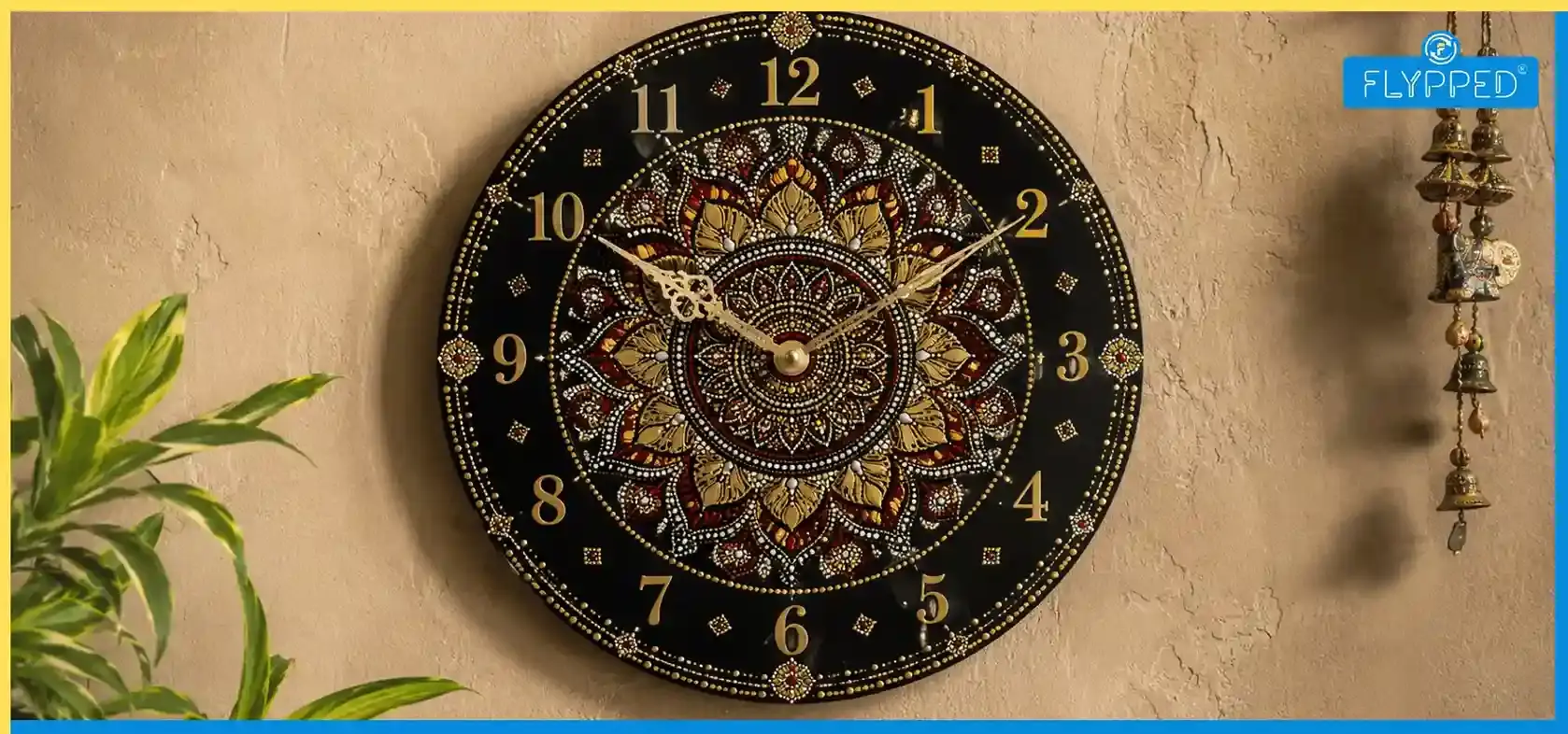
Mandala Dot Art is a hybrid art form conjoining symmetrical mandala concept and pointillist technique. In this art form, numerous dots and patterns traced out in order to make a symmetrical pattern. Dot art was originated from a blend of traditional mandala art and indigenous Australian dot painting techniques. Traditional mandala and dot art mandala differs in terms of structure, as structure can get asymmetrical in dot art. Traditional mandala requires precise stationary whilst dot are could simply be traced back using less set of stationary. Traditional mandala has therapeutic properties whilst dot art has similar therapeutic properties plus strengthens the patience and focus on micro details.
Steps to create dot mandala:
- Tools used in this art are specialized dotting pens, pins, toothpicks, and round tip of brush. Dot art could be made on canvas, sheet, wood, cloth or stone. Acrylic paints and basic stationary is also required.
- Take the base for the better depending on your preference.
- Trace the center of the canvas and place a tip of paint there.
- Mark symmetrical round around the tip of the paint with the help of the pencil.
- Now you a path to trace the middle tip of paint.
- Create a sounding pattern & follow the loop while switching colors on each layers.
- Seal the paint with shine protectant if you need (optional).
Mandala Art Benefits
- Mental Benefit- Mandala art requires precision which requires us to pull our attention single point. Repetitive structured nature drawing lowers brain wave frequency. Mandala also involves spatial awareness and logical awareness, fostering healthy neural integration.
- Emotional Benefit- Mandala is used as a coupled tool in anxiety improvement kits. Lowered focus on other stimulus helps in lowering anxiety and engagement in healthier attention reflecting habits.
- Creative Benefit- Mandala allows us to reflect on our creative drive and channelize our moods or emotions via range of colors, shapes or patterns. Moreover, this help in labelling complex feeling, self-awareness and better mental health of course.
- Spiritual Benefit- As per the intense mentions in Buddhist literature, mandala is been associated with the concept of discovery self & equilibrium. In many meditational kits, textured mandala has a firm place. Mandala helps us navigate through our internally embedded emotions and through reflective gaze the same gets resolved.
How Are Mandalas Used for Art Therapy
Mandala is not just a pretty pattern in art therapy. Art therapy is a psychological intervention technique used to communicate with people dealing with heavy emotions or trauma. Art therapy allows them to channelize and reflect their emotion via creativity. Mandala Assessment Research Instrument is a legit psychological instrument used in art therapy to gauge and label the trauma and emotional distortions via the cues in art. Mandala assists meditation with better encompassing results. Adaptation of mandala in therapy or art therapy units are heavily influenced by Carl Jung’s school of thoughts and Joan Kellogg’s work on archetypes stages of the great round.
In general terms, numerous mandala guides and coloring books are reachable these days. And investing your hour or two in a day to mandala would only help you with improved concentration, patience and self-reflectivity. If you’re someone dealing with complex feeling and feel like attention span has been lowered with time, look for reasonable adult mandala coloring book.
Mandala Art Designs in Home Décor
Mandala art designs have gained immense popularity among interior architectural market and fashion industry. These days Indian culture imprints are been globally adapted. A couple of years ago, in Delhi hemisphere mandala print outfits like sarees and kurta were in trend. Trend followed so well it echoes till now. In the same way in real estate market, aesthetic compatibility of properties are studied seriously. Inclination from minimal white core interior aesthetics have shifted to traditional reflecting Indian aesthetics. A house accommodated with such thought would definitely have a statement mandala art piece in for of rugs, frames, or crockery for say.
Desirable directions to put mandala art piece in your living room are north east and east direction. As per Vastu algorithm this brings peace, harmony, balance and serene vibes in your abode. Mandala being a structured art form reflects balance, peace and harmony.
Why Mandala Art is Becoming Popular Worldwide
Nowadays, digital mandala art games or stimulation pages are available and with easy access comes user generative point of view. In tattoo vertical, many people get stacked mandala design as tattoo on their body. Tattoo of mandala is like a way of tribute to creative culture. Books stores, online stores or free mandala worksheet resources are easily accessible for whoever want to try and see if it helps them with better concentration and focus. Many brands do also adapt mandala designs in their marketing tools such as website backdrops, invitations or other segments, etc.
Summing Up
Social media creators do also preach the idea of opting art as an expression therapy or a healthy outlook to channelize your emotions. This is how trends have had its hand on mandala wave. With the word on social media about mandala is closely related to rise in mindfulness culture or promotion of community mental health. During pandemic DIY art got popularized and since then the imprints of art movement could be seen. With mandala many people who always had a thing for art, do have an outlook that endorses mental stimulation and mental health.
Frequently Asked Questions
Find answers to common questions about this topic
Mandala art is a systematic structured accumulation of patterns. The early origin of mandala art traces back from the Rig Veda age located around Bihar, India.
Renowned four typed of mandala are geometric mandala, healing mandala, sand mandala and spiritual mandala.
Yes, mandala art is originated from Bihar, India.
Yes, mandala started off from religious outlook only. It was used in yagna and deity devotion.
In Ayurveda practices, mandala is referred as a 40-48 day cycle. As mandala is associated with bringing discipline and balance in one\u2019s life. An uninterrupted cycled of practicing mandala for such period is necessary to get habitual of it.
It is a Vasistha family book of the Rigveda, a major collection of 104 hymns focused on vedic deites and sacred themes.