
Mahatma Gandhi's Biography: From Lawyer to Voice of India's Independence
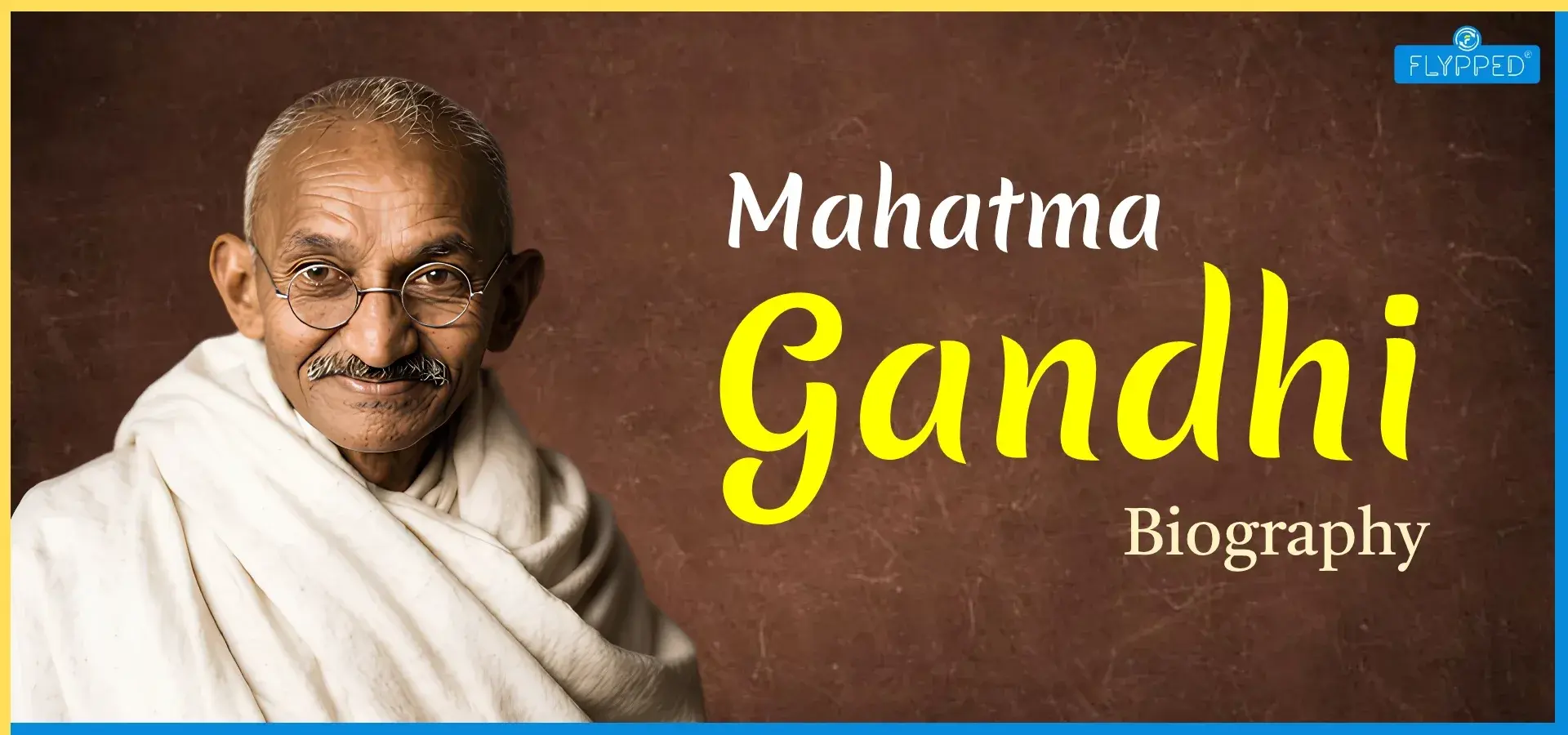
Mahatma Gandhi, born Mohandas Karamchand Gandhi on October 2, 1869, in Porbandar, India, stands as a towering figure in both Indian and global history.
His unwavering commitment to nonviolence and civil rights reshaped the struggle for freedom.
Gandhi’s journey began in South Africa, where he first introduced the concept of Satyagraha, advocating for the rights of the Indian community against unjust laws.
His return to India was a pivotal moment. He emerged as a prominent leader in the fight for independence from British colonial rule.
One of his most notable actions was the Dandi March in 1930, a peaceful protest against the oppressive salt tax.
Through his writings, particularly "The Story of My Experiments with Truth," he offered deep insights into his philosophy and personal experiences.
Gandhi faced numerous hardships throughout his life. These included imprisonment and mass protests.
His unwavering dedication to social reform, particularly in improving the status of women and fighting against untouchability, has cemented his legacy.
Today, he is honored as the father of the nation and as a global symbol of peace and resilience.
His influence continues to inspire civil rights movements and the quest for freedom across the globe.
Mahatma Gandhi Birth Date and Family Background
Mahatma Gandhi was born on October 2, 1869, in Porbandar, a coastal town in what is now Gujarat, India.
Mahatma Gandhi Family: He came from a well-off family; his father, Karamchand Gandhi, served as the chief minister of Porbandar, while his mother, Putlibai, was a deeply religious woman whose faith significantly influenced Gandhi’s spiritual journey.
Growing up in an environment that valued education, ethics, and religious teachings, he absorbed principles that later guided his activism.
As a child, Gandhi was shy and introverted. He often grappled with self-confidence.
However, his early years in Porbandar, enriched by India's vibrant cultural and spiritual traditions, laid the groundwork for his future endeavors.
Family life was characterized by strong bonds, nurturing his understanding of duty and morality.
Mahatma Gandhi Education
Mahatma Gandhi Biography also mentions Gandhi's education that began in Porbandar, where he attended a local school before moving to Rajkot for further studies.
His academic journey took a significant turn when he traveled to London in 1888 to study law.
This move was pivotal. It exposed him to diverse ideas and philosophies that would shape his worldview.
In London, Gandhi faced cultural challenges, including racial discrimination and the struggle to maintain his vegetarian lifestyle against societal pressures.
During his time in London, he was deeply influenced by various thinkers, including Henry David Thoreau.
The essay on civil disobedience left a lasting impact on Gandhi's approach to resistance.
The teachings of Leo Tolstoy and the principles of nonviolence also resonated with him, planting the seeds for his philosophy of Satyagraha.
After completing his studies, Gandhi returned to India but soon journeyed to South Africa, where he would first put his beliefs in nonviolent protest into practice.
His early experiences, both in India and abroad, equipped him with the tools to advocate for justice and equality.
The combination of his educational background and the influences he encountered played a vital role in cementing his commitment to nonviolence and determination to combat oppression.
The early years of Mahatma Gandhi's life were marked by a nurturing family environment and a rich educational journey.
These experiences laid the foundation for his lifelong dedication to social justice and significant contributions to India’s freedom struggle.
The lessons learned during these formative years would guide him as he emerged as a pivotal figure in the quest for independence and civil rights.
Mahatma Gandhi Dandi March
Mahatma Gandhi Biography is incomplete without the mention of a defining moment in Mahatma Gandhi's life. This was the Dandi March, which unfolded in March 1930.
This remarkable 240-mile journey from Sabarmati Ashram to the coastal village of Dandi was a bold stand against the British salt tax, a glaring example of colonial oppression.
Gandhi, alongside his followers, marched for 24 days, capturing both national and international attention.
This movement not only highlighted the unfairness of the salt tax but also showcased the immense power of nonviolent resistance.
Mahatma Gandhi Salt March
The Salt March ignited a spark in Indian society. It motivated thousands to join the fight for independence.
It was a crucial turning point that illustrated the united strength of the Indian populace against colonial rule.
Gandhi’s talent for rallying everyday citizens transformed the independence movement into a mass movement, emphasizing the principles of unity and nonviolence.
Mahatma Gandhi Achievements
Mahatma Gandhi Biography also unfolds Mahatma Gandhi's influence on India's freedom struggle was extensive and profound.
He emerged as a leading advocate for civil rights and social reforms, tirelessly fighting for the rights of the oppressed while working to unite a diverse nation.
His philosophy of nonviolence and civil disobedience not only shaped the Indian independence movement but also had a lasting impact on civil rights efforts worldwide.
Here are some of his major initiatives and campaigns:
Non-Cooperation Movement (1920)
This was one of Gandhi's first nationwide efforts aimed at resisting British rule through peaceful means.
It encouraged Indians to withdraw from British institutions and boycott British goods and services.
Civil Disobedience Movement (1930)
Launched alongside the Dandi March, this campaign urged citizens to refuse compliance with unjust laws, specifically resisting the salt tax and other oppressive regulations.
Quit India Movement (1942)
This pivotal moment called for an end to British rule in India, with Gandhi’s rallying cry igniting protests, strikes, and demonstrations throughout the country.
Promotion of Khadi
Gandhi championed the use of khadi (hand-spun cloth) as a symbol of self-reliance and economic independence. He encouraged the rejection of British goods while supporting local industry.
Social Reforms
He dedicated efforts to eradicate untouchability and uplift the status of women. Gandhi advocated for their rights and active participation in the movement.
Mahatma Gandhi Freedom Struggle: His Legacy of Non-Violence
In Mahatma Gandhi Biography Gandhi's legacy is characterized by a deep commitment to social justice, civil rights, and the pursuit of equality.
His initiatives and achievements have left an enduring imprint on history, inspiring movements for justice and peace around the world.
"You must be the change you wish to see in the world." — Mahatma Gandhi
Through his steadfast dedication to nonviolence and justice, Mahatma Gandhi has become a symbol of hope and resilience, not only in India but across the globe.
His life and efforts continue to inspire generations, securing his place as a timeless figure in the struggle for freedom and human rights.
Mahatma Gandhi Contribution to India | Nonviolence and Satyagraha
Mahatma Gandhi introduced Satyagraha, a concept that means "truth force" or "soul force."
This philosophy pushed for nonviolent resistance against oppression, showing that individuals could stand up to injustice without using violence.
Gandhi believed that true strength comes from love and truth, which can conquer even the strongest opponents.
Nonviolence was the foundation of his approach to social and political change. By advocating for peaceful methods, Gandhi sought to awaken the conscience of oppressors while fostering unity among the oppressed.
His teachings inspired numerous civil rights and freedom movements around the globe, proving that change can be achieved through peaceful means.
The principles of Satyagraha were tested during various campaigns, notably the Dandi March and the Salt March.
Gandhi rallied thousands to engage in acts of civil disobedience. His unwavering commitment to nonviolence not only transformed the Indian independence movement but also left a legacy that continues to resonate today.
Mahatma Gandhi Books
Mahatma Gandhi Biography also has popular mention of his writings. Gandhi was a prolific writer, sharing his philosophies and experiences through various publications.
One of his most well-known works is "The Story of My Experiments with Truth," an autobiography that delves into his journey of self-discovery and the development of his ethical beliefs.
In this book, he openly discusses his challenges, triumphs, and the lessons he learned along the way.
This autobiography is more than just a personal account; it captures the essence of his philosophy and the principles he championed throughout his life.
Gandhi's writings often emphasize living in truth, simplicity, and serving others. These themes resonate deeply, making his works timeless sources of inspiration.
"The best way to find yourself is to lose yourself in the service of others." — Mahatma Gandhi
Besides his autobiography, Gandhi wrote numerous essays, letters, and articles that addressed social, political, and ethical issues.
His writings covered topics like nonviolence, civil rights, and the significance of self-discipline.
They offer valuable insights into his thoughts and motivations, making them essential for understanding his biography.
Gandhi's literary contributions go beyond personal reflections. They serve as guiding principles for many striving to bring positive change to their communities.
His works are still studied and cherished, highlighting the profound impact he had on both India and the global stage.
Through his philosophy of nonviolence and Satyagraha, along with his influential writings, Mahatma Gandhi laid the foundation for a new approach to social justice.
His legacy reminds us that peaceful resistance and a commitment to truth can lead to meaningful change and inspire future generations in their quests for equality and justice.
Why is Gandhi Jayanti Celebrated?
Gandhi Jayanti is celebrated every year on October 2nd to honor the birth of Mahatma Gandhi, who came into this world on this day in 1869.
This occasion is not just a national holiday in India; it is recognized globally as the International Day of Non-Violence.
The essence of Gandhi Jayanti lies in its focus on peace, tolerance, and nonviolent resistance—principles that Gandhi passionately advocated throughout his life.
This day invites everyone to reflect on Gandhi's enduring legacy and teachings. Schools, organizations, and communities often organize events like prayer services, discussions, and cultural programs to promote his ideals.
It serves as a powerful reminder of the ongoing fight for civil rights and social justice, resonating with movements worldwide.
Gandhi's influence reaches far beyond India, inspiring leaders and social movements around the globe.
His philosophy of nonviolence has left a significant mark on figures such as Martin Luther King Jr. and Nelson Mandela, who embraced similar strategies in their quests for justice and equality.
Leaders in various countries have drawn from Gandhi's teachings, applying nonviolent methods to challenge oppression and tyranny.
His impact is visible in numerous global movements advocating for human rights, environmental sustainability, and social change.
Gandhi's approach has become a guiding light, motivating activists to pursue peaceful solutions to conflicts.
The ideals he championed continue to inspire new generations, highlighting the effectiveness of peaceful protest in driving social and political progress.
Mahatma Gandhi’s Impactful Quotes and Their Meanings
- "Be the change that you wish to see in the world."
- "The weak can never forgive. Forgiveness is the attribute of the strong."
- "An eye for an eye will only make the whole world blind."
- "Live as if you were to die tomorrow. Learn as if you were to live forever."
- "In a gentle way, you can shake the world." Sound familiar?
Analysis of Each Quote
- "Be the change that you wish to see in the world." This quote underscores the idea that personal accountability is crucial for creating a better world.
- "The weak can never forgive..." emphasizes that true strength is found in the ability to forgive others.
- "An eye for an eye..." serves as a warning against retaliation. It encourages us to choose peace instead.
- "Live as if you were to die tomorrow..." inspires us to fully embrace life. It also encourages prioritizing lifelong learning.
- "In a gentle way..." conveys that even small, kind actions can lead to meaningful change.
Conclusion
Mahatma Gandhi’s lasting legacy showcases the power of nonviolence and truth in the pursuit of justice.
His life and work have profoundly influenced civil rights movements worldwide, proving that meaningful change can be achieved without violence.
Gandhi's message of peace remains relevant today, reminding us that compassion and understanding are crucial in tackling the world's challenges.
As we celebrate Gandhi Jayanti and reflect on his contributions, it’s vital to acknowledge the ongoing relevance of his teachings.
His dedication to social justice, human rights, and equality serves as a beacon for those striving to create a better world.
The impact of Gandhi's philosophy transcends history; it lives on in the efforts of individuals and movements advocating for justice and peace everywhere.
Frequently Asked Questions
Find answers to common questions about this topic
Mahatma Gandhi was a prominent Indian freedom fighter and leader who played a key role in India’s struggle for independence through non-violence and civil disobedience.
Mahatma Gandhi Biography covers his early life, education, freedom movement, philosophy of non-violence, major movements, personal life, and lasting legacy.
Mahatma Gandhi was born on October 2, 1869, in Porbandar, Gujarat, India.
His major movements included the Non-Cooperation Movement, Salt March, Civil Disobedience Movement, and Quit India Movement.
Gandhi is remembered for promoting non-violence, truth, civil rights, and peaceful resistance, ideas that influenced movements for social and political change worldwide.