
Tungnath Temple: Explore the Highest Shiva Temple on Earth
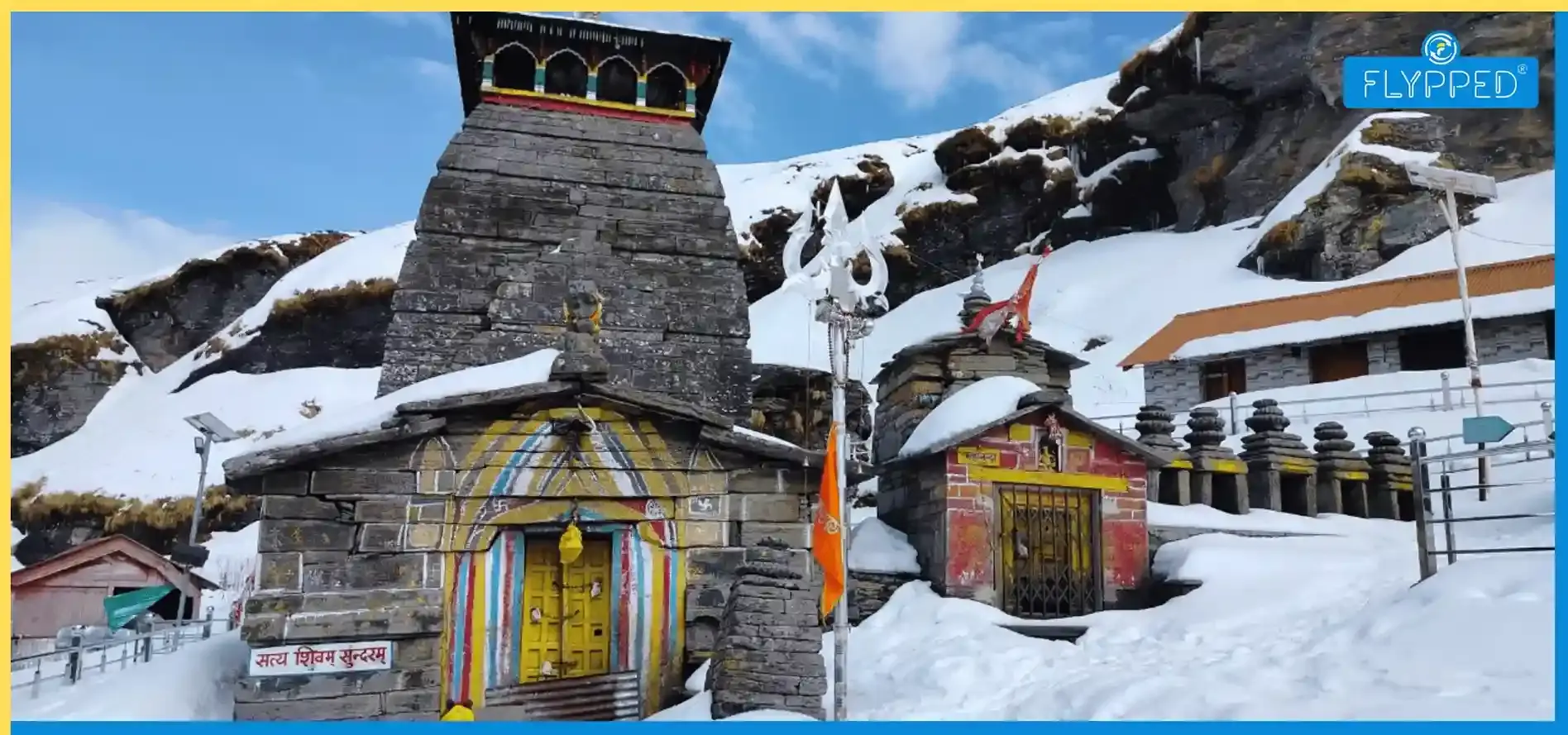
Tungnath Temple rises above the Garhwal Himalayas in Uttarakhand. At 3,680 meters, it is the highest of the five Panch Kedar temples and the tallest Shiva temple in the world.
The route to Tungnath is filled with natural beauty and spiritual meaning, making the journey unforgettable. As you trek, you pass through green meadows, tall deodar trees, and wide alpine views.
Bright flowers colour the path, set against snowy mountains. Each step offers new sights and a sense of wonder.
The trek to Tungnath is not only a physical challenge but also a chance to reflect. It pushes your limits and gives you time to think.
As you climb and the air gets thinner, your excitement grows with every step toward the temple. From the temple, you can see the beautiful Himalayan scenery.
The quiet surroundings and gentle prayer chants bring a sense of calm and connection.
Height of Tungnath Temple
Tungnath temple sits on Chandranath mountain in Uttarakhand’s Rudraprayag district.
At 3,680 meters, or 12,073 feet, above sea level, it is the highest Shiva temple in the world.
If you go beyond Tungnath, you can hike up to Chandrashila Peak, known as the Moon Rock, which stands at 4,000 meters.
From the summit, you get a panoramic view of the Himalayas, with snowy peaks, winding valleys, and a vast open sky all around.
Tungnath Temple Timings
Panch Kedar Temple stays closed for six months every winter. During this period, the deities are worshipped at temples in lower-altitude areas. For Tungnath Mahadev, the winter home is Shri Markandeya Temple in Ukhimath.
The opening rituals for Tungnath Mandir start three days before the temple opens. As part of tradition, a palanquin procession called "Utsav Doli" travels from Ukhimath, the winter seat of Tungnath, to Tungnath Temple in Chopta over three days.
On the first day, the Doli procession leaves Markandeya Temple and stops at Bhootnath Temple. After resting for a day, it continues to Tungnath Temple and arrives in Chopta on the morning of 22 April.
The temple doors open that day, allowing devotees to complete their Tungnath Yatra during the Cancer ascendant, between 11:15 AM and 12:00 noon.
Devotees wait for months for Tungnath Temple and the other Panch Kedar temples to open their gates. Now that the opening and closing dates are announced, you can plan your visit for a memorable experience.
Tungnath Temple Duration
| Morning aarti | 6:00 AM |
| Morning darshan time | 7:00 AM - 12:00 PM |
| Evening aarti | 6:30 PM |
| Evening darshan time | 3:00 PM - 7:00 PM |
| Closure time | 12:00 PM - 3:00 PM |
| Entry fee | Not required |
Tungnath Temple Uttarakhand: How to Reach
To get to Tungnath Temple, first drive to Chopta. From Chopta, you will need to trek to the temple. Use this simple guide to plan your trip.
Begin your journey by going to Rishikesh. You can get there by air, train, or road.
By Road
- You can catch a bus from Rishikesh or Dehradun, but these only go up to Rudraprayag or Ukhimath.
- From there, the easiest way to get to Chopta is by hiring a taxi. Tungnath is a 3.5-kilometre walk from Chopta.
- If you are driving, take National Highway 58 from Rishikesh to Rudraprayag, then switch to National Highway 109.
- Turn right toward Ukhimath, and you will reach Chopta before you get to Ukhimath.
By Air
- Jolly Grant Airport in Dehradun is the nearest airport to Tungnath, located around 232 kilometres away.
- From Dehradun, you can take a bus to Rudraprayag or Ukhimath and then hire a taxi to get to Chopta.
By Train
- Tungnath does not have a railway station. The nearest one is in Rishikesh, about 210 kilometres away.
- From there, you can take a taxi or bus to Rudraprayag or Ukhimath. After that, hire a car or taxi to reach Chopta.
Tungnath Temple History
There is a very interesting mythological lore behind the Tungnath Temple. It says that after the Mahabharat battle, the Pandavas felt deep regret and wanted Lord Shiv to forgive them.
They went to Varanasi to find him at the Kashi Vishwanath Temple, but Lord Shiv was still angry and did not forgive them. He turned into a bull and hid in the Garhwal mountains.
Not knowing what to do next, the Pandavas asked Narad Muni for guidance. He told them that Lord Shiva had become a bull.
After this, Bhim went alone to search for the bull. He found it in Guptkashi, chased it, and managed to grab its tail and hind legs. The bull then vanished into the ground.
Later, different parts of the bull appeared in separate places: the hump at Kedarnath, the arms at Tungnath, the navel and stomach at Madhyamaheshwar, the face at Rudranath, and the hair at Kalpeshwar.
The Pandavas built temples at each of these five places and worshipped Lord Shiv at Kedarnath to seek salvation. In the end, they were freed from their sins.
According to folktales, Arjun, the third Pandava, founded Tungnath, and Adi Shankaracharya later established the Tungnath temple.
All the Panch Kedar temples share a similar architectural style, and those at Kedarnath, Tungnath, and Madhyamaheshwar look almost the same.
Another Story Related to Chandrashila
Chandrashila is the highest peak of Chandranath Mountain. According to Kedarkhand, the moon once came here to meditate on Lord Shiv and seek salvation.
The story goes that the moon developed an eye disease after King Daksha Prajapati, who had twenty-seven daughters, cursed him for showing preference to Rohini. To heal, the moon performed penance at this spot.
Many people also believe that Lord Ram meditated here after defeating Ravan. At the summit, there is a small temple dedicated to the River Ganga.
Best Time to Visit Tungnath Temple
When visiting Tungnath Temple, choose the right season to make your trip truly unforgettable. Here are the suggestions.
Winter (November to February)
The temple closes once the weather turns cold. From early December to February, snow covers the trail and the whole area becomes a thick, white landscape.
Spring (March to April)
Spring is the best time to visit. Snow still covers the peaks, and rhododendrons bloom, filling the trails with pink flowers. If you are lucky, the trails can look just like they do in winter. Lately, the weather has been really pleasant. The days are warm, and the nights get cooler.
Summer (May to early June)
In summer, the climb to Chandrashila Peak is open, with no snow or weather problems. The Bugyal turns lush green, and the weather stays pleasant. Still, bring warm clothes because the nights are always cold.
Monsoon (Late June – August)
June to August is the monsoon season, and it is usually best to avoid visiting because the area can have landslides. After the monsoon, the greenery is at its best, the air is crisp, and the sky is clear with great views of the peaks. Nights are still cold.
Autumn (September – October)
September and October are also great times to visit. The greenery after the monsoon is at its best, the autumn air is crisp, and the sky is clear with fantastic views of the peaks. Nights are cold.
Tungnath Temple Inside
Inside Tungnath Temple, a small stone-and-wood sanctum accommodates only ten people. Within this space is a naturally formed Shiva Lingam, representing Lord Shiva's arm.
Additionally, the temple houses an Ashtadhatu idol of Lord Shiva. This idol is accompanied by silver faces of the Pandavas, images of Sage Vyasa, author of the Mahabharata, and of Kaalbhairava.
As you move toward the entrance, you will see a stone image of Nandi, Shiva's beloved mount.
This is flanked by a shrine of Lord Ganesha on the right. Nearby, you will also find smaller shrines dedicated to Goddess Parvati.
Before visiting this temple, remember not to bring any prohibited items, such as non-vegetarian food, alcohol, or leather items.
Hidden Gems Around Tungnath Temple
Besides gaining a spiritual experience in getting blessings of Lord Mahadev at Tungnath Temple, below are some of the hidden gems that you should also explore.
Chopta Village: A ‘Must Place to Explore in Uttarakhand
- Chopta Village sits in Uttarakhand and is famous for its calm surroundings. It marks the beginning of the Chopta-Tungnath trek.
- Many people call it the "Mini Switzerland of India" thanks to its green meadows, snowy peaks, and beautiful scenery.
- At around 2,680 meters (8,790 feet) above sea level, Chopta offers trekkers their first look at the Himalayas.
- Chopta stands apart from crowded hill stations. Here, you can enjoy nature at its best and find some peace and quiet. It is perfect for anyone looking to escape the noise and rush of city life.
Chopta: A Home to the Himalayan Monal
- Chopta Tungnath Village in Uttarakhand is a popular place for birdwatchers and nature lovers.
- More than 240 bird species live here, including the famous Himalayan Monal, also known as the Impeyan Monal.
- The Himalayan Monal is the state bird of Uttarakhand and is often seen in the forests and meadows during summer treks.
- The male is easy to spot because of its bright, colourful feathers.
- If you're lucky, you might get a chance to see the captivating presence of this bird sitting on a branch or spreading wings over the meadows before the viewing season ends.
- Spotting these birds in Chopta adds excitement to your trek.
Experiencing a Stunning 360-Degree View from Chandrashila Peak
- After completing the Chopta to Tungnath trek and visiting the highest Shiva Temple, you will come across Chandrashila Peak, which is also called the Moon Peak.
- This peak is close to the Panch Kedar Temple and gives you some of the best 360-degree views of the nearby mountains and valleys.
- Chandrashila rises to 13,123 feet (4,000 meters) and offers panoramic views of the Himalayas, including well-known peaks such as Nanda Devi and Trishul.
- According to Hindu mythology, Lord Shiva meditated on this peak after defeating the demon Ravana, as told in the Ramayana.
- This legend, along with the beautiful scenery, makes the peak a highlight of the trek.
Trekking Through One of the Sacred Panch Kedar Shrines
- The Chopta Tungnath trek is known for its adventure and spiritual importance, especially for Hindus.
- Tungnath Temple, which honors Lord Shiva, is one of the five Panch Kedar temples found across Uttarakhand.
- These temples are considered deeply sacred because of the legends tied to them. The five Panch Kedar temples are Kedarnath, Tungnath, Rudranath, Madmaheshwar, and Kalpeshwar.
- The trek can be challenging, but it holds special meaning for those looking for peace, redemption, and blessings from Lord Shiva.
- As you walk, you will see small shrines and stunning natural views that make the journey even more rewarding.
Things to Remember During Your Tungnath Tour
- Make sure to bring enough water and drink regularly as you hike up to 3000 or 4000 feet.
- One trekking pole is helpful, but two can significantly improve stability.
- Choose clothes that dry quickly.
- Pack a poncho because the weather can change fast.
- Wear shoes with good grip. If you plan to hike in winter or spring, bring snow spikes as well.
Bottom Line
Tungnath is more than just a place to visit. It offers an experience full of spirituality, adventure, and natural beauty.
Wearing the right clothes for the Chopta-Tungnath and Chandrashila treks matters because the weather and terrain can change a lot. If you dress in layers with quality materials, you’ll stay comfortable, dry, and safe during your trek.
Choosing the right place to stay can make your trek more relaxing and memorable, especially if you are coming from Delhi for the Tungnath-Chandrashila trek. Whether you are traveling alone, with a partner, or in a group, Chopta has many options to suit your needs.
Whether you come as a pilgrim looking for divine energy or as a traveller hoping to see a Himalayan sunrise, Tungnath will leave a lasting impression.
Frequently Asked Questions
Find answers to common questions about this topic
Tungnath Temple is famous for being the highest Shiva temple in the world, located at an altitude of around 3,680 meters. It is one of the sacred Panch Kedar temples in Uttarakhand and attracts devotees, trekkers, and nature lovers for its spiritual aura, Himalayan views, and peaceful surroundings.
The best time to visit Tungnath Temple is from April to November. During these months, the weather remains pleasant, and the trekking route stays accessible. Summer offers clear mountain views, while autumn provides beautiful landscapes. Winters experience heavy snowfall, and the temple usually remains closed due to extreme weather conditions.
The trek to Tungnath Temple is considered easy to moderate. Starting from Chopta, the trek is around 3.5 kilometers with a well-paved path. Beginners and families can comfortably complete it with short breaks while enjoying stunning Himalayan scenery and refreshing mountain air throughout the journey.
According to Hindu mythology, Tungnath Temple is linked to the Panch Kedar story. It is believed that Lord Shivau2019s arms appeared here when he tried to avoid the Pandavas after the Mahabharata war. This sacred connection makes the temple highly significant among Shiva devotees and spiritual travelers.
Yes, beginners can easily visit Tungnath Temple with basic fitness preparation. The short trek from Chopta is beginner-friendly and well-maintained. Travelers should carry warm clothes, comfortable trekking shoes, and stay hydrated. The breathtaking Himalayan views and spiritual atmosphere make the journey highly rewarding for first-time visitors.