Why is Dussehra Celebrated? The Real Story Behind the Burning of Ravana
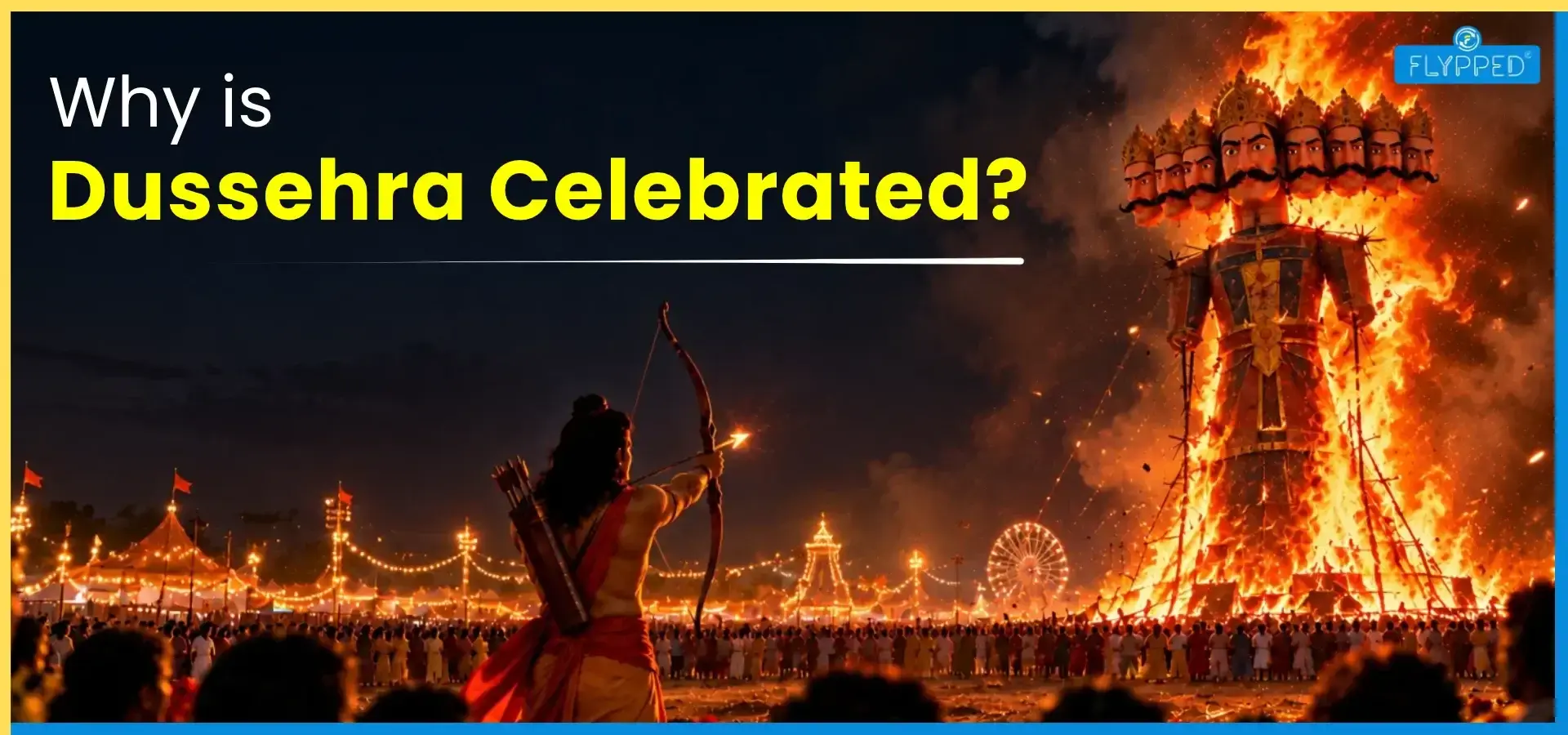
Every October, effigies of Ravana burn across India, but the festival is far older and deeper than a bonfire. Dussehra is one of Hinduism’s most widely observed festivals, marking the victory of good over evil through two key legends. This post covers the story, meaning, date, and significance of Dussehra, answering the question, "Why is Dussehra celebrated?"
What is Dussehra? The Dushera Meaning Explained
Dussehra, also called Vijayadashami, falls on the tenth day (Dashami) of the Shukla Paksha in the Hindu month of Ashwin, right after the nine days of Sharad Navratri.
Dushera Meaning: The name is commonly traced to Sanskrit Dasha (ten) and Hara (defeat or removal), read as “defeat of the ten-headed Ravana”. Vijayadashami means “the tenth day of victory”. Note that etymology is debated.
Spelling variants include Dussehra, Dushera and Dasara, which are used for search coverage. About Dussehra, it is a festival of victory, observed across India and by the diaspora, with regional variations.
Why is Dussehra Celebrated? Two Legends Behind the Festival
Dussehra is celebrated to mark the triumph of good over evil, derived from two significant legends.
Legend 1: Lord Rama’s Victory Over Ravana (The Dussehra Story)
In the epic Ramayana, Ravana abducts Sita, and Rama, with Lakshmana, Hanuman, and the vanar sena, wages war on Lanka. Rama defeats and slays the ten-headed Ravana on the tenth day. Ravana’s ten heads are often interpreted as ten inner vices (lust, anger, greed, ego and so on). This victory connects to the tradition of Ram Leela and Ravana Dahan.
Legend 2: Goddess Durga’s Triumph Over Mahishasura
From the Devi Mahatmya, Durga defeats the buffalo demon Mahishasura after a nine-night battle, and the victory is celebrated on the tenth day. This legend links to Navratri and Durga Puja, especially in Bengal, Odisha, Assam and Bihar, where Vijayadashami marks the immersion of the Goddess.
Other Traditions Linked to the Day
The Pandavas retrieving their weapons from the Shami tree before returning from exile is a Mahabharata tradition. Shami tree worship and the exchange of Shami/Apta leaves occur in parts of India. Ayudha Puja (worship of tools and instruments) and Vidyarambham (initiating children into learning) are especially significant in South India.
Significance of Dussehra: Spiritual and Cultural Meaning
The triumph of dharma over adharma is the central message of Dussehra. It represents the inner victory of conquering ego, anger and other vices, which is the main spiritual takeaway. Vijayadashami is considered auspicious for starting new ventures, and the Vijay Muhurat is regarded as especially favourable. The festival reveres the divine feminine and knowledge, tools, and craft. Community and culture come together through Ram Leela performances, fairs and family gatherings.
Dussehra Date and Muhurat 2026
Dussehra date 2026: Tuesday, 20 October 2026, is the tenth day of Sharad Navratri (11–20 October). The date changes every year because it follows the lunar calendar (tithi), not the Gregorian one.
| Festival | Date | Vijay Muhurat | Ravan Dahan Time |
| Dussehra | 20 October 2026 | Approx. 2:00 PM to 3:06 PM | Varies by location |
Caution on timings: published Vijay Muhurat windows vary by source and city, so readers should check a local panchang or temple calendar for accuracy.
How is Dussehra Celebrated Across India?
Dussehra is celebrated in various ways across different regions:
- North India: Communities stage elaborate Ramlila plays, culminating in the symbolic burning of large effigies of Ravana, Kumbhakarna, and Meghnada.
- Kullu, Himachal Pradesh: The Kullu Dussehra festival is known for its grand celebrations. Kullu Dussehra is a massive assembly of 200 to 300 local village gods and goddesses (devtas and devis) brought in decorated palanquins.
- Mysuru, Karnataka: Mysore Dasara is celebrated to honor the victory of Goddess Chamundeshwari (a form of Durga) over the demon Mahishasura, symbolizing the triumph of good over evil.
- West Bengal and Eastern India: Devotees immerse Durga idols in rivers and partake in Sindoor Khela.
- South India: Families set up Golu/Bommala Koluvu displays, perform Ayudha Puja and celebrate Vidyarambham.
What can We Learn From Dussehra Today?
Practical spiritual takeaways include self-reflection, letting go of one vice, and starting a positive habit. A short list of Dussehra rituals at home includes Shami puja, worship of Goddess Aparajita, Ayudha Puja, and charity. This approach is practical and non-preachy.
Final Thoughts
In recap, Dussehra is celebrated for two legends that convey one message: the victory of good over evil. This festival encourages inner victory and reflection. Wishing everyone a happy Dussehra filled with joy, unity and spiritual growth.
Frequently Asked Questions
Find answers to common questions about this topic
Dussehra is celebrated to mark the victory of good over evil through the legends of Lord Rama and Goddess Durga.
The festival commemorates Lord Rama’s victory over Ravana and Goddess Durga's conquest of Mahishasura.
Dushera means the defeat of Ravana, symbolizing the victory of good over evil.
Dussehra in 2026 falls on 20 October, with celebrations continuing into 21 October depending on local timings.
The significance lies in its celebration of dharma over adharma, as well as community bonding and cultural practices.
Dussehra is the tenth day, immediately following the nine nights of Navratri.
Yes, the terms are used interchangeably.