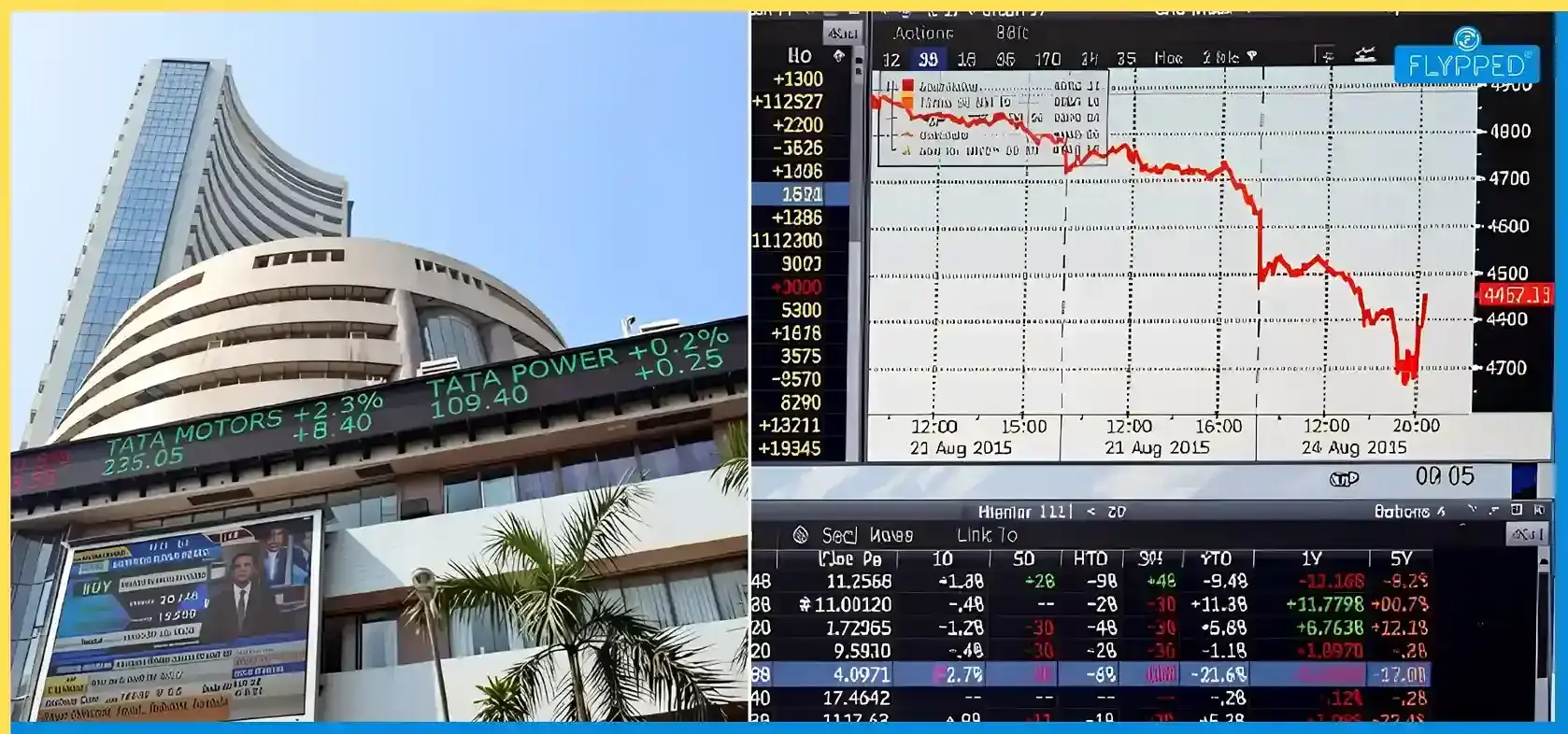
NSE vs BSE: Understanding the Key Differences, Market Share & Trading

Introduction
If you have recently been introduced to the stock market, two terms you must have come across are NSE and BSE.
They are both major stock exchanges in India and play a key role in buying and selling shares. But what drives interest among beginners is understanding the difference between the NSE and the BSE.
The obvious question that arises in mind is which is better than the other? And which one makes a better option for new investors?
Having knowledge of NSE vs BSE is essential because stock exchanges are where buyers and sellers meet to trade financial securities.
Although the NSE and the BSE share basic functions, they differ in market indices, popularity, history, listed firms, and trading activity.
NOTE: Get stock market news, startup trends, finance insights, business updates, and latest updates.
The National Stock Exchange (NSE) is known for its strong trading volumes and its popular NIFTY 50 index. The Bombay Stock Exchange (BSE) is much older and is known for the SENSEX index.
For someone who is new to the stock market, the differences between these might seem challenging in the beginning, but once you become familiar with their functioning, it becomes easier to understand.
To understand it better, read this guide, which explains NSE vs BSE in a very simple way.
Today you will know about their key features, discuss their market share, and provide a briefing on which of these exchanges makes a suitable option for beginners.
NSE and BSE Full Form & Meaning
As mentioned above, NSE stands for National Stock Exchange and is one of the key stock exchanges in India.
It serves as an electronic platform that enables investors and traders to buy and sell shares. This exchange also operates in other financial products.
Coming to BSE, which stands for Bombay Stock Exchange, it is one of the older stock exchanges in Asia. This exchange allows trading in shares and other securities.
The one common thing to notice in these exchanges is the connectivity between buyers and sellers.
For example, if someone wants to purchase shares of a company, he can place his order through a broker on a stock exchange.
Similarly, if anyone wishes to sell those shares, they must place a sell order. When it is being done, the exchange’s trading system then helps match these orders.
So, when comparing NSE vs BSE, the important point to remember is that both are stock exchanges but differ in features, indices, history, and trading activity.
What is a Stock Exchange?
A stock exchange is a marketplace where financial securities, such as shares, are bought and sold.
You can consider it as a digital marketplace wherein, instead of purchasing clothes or groceries, people trade shares of companies through a stock exchange.
Companies make the best use of stock markets in raising money from investors and on the other hand, investors buy shares and become part-owners of those companies.
Stock exchanges also help provide a structured and regulated trading environment. In India, SEBI (Securities and Exchange Board of India) regulates stock market activities.
Both the NSE and the BSE are among the best-known Indian stock exchanges. Investors can use both of these platforms through their stockbroker or trading platform.
One more important fact to know is that if you are an investor, there is no mandatory need to choose one exchange, as many brokers prefer access of both NSE and BSE.
NSE vs BSE Difference
The basic functions of NSE and BSE are similar, but there are several differences between them.
| FEATURE | NSE | BSE |
| Full form | National Stock Exchange of India | Bombay Stock Exchange |
| Established | 1992 | 1875 |
| Main index | NIFTY 50 | SENSEX |
| Trading activity | Generally higher | Generally lower than NSE |
| Technology | Electronic trading platform | Electronic trading platform |
| Location | Mumbai | Mumbai |
| Popularity | Very popular among active traders | Popular for its long history and wide company listing |
The major difference between these stock exchanges lies in their history. BSE has a longer history, dating back to the 19th century, while NSE came much later and has since become a popular contemporary electronic trading system.
Another key difference to point out is the trading volume. Generally, NSE has higher trading activity in the equity market, indicating the highest number of shares traded on it compared to BSE.
Well, by saying this does not mean devaluing BSE, which holds equal importance. It has the largest number of listed companies and remains a key part of India’s financial market.
NSE vs BSE Market Share
Market share is another important part of the NSE vs BSE comparison.
In simple terms, market share shows how much trading activity occurs on one exchange relative to the total market.
NSE has traditionally held a larger share of India's equity trading activity, especially in cash and derivatives markets. Its high trading volumes make it especially popular among active traders.
BSE also has a significant presence and has a large number of listed companies. However, its trading volume across many segments is generally lower than the NSE's.
Higher trading activity can be useful because it often means greater liquidity. Liquidity means how easily an asset can be bought or sold without causing a large change in its price.
For beginners, however, market share should not be the only factor they consider.
If a company is available on both exchanges, the difference for a long-term investor may be less important than factors such as the stock's price, investment goal, company fundamentals, and brokerage costs.
NSE vs BSE Stocks: What’s the Difference?
A common question among beginners is whether NSE stocks and BSE stocks are different.
In many cases, the same company can be listed on both NSE and BSE. For example, a large Indian company may have its shares available for trading on both exchanges.
The company is the same, but the exchange where the trade takes place can be different.
Suppose you want to buy shares of a company that is listed on both exchanges. You may see separate NSE and BSE trading options on your broker's app.
The price on both exchanges is usually very close because traders can compare prices and market participants can move between exchanges.
Small price differences can sometimes occur because buying and selling activity is not exactly the same at every moment.
Therefore, NSE vs BSE stocks do not usually mean that you are buying two completely different versions of the company's shares. The key difference is the exchange through which the transaction is executed.
Key Indices: NIFTY vs SENSEX
One of the easiest ways to understand the difference between the NSE and the BSE is to look at their main stock market indices.
NSE's best-known index is NIFTY 50 and BSE's best-known index is SENSEX.
An index is a group of selected stocks that is used to represent a part of the market. Investors and analysts use indices to understand how the stock market is performing.
NIFTY 50 tracks 50 major companies listed on NSE. SENSEX tracks 30 major companies listed on BSE.
Both indices include companies from important sectors of the Indian economy.
For example, if NIFTY 50 rises, it generally means that the combined performance of its constituent companies has been positive.
Similarly, a rise in SENSEX generally reflects positive movement among its constituent companies.
NIFTY vs SENSEX at a Glance
| POINT | NIFTY 50 | SENSEX |
| Exchange | NSE | BSE |
| Number of companies | 50 | 30 |
| Purpose | Tracks major NSE-listed companies | Tracks major BSE-listed companies |
| Common use | Market performance indicator | Market performance indicator |
NIFTY and SENSEX are both widely followed. One is not automatically better than the other. They simply track different baskets of stocks.
Advantages and Disadvantages of NSE
Advantages of NSE
1. High trading activity
NSE generally has strong trading volumes. High activity can make it easier for buyers and sellers to find matching orders.
2. Strong popularity among traders
NSE is widely used by retail investors, traders and financial institutions.
3. Popular benchmark index
NIFTY 50 is one of India's most widely followed market indices.
4. Electronic trading
NSE has a modern electronic trading system that allows orders to be placed quickly through brokers and trading platforms.
Disadvantages of NSE
1. Not every stock is exclusive to NSE
Many companies are listed on both the NSE and the BSE, so the NSE does not automatically provide access to every possible investment opportunity.
2. High activity can encourage frequent trading
Because NSE is highly active, some beginners may be tempted to trade too frequently. Frequent trading can increase costs and risk.
3. Market movements can be fast
Active markets can experience quick price changes. New investors need to understand risk before placing trades.
Advantages and Disadvantages of BSE
Advantages of BSE
1. Long history
BSE has a very long history and is one of the oldest stock exchanges in Asia.
2. Large number of listed companies
BSE has a broad universe of listed companies, including many smaller companies.
3. SENSEX is widely followed
SENSEX is one of India's most famous stock market indices and is often used as a quick indicator of market sentiment.
4. Electronic trading
BSE also provides electronic trading facilities through modern market infrastructure.
Disadvantages of BSE
1. Lower trading activity in many segments
Compared with NSE, BSE generally has lower trading activity in several important market segments.
2. Lower liquidity for some stocks
Some stocks may have less trading activity on BSE. Lower liquidity can sometimes make it harder to buy or sell a stock at the desired price.
3. Less popular among active traders
NSE is generally more popular for high-volume trading, particularly among active traders.
NSE and BSE Difference in Trading Experience
For most beginners, the trading experience on NSE and BSE may feel quite similar because investors usually access both through the same broker or trading application.
You can search for a company, select the exchange, enter the number of shares, and place a buy or sell order.
The biggest practical difference can be liquidity.
When more buyers and sellers are active in a stock, orders may be matched more easily. This can be especially important for people who trade frequently.
For a long-term investor, however, the exchange itself may not be the most important factor.
The investor should focus more on why they are buying the stock, the company's financial performance, valuation, risk, and investment time horizon.
NSE vs BSE India: Which is More Popular?
When comparing NSE vs BSE India, NSE is generally considered more popular for trading activity and daily market participation.
NSE has become especially important for active trading and derivatives. Its NIFTY 50 index is also closely watched by investors in India and around the world.
BSE, however, remains highly important because of its long history, large listed-company universe, and the popularity of SENSEX.
So, the answer depends on what we mean by "popular."
If we are talking about trading activity, NSE usually leads. If we are talking about historical importance, BSE has a unique position because of its long history.
Both exchanges are important parts of India's financial system.
BSE or NSE: Which is Better for Beginners?
This is one of the most common questions in the NSE vs BSE debate.
The simple answer is that neither exchange is automatically better for every beginner.
If you are investing for the long term and the same stock is available on both exchanges, the difference may not be very important. Your decision should be based on factors such as price, liquidity, brokerage charges, investment strategy, and your financial goals.
NSE may be convenient for investors who prefer higher trading activity and liquidity.
BSE may also be suitable, particularly when a company is available there, and the investor has a reason to use that exchange.
For beginners, the most important thing is not simply choosing NSE or BSE. It is learning how the stock market works, understanding risk, and avoiding decisions based only on short-term price movements.
Factors to Consider Before Choosing NSE or BSE
Before choosing between NSE and BSE, consider the following factors:
1. Liquidity
Check how actively the stock is traded. Higher liquidity can make buying and selling easier.
2. Trading volume
Trading volume tells you how much activity is taking place in a stock or market.
3. Stock availability
Not every stock has exactly the same listing situation. Check whether the company you want to buy is available on your preferred exchange.
4. Brokerage and other charges
Compare the charges your broker applies. These costs can affect your overall returns, especially if you trade frequently.
5. Your investment goal
A long-term investor and a short-term trader may have different needs.
6. Bid-ask spread
The bid is the price buyers are willing to pay, while the ask is the price sellers want. A smaller difference between the two can be helpful when trading.
7. Your broker's platform
Most modern trading platforms make it easy to access both exchanges. Check how the exchange options are displayed and whether your broker provides the services you need.
Common Myths About NSE vs BSE
There are several common misconceptions about NSE vs BSE.
Myth 1: NSE stocks are better than BSE stocks
This is not necessarily true. The quality of an investment depends mainly on the company and its financial outlook, not simply on whether you buy it on the NSE or the BSE.
Myth 2: BSE is outdated
BSE has a long history, but it also operates an electronic trading platform and remains an active stock exchange.
Myth 3: You need separate accounts for NSE and BSE
Usually, investors can access both exchanges through the same trading and demat account, depending on the broker and services available.
Myth 4: NIFTY is better than SENSEX
NIFTY 50 and SENSEX serve similar purposes but track different groups of companies. One is not simply "better" than the other.
Myth 5: Beginners should always use NSE
NSE's higher liquidity can be useful, but beginners should focus first on learning the basics of investing, managing risk, and choosing suitable investments.
Final Verdict
The NSE vs BSE comparison becomes much easier once you understand that both exchanges perform a similar basic job: they provide a marketplace where securities can be traded.
NSE is generally known for higher trading activity, strong liquidity, and the NIFTY 50 index.
BSE has a much longer history, a large universe of listed companies, and the well-known SENSEX index.
For most beginners, there is no need to think of NSE and BSE as a choice between a "good" exchange and a "bad" exchange. Both are important and regulated parts of India's stock market.
If the same stock is available on both exchanges, investors should consider practical factors such as liquidity, trading volume, price, costs, and their own investment strategy.
Most importantly, choosing NSE or BSE does not guarantee profits. Stock market investments carry risk, and beginners should understand those risks before investing.
In short, NSE may be preferred for its higher trading activity, while BSE is valued for its history and broad market presence.
For a beginner, understanding the market is more important than simply choosing NSE or BSE.
Read More:
- Psychology of Money
- Short Term vs Long Term Capital Gains
- Benefits of Fixed Deposit
- Difference Between a Debit and Credit Card
- Best Passive Income Ideas in 2026
- How to Start a Small Business in India
- Digital Gold vs Gold ETF
- Active Income and Passive Income
- What is Treasure NFT?
- How to Start Trading as a Student?
Frequently Asked Questions
Find answers to common questions about this topic
Yes, you can buy a stock on NSE and sell it on BSE, provided the stock is listed on both exchanges. The shares must be credited to your demat account before you can sell them on the other exchange.
The number of listed companies changes regularly. NSE has more than 2,500 listed companies, while BSE has more than 5,000. Many companies are listed on both exchanges.
Both NSE and BSE are regulated stock exchanges and are considered reliable. NSE generally has higher trading volumes and liquidity, while BSE is India's oldest stock exchange. The choice depends on your trading requirements.
NSE is often preferred for its higher trading volume, strong liquidity, advanced trading infrastructure, and popularity among active traders. Its Nifty 50 index is also one of India's most widely followed market benchmarks.
Both NSE and BSE use electronic trading systems designed for fast order execution. For most retail investors, the difference in execution speed is unlikely to be significant, although NSE generally has higher liquidity and trading activity.
BSE itself is a stock exchange, not a stock you buy in the same way as a listed company. If you mean BSE Ltd., its long-term investment potential should be evaluated based on its financial performance, valuation, growth prospects and risks.
No stock can guarantee a 100% return. A stock may double in value, but such returns usually involve significant risk and cannot be predicted with certainty. Investors should consider fundamentals, valuation and risk before investing.