Career Counselling After 12th: Smart Guide for Students to Make the Right Career Choice
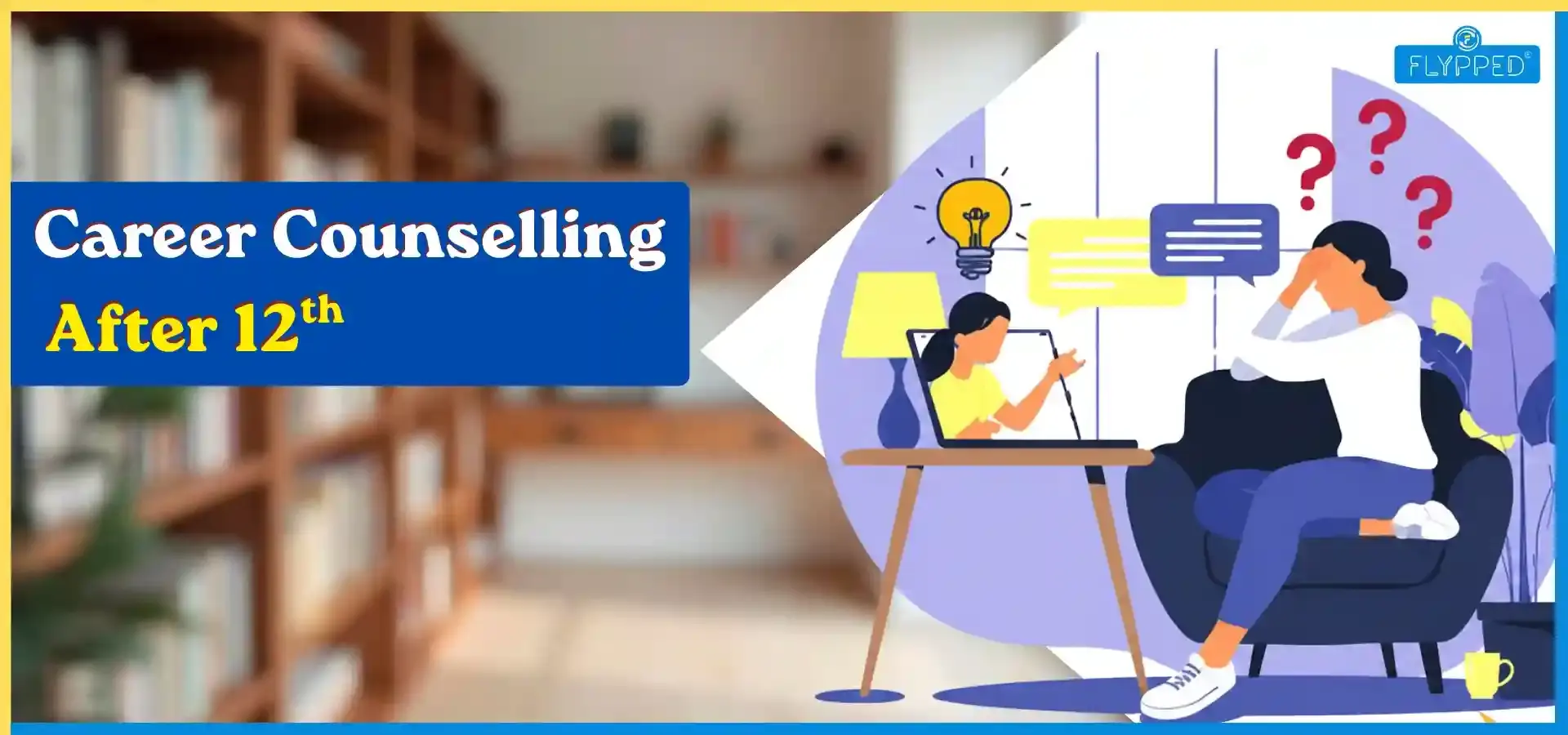
Every year, millions of Indian students sit for their Class 12 board exams carrying not just exam pressure but a far heavier burden, the question of what comes next. The decision made in the months following the boards can shape the next decade of a student's life. Yet most students make this decision with little more than peer pressure, parental expectations and a handful of overheard opinions as their guide. This is precisely why career counselling is no longer a luxury rather a necessity. This blog breaks down everything you need to know about career counselling for students in India addressing what it is, why it matters, how aptitude tests help and how to build a career plan that is rooted in reality.
What is Career Counselling?
Career counselling is a structured professional process that helps students identify their strengths, interests, personality traits and academic aptitude and then maps these to real-world career paths and educational opportunities. It is not about telling students what to do. It is about equipping them with self-knowledge and information so they can make confident, informed decisions.
Career counselling for students in India typically covers three core areas called self-assessment (who you are), career exploration (what is out there) and action planning (how to get there). A skilled career counsellor uses a combination of psychometric tools, one-on-one conversations and industry knowledge to guide students through all three.
NOTE: Find education news, career advice, exam updates, study resources, and latest updates.
Importance of Career Counselling for Students
India produces one of the largest cohorts of 12thgrade graduates in the world. Yet a significant proportion of these students end up in careers they are mismatched for not because they lacked talent but because they lacked guidance. The importance of career counselling lies in closing this gap between potential and outcome. Here is why it matters so profoundly at the Class 12 stage:
- Decisions made after 12th directly determine college, course and career trajectory.
- Students are at an age where identity and interests are still forming, professional guidance prevents costly mistakes.
- The Indian job market is changing fast; counsellors provide updated, relevant career information that families often lack.
- First-generation college students especially benefit from structured guidance they cannot get at home.
Choosing the right career is not about picking the most prestigious option. It is about finding the intersection of aptitude, interest and opportunity and career counselling helps students locate that intersection precisely.
Benefits of Career Counselling
The benefits of career counselling extend well beyond the immediate decision of which college or course to pursue. Students who go through proper career counselling report:
- Greater clarity and confidence in their choices
- Reduced anxiety about the future
- Better alignment between their personality and their chosen field
- Higher academic motivation because they understand why they are studying what they are studying
- Fewer mid-course corrections and dropouts
From a practical standpoint, career counselling also helps students discover options they would never have considered on their own ranging from niche science and technology fields to emerging roles in creative industries, policy and entrepreneurship. It broadens the horizon at exactly the right moment.
Why Students Experience Option Fatigue While Choosing Careers
A 12th grader in India today faces a paradox of choice. There are hundreds of undergraduate programmes, dozens of entrance exams and career paths that simply did not exist a generation ago. Rather than making decisions easier, this abundance of options often leads to option fatigue. It is described as a state of mental exhaustion and decision paralysis caused by too many choices.
Fatigue in students at this stage is not just emotional. It has real consequences like students delay decisions, default to safe but misaligned choices or simply follow what their friends are doing. Signs of option fatigue include:
- Feeling overwhelmed when researching colleges or courses
- Constantly changing one's mind without moving forward
- Avoiding the topic altogether
- Choosing purely based on what family or peers expect
Career counselling directly addresses option fatigue by narrowing the field. Instead of a student staring at 500 possible careers, a counsellor helps them identify 5 to 10 that genuinely fit and then provides clear, actionable next steps toward each one.
The Role of Aptitude Tests in Career Counselling
Aptitude tests are among the most scientifically validated tools in career counselling. An aptitude test for students measures natural abilities like verbal reasoning, numerical aptitude, spatial thinking, logical reasoning and more rather than learned knowledge. The results reveal where a student is likely to excel with effort and training. But aptitude tests are only one part of a broader assessment toolkit. Effective career counselling in India uses several types of instruments:
- Aptitude Tests- Measure cognitive strengths and natural abilities across verbal, numerical, spatial and analytical domains.
- Interest Inventories- Identify whether a student's orientation is Realistic, Investigative, Artistic, Social, Enterprising, or Conventional; each linked to clusters of suitable careers.
- Personality Assessments (e.g., MBTI, Big Five)- Examine traits like introversion/extroversion, conscientiousness, and openness to experience, all of which influence career satisfaction.
- Emotional Intelligence (EQ) Assessments- Evaluate self-awareness and interpersonal skills, particularly relevant for careers in management, healthcare, education and social work.
- Learning Style Inventories- Determine how a student absorbs information best, which informs not just career fit but also the best learning environments and academic strategies.
Used together, these tools give both student and counsellor a rich, multi-dimensional picture far more reliable than gut feeling alone.
Career Guidance After 12th: Choosing the Right Stream-Based Career
One of the most practical forms of career guidance after 12th is stream-based counselling which help students understand what their chosen stream genuinely opens up for them, and what it does not.
| Science Stream Career Options | Commerce Stream Career Options | Arts Stream Career Options |
| Engineering and Technology (Computer Science, Mechanical, Civil, Aerospace, AI) | Chartered Accountancy (CA) and Cost Accounting (CMA) | Journalism, Mass Communication and Media |
| Medicine and Allied Health (MBBS, BDS, Physiotherapy, Optometry) | Business Administration and Management (BBA/MBA) | Psychology and Counselling |
| Pure Sciences (Physics, Chemistry, Mathematics, Biology leading to research and academia) | Economics and Finance | Law and Political Science |
| Architecture and Design | Banking and Financial Services | Fine Arts, Design and Animation |
| Data Science, AI and Machine Learning | Corporate and Taxation Law | Social Work and Development |
| Environmental Science and Sustainability | Actuarial Science | Literature, Linguistics and Content Creation |
| Pharmacy and Biotechnology | Digital Marketing and E-Commerce | History, Archaeology and Heritage Management |
Career counselling helps students from every stream see their full range of options not just the obvious ones.
How to Create an Effective Career Plan for Students
A career plan for students is not a rigid roadmap rather a living document that gives direction while allowing for course corrections. Here is a practical framework:
- Step 1: Self-Assessment- Complete aptitude, interest and personality assessments. Identify strengths and potential areas of challenge.
- Step 2: Career Exploration- Research 5-10 career options that match your profile. Speak to professionals in those fields. Look at realistic job outcomes, not just aspirational ones.
- Step 3: Goal Setting- Set a short-term goal (which stream/course to pursue), a medium-term goal (which college or programme) and a long-term goal (the career role you are working toward).
- Step 4: Action Planning- Map out the entrance exams to take, the skills to build and the timelines involved. Include contingency options.
- Step 5: Review and Revise- Revisit the plan every 6-12 months. Goals change as students grow, the plan should reflect that.
A good career counsellor does not just hand a student a plan. They build the plan collaboratively, ensuring the student owns it and understands every step.
Higher Education Guidance: Selecting the Right Course and College
Higher education guidance is one of the most practically valuable components of career counselling. The Indian higher education system is vast and often confusing with hundreds of universities, dozens of entrance exam systems and varying quality across institutions. Students need guidance on:
- Understanding the difference between central universities, state universities, deemed universities and autonomous colleges
- Identifying the right entrance exams (JEE, NEET, CLAT, CUET, CAT and many others)
- Evaluating colleges on factors beyond ranking faculty quality, industry connections, placement records, campus culture
- Exploring scholarship and financial aid options
- Considering study abroad opportunities and when they make sense
The right course at the right institution can make an enormous difference to career outcomes. Choosing the right career also means choosing the right learning environment and that requires informed, personalized guidance.
Common Career Counselling Mistakes Students Should Avoid
Even students who seek career counselling sometimes undermine the process. Here are the most common pitfalls:
- Following trends blindly- What is hot today may be saturated by the time you graduate. Choose based on aptitude and interest, not hype.
- Ignoring assessment results- If your aptitude tests consistently point away from a field that is data worth taking seriously.
- Treating it as a one-time event- Career counselling is most effective as an ongoing process, not a single session.
- Letting parents decide entirely- Parents provide important perspective, but the career belongs to the student. Their voice must be central to the process.
- Waiting too long- Ideally, career counselling should begin in Class 10 or early Class 11, not after the boards are over.
How Parents Can Support Career Decision-Making
Parents play a critical role in career decisions for better or worse. The most helpful thing parents can do is create an environment where their child feels safe to explore and make mistakes. Practically, this means:
- Listening to the student's interests without immediately redirecting toward 'safer' options
- Learning about careers beyond medicine, engineering, and law as the landscape has changed dramatically
- Participating in career counselling sessions when the counsellor recommends it
- Distinguishing between their own aspirations and their child's aptitudes and interests
- Supporting the process of self-discovery even when it leads to unexpected choices
The best career decisions come when students and parents are aligned and career counselling creates the structured space for that alignment to happen.
The Future of Career Counselling in India
Career counselling in India is at an inflection point. The traditional model which involves a single meeting, a printed brochure of college options, a generic suggestion is giving way to something far more sophisticated. The future of career counselling in India involves:
- AI-driven assessment tools that provide nuanced, personalized career mapping
- Online counselling platforms that make quality guidance accessible to students in Tier 2 and Tier 3 cities
- Integration of career counselling into school curriculum from Class 8 onwards
- Real-time labor market data that keeps career recommendations relevant and current
- Mentorship models where students connect directly with professionals in fields they are exploring
As India's economy diversifies and the job market evolves, the students who will thrive will be those who made informed, self-aware choices guided by professionals who helped them see themselves and the world clearly. If you are a 12thgrader in India or the parent of one, investing in proper career counselling is one of the highest-return decisions you can make right now. The right career is not found by accident. It is discovered through the right process.
Start your career counselling journey today. Your future self will thank you.
Read More:
- APAAR ID: What is It, How Is It Relevant For Students
- Pilot Course After 12th: Training, Fees & Career Salary
- How to Prepare for CAT Exam Strategy for High Score
- 10 Time Management Tips for Students: Study Smarter, Not Harder
- Bio Data Format for Job
- Top Courses That Offer Immediate Jobs for Rapid Success
- Online vs Offline Education: Which is Better?
- Study Less, Rank Higher: 7 Science-Backed Hacks to Master Any Subject
- Role of Teachers in Student Success