
IndiGo Flight Struck by Lightning at 17,000 Feet During Descent, Passengers Safe in Lucknow
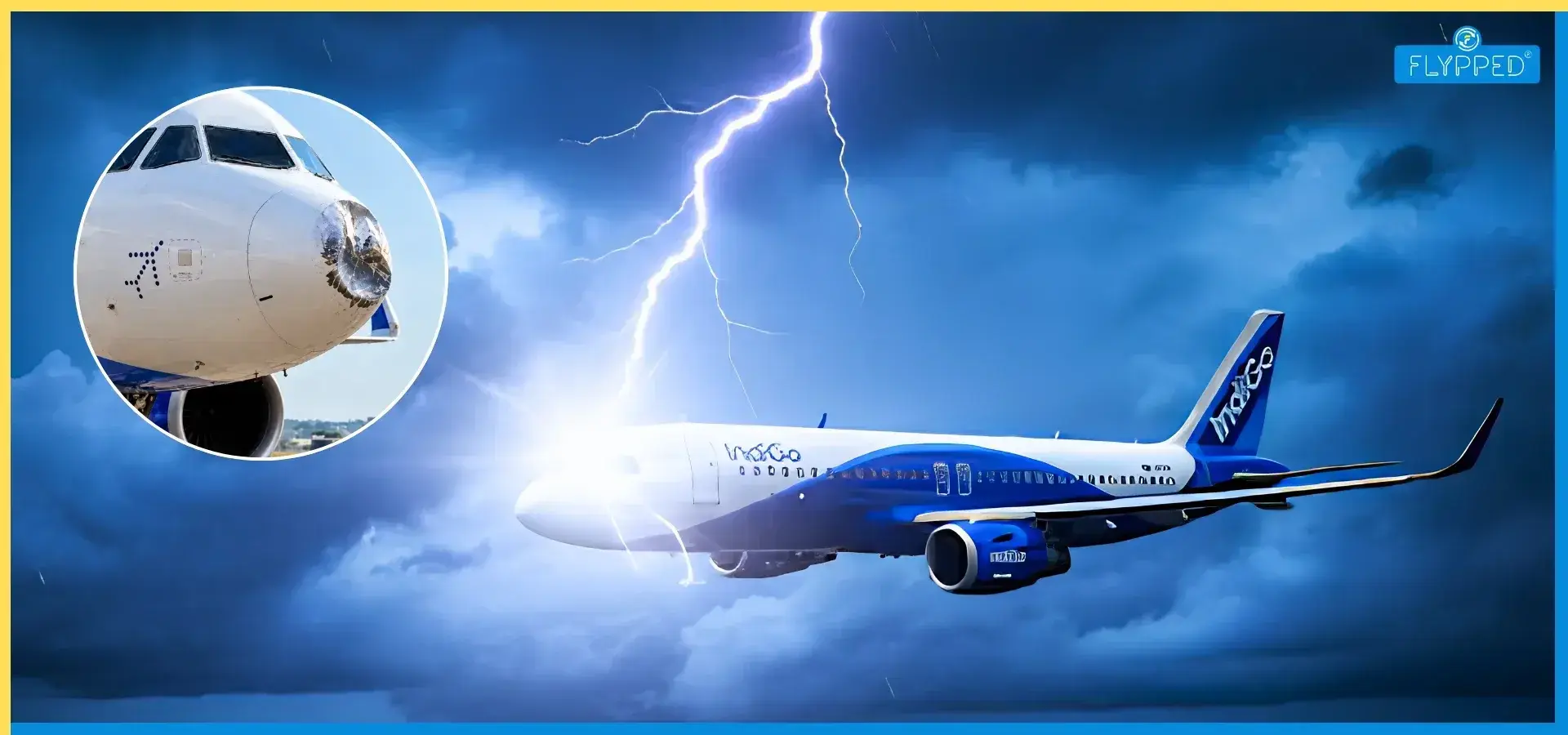
An IndiGo flight operating from Patna to Lucknow faced a dramatic incident when it was struck by lightning during its descent. IndiGo flight hit by lightning at 17000 feet: At approximately 17,000 feet, the aircraft sustained damage to its nose. Thankfully, all 104 passengers and 6 crew members aboard flight 6E925 landed safely at Chaudhary Charan Singh International Airport.
The event has raised important questions about aviation safety, particularly during adverse weather conditions. Pilots are trained to handle such emergencies, and the successful landing of this flight showcases the effectiveness of these safety protocols.
Passengers reported feeling a strong jolt, but the crew remained calm and focused, ensuring a smooth landing despite the circumstances. This incident highlights the resilience of modern aircraft and the critical importance of weather awareness in aviation. As investigations continue, the aviation community will scrutinize the details surrounding the Lucknow airport flight incident to enhance safety measures further.
NOTE: Stay informed with the latest breaking news, current affairs, top headlines, and latest updates from across the globe.
IndiGo Flight Struck by Lightning | Incident Overview
On October 7, 2026, IndiGo flight 6E925 was operating on its route from Patna to Lucknow when it experienced a lightning strike at an altitude of 17,000 feet. The incident occurred during the descent phase, as the aircraft was approaching Chaudhary Charan Singh International Airport.
Such strikes, while alarming, are relatively common in aviation, with modern aircraft designed to withstand the electrical discharge without compromising passenger safety.
Immediate Impact on Aircraft
The lightning strike caused noticeable damage to the nose of the aircraft. Fortunately, despite the impact, there were no injuries reported among the 104 passengers and 6 crew members aboard. The crew's training and adherence to safety protocols played a crucial role in managing the situation effectively.
Passengers described feeling a sudden jolt, but the flight crew quickly reassured everyone, maintaining calm and ensuring a safe landing. The swift response and professionalism exhibited by the flight team highlight the robust safety measures in place within the aviation industry.
Following the incident, the aircraft underwent a thorough inspection to assess the extent of the damage and ensure its airworthiness for future flights. This event serves as a reminder of the challenges pilots face and the importance of their training in navigating unexpected situations.
As investigations continue, the aviation community is focused on analyzing the specifics of this Lucknow airport flight incident to enhance future safety protocols and further improve passenger confidence in air travel.
Response from IndiGo Airlines | Official Statement from IndiGo
In response to the incident involving the IndiGo flight struck by lightning, the airline issued an official statement emphasizing their commitment to passenger safety. They reassured the public that all 104 passengers and 6 crew members aboard flight 6E925 were safe following the event.
The airline highlighted that modern aircraft, including the Airbus A320-251N involved in this incident, are designed to handle such strikes. IndiGo confirmed that an investigation is underway to assess the damage sustained during the strike and to understand the circumstances surrounding the event.
The airline is collaborating with aviation authorities to ensure a thorough examination of the aircraft and to reinforce safety protocols for future flights.
IndiGo Flight Emergency Landing
Following the lightning strike at an altitude of 17,000 feet, the flight crew executed established emergency landing procedures. The pilots immediately assessed the situation, ensuring that the aircraft remained stable and operational.
Coordination with air traffic control was prompt, allowing for a safe approach to Chaudhary Charan Singh International Airport. The flight crew communicated the nature of the incident and requested priority landing clearance, which was granted to ensure the safety of all onboard.
The pilots effectively utilized emergency protocols, which included checking the aircraft systems for any malfunction and preparing for a possible evacuation if necessary. Their training and experience were pivotal in managing the situation, allowing them to maintain control and safely land the aircraft despite the unexpected strike.
The swift actions taken by the IndiGo flight crew during this emergency highlight the effectiveness of airline training programs and the reliability of modern aircraft. The incident serves as a reminder of the importance of preparedness in aviation, ensuring that safety remains a top priority for all involved.
Understanding Lightning Strikes on Aircraft | Technical Aspects of Lightning Strikes
There’s a common misconception that lightning strikes can be catastrophic for aircraft. In reality, commercial planes are designed to handle such events safely. When a lightning strike occurs, the aircraft's metal structure acts as a Faraday cage, allowing the electrical discharge to travel along the exterior and exit without causing severe damage inside.
Modern aircraft are equipped with various engineering features to protect them during such strikes. These include:
- Conductive Materials: Aircraft are built using conductive materials that help disperse the electrical charge safely.
- Shielding: Critical components like fuel tanks and electrical systems are shielded to prevent damage from lightning.
- Regular Inspections: Airlines conduct thorough inspections post-strike to ensure that no hidden damage compromises safety. Pilots receive extensive training to deal with the aftermath of a lightning strike, ensuring that they can maintain control and execute safe landings, as seen with the IndiGo flight incident.
Statistics on Lightning Strikes in Aviation
Understanding the frequency and impact of lightning strikes in aviation provides insight into aircraft safety. Here’s a quick overview of statistics over recent years:
| Year | Number of Strikes | Incidents with Damage | Safe Landings |
|---|---|---|---|
| 2023 | 23 | 5 | 18 |
| 2024 | 30 | 7 | 23 |
| 2025 | 25 | 4 | 21 |
These numbers indicate that while lightning strikes aren't uncommon, incidents resulting in significant damage are relatively rare. The majority of flights, like the Patna Lucknow IndiGo flight, manage to land safely even after experiencing a lightning strike.
Understanding these statistics helps demystify the risks associated with flying during thunderstorms and reinforces confidence in modern aviation safety measures.
Overall, lightning strikes are taken seriously, but they are not the doom and gloom often portrayed in popular media. Airlines and pilots are well-prepared to handle such situations, ensuring passenger safety remains paramount.
Importance of Training and Safety Measures
The incident at Chaudhary Charan Singh International Airport underscores the critical role of pilot training and robust safety measures in aviation. Pilots are extensively trained to respond to various emergencies, including lightning strikes, which can occur unexpectedly.
The professional response from the flight crew during this event not only reassured passengers but also highlighted the importance of preparedness in ensuring safety.
In addition to pilot training, airlines invest heavily in aircraft design and technology to withstand environmental challenges. Modern planes, like the Airbus A320 involved in this incident, are engineered to endure lightning strikes.
Their metal structures act as a Faraday cage, allowing electrical charges to travel along the exterior without impacting internal systems or passenger safety.
IndiGo Flight Latest News | After Lucknow Flight Incident, Focus Shifts to Aviation Safety
As investigations into the Lucknow airport flight incident continue, the aviation community is focused on learning from this experience.
Enhancements to safety protocols and procedures will undoubtedly emerge from the analysis of this event, reinforcing the commitment to passenger safety and confidence in air travel.
While the IndiGo flight struck by lightning serves as a reminder of the inherent risks of flying, it also illustrates the industry’s preparedness and resilience. The successful handling of the situation reinforces the importance of continuous training, technological advancements, and safety protocols in aviation, ensuring that passengers can travel with peace of mind.
Conclusion
The recent incident involving the IndiGo flight serves as a stark reminder of the potential hazards associated with aviation, particularly concerning weather conditions. The IndiGo flight struck by lightning highlights the unpredictable nature of flying, especially during thunderstorms.
Lightning strikes, while alarming, are not uncommon in aviation, and the industry has developed extensive measures to handle such situations safely. The successful management of the flight 6E925's emergency landing showcases the effectiveness of training and safety protocols in place within the airline industry.
The crew's quick thinking and adherence to established procedures ensured the safety of all on board, preventing any injuries despite the damage to the aircraft.
Read More:
- Gyanesh Kumar Contempt Plea: What Do Supreme Court Judgments Say About the CEC?
- CJP Demands Gyanesh Kumar Resignation: SIR Controversy, 48-Hour Ultimatum
- Greater Noida Bus Fire: 9 Killed, Passengers Jump from Moving Bus to Escape
- PM Modi US Visit for G20 Summit: What to Expect from Trump and QUAD Talks
- Sahil Wakode CCTV Footage: IIT Bombay Student Asked to Leave Exam Hall
- Delhi Gangrape Near Kalkaji Temple: Minor Girl Allegedly Raped by 3 Men Posing as Cops