Justice Yashwant Varma Resignation: Requests Closure of Proceedings for His Removal
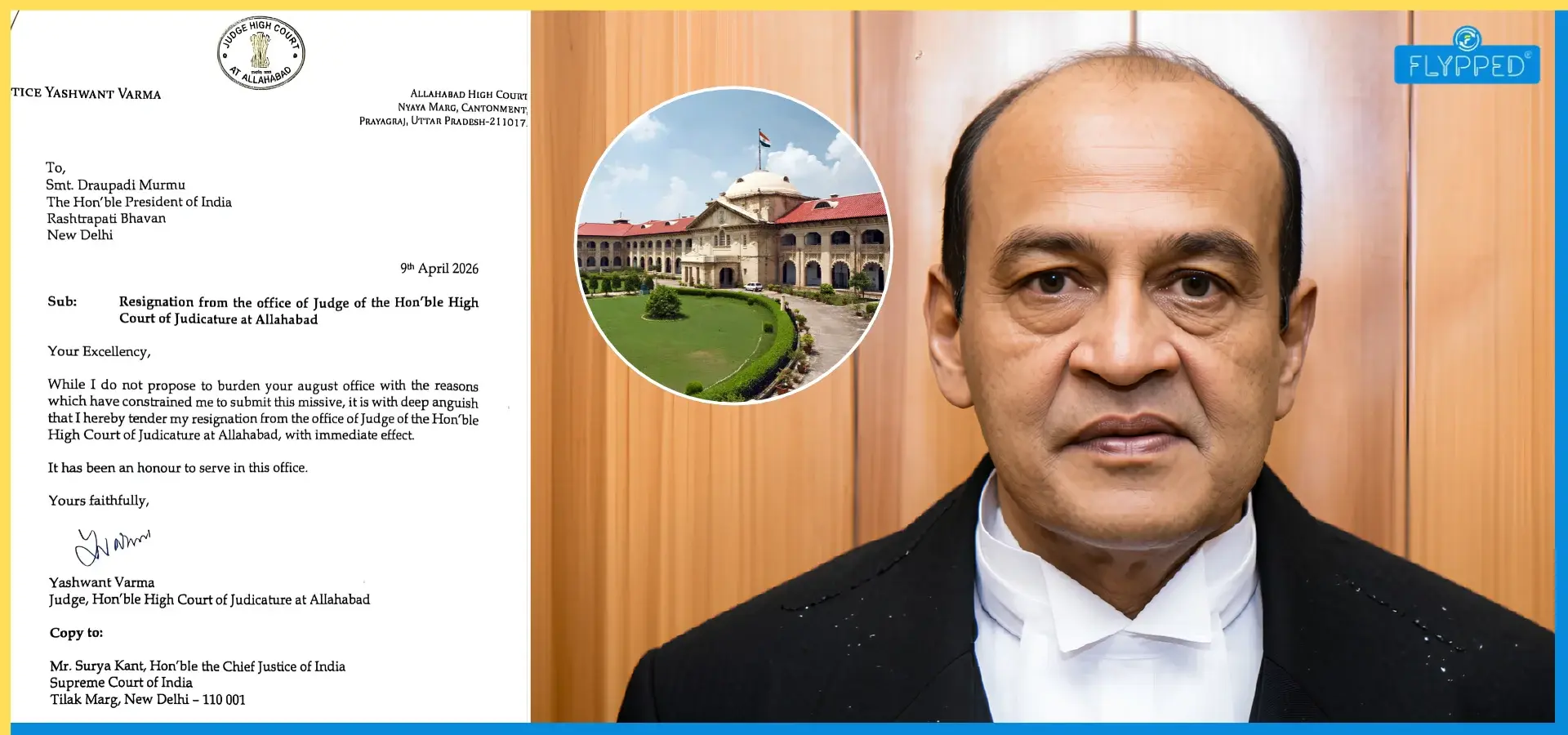
Justice Yashwant Varma Resignation: Justice Yashwant Varma says he is completely innocent of the allegations about the burnt notes found at his official residence. He makes it clear that his resignation as a High Court judge should not be construed as an admission of guilt or an acceptance of the findings against him. In a letter to Lok Sabha Secretary General Utpal Kumar Singh dated 10th September, which Members of Parliament received on Thursday, he says the proceedings for his removal are irrelevant once he resigned on 9th April.
NOTE: Stay informed with the latest breaking news, current affairs, top headlines, and Latest updates from across the globe.
Justice Yashwant Varma Resignation | Cites Constitution and 1978 SC Ruling
Justice Yashwant Varma points out that the Constitution does not permit his removal from office after he has resigned. He cites Article 217(1)(a) of the Constitution and the 1978 Supreme Court Constitution Bench judgment in 'Union of India vs Gopal Chandra Mishra' to the effect that a High Court judge's resignation takes effect automatically and does not require the approval of the President or any other authority.
Justice Yashwant Varma Case | Removal Process Invalid After Resignation, Varma Claims
Justice Yashwant Varma Resignation: Varma said that once he resigned, the process to remove him could not proceed. He maintained that the constitutional rules for removing judges apply only to judges who are in office. He explained that he had been part of the Judges Inquiry Committee's inquiry until April 9, when he resigned to the President with immediate effect. He had raised issues about how the inquiry was being conducted and had preserved his right to challenge the findings.
Justice Yashwant Varma Inquiry Committee Report | Varma Requests Letters & Attachments Be Placed Before Both Houses of Parliament
Justice Yashwant Varma Resignation: Choosing not to comment on the report or take part in any further process, Varma requested that his letter and the attachments be placed before both Houses of Parliament so the matter could be considered. The three-member inquiry committee set up by Lok Sabha Speaker Om Birla found all three charges against Varma proven in its report, which was presented in Parliament on August 12.
Removal Proceedings Initiated Against Justice Yashwant Varma Over Unexplained Cash Recovery
Yashwant Varma removal proceedings: The charges were that he failed to explain the presence, source, and ownership of the cash found at his official residence, that he did not secure and preserve the material evidence, and that he gave evasive and unsatisfactory explanations during the inquiry. The matter arose on March 14 2025, when burnt bundles of currency notes were found at Varma's official residence following a fire.
These findings of misconduct led then CJI Sanjiv Khanna to recommend his removal. At the time, Varma was a judge of the Delhi High Court and was sent back to the Allahabad High Court, his parent court. He took the oath there on April 5 2025, but stopped performing any judicial functions.
Varma Resigns Before Inquiry Ends; Parliament Can No Longer Remove Him
Justice Yashwant Varma Resignation: Subsequently, nearly 150 MPs moved a notice calling for Varma’s removal, and the Lok Sabha Speaker set up the three-member inquiry committee under the Judges (Inquiry) Act 1968. The committee was formed in the Supreme Court, but it rejected his plea. He later withdrew from the inquiry, saying the process was unfair and lacked due process.
He said that he was not in Delhi at the time of the incident and that no cash had been recovered. He resigned on April 9 whilst the inquiry was still in progress. The committee completed the inquiry and submitted a report to Parliament. Varma is no longer a judge, and so Parliament cannot proceed with his removal.
Judges Are "Removed," Not "Impeached," Under the Indian Constitution
Justice Yashwant Varma Resignation: The Constitution provides that judges of the Supreme Court and High Courts may leave office by resignation or by removal by Parliament on the grounds of proven misbehavior or incapacity. The term 'impeachment', commonly used in India to describe the process of removing judges, does not appear in the Constitution.
Read More:
- Delhi police protest news: acp manasvi vashishta suspended after shahdara clash
- Congress protest at ramlila maidan: bjp calls india bloc rally a “flop show”
- Alphabet stock plunge: shares fall 12.6%, wiping $482 billion in market value amid ai spending concerns
- Cyclone arnab latest updates: rail services remain disrupted after heavy rain in odisha
- Grap restrictions delhi ncr
- Jio platforms nse listing: stock rises over 5% as market cap nears ₹13.5 lakh crore