
Iran Ceasefire Talks for 45 Days Amid Hormuz Tensions
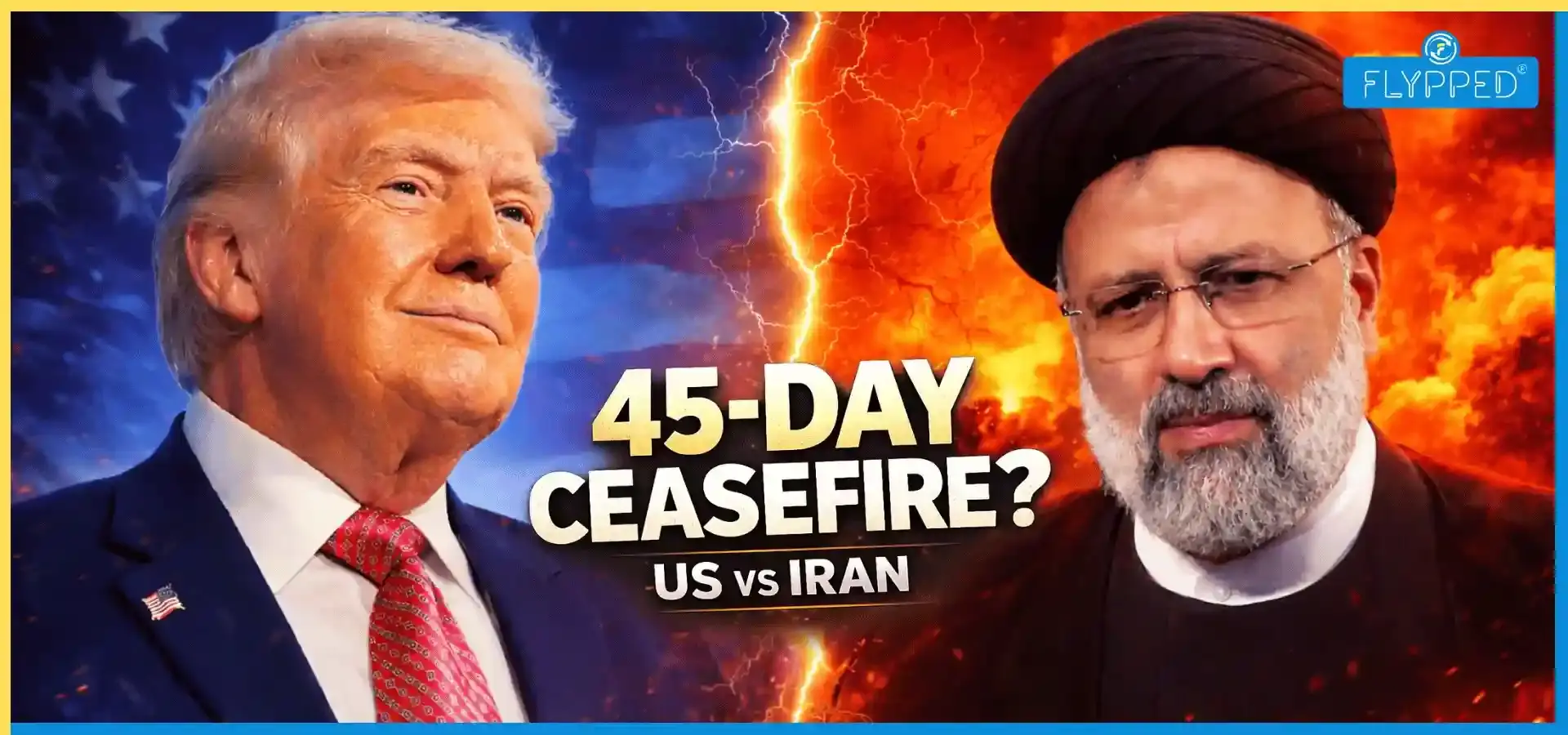
Israel-Iran war news: The United States, Iran and a group of regional mediators are reportedly in talks over the terms of a possible 45-day ceasefire that could pave the way for ending the war in West Asia.
Talks are being conducted through mediators from Pakistan, Egypt and Turkey, along with backchannel exchanges between US envoy Steve Witkoff and Iran’s foreign minister Abbas Araghchi, Axios reported, citing four sources with knowledge of the diplomatic efforts.
According to a report, there have been talks between third parties from Turkey, Pakistan, and Egypt, with backchannel exchanges between US envoy Steve Witkoff and Iran’s foreign minister Abbas Araghchi.
It also stated that the chances of the deal reaching a conclusion in the next 48 hours are very low. However, this is seen as a last effort to avoid further war.
US-Iran Conflict Updates: Trump Raising Deadline For Iran
Iran ceasefire talks: On Sunday, the US President extended his self-imposed deadline as a warning to Iran to adhere to its deal in reopening the Strait of Hormuz or else get prepared to face the worst attacks on its infrastructure.
In a cryptic post on Truth Social, Trump gave the new deadline — Tuesday, 8 PM ET.
"Tuesday, 8:00 P.M. Eastern Time!" he said in the post.
This came hours after he had posted, “Tuesday will be Power Plant Day, and Bridge Day, all wrapped up in one, in Iran. There will be nothing like it!!! Open the Fuckin’ Strait, you crazy bastards, or you’ll be living in Hell - JUST WATCH! Praise be to Allah.”
Iran-Israel Conflict: Oil Markets Hit Due To Iran’s Strait of Hormuz Blockade
Following the US-Israel joint attack on Iran, since February 28, Iran has decided to block the Strait of Hormuz, which is known to be the main route for the world’s oil and gas.
This blockade led to serious global tensions over oil routes, driving up oil prices worldwide and putting pressure on Trump ahead of the mid-term election year in the United States.
Ever since his address to the nation on Wednesday, Trump has not attended any public events. He did give short interviews to media outlets, claimed a dramatic rescue of a US airman, and issued a strong, blunt warning to the Islamic Republic.
His words were "We are in a position that's very strong, and that country will take 20 years to rebuild, if they're lucky, if they have a country.
And if they don't do something by Tuesday evening, they won't have any power plants, and they won't have any bridges standing."
Donald Trump Iran Threat
He told Fox News he believes there is a "good chance" of making a deal with Iran on Monday.
Briefing the media, Trump shared his approach, saying it's a good chance of negotiating a deal with Iran on Monday.
And if it doesn't pay heed, he will consider causing disaster everywhere and will also claim authority over the oil.
Responding to Trump’s recent threats, Iran’s parliamentary Speaker, Mohammad Bagher Ghalibaf, called them ' reckless’ in a social media post on Monday.
As per his post on X, he mentioned: “You won’t gain anything through war crimes.” The only solution, according to him, is honouring the rights of the Iranian masses and putting an end to this havoc.
Frequently Asked Questions
Find answers to common questions about this topic
Reports suggest that the United States and Iran, along with regional mediators, are discussing a possible 45-day ceasefire. However, nothing is confirmed yet, and negotiations are still ongoing amid rising tensions in the region.
The proposed ceasefire is meant to temporarily stop fighting and create time for peace talks. It is seen as the first step in a two-phase plan that could eventually lead to a permanent end to the ongoing conflict.
The talks include the US and Iran, along with mediators from countries like Pakistan, Turkey, and Egypt. These intermediaries are helping both sides communicate and negotiate possible terms for the ceasefire.
The chances remain uncertain. Reports indicate that while talks are active, reaching even a temporary agreement quickly is difficult due to ongoing conflict, political pressure, and strict conditions from both sides.
If agreed, the 45-day ceasefire would pause military actions and allow further negotiations. During this period, both sides would try to reach a long-term peace deal and reduce the risk of further escalation in the region.