
Iran US New Deal: Iran Shares 3 Point Plan With US In Report
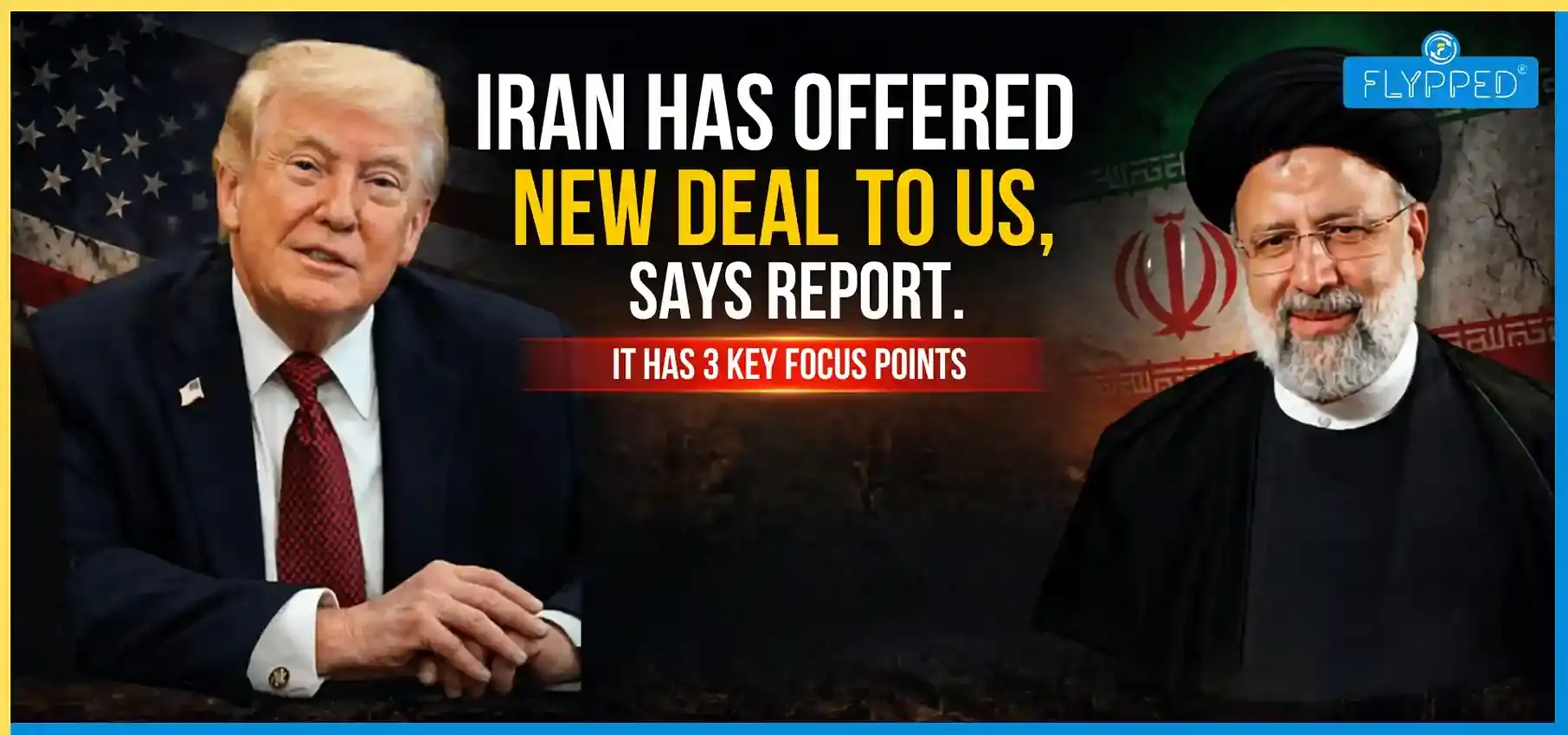
Iran US New Deal: Iran has reportedly made a new offer to the United States to end the war and reopen the Strait of Hormuz, while putting off talks about its nuclear program.
According to Axios, Pakistan acted as a mediator and delivered Iran's proposal to Washington. The plan is meant to address the crisis over the important waterway and the US naval blockade.
NOTE: Stay informed with the latest breaking news, current affairs, top headlines, and latest updates from across the globe.
Iran US New Deal: What is Included in the New Deal?
Iran's proposal to the US would reopen the Strait of Hormuz, help with the global energy crisis, end the war, and delay nuclear talks, according to a US official and two other sources mentioned in the report.
The new deal could extend the ceasefire for a longer time, or Tehran and Washington might agree to end hostilities for good.
Iran Strait of Hormuz Deal: Axios reported that nuclear talks would start later, but only after the Strait is reopened and the US lifts its naval blockade on Iranian ports.
The White House has reportedly received the proposal.
However, it remains uncertain whether the Trump administration will pursue the new deal.
White House spokesperson Olivia Wales told Axios that the US will not discuss such "sensitive diplomatic" issues through the media.
"As the president has"As the president has said, the United States holds the cards. The US will only make a deal that puts the American people first. It will never allow Iran to have a nuclear weapon," Wales added.
US Iran Peace Talks: Trump Cancels Pakistan Peace Visit Amid Rising Tensions
US Iran Peace Deal: The new proposal comes only a few days after Trump called off his envoy's planned trip to Pakistan for peace talks.
He cancelled the visit by Steve Witkoff and Jared Kushner after Iranian foreign minister Abbas Araghchi left Pakistan.
Trump said, "There is no point in sending them on an 18-hour flight given the current situation. It's too long, and much time is spent on travelling."
US Iran Negotiations: United States Demands Iran to Initiate Talks
According to the US President, if Iran wants to initiate talks, they need to call.
Araghchi has gone back to Islamabad for more talks with Pakistani mediators, as discussions with the United States remain stalled.
Besides meeting with Pakistani army chief Asim Munir, Aragchi had also met Prime Minister Shehbaz Sharif and Foreign Minister Ishaq Dar during his last visit on Saturday.
The Iranian foreign minister is now in Russia to meet with President Vladimir Putin.
Iran US New Deal: Aragchi Meeting with Russian President Vladimir Putin: Highlights
- Iran's Foreign Minister Abbas Araghchi reached Saint Petersburg on Monday, according to state media.
- The Iranian news agency IRNA said on Telegram that he arrived early in the morning to meet and hold talks with Russian President Vladimir Putin.
- Earlier, Moscow's TASS news agency confirmed that Putin plans to meet with Araghchi, quoting Kremlin spokesman Dmitry Peskov.
- Strait of Hormuz reopening: Axios reported that the Iranian plan offers a framework to reopen the Strait of Hormuz and end the conflict, suggesting there could be a breakthrough after a long period of stalled peace efforts.
- Iran's envoy in Russia, Kazem Jalali, wrote on X that Araghchi would meet with Putin “in continuation of the diplomatic jihad to advance the country's interests and amid external threats.”
- According to Jalai, both Iran and Russia are united against countries who dominate others.
- He also said that these countries (Iran and Russia) will back the nations who want independence and a world without Western dictatorship.
- On Monday, oil prices had shot up to 2% as dialogue between the United States and Iran had come to halt.
- Strait of Hormuz crisis: Also, there are not many oil shipments sailing through the Strait of Hormuz. This is why the global supply of oil remains tight.
- Brent crude futures increased by $2.16, or 2.05%, to $107.49 a barrel by 2346 GMT, the highest since April 7. U.S. West Texas Intermediate reached $96.17 a barrel, up $1.77, or 1.88%.
Frequently Asked Questions
Find answers to common questions about this topic
Iran has proposed a new deal to the United States aimed at easing tensions and restarting cooperation. The proposal focuses on improving regional stability by addressing urgent concerns like oil supply routes, ongoing conflicts, and delayed nuclear discussions, creating a step-by-step approach instead of handling all issues at once.
Iran’s proposal highlights three main priorities: reopening the Strait of Hormuz to ensure smooth global oil flow, working toward ending or reducing ongoing conflict, and postponing nuclear talks for later. This approach aims to first stabilize the region before tackling more complex and sensitive nuclear issues.
Iran is delaying nuclear negotiations to avoid immediate disagreements that could block progress. By focusing first on less controversial issues like trade routes and conflict reduction, both sides may build trust. This step-by-step strategy could make future nuclear discussions smoother and more productive for all parties involved.
The proposal was reportedly delivered through indirect diplomatic channels, including mediators from Pakistan. Since direct talks between Iran and the United States have stalled, third-party countries are playing a key role in carrying messages, reducing tensions, and helping both sides stay engaged in negotiations despite ongoing disagreements.
The United States has not officially accepted Iran’s proposal yet. Officials are still reviewing the terms and considering their strategic impact. The outcome will depend on how the deal aligns with US interests, especially regarding security, nuclear concerns, and regional stability in the Middle East.