Modi Govt's Women's Quota Bill Fails Lok Sabha Test; What's Next for BJP?
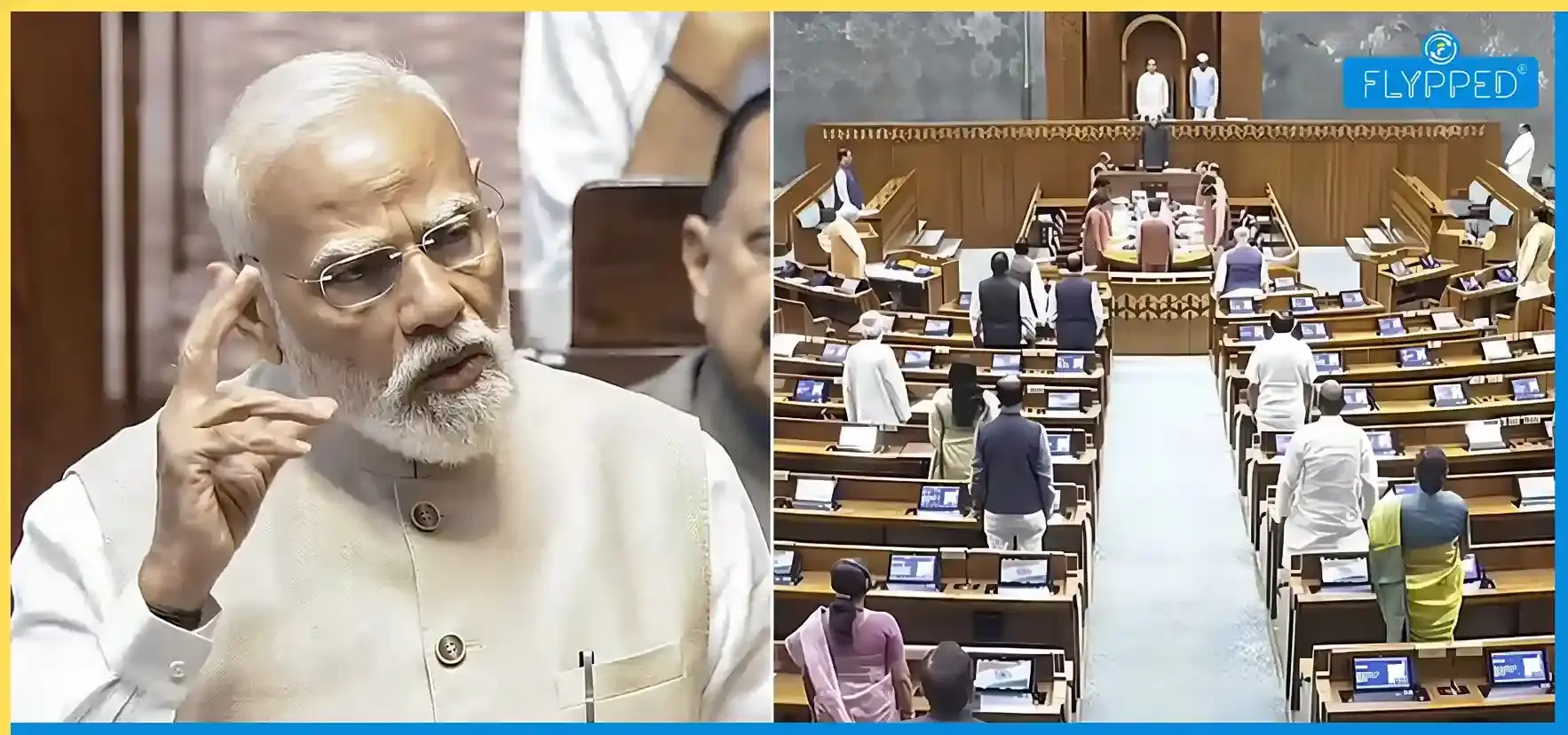
Lok Sabha latest news: The Constitution (131st Amendment) Bill 2026, proposed by the Narendra Modi Government as an amendment to the 2023 women’s reservation law, was rejected in the Lok Sabha on Friday.
Women's Quota Bill Failed: Could Not Generate Two-Thirds Majority
Following this, the bill failed to gain the two-thirds majority needed to pass. This is the government's first bill to fail since Narendra Modi became Prime Minister in 2014.
Moreover, this is also seen as the failure of the first amendment bill in the Lok Sabha since 2011. The bill got 298 votes in favour and 230 against.
Of the 528 members who voted, the bill needed 352 votes (two-thirds) to pass, but fell 54 votes short, underscoring its defeat.
Parliament News: Government Withdraws Two Other Bills
After the defeat, the government withdrew two other bills introduced alongside the women's quota bill.
The Delimitation Bill 2026, introduced along with the Women's Reservation Bill, could have redrawn constituency boundaries based on the 2011 census.
The Union Territories Laws (Amendment) Bill 2026, introduced at the same time, sought to amend the laws of Puducherry, Jammu and Kashmir, and Delhi.
The Parliamentary Affairs Minister, Kiren Rijiju, explained that the three bills were interlinked and that the government was unable to proceed further with the other two.
Bills in Lok Sabha: What Did They Suggest?
The 131st Amendment Bill proposed increasing the number of Lok Sabha (Lower House) seats from 550 to 850.
It also wanted to execute 2023 women’s reservation law (Nari Shakti Vandan Adhiniyam) soon by separating it from the next census.
According to 2023 law, women deserve to get 33% of the seats in the Lok Sabha and state assemblies. But it is only possible after the first census following the law's passing.
This means the reservation cannot be implemented before 2034, after the current census and delimitation.
The new bills also proposed to bring the reservation into action by 2029 by using the 2011 census for delimitation. But this raises concerns about fairness across regions and castes.
PM Narendra Modi News: Promises Made by the Government
Prime Minister Narendra Modi and Home Minister Amit Shah gave assurance that southern states won’t lose the seats.
Shah also offered a last-minute moderation to the bill, promising a 50% rise in seats for all states if they get support from the opposition.
But opposition didn’t pay heed to it, and rejected it, with Samajwadi Party leader Akhilesh Yadav expressing no faith in the government.
Amit Shah Criticizes Opposition for Blocking Bill, Calls It an Insult to Women Power
As per his post on X, Shah slammed opposition in not allowing such an essential Constitutional Amendment Bill for Nari Shakti Vandan Adhiniyam to pass in Lok Sabha.
Further expressing his anger, he said this is an insult to women power which is not going to stop and travel far and wide.
What Was Opposition Perspective Towards the Bill?
The Opposition did accept the idea of women’s reservation but expressed dissatisfaction regarding the rushing the delimitation procedure.
According to opposition leader Rahul Gandhi, the bill was not centred on women’s reservation but on bringing changes in the electoral map of the country.
He also said "I want to tell the Prime Minister that if the government wants to implement the bill on women's quota that was passed in 2023, the Opposition will support it 100%."
His sister Priyanka Gandhi Vadra also expressed her viewpoint, "We can never agree to linking women's reservation with delimitation based on an old census that does not include the Other Backward Classes. This is a big win for democracy in our country."
Opposition leaders also had this belief that Prime Minister Modi wanted to present himself as pro-women for the upcoming elections in West Bengal and Tamil Nadu.
Women’s Reservation Bill: What Will Be The Next Step?
The original 2023 women’s reservation law is still intact, but cannot come into force unless the new delimitation process is carried out.
If the Modi government seeks sooner action over it, then it must bring new ideas such as reserving one-third of the 543 Lok Sabha seats for women.
Regarding discussion for the next steps, a cabinet meeting is expected to take place on Saturday.
Conclusion
The Modi government's inability to pass the Women's Quota Bill in the Lok Sabha represents a setback.
This definitely seemed like a major blow to the Bharatiya Janata Party, especially since they had wished to present the bill in support of women’s representation in politics.
Even though the bill garnered the support of many, the opposition expressed their discontent and prevented it from passing.
Moving forward, the BJP will try its best to address their concerns and will enact a new way for the bill to pass.
The failure also questions the government's stance on gender equality going forward. So far, the future of the bill is unknown.