Rajya Sabha Polls 2026 LIVE: Voting Starts in 10 States
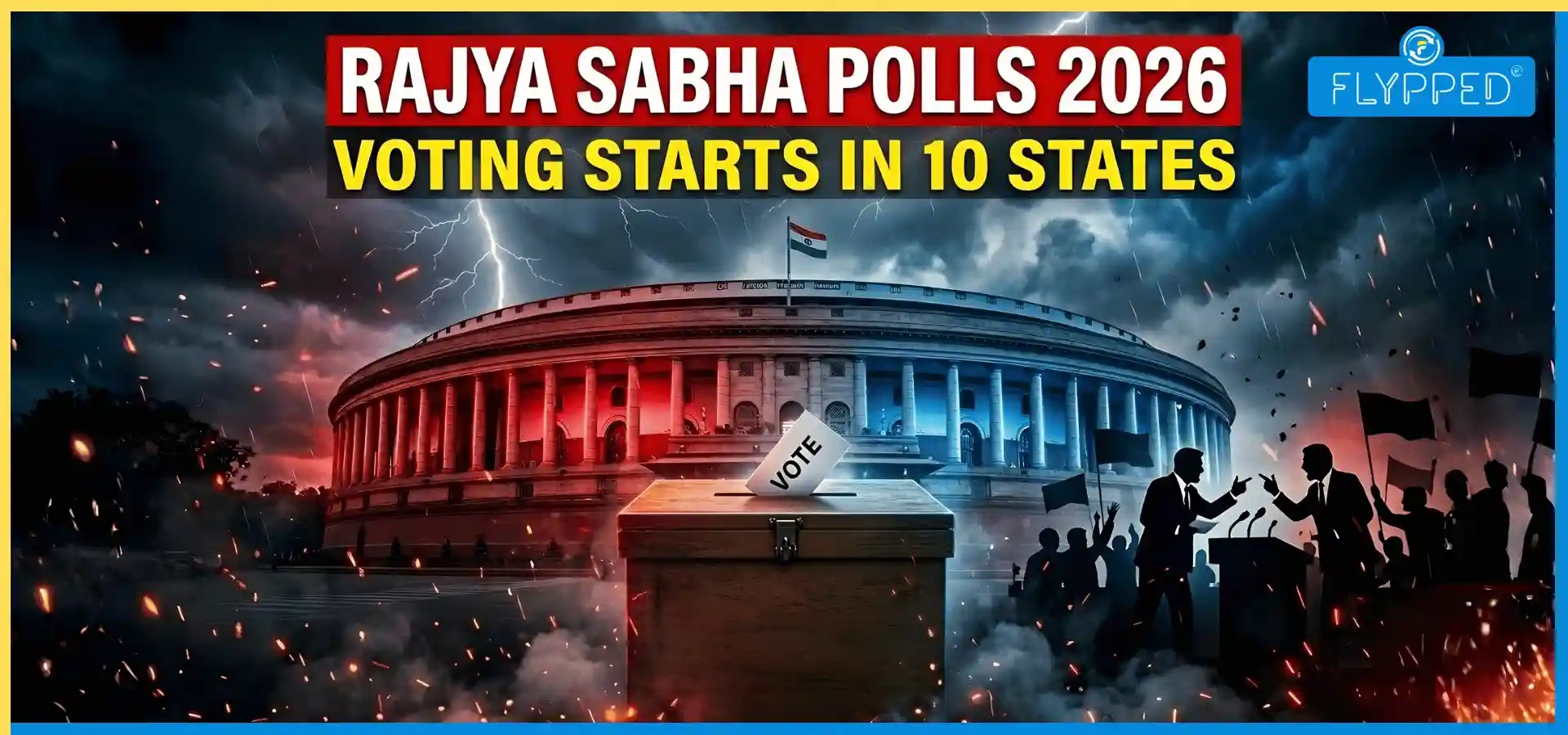
Voting for the recent Rajya Sabha Polls 2026 had started at 9:00 AM on March 16, 2026. Counting will continue and conclude by 5:00 PM.
As the tenure of 37 members elected from West Bengal, Maharashtra, Himachal Pradesh, Telangana, Odisha, Bihar, Tamil Nadu, Chhattisgarh, Haryana, and Assam ends in April, new members will fill these seats.
Of the positions opening up, 26 candidates have already claimed victory without a contest. For the remaining seats, voting is set for five in Bihar, four in Odisha, and two in Haryana.
Among the uncontested winners, the BJP earned seven seats; Congress, five; Trinamool Congress, four; DMK, three; and Shiv Sena, RPI (A), PMK, NCP, NCP (SP), and UPPL each earned one.
The newly elected members include Sharad Pawar, Tiruchi Siva, Abhishek Singhvi, and Vinod Tawade.
Bihar Chief Minister Nitish Kumar On Key Focus
Following his announcement to move to the Upper House, Nitish Kumar has filed his nomination in the presence of India’s Home Minister, Amit Shah, making him a focal point in the election.
Nitin assured the people of Bihar that his relationship with them would remain even after he left office as CM.
Sharing a post on X, he said, “I seek to become a member of the Rajya Sabha in the elections being held this time. I want to assure you, with complete honesty, that my relationship with you will continue, and my resolve to work with you to build a developed Bihar will remain steadfast. The new government that will be formed will have my full cooperation and guidance.”
Against this backdrop, the NDA (National Democratic Alliance) seeks to bolster its position in the Rajya Sabha.
Governing six of the 10 states to the polls, it currently has 134 seats in the 234-member House and is set to increase its numbers.
Meanwhile, the opposition INDIA bloc, which rules four states, currently holds 80 seats in the Upper House.
Know the Working of Rajya Sabha Voting
In the Rajya Sabha voting, MLAs of state assemblies elect Rajya Sabha members by proportional representation through single transferable vote, conducted by open ballot.
If seats are not filled by first-preference votes, the maximum votes of the winning candidates are transferred to other candidates who need more votes.
If it still does not provide a candidate with the required 41 votes, second-preference votes are then used.
NDA Hopes To Secure Maximum Votes in Bihar
The NDA (National Democratic Alliance) is aiming to win all five seats with three prominent names in the contest.
These are Nitish Kumar (Janata Dal (United) [JDU]), Nitin Nabin (Bharatiya Janata Party [BJP), and Upendra Kushwaha (Rashtriya Lok Morcha [RLM]).
Two candidates are Minister Ram Nath Thakur of the JDU, who is currently aiming for a hat-trick and BJP state general secretary Shivnesh Kumar.
According to JD(U) minister Vijay Kumar Chaudhry, there is confidence among all NDA leaders regarding all five seats.
The only problem lies in the opposition camp, where leaders are holding meetings. This reflects the sign of uncertainty.
Voting Begins for Upper House Seats
The first two states to begin voting for Upper House seats are Odisha and Bihar. Chief Minister and JD(U) (Janata Dal (United)) chief Nitish Kumar and BJP (Bharatiya Janata Party) national president Nitin Nabin are among the NDA candidates from Bihar.
Voting for the Rajya Sabha polls is taking place for the first time in 12 years. Currently, five candidates are running for the four seats that will be left vacant on April 2, 2026.
For more updates, log on to the Flypped side of English News.
Frequently Asked Questions
Find answers to common questions about this topic
Rajya Sabha polls are elections held to choose members of the Upper House of Parliament.
Voting is being held for 37 Rajya Sabha seats across 10 states.
Members are elected by MLAs of state assemblies using a proportional representation system with a single transferable vote.
The terms of several Rajya Sabha members are ending in April 2026, creating vacancies.
Yes, 26 candidates were elected unopposed before the voting.