
Strait of Hormuz Accessible to “Friendly Nations”: Reopening Amid War Signals Strategic Shift
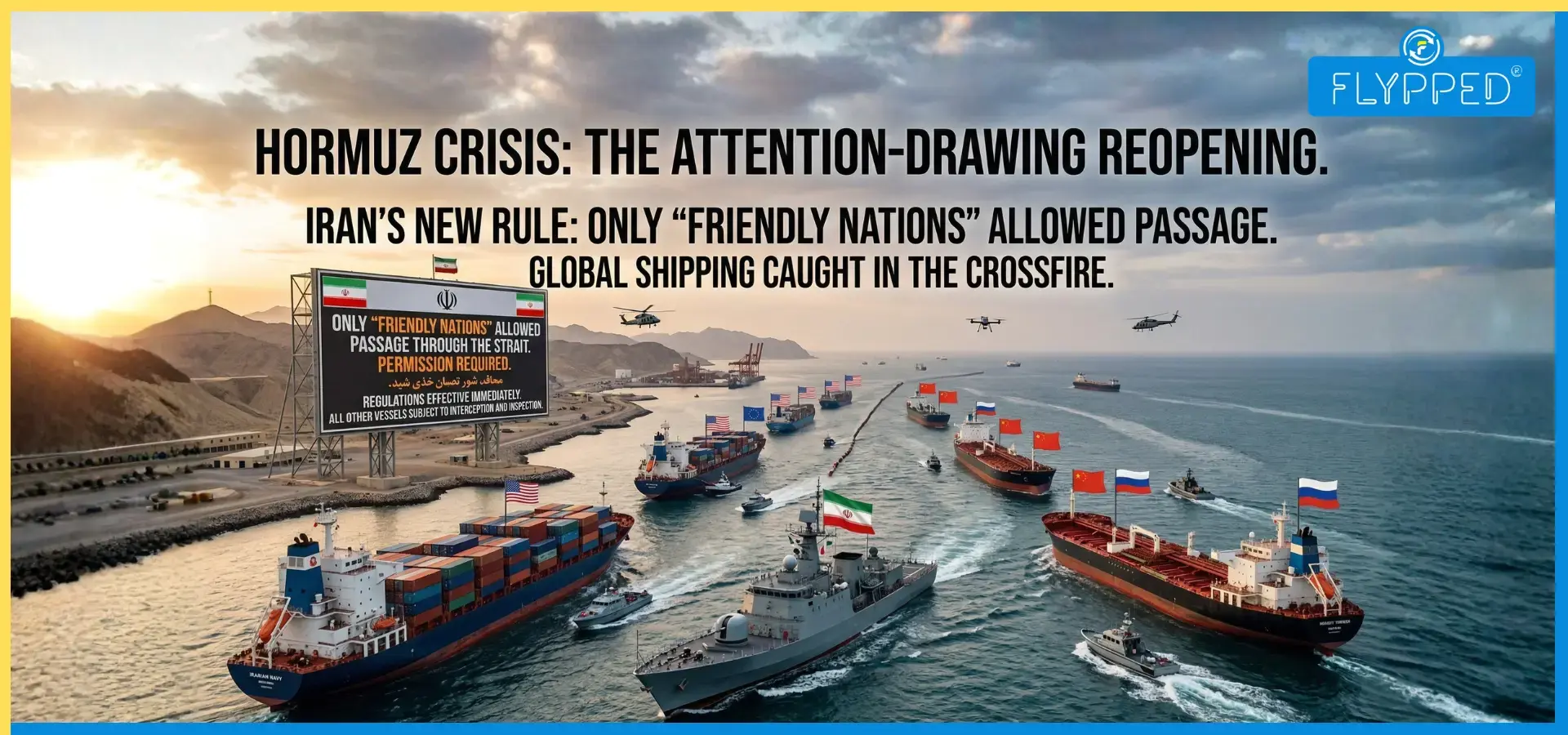
The reopening of Hormuz has taken an attention-drawing turn after Iran declared that only “friendly nations” will be allowed a passage through the Strait. Hormuz is one of the most critical oil transit routes in the world. Its early closure had a significant impact on the oil industry.
The development comes at a critical moment when the US-Israel-Iran war is constantly escalating. This change is likely to affect military, economic, and diplomatic manoeuvres, which play a key role in geopolitical dynamics.
Limited Reopening of Hormuz for Friendly Nations
Although Iran has announced the reopening of the Strait of Hormuz, access is limited to a select few countries it considers “friendly”. The list of these friendly nations includes India, China, Russia, Iraq, and Pakistan.
According to Abbas Araghchi, Iran’s Foreign Minister, vessels from these selections would be allowed to pass through the strait amid the ongoing hostilities.
Background: Closure Triggered by War Escalation
The Strait of Hormuz used to be open for global oil supply. However, after the United States and Israel’s strikes on Iranian targets, the route went into crisis.
Iran retaliated by threatening to block the Strait, which shocked the global markets as about 20% of the world’s oil passes through the Strait. Tehran even warned that it would attack any ship that would attempt to pass through it. This nearly halted maritime traffic and raised concerns about oil price volatility and energy security.
Global Impact: Energy, Trade, and Supply Chains
Iran’s latest announcement sends a clear geopolitical message: Hormuz is open to friendly nations but closed to adversaries.
The inaccessibility of Hormuz has major implications for global energy markets. The earlier disruptions have already drastically reduced shipping traffic. As a result, oil prices have increased.
The United Nations has warned that continuous closure would disrupt oil, gas, and fertiliser supplies, which would have a strong negative effect on agricultural cycles.
For India, the reopening of Hormuz brings temporary relief as it heavily relies on Gulf oil imports.
US Peace Plan and Trump-Iran Talks
The US President Donald Trump has maintained that talks with Iran have been “productive”.
With the reopening of Hormuz, many are speculating on a possible US peace plan aimed at bringing free navigation in the Strait. Some are also rooting for preventing further escalation.
Many are hoping for a re-stabilised global energy market through Trump-Iran talks.
Iran, however, has not issued any official statement regarding these negotiations.
Ongoing Military Pressure to Reopen Hormuz
The US is continuously making efforts to ensure full reopening. US forces have also launched operations to target Iranian naval capabilities. This is seen as a broader strategy for fully reopening the Strait.
Iran, on the other hand, has warned that continuous aggression would lead to mining of the Persian Gulf, which poses a huge potential risk for all maritime traffic.
The selective reopening has made the Strait of Hormuz a critical issue in Iran's latest war news.
West Asia Conflict: What Lies Ahead?
The reopening of Hormuz has brought short-term relief to a few countries. However, the global situation remains largely volatile.
Right now, there are many uncertainties, such as whether access will expand to other nations. Would the Trump-Iran talks lead to a positive outcome, or would there be further escalation in the US-Israel-Iran war?
For now, the Strait is partially open. Both diplomatic breakthroughs and military restraint are required to ease the global situation.