Chaitra Navratri 2026: First Day of Maa Shailputri Puja
Chaitra Navratri, which begins on 19th March 2026, is perhaps one of the holiest Hindu festivals dedicated to Goddess Durga and her nine divine avatars. It is a nine-day festival celebrating the victory of good over evil, the triumph of Goddess Durga over the demon Mahishasura.
The festival falls during the autumnal season and harvest time, symbolising nature's fertility and divine feminine power (Shakti) that nurtures the universe.
Concept of Chaitra Navratri
Chaitra Navratri is a nine-day Hindu festival in which devotees worship Maa Durga in her nine forms. The first day of the Hindu month Chaitra marks the onset of the spring season and the Hindu New Year in most regions.
The festival of Navratras represents the victory of good over evil and the awakening of divine feminine power called Shakti.
During these days, devotees observe fasting, prayers, and rituals to gain strength, purity, and blessings. It ends with Ram Navami, observed as the birth of Lord Rama.
There is fasting, prayer, and meditation during these nine nights, invoking the grace of the female goddess for spiritual rejuvenation, prosperity, and protection. The festival is joyfully celebrated throughout India, with Garba dances in Gujarat, Durga Puja in Bengal, and temple festivities nationwide.
The First Day of Navratri
The very first day of Navratri, Pratipada, is unparalleled in significance as it inaugurates this devotional festival.
It is the day to worship Maa Shailputri, the first form of Goddess Durga, and it starts with the holy procedure of Ghatasthapana (holy pot installation).
What is unique about the first day:
- Establishes the spiritual groundwork for the whole nine-day celebration
- Symbolises new beginnings and spiritual renewal
- Emphasises the awakening of the Muladhara Chakra for stability and grounding
- The goddess is traditionally invoked to bless devotees' homes and hearts
- From a yogic standpoint, this day marks the commencement of the spiritual journey towards self-realisation and divine union.
Maa Shailputri: The Divine Story
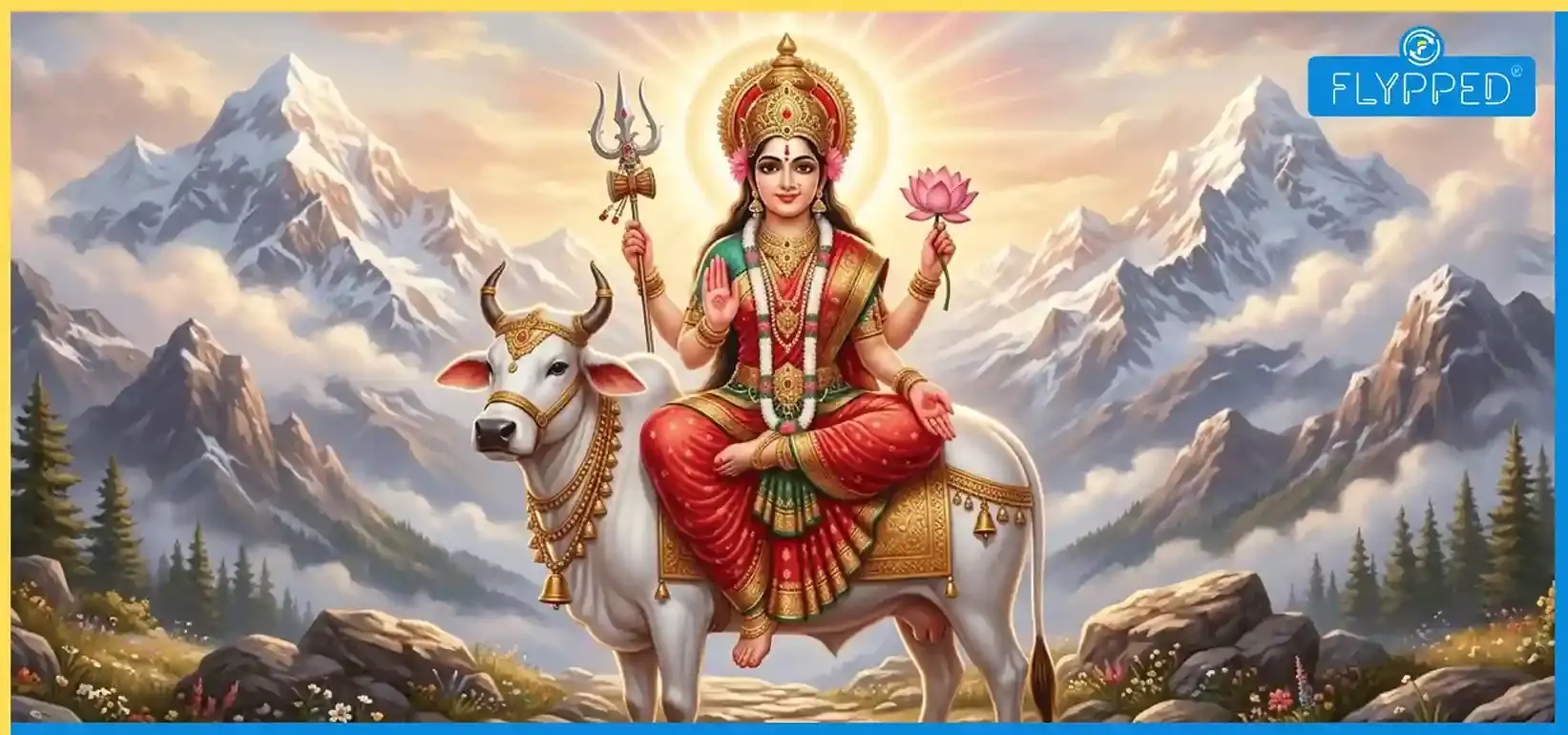
Maa Shailputri, or "daughter of the mountains," is the first of the nine forms of Goddess Durga. She is also referred to as Sati Bhavani, Parvati, and Hemavati.
Previous Birth as Sati: She was born in her previous life as Sati, the daughter of King Daksha. Despite her father's opposition, Sati married Lord Shiva in utter devotion. King Daksha, full of ill will against Lord Shiva, conducted a great Yagna (fire sacrifice) and deliberately kept them out.
Sati, eager to meet her parents, went to the Yagna despite Lord Shiva's warning. When King Daksha insulted Lord Shiva in public in front of all the invitees, Sati felt humiliated for her dearest husband. She sacrificed herself in the sacrificial fire, preferring death to dishonour.
Rebirth as Shailputri: Sati was reborn as the daughter of Parvat Raj Himalaya (Mountain King) and was named Shailputri. Here, she was married to Lord Shiva again, representing the unbreakable union of consciousness (Shiva) and energy (Shakti).
Appearance: She is mounted on Nandi (holy bull), holds a trident in her right hand and a lotus in her left hand, with a crescent moon on her forehead.
Worship of Maa Shailputri on the first day of Navratri provides the religious groundwork required for the nine-day divine respite.
With her mountain-like solidity and custodian energy, she guides devotees along the path of inner revitalisation and spiritual awakening. In adhering to the right puja methodologies and rules of fasting with unblemished commitment, devotees are blessed with her abundant blessings for strength, solidity, and achievements in all walks of life.
What to Do on the First Day of Navratri (Pratipada)
- Ghatasthapana (Kalash Sthapana):
- Put an earthen pot filled with barley seeds.
- Fill a Kalash with sacred water, put mango leaves on its neck, and crown it with a coconut.
- This represents calling the presence of Goddess Durga into your home.
Worship Maa Shailputri:
- Light a ghee lamp in front of her statue or picture.
- Keep red flowers, fruits, and satvik pure food.
- Chant her mantra: "ॐ देवी शैलपुत्र्यै नमः".
- Do aarti and share prasad.
Set the Intention:
Start your nine-day spiritual journey with prayers for strength, stability, and protection.
Benefits: It wakes up the root chakra, gives stability, eliminates the ill effects of the Moon, and brings prosperity and health
First Day Navratri Fasting Guidelines
Types of Fasts:
- Nirjala Vrat: No eating or drinking until evening aarti (for only experienced devotees).
- Phalahar Vrat: Permitted to eat fruits, milk, coconut water, and dry fruits.
- Saatvik Vrat: A simple meal prepared from vrat ingredients such as sabudana, kuttu flour, potatoes, and rock salt.
What to Avoid:
No onion, garlic, meat, alcohol, or regular salt.
Avoid wheat and rice grains.
General Rules:
- Start the fast after the morning puja.
- Break the fast after the evening aarti.
- Drink lots of water (unless on Nirjala).
- Maintain a peaceful mind by meditating, singing bhajans, or reading the Durga Saptashati.
Observing the first day with devotion ensures that the remaining days of Navratri are spiritually uplifting. Maa Shailputri blesses devotees with stability, peace, and strength to maintain their commitment throughout the nine-day vrat.
*This article is based on the facts described in religious texts and scriptures. Our aim is not to hurt any religion or belief, but simply to share cultural and religious knowledge.
For Hindi Reader, Please Click for aaj ki khabar
Discover Spiritual Insights on Flypped
- Anger Management Tips: How To Keep Anger At Bay
- Temples where Radha is worshipped as Krishna's Guru, not lover
- A Journey Back To Your Soul: Why Young People are Embracing Spirituality
For more news updates, follow the Flypped Side of English News