Chidambaram Temple: History, Secrets, Architecture and Spiritual Significance
Introduction
The Chidambaram Temple is ancient and very interesting; a visit there gives you the impression of going back to Vedic times or even getting a glimpse of the future.
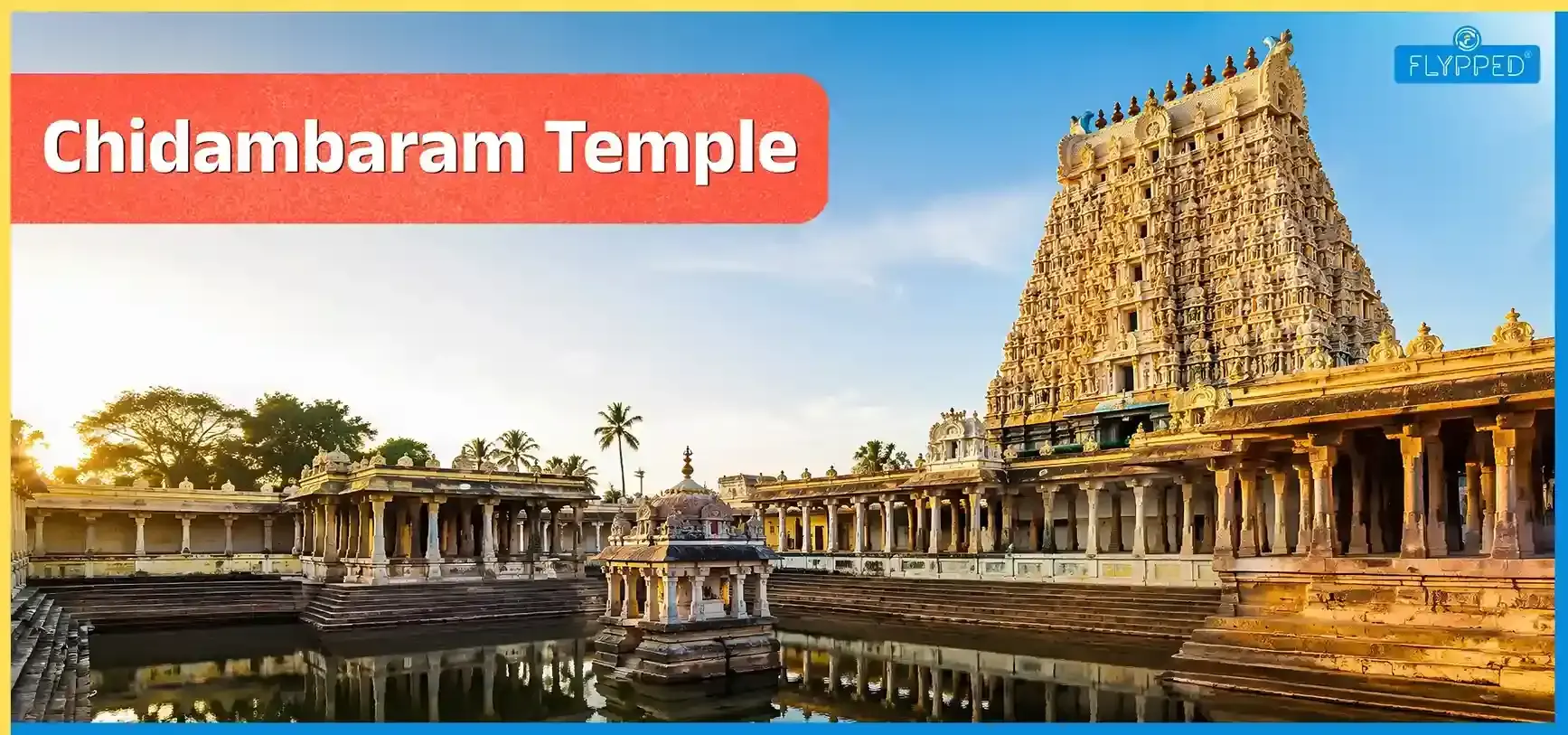
The temple covers an area of 40 acres and features attractive shrines, a big sacred tank known as Shivaganga, tall gopurams, elephants wandering around the premises, and vibrant rituals conducted by the Dikshitars.
Every year, thousands of devotees, pilgrims, history lovers, and tourists visit this temple to seek blessings and admire its unique design. Unlike many Shiva temples where the deity is worshipped as a Shiva Linga, Chidambaram Temple is special because Lord Shiva is worshipped as Nataraja, performing the Ananda Tandava (Dance of Bliss).
NOTE: Read spiritual insights, meditation tips, religious stories, and latest updates for mindful living.
For those of you who are thinking of making a visit, this Chidambaram travel guide will be a useful starting point as you will learn about the history, architecture, builders, spiritual significance, and the amazing features of Chidambaram Nataraja Temple.
What is Chidambaram Temple?
Thillai Nataraja Temple is an ancient Hindu temple in Chidambaram, Tamil Nadu, about 2 km from the Chidambaram Bus Station.
As one of South India’s oldest temples, it attracts many visitors. Also called Chidambaram Nataraja Temple or simply Chidambaram Temple, it is dedicated to Nataraja, the cosmic dance form of Lord Shiva.
This temple is one of the five Panchbootha Sthals, with each representing one of the five elements. "Chidambaram Temple represents the element of space (Akasha) in the Pancha Bhoota tradition."The name Chidambaram means \'stage of consciousness.\'
The word "Chidambaram" comes from two Sanskrit words:
- Chit means consciousness or wisdom.
- Ambaram means sky or space.
Together, Chidambaram means "the sky of consciousness" or "the space of divine wisdom."
The temple represents the Akasha (Space) element among the Pancha Bhoota Sthalams, the five famous Shiva temples that symbolize the five natural elements:
- Earth
- Water
- Fire
- Air
- Space
Because of this, Chidambaram Temple holds a special place in Shaivism and is considered one of the holiest pilgrimage sites for Shiva devotees.
Chidambaram Temple History
Ancient Origins of the Temple
The exact date of the temple’s construction is unknown, but records show there was a Shiva shrine here before the 7th century AD, when the town was called Thillai.
The Chola dynasty, who saw Nataraja as their family deity, built and expanded the temple in the 10th century. King Parantaka I added the golden roof during this time.
Other important figures, including Rajaraja Chola I, Kulothunga Chola I, Kundavai II (the daughter of Rajaraja Chola), and Vikrama Chola, also contributed when the temple was at its height.
After the 10th century, the temple went through many periods of damage, repair, renovation, and expansion over the next thousand years.
Most of the buildings visitors see today were built in the late 12th and early 13th centuries, with more additions in the same style.
Over the centuries, many rulers and kingdoms, such as the Vijayanagara rulers, the Madurai Nayakas, the Maharaja of Pudukkottai, the Sethupathy, and even the British, donated to the temple.
The deity still has the emerald jewel given by Sethupathy. Today, the temple is managed by the Dikshithars, a group of hereditary trustees.
Chola Dynasty and Temple Expansion
The Chola dynasty played the biggest role in developing Chidambaram Temple into the grand structure seen today.
Between the 9th and 13th centuries, several Chola kings expanded the temple by adding:
Large entrance towers (Gopurams)
- Beautiful halls
- Shrines
- Mandapams
- Temple walls
The Chola rulers deeply respected Lord Nataraja and considered him their family deity. They also supported art, music, dance, and temple traditions.
Many inscriptions found inside the temple provide information about donations, rituals, and festivals during the Chola period.
Later Contributions by Pandya and Vijayanagara Rulers
After the Cholas, other South Indian dynasties also helped maintain and improve the temple.
The Pandya rulers added new shrines and strengthened different parts of the temple complex.
Later, the Vijayanagara Empire contributed to the temple by renovating damaged structures and supporting religious festivals.
Because of these continuous efforts, Chidambaram Temple remained an important place of worship for centuries.
Historical Invasions and Restoration
Like many ancient temples in India, Chidambaram Temple also faced difficult times during periods of political conflict and invasions.
Some parts of the temple were damaged over the years. However, local rulers, temple priests, and devotees worked together to restore and protect the temple.
Thanks to these restoration efforts, the temple continues to stand as a symbol of India\'s rich cultural and spiritual heritage.
Who Built Chidambaram Temple?
The Original Founders
The exact founders of Chidambaram Temple are not clearly known. Traditional beliefs suggest that the temple existed from ancient times and was worshipped by saints and sages.
Its earliest structures were likely simple places of worship that gradually developed into a large temple complex.
Chola Kings as Major Builders
Although the temple\'s origins are ancient, the Chola kings are widely recognized as the major builders of the present temple.
They constructed many important sections, including:
- Massive Gopurams
- Sacred halls
- Temple walls
- Mandapams
- Decorative sculptures
The Cholas also introduced many temple festivals and encouraged classical arts, especially dance and music, making Chidambaram an important cultural center.
Contributions from Other Dynasties
After the Cholas, several rulers continued to support the temple.
The Pandya, Vijayanagara, and Nayak rulers carried out repairs, built additional structures, and preserved temple traditions.
Their contributions helped maintain the temple\'s beauty and ensured that religious activities continued without interruption.
Chidambaram Temple Architecture
The Thillai Nataraja Temple is one of the best-preserved examples of Chola-period temple architecture from the 10th century CE.
Above the temple, there are four tall gateway towers, each exceeding 40 metres in height.
The walls are adorned with detailed carvings of celestial beings, mythical tales, and dancing figures, which illustrate the richness of classical Tamil religious art.
The temple is unlike any other major Shaivite shrine in that it is part of the Pancha Bhoota Sthalam, a set of five temples in South India, each representing one of the five elements; Chidambaram embodies Akasha, or space, which is regarded as the most abstract of the elements.
This idea is reflected in many of the temple\'s features, such as its artwork and the rituals performed there.
In the sanctum, Lord Shiva is worshipped under the name Nataraja, depicted in the act of performing the Ananda Tandava, the cosmic dance which involves creation and destruction.
One of the temple\'s most notable characteristics is its golden roof, consisting of 21,600 gold tiles.
It is believed that this number corresponds to the average number of human breaths taken in a day.
The roof is maintained in good condition through periodic restoration and appeared especially beautiful to me when I was there in October 2025.
The Dikshitars, a community of hereditary priests, have been in charge of the temple\'s rituals and administration for centuries, and this continuous practice gives each visit a feeling of living history.
Layout of the Temple Complex
The temple is surrounded by high walls and has four magnificent Gopurams, one on each side.
Each gateway is decorated with detailed carvings of gods, goddesses, dancers, musicians, and scenes from Hindu mythology.
Inside the complex, visitors can find:
- Main shrine of Lord Nataraja
- Shrines of other deities
- Sacred water tanks
- Mandapams
- Open courtyards
- Beautiful stone pathways
The spacious layout allows devotees to move peacefully through different parts of the temple.
The Golden Roof
One of the most famous features of Chidambaram Temple is its golden roof above the sanctum of Lord Nataraja.
The shining roof is considered a symbol of divine light and spiritual wisdom.
Its golden appearance makes it one of the most recognizable parts of the temple and attracts visitors from across the country.
The Five Sabhas (Sacred Halls)
Chidambaram Temple is famous for its Five Sabhas, or sacred halls, each with its own religious importance.
These halls are associated with different forms of Lord Shiva\'s divine dance and are used during important temple rituals and festivals.
Together, they represent different aspects of spirituality, devotion, and cosmic energy.
Sculptures and Carvings
The temple is filled with beautiful stone carvings that display the talent of ancient South Indian craftsmen.
Visitors can see sculptures of:
- Lord Shiva
- Goddess Parvati
- Lord Ganesha
- Lord Vishnu
- Saints
- Celestial dancers
- Mythological figures
Many carvings also show classical dance poses, reflecting the close connection between Lord Nataraja and Bharatanatyam.
Chidambaram Temple Inside – What Devotees Can See
Sanctum of Lord Nataraja
The main attraction inside the temple is the sanctum where Lord Shiva is worshipped as Nataraja, performing the Cosmic Dance.
Devotees offer prayers, flowers, and deep respect while seeking blessings for peace, wisdom, and prosperity.
The spiritual atmosphere inside the sanctum creates a feeling of devotion and calmness.
Shrines Within the Temple Complex
Apart from the main shrine, the temple has several smaller shrines dedicated to different Hindu deities.
These shrines allow devotees to offer prayers to multiple gods and goddesses during a single visit.
Each shrine has its own unique design and religious significance.
Sacred Water Tanks and Mandapams
The temple complex also includes sacred water tanks where devotees perform traditional rituals before entering the main shrine.
Large mandapams provide space for religious gatherings, prayers, and temple ceremonies throughout the year.
These structures add to the temple\'s peaceful and spiritual atmosphere.
Spiritual Experience Inside the Temple
Walking through Chidambaram Temple is a deeply spiritual experience for many visitors.
The sound of temple bells, devotional chants, traditional rituals, and beautifully decorated shrines create an atmosphere of peace and devotion.
Whether visiting for worship or to admire its history and architecture, many people leave the temple with a sense of calm and inspiration.
Chidambaram Temple Secret (Chidambaram Rahasyam)
What is Chidambaram Rahasyam?
Next to Nataraja in the sanctum of the Chidambaram temple, there is an empty chamber that represents Space.
This formless aspect of the creator is known as “Chidambaram Rahasyam,” or the Secret of Chidambaram.
Space is considered the most basic element and is the foundation for the other four elements of the Pancha Bhootha.
Most of the time, a curtain covers this space, but it is lifted after the puja at certain times. Many devotees gather to witness this moment.
Lamps are waved briefly, revealing an empty chamber with golden Vilva leaves hanging inside.
A powerful “chakra” is placed here, serving as the temple’s energy centre. People believe that Lord Shiva and Parvati are present here in their formless state.
The Symbolism Behind the Empty Space
The empty space behind the curtain represents the Akasha (Space) element, one of the five elements of nature in Hindu philosophy.
It reminds devotees that:
- God is present everywhere.
- The divine cannot always be seen with the eyes.
- True spiritual wisdom comes through inner realization.
This powerful symbolism makes Chidambaram Temple different from most other Shiva temples and gives it a special place in Hindu spirituality.
Spiritual Interpretation of the Secret
The Chidambaram Rahasyam encourages people to look beyond the material world and understand the deeper meaning of life.
According to Hindu philosophy, the human mind becomes peaceful when it realizes that the Supreme Being exists within every living creature.
The empty space symbolizes purity, limitless consciousness, and the unity between the individual soul and the Divine.
Many devotees believe that understanding this spiritual message brings inner peace and wisdom.
Why It Continues to Fascinate Visitors
The mystery surrounding the Chidambaram Rahasyam has inspired curiosity for generations.
While some visitors admire its philosophical meaning, others are amazed by the temple\'s unique tradition.
For devotees, the Rahasyam is not just a mystery but a reminder that faith goes beyond what can be seen.
It continues to make Chidambaram Temple one of India\'s most spiritually significant pilgrimage sites.
Religious Significance of Chidambaram Temple
Lord Nataraja and the Cosmic Dance
Chidambaram Temple is dedicated to Lord Shiva as Nataraja, the Lord of Dance. In this form, Shiva performs the Ananda Tandava, or Dance of Bliss, which symbolizes the continuous cycle of creation, preservation, and destruction in the universe.
Each movement of Lord Nataraja represents cosmic balance and the rhythm of life. This form of Shiva teaches that change is a natural part of existence.
Importance in Shaivism
The temple is one of the most sacred pilgrimage sites in Shaivism, one of the major traditions of Hinduism that worships Lord Shiva as the Supreme God.
Devotees believe that offering prayers at Chidambaram Temple brings spiritual growth, peace of mind, and divine blessings.
The temple is also one of the Pancha Bhoota Sthalams, representing the element of Space (Akasha), making it especially important in Shiva worship.
Association with Bharatanatyam
Chidambaram Temple shares a deep connection with Bharatanatyam, one of India\'s oldest classical dance forms.
The dance poses carved on the temple walls reflect the beauty and grace of Bharatanatyam.
Every year, dancers from across India perform during the famous Natyanjali Dance Festival as a tribute to Lord Nataraja.
This tradition highlights the close relationship between spirituality, art, and culture.
Chidambaram Temple Timings
Daily Opening and Closing Hours
Chidambaram Temple generally opens early in the morning and remains open until late evening with a break in the afternoon. Here are the details of temple timings.
| SESSION | TIME |
| Morning Darshan | 6:00 AM – 12:00 Noon |
| Paal Nivedhyam | 6:30 AM |
| Maha Aarti | 7:00 AM |
| Kalasandhi Pooja | 7:45 AM – 9:00 AM |
| Irandaam Kaalam | 10:00 AM – 11:00 AM |
| Uchikalam | 11:30 AM – 12:00 Noon |
| Evening Darshan | 5:00 PM – 10:00 PM |
| Saayarakshai Pooja | 5:15 PM – 6:00 PM |
| Rahasyam Darshan | 7:00 PM – 8:00 PM |
| Ardhajaamam Aarti | 9:00 PM – 10:00 PM |
Visitors are advised to check the latest timings before planning their visit, especially during festivals.
Best Time for Darshan
The best time for darshan is during the early morning hours when the temple is less crowded and the atmosphere is peaceful.
The winter months, from October to March, are considered the most comfortable for visiting because the weather is pleasant.
Important Rituals and Aarti Timings
Several daily rituals are performed with great devotion. Priests offer prayers, chant Vedic hymns, and perform aarti before Lord Nataraja.
Many devotees prefer attending the morning or evening rituals to experience the temple\'s spiritual atmosphere.
Festival-Day Timings and Special Arrangements
During major festivals such as Arudra Darshan, Maha Shivaratri, and Natyanjali, the temple remains open for extended hours to accommodate the large number of devotees.
Special arrangements are made for darshan, security, and crowd management during these occasions.
Major Festivals Celebrated at Chidambaram Temple
Arudra Darshan Festival
Arudra Darshan is the most important festival celebrated at Chidambaram Temple. It marks the divine dance of Lord Nataraja and attracts thousands of devotees from different parts of India.
Special prayers, processions, and cultural programs are organized during this festival.
Natyanjali Dance Festival
The Natyanjali Dance Festival is held every year to honor Lord Nataraja, the Lord of Dance.
Classical dancers from across the country perform Bharatanatyam and other traditional dance forms inside the temple complex, making it a unique blend of devotion and art.
Maha Shivaratri Celebrations
Maha Shivaratri is celebrated with great devotion. Devotees observe fasting, offer prayers throughout the night, and participate in special pujas dedicated to Lord Shiva.
The temple remains filled with chants and devotional activities.
Annual Brahmotsavam
The Annual Brahmotsavam is another important festival featuring temple processions, traditional rituals, music, and cultural performances.
It provides devotees with an opportunity to witness the rich traditions of Chidambaram Temple.
How to Reach Chidambaram Temple
Chidambaram Temple is well connected by road, rail, and air.
- By Air: The nearest airports are Tiruchirappalli and Chennai, from where taxis and buses are available.
- By Train: Chidambaram Railway Station is well connected to major cities in Tamil Nadu and nearby states.
- By Road: Regular government and private buses connect Chidambaram with Chennai, Puducherry, Madurai, Thanjavur, and other cities.
Travel Tips for Visitors
Dress Code and Temple Etiquette
Visitors should wear modest and traditional clothing while entering the temple. Maintaining silence and respecting temple customs helps preserve its peaceful environment.
Photography Rules
Photography may not be allowed in certain parts of the temple, especially near the sanctum. Visitors should follow the temple authorities\' instructions.
Accommodation Options
Many hotels, guest houses, and lodges are available in and around Chidambaram for different budgets. It is advisable to book accommodation in advance during festival seasons.
Suggested Duration of Visit
A visit of 2 to 4 hours is generally enough to explore the temple, attend darshan, admire its architecture, and experience its peaceful atmosphere.
Interesting Facts About Chidambaram Temple
Chidambaram Temple is dedicated to Lord Shiva in the form of Nataraja, which is rare among Shiva temples.
- It represents the Space (Akasha) element among the Pancha Bhoota Sthalams.
- The temple is famous for the spiritual concept of Chidambaram Rahasyam.
- Its magnificent gopurams feature detailed carvings inspired by Hindu mythology and classical dance.
- The temple has been an important center of religion, art, music, and culture for many centuries.
Conclusion
Chidambaram Temple is more than just an ancient place of worship. It is a symbol of faith, spirituality, art, and India\'s rich cultural heritage.
From its magnificent Dravidian architecture and sacred halls to the mysterious Chidambaram Rahasyam, every part of the temple reflects deep religious meaning and timeless beauty.
Whether you visit to seek the blessings of Lord Nataraja, admire the temple\'s architecture, or learn about its fascinating history, Chidambaram Temple offers a truly memorable and spiritual experience.
Read More: