Navratri Day 8: Maa Mahagauri, the Goddess of Purity and Divine Grace
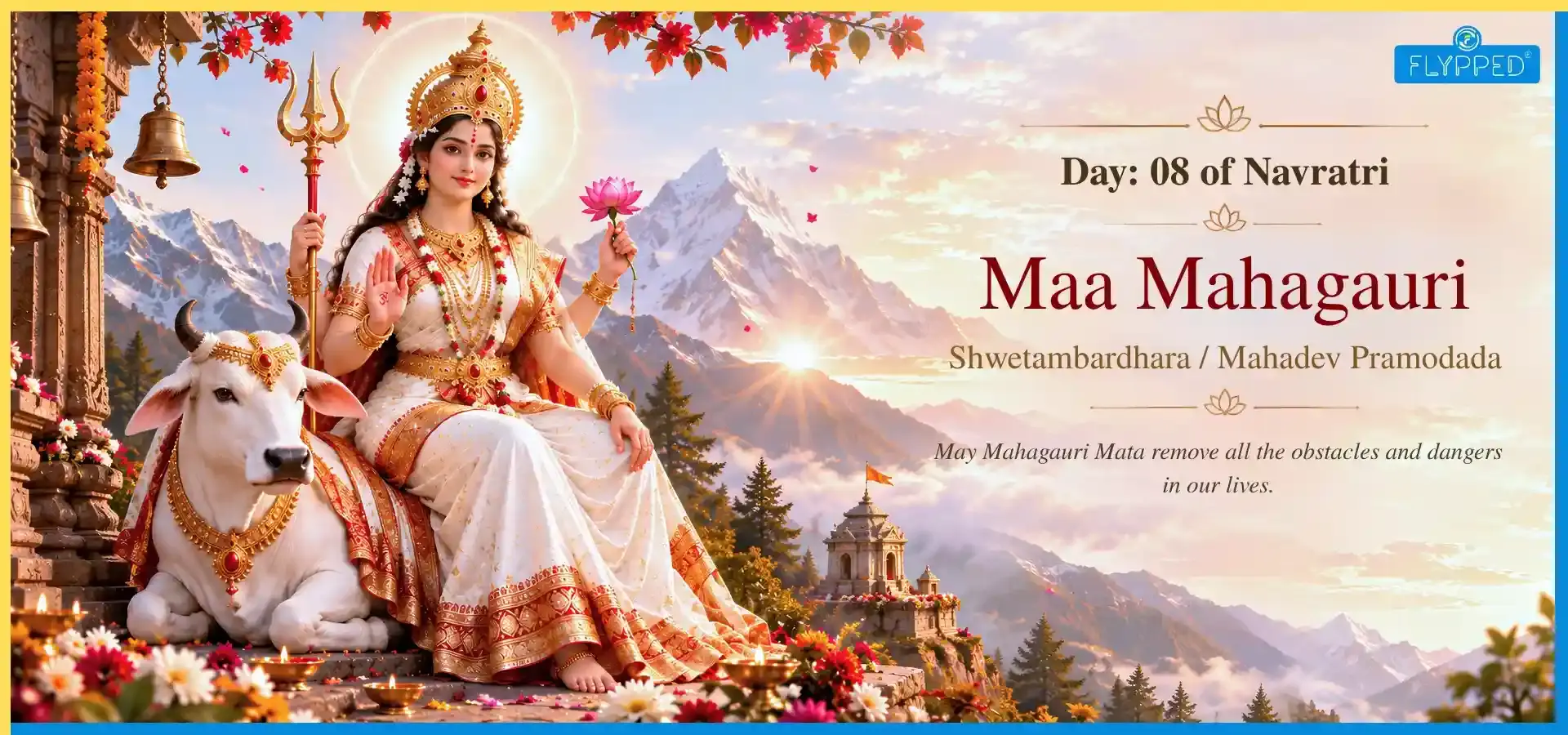
Navratri is in full swing, and the 8th day is one of the most awaited. Celebrated as Durga Ashtami, this day is dedicated to Maa Mahagauri, who embodies the highest essence of purity, tranquility and inner peace among the divine forms of Goddess Durga. As devotees engage in rituals, they seek her blessings for renewal and spiritual growth. This blog will cover who Maa Mahagauri is, the rituals associated with her worship, the significance of the Day 8 Navratri colour and much more.
Who is Maa Mahagauri? The Day 8 Navratri Goddess Explained
Maha Ashtami (Day 8) of Shardiya Navratri 2026 falls on Sunday, October 18, 2026. Maa Mahagauri is the eighth form of Goddess Durga, revered as the goddess for the 8th day of Navratri. Her name combines "Maha" (great) and "Gauri" (fair or white), symbolising her radiant purity. She is depicted in white clothes, gracefully seated on a white bull, holding a trident in one hand and a damaru in the other, radiating a serene expression.
Maa Mahagauri embodies purity, peace, forgiveness and redemption, serving as a reminder that true strength arises from inner calm and pure intentions. Her gentle essence helps devotees release past grievances and emotional burdens, cleansing away accumulated negativity.
Maa Mahagauri Katha: The Story Behind the Radiant Goddess
The tale of Maa Mahagauri reveals her journey of devotion. Parvati performed severe tapasya to win Lord Shiva's affection, which darkened her skin. To restore her radiant complexion, Shiva bathed her with Ganga water, revealing her pristine form and leading to her name, Mahagauri.
In some folk variations, it is said that a lion waited for her and became her companion. This story highlights the themes of patience, devotion and inner transformation.
Navratri Day 8 Colour 2026
On the 8th day of Navratri, the colour to wear is white, symbolising purity and peace. This traditional colour aligns perfectly with the qualities of Maa Mahagauri. Wearing white allows devotees to connect with her divine energy and embrace the calmness she represents.
For styling, traditional attire like a white saree or salwar kameez captures the spirit of the day. Men can opt for a crisp white kurta paired with pyjamas. Accessorizing with silver jewellery complements the white theme beautifully.
Mahagauri Puja Vidhi: Step-by-Step
Before beginning the puja for Maa Mahagauri, ensure to take an early bath, wear clean white or fresh clothes, and prepare a clean puja space.
Ritual Steps Involved in Worshipping Maa Mahagauri
Cleanse the Area: Start by thoroughly cleaning the space for the puja, creating a sacred atmosphere.
Sankalp: Set an intention for the puja, then invoke Ganesha and the kalash.
Offerings: Present white flowers, roli/akshat, incense, and a diya (lamp).
Bhog and Mantra: Offer bhog, recite the Maa Mahagauri mantra, and perform the aarti.
Ashtami-specific rituals: Conduct Kanya Pujan, Havan, and Sandhi Puja (timing varies by city).
Fasting Guidance: Devotees can consume fruits, sabudana and kuttu during the fast.
Maa Mahagauri Bhog: What to Offer
Coconut (nariyal) is the most commonly cited offering for Maa Mahagauri. Ashtami prasad typically includes halwa, puri and black chana, often served at Kanya Pujan. Offerings may vary by region and family tradition.
Maa Mahagauri Mantra
The beej/naam mantra is “Om Devi Mahagauryai Namah” (meaning: salutations to Goddess Mahagauri).
The dhyana shloka is “Mahagauri Shubham Dadyanmahadeva Pramodada,” which translates to "may the goddess who rides a white bull and delights Mahadeva bestow auspiciousness."
Additionally, the stuti “Ya Devi Sarvabhuteshu Maa Mahagauri Rupena Samsthita | Namastasyai Namastasyai Namastasyai Namo Namah ||” includes a line dedicated to Mahagauri. Suggested counts for chanting the mantra are 11 or 108 repetitions, as a tradition.
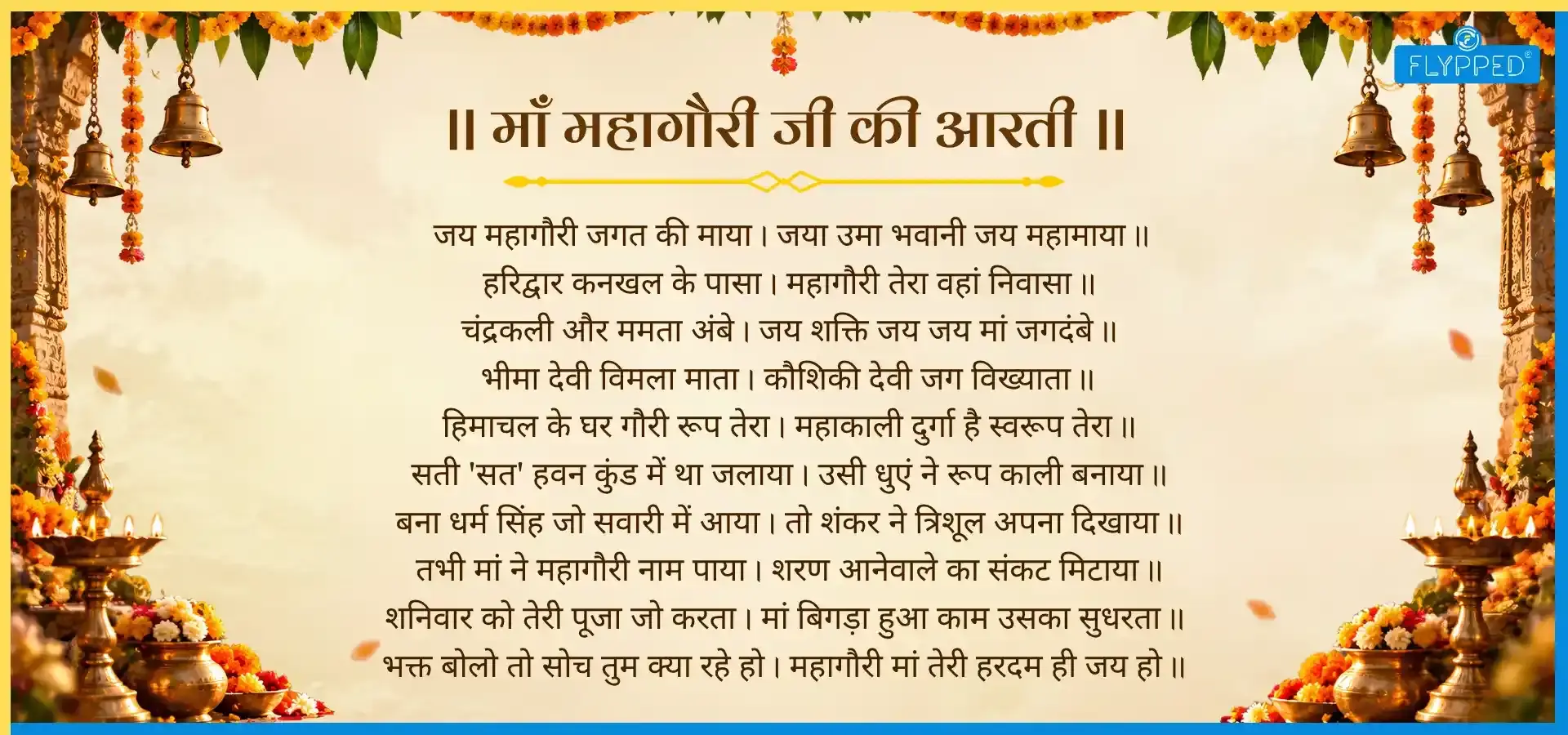
Mahagauri Mata Aarti
The Mahagauri Mata Aarti is typically sung at the end of the puja, signifying devotion and gratitude.
Significance and Benefits of Worshipping Maa Mahagauri
Worshipping Maa Mahagauri is traditionally associated with the purity of mind, relief from past burdens, peace, and marital harmony. These are framed as beliefs rather than guarantees. In some astrological traditions, she is also associated with the planet Rahu.
Navratri Day 8 Dos and Don’ts
Dos: Maintain cleanliness, consume sattvic food, perform respectful Kanya Pujan.
Don’ts: Avoid rigid or fear-based practices.
Final Thoughts
Celebrating Maa Mahagauri on the 8th day of Navratri is a journey towards peace and purity for all devotees. This day honours the Day 8 Navratri goddess, inviting moments of deep reflection and spiritual renewal. Engaging in the Mahagauri puja vidhi fosters a sacred bond with the goddess, welcoming her divine presence into life. Ashtami tithi began around 18 October at 8:27 AM and Ashtami Tithi ends around 10:51 AM on 19 October 2026.
Offering bhog items like kheer and seasonal fruits nourishes the body and expresses heartfelt gratitude. Choosing to wear white, the Navratri Day 8 colour, deepens the spiritual connection, aligning with the purity and serenity that Maa Mahagauri represents.
Reciting the Maa Mahagauri mantra during the puja strengthens intentions and prayers, nurturing a deeper connection with the goddess. This sacred ritual encourages cleansing both surroundings and mind, creating space for peace and positivity.
Participating in the Mahagauri Mata Aarti further enriches devotion, as singing praises to the goddess fosters a sense of community and togetherness. Every action taken on this auspicious day should be filled with love and sincerity, enhancing the connection with the divine.
As rituals are engaged, remember that the essence of Maa Mahagauri is rooted in purity and peace. Embrace her blessings for a prosperous and serene life, allowing this day to signal a new beginning filled with hope and divine grace.
Frequently Asked Questions
Find answers to common questions about this topic
Maa Mahagauri is worshipped on this day.
White is the colour associated with Day 8.
Typical bhog offerings include kheer, coconut and jaggery and seasonal fruits.
The mantra is “Om Devi Mahagauryai Namah”.