Tulsi Vivah 2026: Know the Significance, Story & Timings
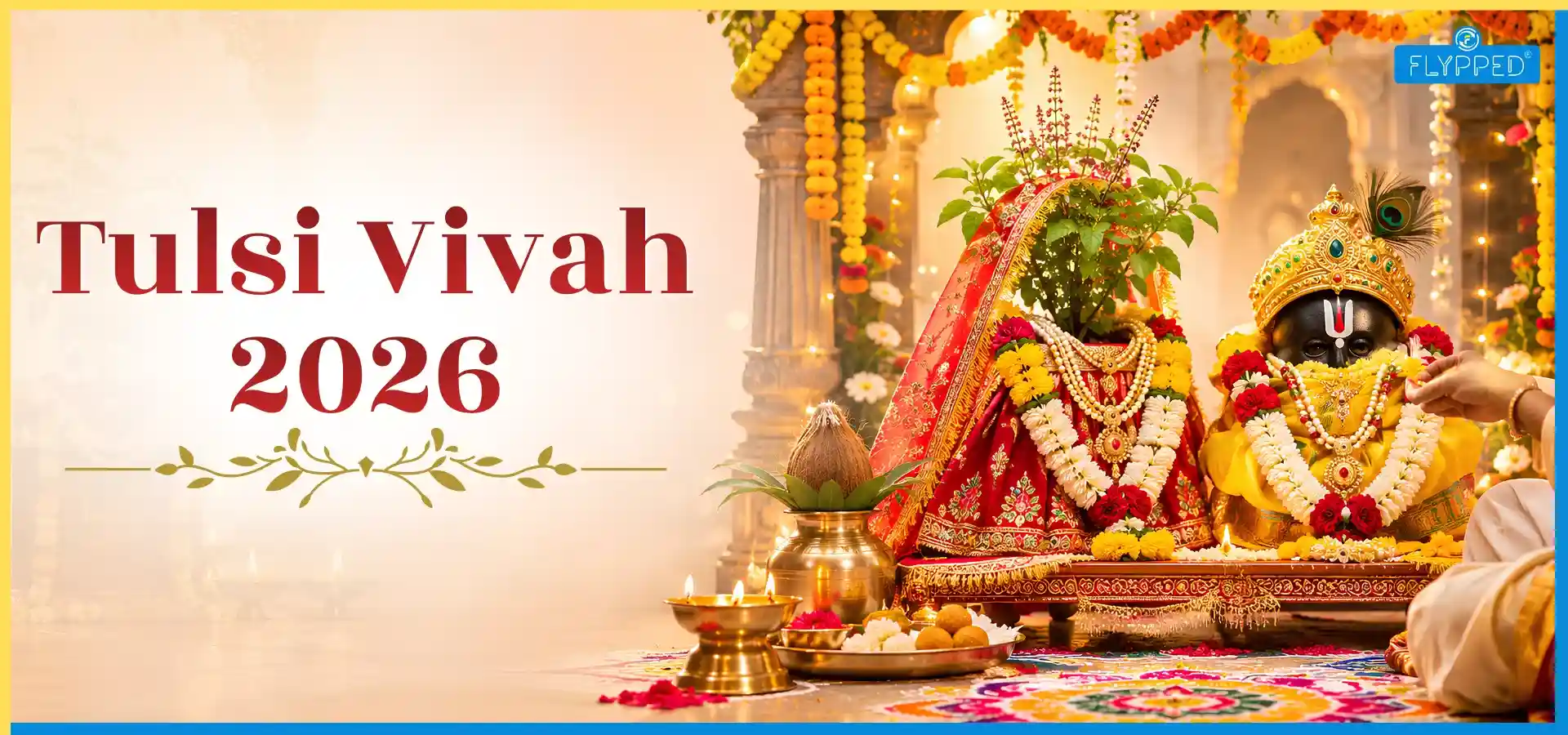
Tulsi Vivah 2026: In the Karthik month, Tulsi Vivah has great significance. As the name suggests, during this time, people visit temples and organise a wedding of Mata Tulsi with Lord Vishnu in his Shaligram form. On this day, women decorate the Tulsi plant as a bride and perform related rituals.
It is believed that Tulsi Vivah brings prosperity and happiness in married life. Although Tulsi Vivah is said to fall on 21st November, Saturday, people still disagree on the date. Because of this, Dev Uthani Ekadashi and Dwadashi have separate dates.
According to the Hindu Panchang, Dev Uthani falls on Friday, 20th November, while it begins on the 21st. In this context, let us find out more facts about Tulsi Vivah 2026 regarding its auspicious timing, rituals, process, and the items needed for worship.
Tulsi Vivah: What is it; Why is it Celebrated?
What is Tulsi Vivah? Tulsi Vivah, as the name suggests, means Tulsi's wedding. This Hindu festival is celebrated after Dev Uthani Ekadashi. It is a ritual wedding between the sacred Tulsi plant and Lord Vishnu, represented by the Shaligram stone. This spiritual union marks the divine marriage of Tulsi, who represents Vrinda, with Lord Vishnu.
NOTE: Read spiritual insights, meditation tips, religious stories, and Latest updates for mindful living.
It marks the end of the Chaturmas, the period when Lord Vishnu goes for cosmic sleep. It is called Devshayani Ekadashi. At Dev Uthani, when Lord Hari wakes up, it is considered very auspicious for people to organise events like weddings and new openings. Devotees find it an appropriate time for Kanyadaan (giving away one's daughter in marriage) with the Tulsi plant. It is done to seek spiritual harmony and prosperity in one's family life. This is the significance of Tulsi Vivah.
Tulsi Vivah 2026: Note the Timings
Tulsi Vivah 2026: To attain the full benefits of the worship, it is important to keep the auspicious timing (muhurta) for Tulsi Vivah in mind. According to media reports and the *panchang* (Hindu almanac), some key timings related to Tulsi Vivah are provided below:
| Muhurat | Date | Timings |
| Dev Uthani Ekadashi Start | Nov 20, 2026 | 7:15 AM |
| Dev Uthani Ekadashi End | Nov 21, 2026 | 6:31 AM |
| Abhijit Muhurat | Nov 21, 2026 | 11:46 AM – 12:28 PM |
| Godhuli Muhurat | Nov 21, 2026 | 5:25 PM – 5:52 PM |
| Sayahna Sandhya / Pradosh Puja | Nov 21, 2026 | 5:25 PM – 6:46 PM (up to 7:49 PM) |
| Dwadashi Tithi Begins | Nov 21, 2026 | 6:31 AM |
| Dwadashi Tithi Ends | Nov 22, 2026 | 4:56 AM |
Fact About Tulsi Vivah Vrat Katha | Story You Must Know
Tulsi Vivah 2026, which is said to be observed on Saturday, 21st November, has a deep mythological legend behind it. The legend of Tulsi Vivah is associated with her demon husband Jalandhar and Lord Vishnu.
The story is linked with Samudra Manthan, when a mighty son was born from Lord Shiva's radiance. His name was Jalandhar. When Jalandhar grew up, he became extremely powerful. It is said that the main source of his power lay in the chastity and purity of his wife Vrinda.
The growing influence of Jalandhar made the devas very insecure, and they became victims of his atrocities. When they could no longer stop him, they approached Lord Vishnu for help. Seeing Jalandhar as a strong opponent, not easy to slay directly in war, Vishnu chose treachery: he took Jalandhar's form.
He visited Vrinda, who mistook him for her husband, resulting in the violation of her chastity. Because of this, Jalandhar faced defeat in the war, as he became powerless, and was finally slain by Lord Vishnu. Knowing the truth about Vishnu's treachery, she cursed him to turn into a stone.
In response, Lord Hari accepted the curse to honour her devotion, and she later worshipped him as Shaligram. Lord Vishnu also gave Tulsi a boon that his worship will be incomplete without her. After learning the truth, Vrinda left her mortal coil. Her ashes gave birth to a sacred plant, which Vishnu named Tulsi.
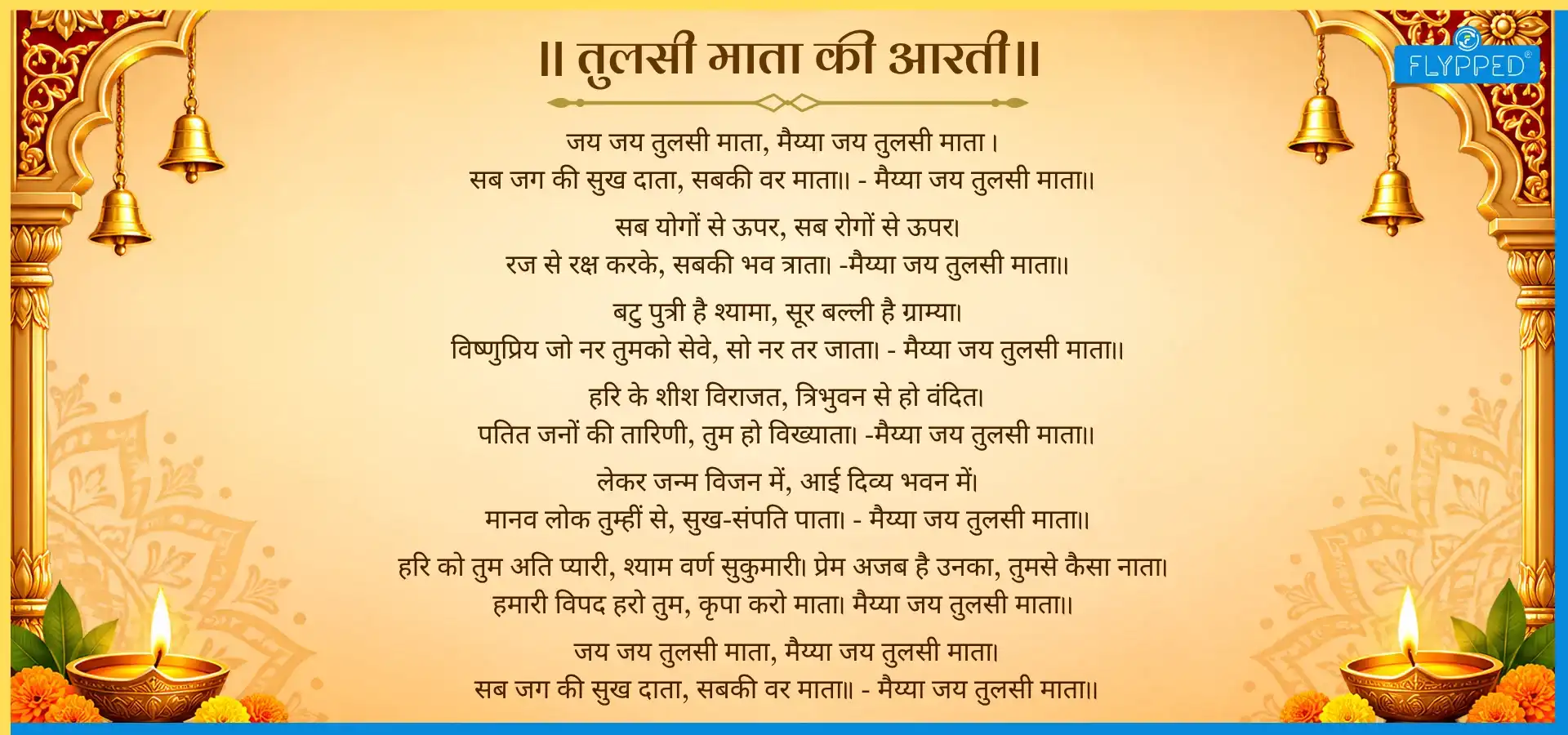
Tulsi Vivah Aarti | Rituals & Items for Tulsi Puja
Tulsi Vivah 2026: If you want to know how to do Tulsi Vivah at home below are the steps to follow:
- Wake up early in the morning
- Cleanse your house and temple area
- In the evening, decorate the Tulsi plant with red cloth (chunri & saree)
- Construct a small mandap with the help of sugarcane stalks near the Tulsi plant
- Since yellow is associated with Lord Vishnu, dress the shaligram in yellow cloth and place it near the Tulsi plant.
- After that, organise the marriage of Lord Shaligram and Maa Tulsi and sing the aarti
- In the end, distribute the prasad among your family members.
Items Needed for Tulsi Vivah Puja
- Tulsi plant
- Shaligram
- Red *chunri* (veil/scarf) or *sari*
- Yellow garments
- Sugarcane and items for decorating the *mandap* (ceremonial canopy) Roli
- Chandan
- Haldi
- Akshat
- Flowers
- Fruits
- Unbroken rice grains (akshat) and flowers
- Fruits and sweets
- Incense and a lamp (diya)
- Bangles and items symbolizing married status (suhag)
- Coconut
- Betel leaf and areca nut (supari)
Flypped Conclusion
Tulsi Vivah is not merely a traditional date; it is a sacred occasion to bring the family together and express gratitude toward nature. As you perform the ceremonial marriage of Tulsi Mata and Shaligram Ji in your courtyard, pray for happiness, peace, and purity in your life.
Furthermore, on this auspicious festival, along with performing the rituals, take a pledge to plant medicinal herbs in and around your home. May the blessings of Lord Vishnu and Tulsi Mata bring prosperity to everyone’s life and mark an auspicious beginning for all virtuous endeavors.
Read More:
Frequently Asked Questions
Find answers to common questions about this topic
In Hindu tradition, Tulsi Maa rests and fasts for Lord Vishnu on Sundays, so touching or watering her disturbs her.
Tulsi requires abundant direct sunlight and fresh air to thrive, and in Vastu, she belongs in an open, sunny courtyard.
Tulsi Maa, born as Vrinda, married the demon king Jalandhar, and later symbolically married Lord Vishnu in his Shaligram form.
Yes, according to Vastu and Hindu beliefs, Tulsi purifies the surrounding environment by absorbing negative energies and radiating spiritual positivity.