Navratri Day 9: Maa Siddhidatri, the Goddess who Blessed Lord Shiva
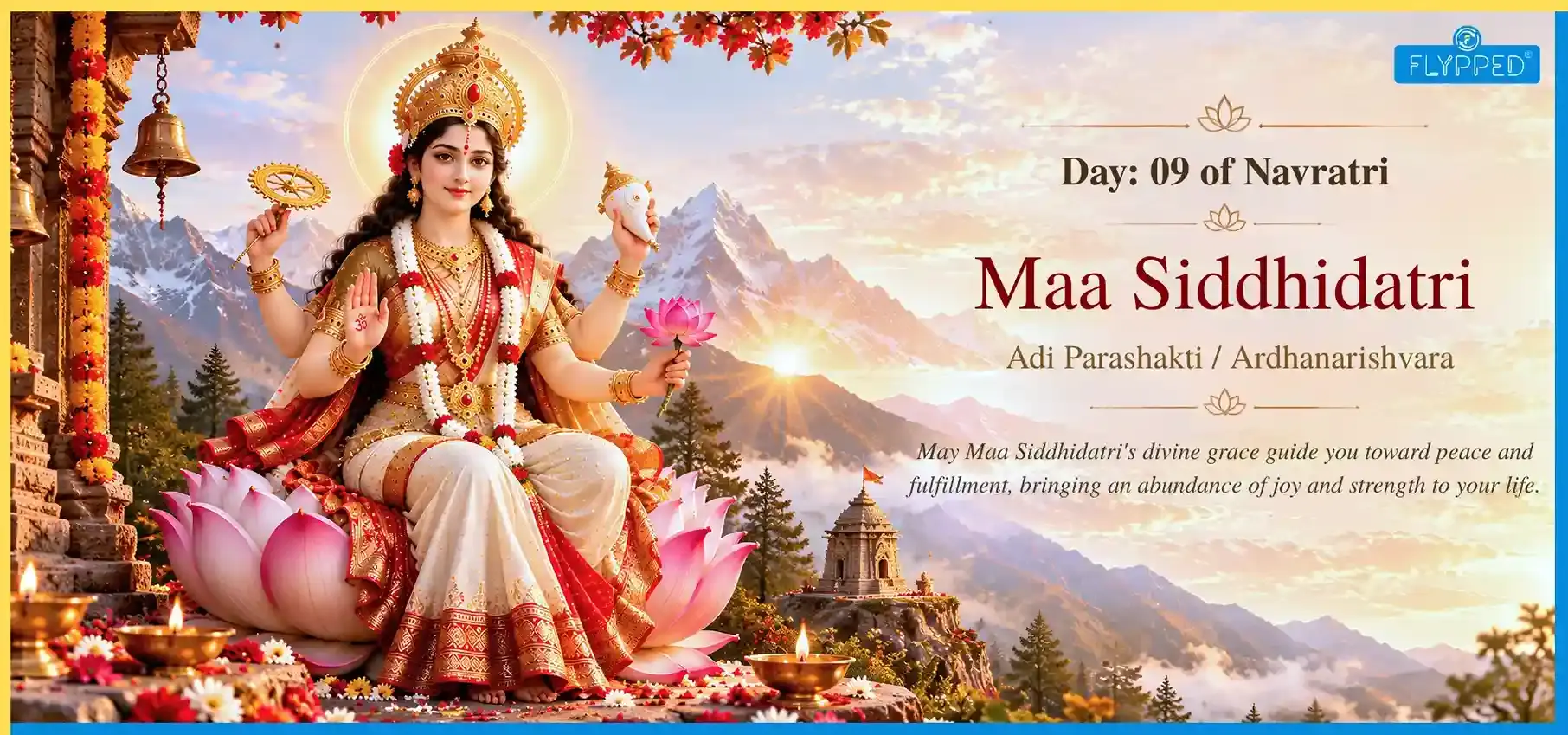
Maa Siddhidatri shines as the ninth form of Goddess Durga, celebrated with great reverence during the Navratri festival. Her essence embodies spiritual achievement and the fulfilment of all desires. On the 9th day of Navratri, which falls on 19 October 2026, devotees partake in rituals to honour her, recognising that even Lord Shiva, the supreme deity of destruction, holds her in high regard. This reverence highlights her immense power and significance in maintaining cosmic harmony.
Maa Siddhidatri, also called Siddhidatri Mata, is closely linked with mastery over all forms of knowledge and the attainment of Siddhis or supernatural abilities. The rituals performed in her honour known as the Siddhidatri puja, involve chanting her mantra, offering specific bhog and conducting aarti.
It's also worth noting that the siddhidatri colour for this day are peacock green, pink and purple representing abundance, harmony and grandeur.
As you get ready for this auspicious occasion, take a moment to reflect on the teachings of Maa Siddhidatri, inviting her grace to enrich your life with wisdom and enlightenment.
Day 9 of Navratri 2026: Date and Significance
Sharad Navratri runs from 11 to 19 October 2026, and Navami falls on 19 October. The following day, Vijayadashami (Dussehra), will be on 20 October. Day 9 matters as it is the closing day of Navratri, observed as Maha Navami. Many traditions also include Kanya Puja, Navami havan, and Ayudha Puja on this day. It's advisable to check your local panchang for tithi timings as they may vary.
Who is Maa Siddhidatri? Her Form and Symbolism
Maa Siddhidatri is revered as the ultimate source of spiritual power and perfection. As the ninth Navdurga, this goddess of the 9th day of Navratri is depicted seated gracefully on a fully bloomed lotus. In her four hands, she holds a mace, a discus, a conch, and a lotus, embodying complete cosmic wisdom. She is known to grant supernatural abilities or Siddhis, to devoted seekers.
Her spiritual essence is intricately connected to the very creation of the universe. According to sacred tradition and the maa siddhidatri katha, it is said that Lord Shiva meditated on Siddhidatri Mata to attain the eight classical perfections. Through her divine grace, Shiva integrated feminine energy into his being, thus forming the united cosmic identity of Ardhanarishvara.
Worshipping her on the 9th day of Navratri represents the spiritual peak of this nine-night festival. Here are some divine attributes associated with her grace:
Giver of Eight Siddhis: She bestows incredible perfections like Anima, Mahima and Garima to her true devotees.
Cosmic Harmony: She harmonises the dynamic forces of nature with pure spiritual awareness.
Source of Knowledge: She dispels inner darkness, enlightening the human mind with supreme wisdom.
Maa Siddhidatri Katha: The Story Behind the Goddess
The Devi Purana tradition reveals that Lord Shiva worshipped the Adi Shakti and received all siddhis through her grace. Her grace gave Shiva the Ardhanarishvara form, half Shiva and half Devi. This story varies by text and region, illustrating that Shakti and Shiva are inseparable.
Maa Siddhidatri Puja Vidhi for Navami 2026
Celebrating Maa Siddhidatri through her puja is a wonderful way to connect with her divine energy. Here's a simple guide on how to perform the puja:
Required Items for the Puja:
A clean altar or space
An image or idol of Maa Siddhidatri
Fresh flowers, preferably lotus
Incense sticks and a diya (lamp)
Fruits, sweets, and other offerings for Maa Siddhidatri bhog
A red or yellow cloth for the altar
A bell to ring during the aarti
Step-by-Step Process:
Begin with a morning bath to purify yourself.
Clean your puja space and set up a kalash.
Place the idol or image of Maa Siddhidatri on the altar.
Perform a sankalp (resolution) for the puja.
Offer flowers, roli, akshat and light incense and a lamp.
Present the bhog, followed by chanting the Maa Siddhidatri mantra.
Conclude with the aarti.
The puja is best conducted in the morning, during the muhurat (auspicious time) for Navami. Local timings can vary, so it’s good to check for the ideal moment to worship. Offering Maa Siddhidatri bhog is a key aspect of the ritual. You might include a selection of sweets like laddus and fruits such as bananas and pomegranates. These offerings express gratitude and invite blessings for spiritual growth and prosperity.
Maa Siddhidatri Bhog: What to Offer
Traditional offerings include halwa, puri, black chana, kheer, coconut, sesame (til) items, and seasonal fruits. The Navami halwa-puri-chana prasad is particularly significant for Kanya Puja. It is advisable to offer sattvik food only, as it aligns with the spiritual essence of the rituals. Navami Tithi Begins on October 19, 2026, at 10:51 AM and navami tithi ends on October 20, 2026, at 12:50 PM.
Siddhidatri Colour for Day 9
Navratri colours are a popular modern custom, not a religious rule. Purple is the commonly listed colour for Day 9 in 2026 guides, though lists vary by region, with some giving peacock green or pink. On the 9th day of Navratri, the siddhidatri colour is a radiant yellow, representing joy, prosperity, and optimism. Wearing this colour during the festivities embodies the essence of Maa Siddhidatri, encouraging positivity in your life.
You can easily incorporate this vibrant colour into your celebrations by donning mentioned colored attire, decorating your puja area with flowers or using yellow accessories. This not only amplifies the festive spirit but also aligns you with the day's energy.
Maa Siddhidatri Mantra
The maa siddhidatri mantra is pivotal in the worship of this divine goddess. Notable mantras associated with maa siddhidatri are as follows:
- Mool/Main Mantra: ॐ देवी सिद्धिदात्र्यै नमः॥
Meaning: I bow to Goddess Siddhidatri, the bestower of divine powers, wisdom and spiritual fulfillment. Stuti Mantra: या देवी सर्वभूतेषु माँ सिद्धिदात्री रूपेण संस्थिता। नमस्तस्यै नमस्तस्यै नमस्तस्यै नमो नमः॥
Meaning: To the Goddess who resides in all beings in the form of Maa Siddhidatri, I bow to her, I bow to her, I bow to her again and again.
Beej Mantra: ॐ ह्रीं क्लीं ऐं सिद्धये नमः॥
Meaning: Salutations to the seed energy of Goddess Siddhidatri, invoking the power of siddhis for success, wisdom, and divine grace
Dhyan Shloka: सिद्ध गन्धर्व यक्षाद्यैरसुरैरमरैरपि। सेव्यमाना सदा भूयात् सिद्धिदा सिद्धिदायिनी॥
Meaning: To the Goddess who resides in all beings in the form of Maa Siddhidatri, I bow to her, I bow to her, I bow to her again and again.
Regular chanting is believed to foster spiritual growth and assist in realising desires. It is suggested to chant this mantra 108 times using a mala for enhanced benefits.
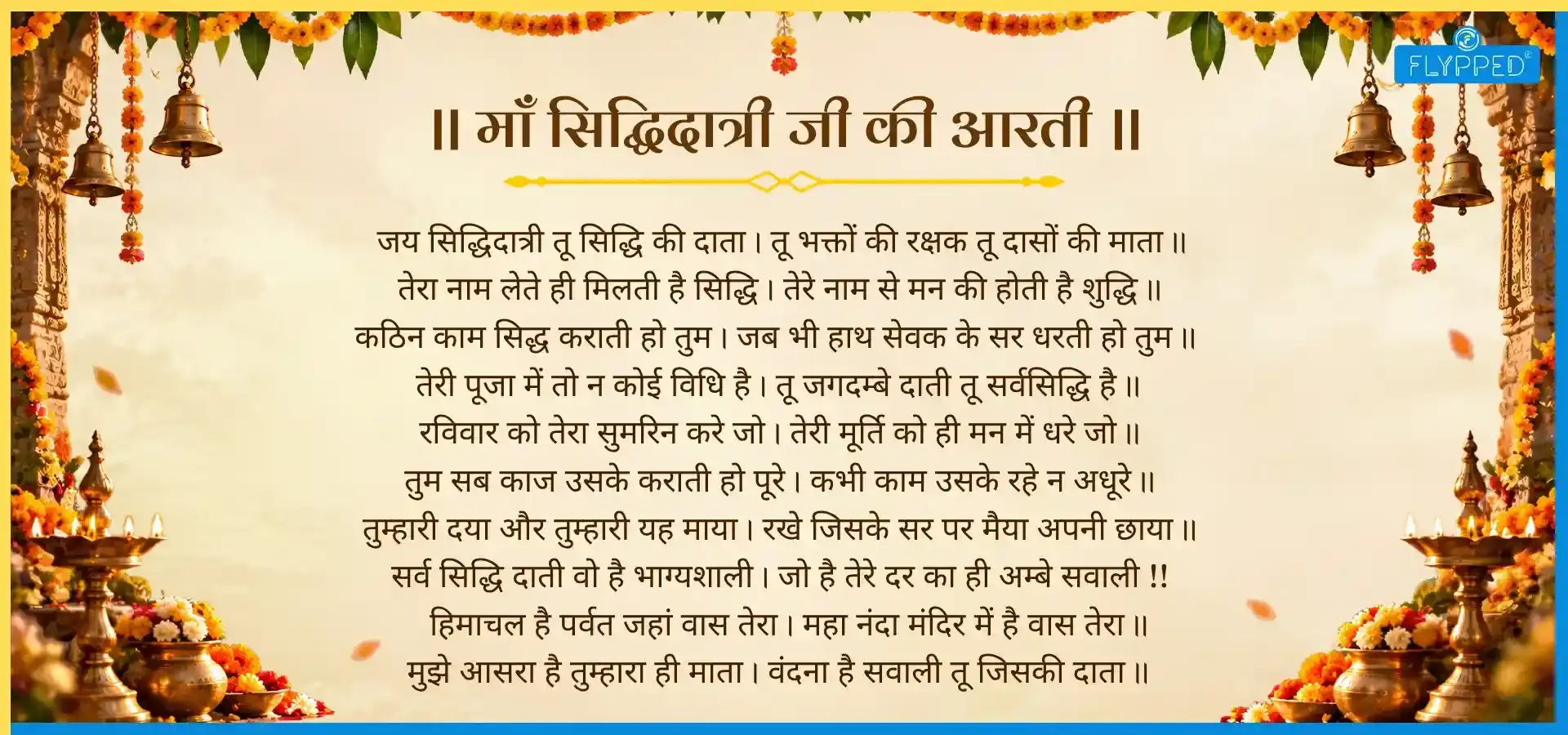
Maa Siddhidatri Aarti
The Maa Siddhidatri aarti beautifully complements the mantra, providing a form of worship that celebrates her divine qualities. During the aarti, devotees sing praises and light a diya, symbolising the dispelling of darkness and ignorance from their lives. This ritual becomes a focal point for devotees, enabling them to express their gratitude and devotion.
Spiritual Takeaways of the 9th Day of Navratri
This day serves as a reflection on completion, gratitude and inner discipline. It connects to the previous eight goddesses, each representing unique attributes and teachings, and offers a holistic journey through the festival.
Final Thoughts
Looking at the true meaning behind the 9th day of Navratri, it's easy to see why even Lord Shiva sought the divine blessings of Maa Siddhidatri. Worshipping her goes far beyond daily routine. It's about tapping into a deeper sense of balance, wisdom and inner peace.
Preparing traditional offerings like the Maa Siddhidatri bhog is a wonderful way to express gratitude while welcoming prosperity into your home. Adding the bright siddhidatri colour of cheerful yellow to your worship instantly lifts the festive mood and keeps you aligned with her positive energy.
Bringing these traditions into your time honouring the 9th day of Navratri transforms the whole celebration. It moves you past surface festivities, helping you build a sincere personal connection with the divine.
So, wear the bright festive shades, share in the sweet offerings, and chant her prayers with an open heart. Embracing these sacred practices brings a lasting sense of calm, joy, and fulfilment that stays with you long after the lights of Navratri fade.
Frequently Asked Questions
Find answers to common questions about this topic
The 9th day of Navratri in 2026 falls on 19 October.
Maa Siddhidatri is worshipped on day 9 of Navratri.
The colour associated with Maa Siddhidatri for the 9th day is yellow.
Traditional bhog offerings include halwa, puri, black chana and seasonal fruits.
The mantra for Maa Siddhidatri is "Om Devi Siddhidatryai Namah".
Kanya Puja is traditionally performed on Navami. Navami Tithi Begins on October 19, 2026, at 10:51 AM and navami tithi ends on October 20, 2026, at 12:50 PM.