
Bollywood Films That Reflect Society: 15 Movies That Hold a Mirror to India’s Social Realities
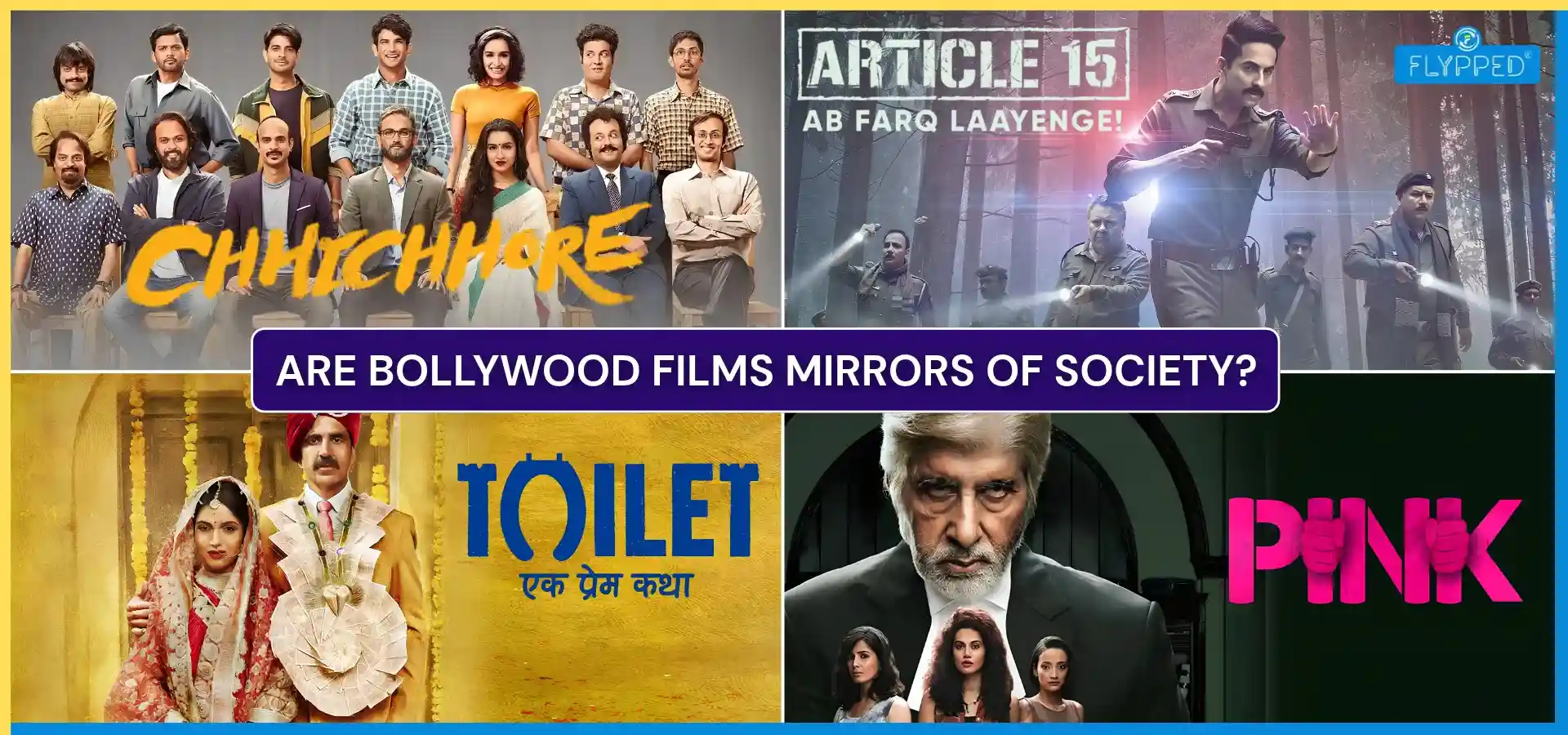
Cinema in India has long moved beyond simple song-and-dance routines to capture the real lived experiences of millions. Thought-provoking bollywood films that reflect society reveal systemic flaws, challenge outdated traditions and spark conversations across living rooms.
From deep-seated gender bias to caste inequality, Hindi films that reflect Indian society push audiences out of their comfort zones. They remind us that cinema isn't just entertainment but a powerful tool for cultural awareness and lasting change. This blog offers a countdown of prominent movies that reflect society’s prevailing problems like women’s safety, caste-discrimination, institutionalized corruption and more.
NOTE: Discover entertainment news, Celebrity news, movie reviews, OTT releases, Trending stories, and breaking news.
Bollywood Films About Domestic Violence and Women’s Safety in India
Films addressing movies about women’s safety in India are crucial in highlighting the challenges women face. These narratives not only entertain but also inspire discussions around safety and protection.
Thappad (2020), the slap that asked a bigger question
Anubhav Sinha’s film follows Amrita (Taapsee Pannu), who leaves her marriage after her husband slaps her once, publicly. The film asks why a single slap is treated as “no big deal.” The movie targets to cater the issue behind normalizing violence in marital relationship. Apart from leading protagonist of the movie, the side characters have aligned storyline covering passive ways women are put down in domestic setting and how it socially affects their image. The movie also reflects on the notion of tolerance in marriage and how the disequilibrium led the protagonist to walk out of the house and take legal action when her feeling were dismissed by many in the family. The movie clearly sets a raw example of how domestic violence incidents and dismissed or pushed under the rug in the name of maintaining peace in the family.
Why it’s still relevant? The movie clearly stands out the test of time and current social situation simultaneously. Domestic violence is one of the prevalent issue that comes under the women’s safety terminology. Crime data backs the prevalence of the issue. As NFHS-5 (2019-21) found that 29.3% of women reported domestic violence, down from 31.2% in NFHS-4. NCRB’s Crime in India 2024 lists “cruelty by husband or relatives” as the largest category of crimes against women, at roughly 1.2 lakh cases or about 27% of the 4,41,534 total.
Thappad, the movie, is six years old but the context and data sadly resonates the society’s current state. Other notable bollywood films about domestic violence in marital setting are Parched (2016), Darlings (2022) & Secret Superstar (2017).
Pink (2016), when “no” finally became a full sentence
Pink revolves around three women in Delhi are accused of a crime after rejecting a group of men’s advances. A lawyer (Amitabh Bachchan) defends them in court. The social issue this movie caters is consent (no means no), victim blaming and aggregately women’s safety in metro cities these days. The movie was released in 2016 yet still relevant till this day. In the movie, a victim is blamed when she files a complaint against a man who at first seemed like a friend but wasn’t. In response, she has to face abduction, another assault and the social humility via character assassination during the trial. During the trial her choices, life decision, clothing everything is judged and investigated upon in the court. Money power is another aspect that has been shown in the movie via which leading protagonists of the movie suffer job loss.
The movie is ten years apart yet relevant till this day, why? The metrics around hate crime against women is alarming and movie clearly portrays an imagery of the existing situation. NCRB 2024 recorded 29,536 rape cases nationally. Delhi, where the film is set, recorded 13,396 crimes against women, the most among Union Territories. Other notable bollywood movies that address social issue like victim blaming and women’s safety in metro cities. Notable movies about women’s safety in India are Guilty (2020), Mardaani (2014), Mom (2017) & Section 375 (2019).
No One Killed Jessica (2011), money, power and a justice system under pressure
Based on the 1999 murder of Jessica Lal, a barmaid shot in a Delhi restaurant after refusing to serve a drink. The film follows the public campaign for justice. The movie stars Vidya Balan and Rani Mukherjee who fights via protests and legal battle against the culprit. The major themes of this movie are hate crime against women witness intimidation and loopholes in the justice system, alongside women’s safety.
Why it’s still relevant? Nine of 12 accused, including the main accused Manu Sharma, were acquitted in 2006 after 32 witnesses turned hostile. The Delhi High Court overturned that verdict in December 2006, and the Supreme Court upheld the conviction in 2010. Sharma was released early in June 2020 on grounds of good behaviour. In the film’s home city, 13,396 crimes against women were recorded in 2024.
Hindi Movies About Child Abuse and Family Pressures
Ribbon (2017), the working-parent trap and a hidden danger at home
A couple (Kalki Koechlin and Sumeet Vyas) face an unplanned pregnancy. The wife is demoted and then fired and they later discover their young daughter is being abused by her school bus driver. The movie focuses on two major themes. Firstly, job security of pregnant women. Before pregnancy Kalki’s character is at good position at her job yet pregnancy happens. After maternal leave, she found out that she has been demoted. This reflects on a status of women in workplace setting. This is the one of the most underrated issue that falls under women’s safety spectrum. An analysis of PLFS 2022-23 data by OP Jindal Global University researchers found that about 93.5% of working women can’t access maternity benefits, and over 85% work in establishments with fewer than 10 workers.
Then, the second issue movie highlights is child abuse among trusted family setting. The issue comes up in a very delicate moment and the child doesn’t understand the toll of the crime on herself. When reported, protagonists face scrutiny by authorities. NCRB 2024 recorded 44,126 penetrative sexual assault cases under POCSO and in 96.6% of them the offender was known to the child. Family members accounted for 3,658 of those cases. Other notable hindi movies about child abuse are Highway (2014), Bhakshak (2024) and Kahaani 2 (2016).
Bollywood Movies That Address Social Issues of Caste and Corruption
Article 15 (2019), when the Constitution meets caste
A police officer (Ayushmann Khurrana) investigates the disappearance of Dalit girls in rural Uttar Pradesh. The title refers to Article 15 of the Constitution, which bars discrimination on grounds of caste, religion, sex or place of birth. The movie highlights on deeply ingrained caste based discrimination and systematic violence that continue to persist in different parts of India despite the constitutional guarantees provided under Article 15.
Why it’s still relevant (metrics)? According to recent NCRB data released and analyzed through parliamentary briefings, crimes against Scheduled Castes (SCs) have consistently hovered at a high plateau, logging 57,789 cases in a single reporting year. This highlights an overall multi-year upward climb from 45,995 cases documented in 2020. A 2026 data analysis by the National Campaign on Dalit Human Rights (NCDHR) reveals that roughly 158 Dalits face caste-based atrocities every day, which translates directly to 7 Dalits being targeted every single hour.
Jaane Bhi Do Yaaro (1983), a comedy that never stopped being true
Kundan Shah’s 1983 cult classic Jaane Bhi Do Yaaro is arguably more relevant today than at the time of its release, as the systemic vulnerabilities it satirized have mutated rather than disappeared. The film's core themes are corporate-bureaucratic collusion, the moral decay of media and the exploitation of the common man remain highly reflective of modern socio-political realities. The film follows two struggling photographers who stumble into a builder-politician-journalist nexus. Economic offences and infrastructure corruption continue to exist amid rapid urbanization.
Why it’s still relevant? According to latest NCRB data, such instances fall under Prevention of Corruption Act and massive economic scams like forgery, cheating and fraud remain highly prevalent in metropolitan hubs. India is ranked 91st out of 182 countries in Transparency International's Corruption Perceptions Index (CPI) 2025 (released in early 2026), with a score of 39 out of 100.
Movies About Student Pressure and Suicide
Idiots (2009) & Chhichhore (2019), the film that questioned rote learning
Both the movies released ten years apart yet still addresses a serious concern about the education system. 3 idiots directly addresses academic pressure and competition and how it contributes to rising suicide rates in India. In the same manner, Chhichhore addresses the toll students have to deal with while appearing for competitive exams. The core issue both movie raises is increasing suicide rates among students. The ideation behind these movies was to raise awareness and it did at some point. According to NCRB, India recorded 1,70,746 suicide deaths in 2024, maintaining a national suicide rate of approximately 12.3 to 12.4 per 100,000 population.
So, if you’re someone dealing with academic pressure and if its taking unnatural toll on your well-being then contact mental health helpline, Tele-MANAS (14416) and 1800-891-4416 is a government option but confirm the number before publishing.
Films on Sanitation and Citizen Protest
Toilet: Ek Prem Katha (2017), a love story about a toilet
The plot of the movie follows a newly married woman leaves her husband’s home because it has no toilet. The movie remains relevant today because it addresses public sanitation, women's safety and behavioral change around hygiene are ongoing challenges across parts of rural and semi-urban India.
Why it’s still relevant (metrics)? Government initiatives like the Swachh Bharat Abhiyan have built millions of toilets, maintaining usage, water supply and waste management as well as addressing legacy issues like manual scavenging keeps sanitation a live public health issue.
Rang De Basanti (2006), when the youth got angry
The movie follows young Delhi friends who are moved to protest after a friend dies in a corruption-linked air force accident. The film’s core commentary on systemic corruption, institutional apathy and the awakening of a politically indifferent youth continues to mirror modern societal challenges
Recent NEET paper protest in July, 2026 and Anti-CEC protest in October outlines the prevailing environment. Why it’s still relevant (metrics)? Over 17.5 lakh RTI applications were filed in 2023–24, according to Centre-reported data. This shows citizens still use the law to question the state.
What These Films Tell Us About Indian Society
These films tie together themes of gender, caste, children, education, governance and sanitation. Movies reflect society and Bollywood films that reflect society make a point that films raise a question but data shows whether it was answered.
Summing Up
Bollywood films that reflect society do far more than fill theatre seats on a Friday evening. They pull back the curtain on uncomfortable truths, forcing audiences to engage with stories about human dignity, systemic corruption and personal freedom. When filmmakers choose courage over easy formulas, cinema becomes a genuine mirror for our collective conscience.
Over the years, Hindi films that reflect Indian society have redefined how families discuss difficult topics at home. From domestic violence and mental health to deep-seated caste prejudice, these stories break silence where traditional discourse often fails. They challenge viewers to step beyond passive viewing and examine how individual choices shape the community around them.
As new storytellers emerge, Indian cinema continues to broaden its scope. You can now see directors taking bold narrative risks, ensuring that themes around safety, equality, and justice receive mainstream attention without losing their emotional core.
When films take on topics like domestic abuse or systemic bias, they give victims a voice and encourage communities to demand accountability. These narratives create shared moments of empathy across diverse cultural backgrounds, proving that cinema remains one of our most effective mediums for positive change.
Great cinema leaves a lasting imprint long after the credits roll. By choosing to watch and share Bollywood films that reflect society, you actively support storytellers who risk creative comfort to highlight vital national issues. The next time you pick a movie for evening viewing, seek out titles that challenge your assumptions, spark meaningful debates with your family, and inspire actionable empathy within your daily life.
Read More:
- Abhijeet dipke apologises to diljit dosanjh on instagram after his delhi concert remarks
- Varun dhawan and kriti sanon recreate obsession scene ahead of jiohotstar premiere
- Janhvi kapoor peddi controversy: actress says she should have used her privilege to speak up
- Kutle khan clarifies shilpa rao incident: interrupted performance at bollywood music project
- Why did vijay deverakonda and rashmika mandanna slam trolls after koffee with karan
- Ramayana mangal rang song: a.r. rahman’s new track released in five languages
Frequently Asked Questions
Find answers to common questions about this topic
Films like Pink, Article 15, Thappad address key social topics including gender equality, caste prejudice, educational pressure, and legal consent across modern India.
Movies such as Thappad, Guilty and Pink focus on the critical issue of women’s safety, highlighting personal stories that resonate deeply within society.
Acclaimed productions like Thappad, Darlings and Provoked bring clear focus to Bollywood films about domestic violence, examining legal remedies and physical abuse within home settings.
Yes, movie like Ribbon, Highway and Kahaani 2 explore the sensitive issue of child abuse and the impacts it has on families and society.
They start public discussions on taboo topics, challenge traditional biases, and raise awareness about legal rights, helping communities understand complex social problems through relatable personal stories.