Dance Where the Sun God Once Watched: Konark Dance Festival 2026, A 5-Night Spiritual Escape You Can't Miss
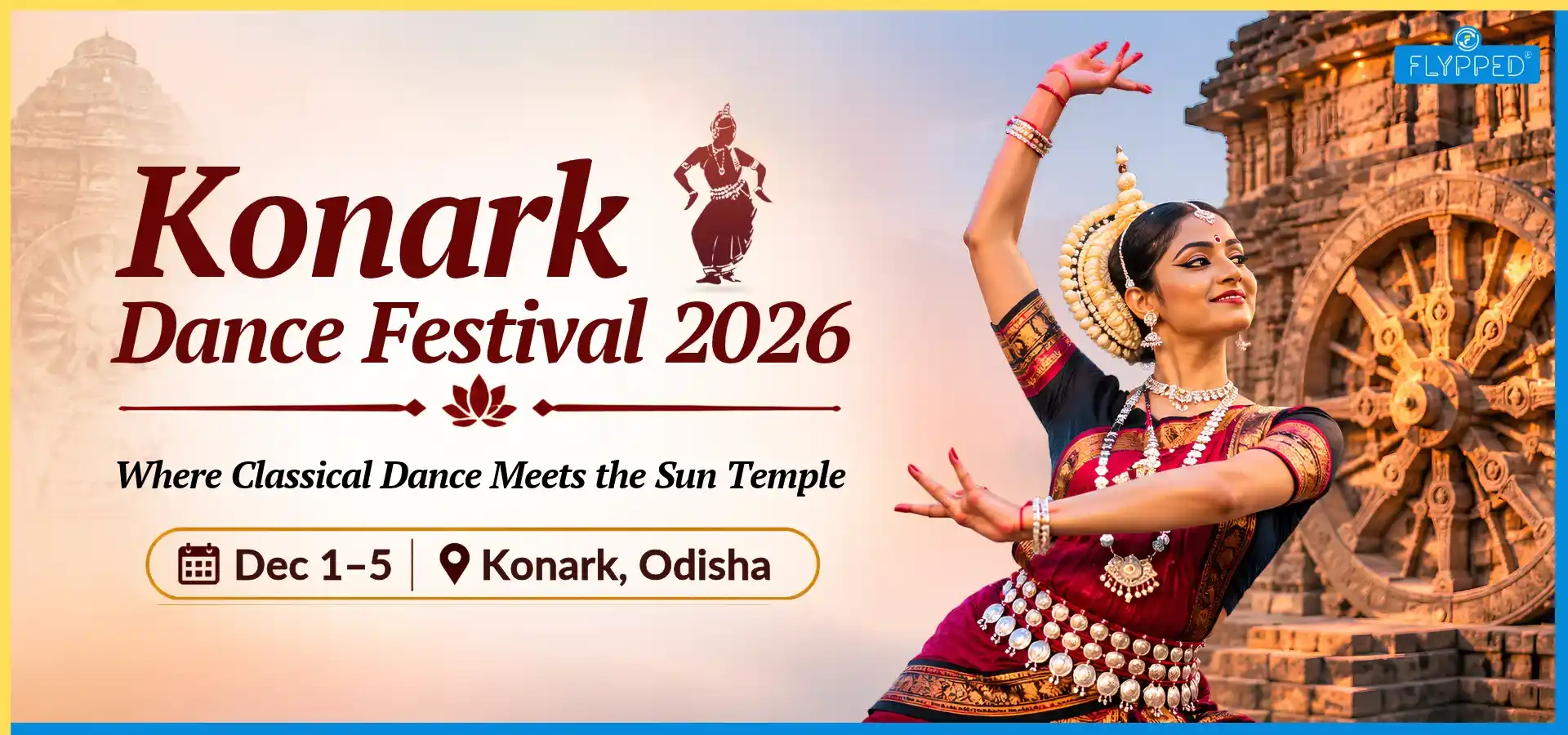
Step into a sensory scene of soft ghungroo bells, the graceful Odissi tribhangi pose and a UNESCO-listed temple illuminated majestically behind the stage.
The Konark Dance Festival is a mesmerising celebration of Indian arts, held against the breathtaking backdrop of the 13th-century Konark Sun Temple in Odisha. This 5-night cultural gathering brings together the finest exponents of the classical dances of India, performing under the open winter sky to honour the nation’s rich artistic legacy.
By blending ancient architecture with rhythmic movement, the event provides a unique opportunity to witness traditional performances in an authentic, historic setting. If you're curious about the Konark Festival history or planning your visit for the upcoming season, this guide explores the significance and charm of this annual cultural spectacle.
NOTE: Read spiritual insights, meditation tips, religious stories, and Latest updates for mindful living.
What is the Konark Dance Festival?
The Konark Dance Festival, also called the konark dance & music festival, or simply the Konark Festival, is an annual celebration of Indian classical dance. It is held in Odisha near the magnificent Konark Sun Temple. This gathering serves as a vital platform for classical artists and culture enthusiasts, showcasing where the event takes place, who it is curated for and why it holds profound cultural importance in the region.
Konark Festival History: From 1986 to Today
Started in 1986 and organised by Odisha Tourism, with the Odissi Research Centre cited as a partner, this event initially centred on Odissi before widening to welcome dancers from across India. A parallel International Sand Art Festival is held at Chandrabhaga Beach (started in 2015).
A common confusion often arises with the Konark Natya Mandap, founded by Guru Gangadhar Pradhan, which holds its own separate dance and music festival (its 2026 edition is reported for February 19).
Please note that this is a completely different event from the December festival.
Konark Sun Temple: The Sacred Backdrop
Built in the 13th century by King Narasimhadeva I of the Eastern Ganga dynasty, the Konark Sun Temple was designed as a colossal chariot of Surya, the Sun God, complete with 24 carved wheels and seven horses. It became a designated UNESCO World Heritage Site in 1984.
The temple's Natya Mandap (dance hall) carries exquisite sculptures of dancers and musicians, serving as a direct architectural link between the ancient stone carvings and the modern stage. Surya worship, sunrise traditions, and the sacred energy of Chandrabhaga further deepen the spiritual resonance of the monument.
Konark Festival Significance: Why It Matters Spiritually and Culturally
The festival embodies dance as worship (nritya as sadhana), carrying forward the ancient temple dance tradition. It plays a crucial role in preserving heritage and giving classical artists a national stage while supporting cultural tourism in Odisha.
Classical Dances of India You'll See
Odissi serves as the emotional heart of the festival, tracing its origins to Odisha's ancient temples and recognized by its signature tribhangi posture, sculptural poses and deep devotional themes. Alongside Odissi, the festival typically features other major classical dances of India. The Sangeet Natak Akademi recognises eight to nine classical dances.
| Dance Form | Home State | One-Line Signature |
| Odissi | Odisha | Characterised by the graceful tribhangi posture and lyrical flowing movements |
| Bharatanatyam | Tamil Nadu | Known for fixed upper torso, bent legs and intricate footwork |
| Kathak | Uttar Pradesh | Famous for lightning-fast spins, complex rhythms and storytelling. |
| Kuchipudi | Andhra Pradesh | Combines fast rhythmic footwork with dramatic characterization and theatricality |
| Sattriya | Assam | Originated in Vaishnavite monasteries and blends dance, drama, and devotional music. |
| Mohiniyattam | Kerala | A graceful, swaying solo style traditionally performed by women. |
| Manipuri | Manipur | Characterized by fluid, graceful movements and themes centered on Radha and Krishna. |
| Kathakali | Kerala | A dramatic dance-drama marked by elaborate makeup, costumes, and expressive eye and facial movements. |
| Chhau | Odisha, Jharkhand & West Bengal | Semi-classical martial dance famous for acrobatic leaps, thunderous drumming, and dramatic mythological storytelling performed with or without elaborate masks. |
Konark Festival Dates 2026
According to the official Odisha Tourism listing via Incredible India, the dates are December 1-5, 2026, adhering to its annual schedule in early December. The venue is the Konark Open Air Auditorium, which overlooks the majestic Konark Sun Temple. Evenings serve as the main performance slots.
Please note an update: confirm the final schedule and performer line-up directly on the official Odisha Tourism site, as line-ups are typically released close to the event date.
Konark Festival Tickets and Entry
You can check the official Odisha Tourism website for updates on how to find on-site passes and seating arrangements and whether general entry is free or ticketed. Additionally, remember that the separate Sun Temple entry fee is set by the Archaeological Survey of India and should be verified independently.
- General Entry (Single Evening): ₹100 per person, as listed by Odisha Tourism.
- Season Pass (All 5 Days): ₹400 per person for access across all five festival evenings.
Note on Other Festivals: Do not confuse this state-run December event with the separate private Konark Dance & Music Festival held in February (whose VIP and charity passes cost ₹1,000-₹25,000).
How to Reach Konark and Plan Your Stay
- Nearest Airport: Biju Patnaik International Airport, Bhubaneswar (about 65 km away, roughly 1.5 hours by road).
- Nearest Railhead: Puri (about 35 km away). Bhubaneswar is also a major rail hub option.
- Stay Options: Choose accommodation in Konark, Puri or Bhubaneswar. It is wise to book early, as December marks peak tourist season.
- Weather: Expect pleasant, cool and dry weather conditions in early December.
Make It a Spiritual Journey: Itinerary Ideas
To make the most of your trip, consider a sample plan that includes exploring Bhubaneswar's ancient temples (such as Lingaraj and Mukteshwar), visiting the revered Jagannath Temple in Puri, taking in the Konark Sun Temple by day and attending the festival performances in the evening.
You can also experience Chandrabhaga Beach at sunrise alongside the concurrent Sand Art Festival. Include quiet moments of reflection, such as a sunrise meditation spot or a peaceful temple visit before the evening show begins.
Travel Tips and Etiquette
- Observe photography and recording rules carefully during the performances.
- Dress modestly when visiting temples and sacred sites.
- Carry drinking water, light woollens for the cool evenings and proper sun protection for daytime sightseeing.
- Pre-book your return transport from the venue ahead of time, as evening shows draw large crowds.
Final Thoughts
The Konark Dance Festival remains an extraordinary symbol of cultural preservation, offering a unique blend of history, spirituality and artistic brilliance. By gathering under the shadows of the ancient Sun Temple, you become part of an enduring tradition that celebrates the classical dances of India. Plan your journey today to ensure you do not miss this spectacular programme in the coming season.
Read More:
Frequently Asked Questions
Find answers to common questions about this topic
It is a premier annual celebration of Indian classical dance hosted against the historical backdrop of the Konark Sun Temple in Odisha.
It is scheduled for December 1-5, 2026, keeping with its traditional early-December timeline.
It takes place at the Konark Open Air Auditorium, located right next to the Konark Sun Temple in Odisha.
Ticketing and entry details vary by year; visitors should check the official Odisha Tourism portal closer to the event dates for current booking procedures.
The festival was established in 1986 by Odisha Tourism in partnership with the Odissi Research Centre to promote traditional Indian dance forms.
Performances prominently feature Odissi, Bharatanatyam, Kathak, Kuchipudi, Manipuri, Kathakali, and Sattriya.
No, they are different events; the Konark Natya Mandap hosts a separate independent festival, typically held in February.