Trump Highlights ‘Operation Midnight Hammer’ as Iran Truce Wavers
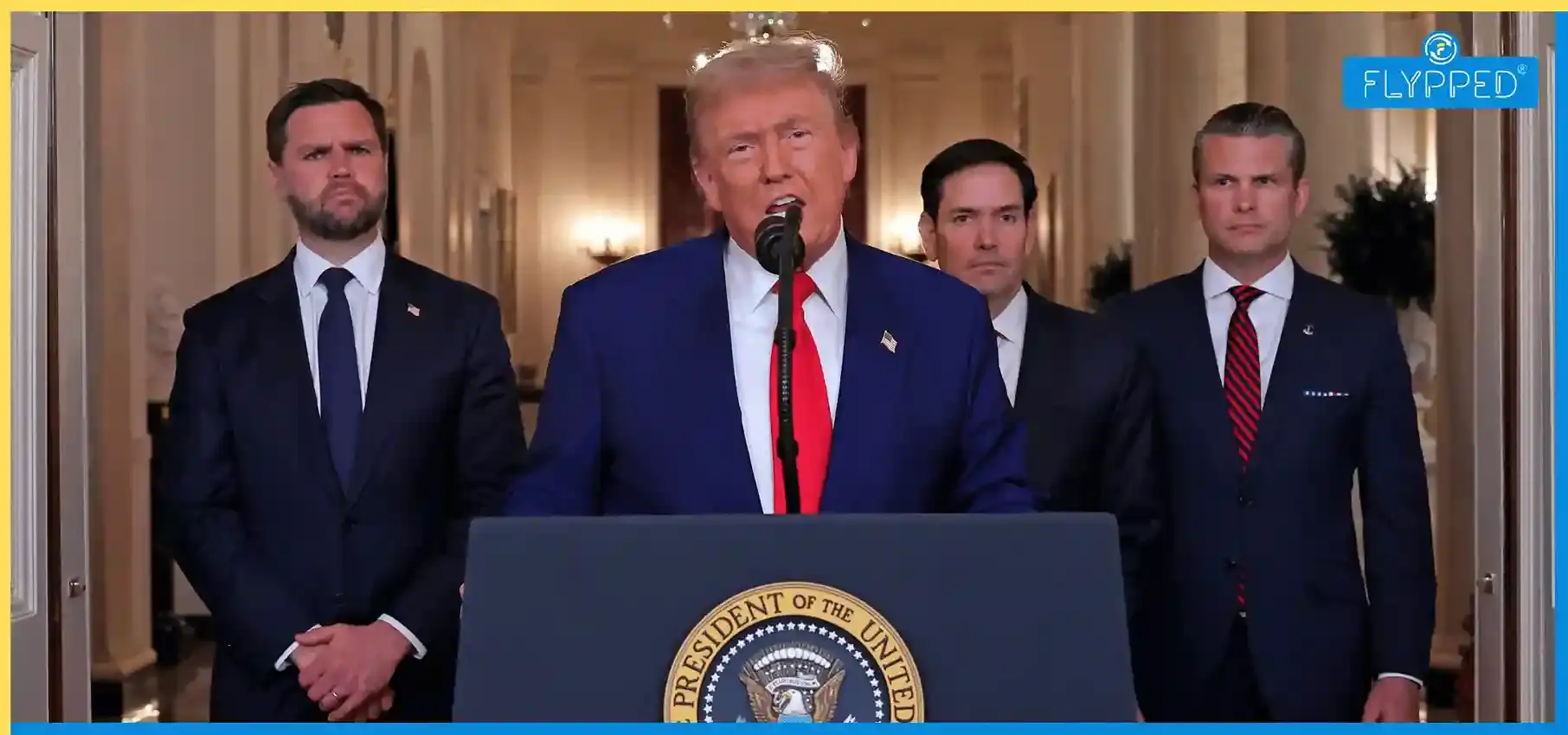
US President Donald Trump said on Monday that Operation Midnight Hammer had completely destroyed Iran's nuclear sites. He added, “digging it out will be a long and difficult process.”
The United States launched Operation Midnight Hammer against Iran in June last year, following 12 days of Israeli airstrikes on parts of the country over its alleged nuclear program.
Trump said that media outlets “fail to give our great aviators the credit they deserve,” and in a post on Truth Social, he accused them of "always trying to demean and belittle - LOSERS!!!”
Iran’s Nuclear Sites Destroyed
On June 22 last year, the United States Air Force and Navy attacked three key nuclear facilities in Iran: the Fordow Uranium Enrichment Plant, the Natanz Nuclear Facility, and the Isfahan Nuclear Technology Centre.
The operation, called Operation Midnight Hammer, used bunker buster bombs delivered by B-2 Spirit stealth bombers.
The attack marked the United States' official entry into the “twelve-day war,” which began on June 13 with surprise Israeli strikes and ended with a ceasefire on June 24, 2025.
On February 28 this year, Iran faced joint military attacks from the United States and Israel. This full-scale war shook the entire Gulf region, after which Iran closed down the vital waterway route, the Strait of Hormuz. Its closure resulted in disruption in global shipping and heightened tensions.
US-Iran Talks: Tensions Remain Unresolved
Missiles and drones were exchanged for more than a month, and the fighting paused only recently, after a two-week ceasefire was announced following Pakistan-brokered talks between Iran and the US.
As the two-week ceasefire nears its end on Wednesday, April 22, both the United States and Iran have warned they are ready for war.
Talks that President Donald Trump suggested would resume in Pakistan remain uncertain. The White House has stated that Vice President JD Vance was prepared to return to Islamabad, Pakistan’s capital, for a second round of talks aimed at ending the war.
The conflict has spread across the Middle East, causing widespread disruption in global markets.
However, Iran’s cleric-led government did not confirm its participation and accused the United States of breaking the truce by blockading Iranian ports and seizing a ship.
US-Iran Ceasefire: Ghalibaf Says Trump Uses Blockade to Force Iran’s Surrender or Restart War
According to Iran’s parliament speaker Mohammad Bagher Ghalibaf, by imposing a blockade and breaking the ceasefire, US President Donald Trump wants to force Iran to surrender or justify restarting the war.
Writing on X, he mentioned that accepting negotiations under the shadow of threats is not at all possible. Ghalibaf added that in the last two weeks, there had been preparations to show new cards on the battlefield.
Iran Threatens to Strike Vessels in Strait of Hormuz
Iran’s Revolutionary Guards have warned that any vessel passing through the Strait of Hormuz without permission will be targeted. Trump has also accused Tehran of breaking the truce by harassing ships in the key strait.
This waterway carries about a fifth of the world’s oil and was nearly closed by Iran in response to the war started on February 28 by the United States and Israel.
Iran Ceasefire: Strait of Hormuz Dispute Deepens
Both sides have engaged in a war of words, with the US pointing to Iran’s actions in the Strait of Hormuz as a clear violation of the terms of the ceasefire.
The continued tensions in this critical region have further complicated the already fragile peace talks and raised concerns about the potential for a wider regional conflict.
The Road Ahead: A Fragile Peace or Escalation?
As the deadline for the ceasefire approaches, the prospect of renewed fighting looms large. Both the United States and Iran have warned of their readiness for war, with military preparations continuing on both sides.
The ceasefire, though temporary, has not brought lasting peace, and it remains to be seen whether the talks in Pakistan will be fruitful or whether the conflict will escalate once again.
The situation in the Middle East remains highly volatile, with the outcome of the conflict uncertain. The world watches closely, hoping for a peaceful resolution but bracing for the possibility of more violence and instability.
The fate of the Strait of Hormuz, Iran’s nuclear program, and the broader geopolitical landscape hang in the balance as the United States and Iran continue their fraught and volatile standoff.
Frequently Asked Questions
Find answers to common questions about this topic
Trump claimed that U.S. bombings in June 2025 destroyed Iran’s uranium enrichment facilities, describing them as “completely and totally obliterated.” He added that recovering any remaining nuclear material (“nuclear dust”) would be “difficult and time-consuming.”
Trump said Iran agreed to hand over the “nuclear dust” (leftover enriched uranium) during negotiations. However, Iran has publicly denied agreeing to send its enriched uranium abroad.
Diplomatic efforts have stalled because Iran refuses U.S. demands, such as permanent limits on uranium enrichment and sanctions relief. Iran has also said it’s not ready for direct talks. U.S. actions like a naval blockade and the seizure of an Iranian ship have increased tensions, making negotiations harder.
A temporary ceasefire, part of broader regional conflict dynamics, is about to end. With key disagreements unresolved and peace talks uncertain, the future of the truce is unclear.
The halted talks raise the risk of renewed conflict and more disruptions in the Strait of Hormuz, a key oil shipping route. There are also economic concerns, like changes in oil prices, and ongoing regional security issues as both sides consider their next steps.