
Signs of a Weak Man in a Relationship Every Woman Should Know
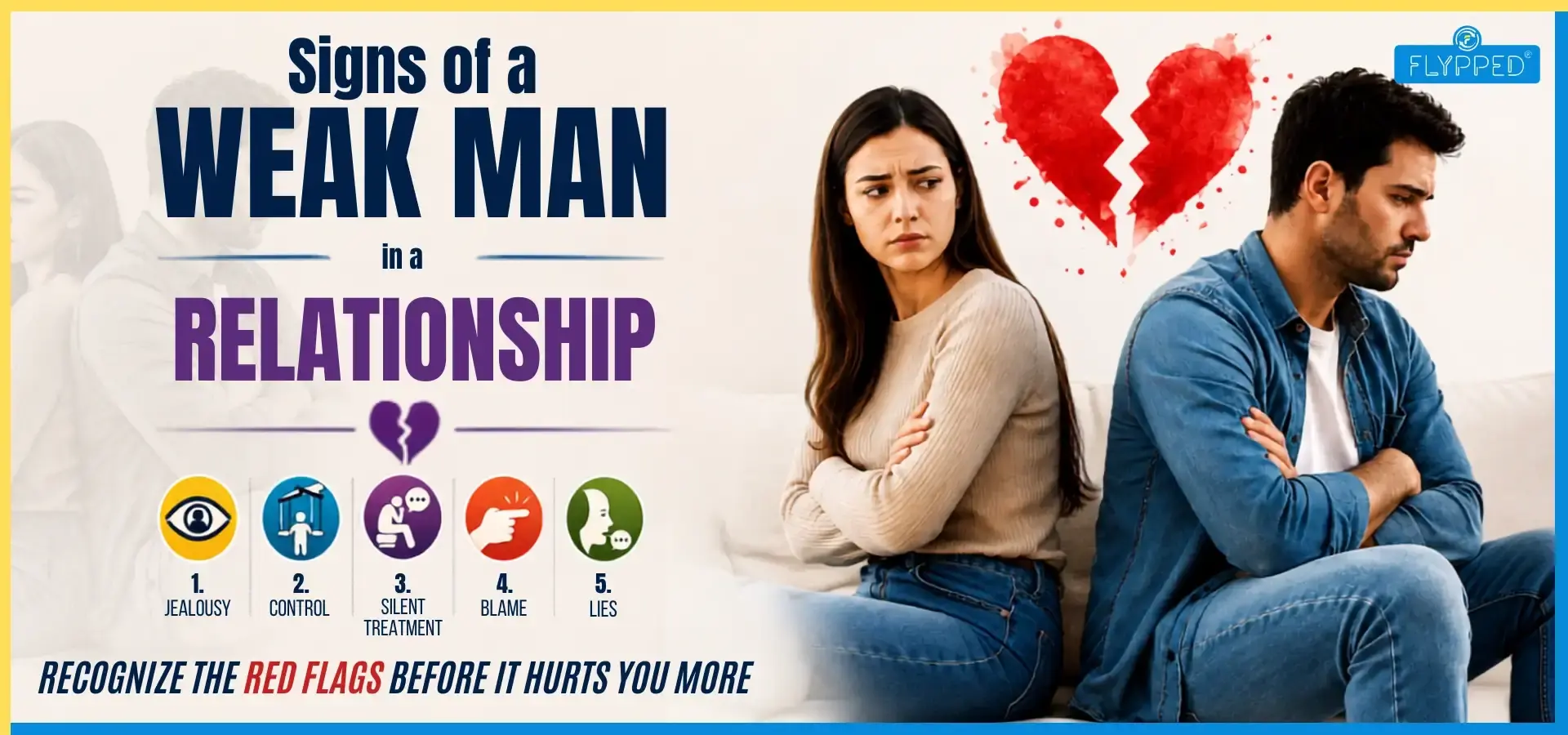
Relationships have a funny way of showing us exactly who someone is, usually right when we least expect it. You can date someone for months, convinced they\'re everything you wanted and then one ordinary day, something shifts. He cancels plans without a real reason. He goes quiet when things get hard instead of talking it through. He blames you for something that was clearly his mistake. And slowly, you start wondering if what you\'re seeing is just a bad week or something deeper.
That "something deeper" is often what people mean when they talk about the signs of a weak man in a relationship. Not weak in the sense of muscles or money or ambition but weak in the way that actually matters long-term: emotional strength, self-awareness and the ability to show up for another person consistently.
NOTE: Read relationship tips, dating advice, marriage insights, and latest updates for stronger connections.
This isn\'t about tearing men down or painting an unfair picture. Plenty of men struggle with these patterns without even realizing it and some grow out of them with time and effort. But if you\'re in a relationship right now and something feels off, it helps to know what you\'re actually looking at. Let\'s break it down.
What Does It Mean to Be a Weak Man in a Relationship?
Being a "weak man" in a relationship has nothing to do with physical strength or how much he earns. It\'s about emotional capacity. It\'s whether he can hold space for someone else\'s feelings without falling apart, deflecting or making everything about himself.
A man who\'s emotionally weak tends to avoid discomfort at all costs. Instead of facing a hard conversation, he\'ll dodge it. Instead of admitting he\'s wrong, he\'ll twist the story until somehow it\'s your fault. Instead of sitting with uncertainty, he needs constant reassurance, attention or control to feel okay.
This kind of weakness usually isn\'t loud. It doesn\'t always look dramatic from the outside. It shows up in small, repeated moments that quietly wear a person down over time. And that\'s exactly why it\'s often mistaken for something else, like "he\'s just stressed" or "he\'s not a talker" or "he\'ll open up eventually."
Sometimes he will. But often, this is just who he is underneath the surface and no amount of patience on your part is going to fix a problem that isn\'t yours to fix.
Signs of a Weak Man in a Relationship
There are early indicators that tend to show up before anything more serious. They\'re easy to miss because they can look like normal personality quirks at first.
He Avoids Responsibility
Ask him about a mistake and watch what happens. A man who lacks emotional strength will almost never say "you\'re right, that was on me." Instead, he\'ll explain it away, blame the situation or somehow make it about something you did first. Accountability requires a kind of emotional maturity that he simply hasn\'t built yet, so he sidesteps it every time.
He Is Afraid of Commitment
Fear of commitment doesn\'t always look like refusing to define the relationship. Sometimes it looks like one foot in and one foot out, forever. He talks about the future in vague terms. He avoids meeting your family. He gets strangely distant right when things start feeling real. This hesitation usually isn\'t about you; it\'s about his own unresolved fear of being fully seen and fully responsible for someone else\'s heart.
He Struggles to Express Emotions
You ask how he\'s feeling, and you get a shrug, a joke, or silence. Emotionally unavailable men often weren\'t taught how to name what they feel, so instead they bottle it up until it leaks out sideways, as irritability, withdrawal, or sudden anger over something small. Living with someone who can\'t express emotions honestly means you\'re often left guessing what\'s actually going on in his head.
Major Signs of a Weak Man in a Relationship
If the earlier signs go unaddressed, they tend to grow into patterns that are harder to excuse and harder to live with.
He Uses Emotional Manipulation
This is one of the more damaging red flags in a relationship. Emotional manipulation can look like guilt-tripping, gaslighting, playing the victim or twisting your words until you\'re apologizing for something you didn\'t even do. It\'s subtle enough that you might question your own memory of events. Over time, this erodes your confidence and makes you doubt your own perception of reality, which is exactly the point.
He Shows Constant Insecurity
An emotionally insecure man often needs constant validation to feel stable. He might get jealous over harmless things, need you to check in constantly, or grow anxious anytime you have a life outside of him. At first this can be mistaken for love or devotion. In reality, it\'s often fear dressed up as affection, and it puts an exhausting amount of emotional labor on you to keep reassuring him.
He Displays Controlling Behavior
Controlling behavior in relationships doesn\'t always start with big, obvious demands. It often begins small: an opinion about what you wear, a comment about who you\'re spending time with, a "joke" about your friends that isn\'t really a joke. Over time these comments can turn into rules, restrictions, and monitoring. Control is frequently a mask for insecurity and weakness, not strength, no matter how it\'s framed.
He Disrespects Your Feelings
Disrespect in a relationship isn\'t always loud or cruel. Sometimes it\'s dismissive, like rolling his eyes when you bring up something that matters to you, or minimizing your emotions with "you\'re overreacting." A partner who consistently disregards how you feel is signaling that your inner world isn\'t a priority to him, which is a hard thing to build a future on.
He Cannot Handle Conflict Maturely
Disagreements are normal in every relationship. What matters is how someone handles them. A weak man tends to shut down, storm off, get defensive, or escalate small disagreements into full blown fights. Instead of working through the issue together, conflict becomes something to survive rather than resolve.
He Doesn\'t Trust You
Trust issues in a relationship often stem from a man\'s own past, insecurities, or unresolved wounds, but they get projected onto you regardless. He checks your phone. He questions your whereabouts. He assumes the worst about your intentions without evidence. Living under constant suspicion is draining, and it usually has very little to do with anything you\'ve actually done.
He Acts Like an Emotionally Immature Man
An emotionally immature man tends to prioritize his comfort over your needs, sulk instead of communicating, and expect you to manage his moods like you would a child\'s. He wants the benefits of a partnership without the responsibilities that come with one. This immaturity can be charming in small doses early on, but it becomes exhausting fast once real life responsibilities enter the picture.
Why These Behaviors Become Red Flags
None of these signs exist in isolation. What makes them toxic relationship signs rather than just personality flaws is the pattern they create over time. A single bad day isn\'t a red flag. A repeated cycle of avoidance, manipulation, control and disrespect is.
These behaviors chip away at your self-esteem, your sense of safety, and your trust in your own judgment. You might find yourself constantly walking on eggshells, second-guessing your instincts, or shrinking your own needs just to avoid conflict. It\'s rarely one big incident that breaks a relationship. It\'s the slow accumulation of small moments where you learn that your feelings aren\'t safe to bring up.
What Causes Emotional Weakness in Some Men?
It\'s worth understanding where this comes from, not to excuse it, but to make sense of it. Many men grow up in environments where vulnerability wasn\'t welcomed. They were taught that expressing sadness or fear made them weak, so they learned to suppress emotions instead of processing them. Some carry unresolved trauma from past relationships or childhood experiences that left them with trust issues or a fear of abandonment. Others simply never had healthy role models who showed them what emotional maturity actually looks like in practice.
None of this is your responsibility to fix. Understanding the root cause can bring compassion, but compassion doesn\'t mean staying in a relationship that\'s hurting you while you wait for someone else to heal.
How to Deal With a Weak Man in a Relationship
If you recognize these patterns in your own relationship, you don\'t have to accept them as permanent or unchangeable. Here\'s practical relationship advice for handling this with clarity instead of confusion.
Communicate Clearly
Say what you mean directly, without softening it into something unrecognizable. "When you dismiss my feelings, it hurts me" lands very differently than hinting around the issue and hoping he picks up on it. Clear communication also gives him the chance to actually change, if he\'s capable of it.
Stop Enabling Toxic Behaviors
Every time you excuse manipulation, dismiss controlling behavior as "he just cares," or absorb blame that isn\'t yours, you\'re reinforcing the pattern. Boundaries only work if they\'re followed by real consequences, not just words.
Prioritize Your Mental Health
Your peace of mind matters more than keeping the relationship comfortable for him. Lean on friends, consider therapy, and pay attention to how you feel about yourself when you\'re around him versus when you\'re not. That difference tells you a lot.
Know When to Walk Away
Sometimes the most loving thing you can do, for yourself and even for him, is to leave. Growth requires accountability and some people only find that accountability once the relationship is no longer there to cushion the consequences of their behavior. You are not responsible for fixing someone who isn\'t willing to look at themselves honestly.
Final Thoughts
Recognizing the signs of a weak man in a relationship isn\'t about judging every man who has a bad day or struggles occasionally with vulnerability. It\'s about noticing patterns that repeat, patterns that leave you smaller, more anxious and less like yourself. Trust what you\'re seeing. Trust what you\'re feeling. You deserve a relationship built on honesty, respect and emotional maturity, not one where you\'re constantly managing someone else\'s fear of growing up.
Read More: