
Salasar Balaji Temple: Darshan, History, Miracles & Complete Travel Guide
Introduction
Salasar Balaji Temple is in Churu district, Rajasthan, and is dedicated to Lord Hanuman. Every year, millions of devotees come here for blessings and peace.
People come here carrying their worries, questions, and silent prayers. Many leave feeling lighter.
This sacred Hanuman temple, known as Balaji, offers more than just rituals or traditions. It creates a quiet sense of connection and helps you feel seen, even in a crowd.
For many devotees, visiting is more than a routine. It is an experience of trust, surrender, and something beyond words.
This guide shares tips on the best time to visit, nearby railway stations, train choices, and food delivery to help make your pilgrimage smoother and more memorable.
Salasar Balaji History
The Salasar Balaji Temple’s story starts in the small village of Asota in Rajasthan.
Local stories say a farmer was ploughing his field when his plough hit something hard. As he dug further, he found an idol.
That same day, in distant Salasar, the temple priest dreamed that Balaji asked him to bring the murti there.
This story is special because both events happened at the same time, even though they were not connected. The idol was taken to Salasar with devotion and faith.
Over time, the place became a center of worship. As more people visited, the temple grew. Even now, when you visit, the story feels fresh, almost as if it happened only recently.
Surprising Facts About Salasar Balaji Idol
There are several interesting things about the idol of Lord Hanuman in this temple.
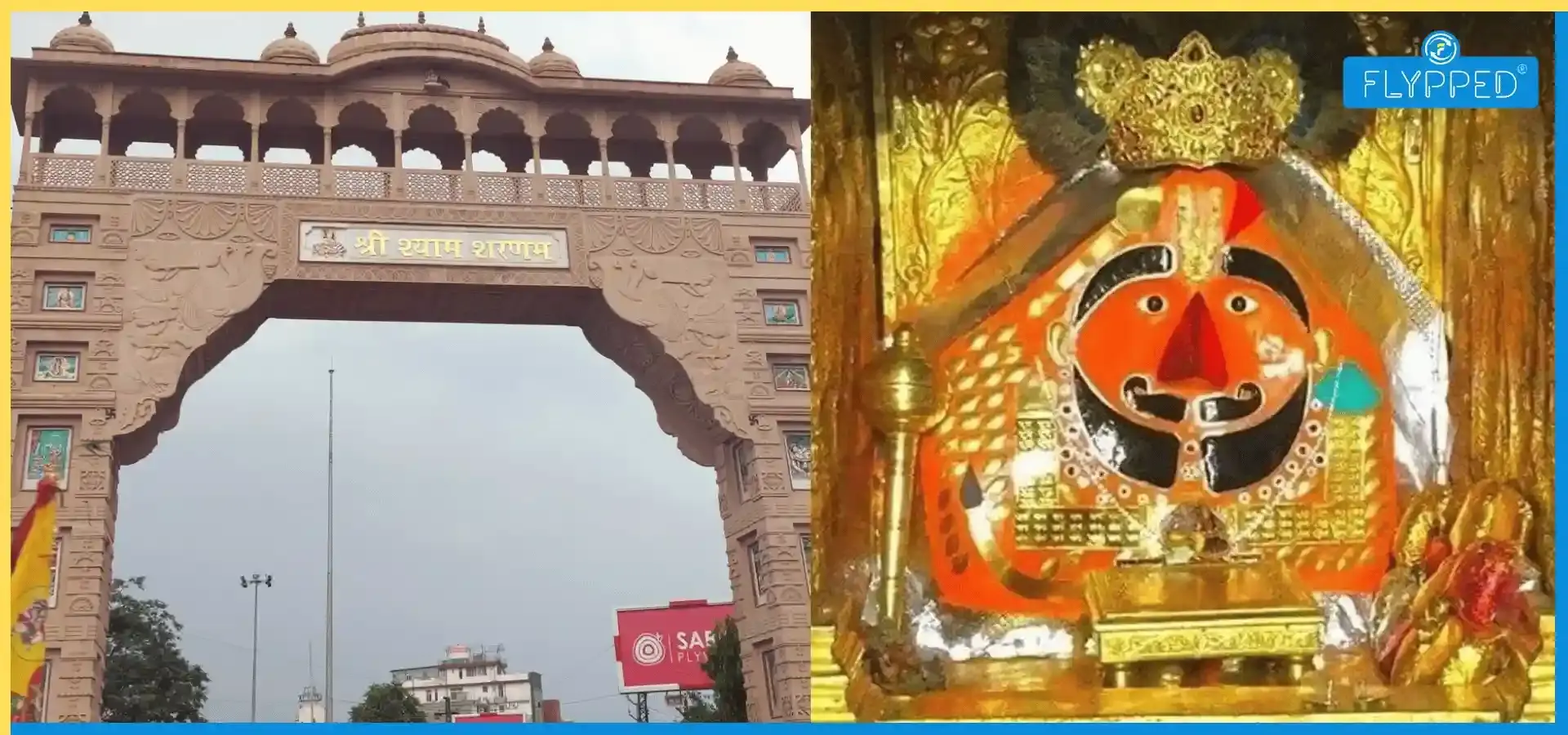
- One of the most unique features is that this is the first idol of Hanuman Ji with a moustache, which is not found in Hanuman temples in other Indian states.
- Many people think the murti at the Salasar Balaji Temple is special and has a presence that visitors notice right away.
- The beard and moustache give Balaji a grounded, almost human look. Rather than just being a symbol, the image seems real, approachable, and familiar.
- Some believe the murti was not created by artists but found as it is. This supports the idea that Balaji here is self-manifested (swayambhu).
- Many devotees say that when they stand before the murti, it feels as if someone is truly listening. They do not feel judged or pressured; they feel only heard.
Salasar Balaji Mandir Location
Salasar Balaji Mandir is situated in the small but spiritually significant town of Salasar, in the Churu district of Rajasthan, India. The temple sits at the heart of the town, which has essentially grown around this sacred shrine over centuries.
Importance of Salasar Balaji
- Salasar Balaji temple, dedicated to Lord Hanuman, holds special meaning for many people.
- Visitors come here to find strength, courage, and protection in difficult times.
- The temple helps bring the community together through shared faith and devotion.
- During festivals and special occasions, it is filled with pilgrims, lively chants, and the scent of incense. The atmosphere is both spiritual and welcoming.
Salasar Balaji Temple Timings
Darshan at Salasar Balaji Temple starts early in the morning and goes on until late in the evening.
- The morning aarti happens between 4:00 AM and 5:00 AM.
- The evening aarti takes place after sunset.
The temple stays open all day, so you can visit at any time. Tuesdays and Saturdays are special for Hanuman ji, so it tends to be more crowded then. During festivals, you might have to wait even longer.
The temple\'s rituals are simple. Take a moment upon entering to absorb the spiritual energy around you.
You don’t have to do everything perfectly. Just being there is enough.
Best Time to Visit Salasar Balaji
For a more enjoyable spiritual experience, plan your visit to the Salasar Balaji Temple on a day with good weather.
1. Summer (April to June)
Summers here are very hot, and average temperatures often go above 40°C. If you want to attend darshan during this season, try to visit early in the morning or later in the evening when it is cooler and more comfortable.
2. Monsoon (July to September)
During the monsoon season, the area around the temple becomes peaceful and lush with green trees. However, when it rains heavily, it can be hard for travellers to move around.
3. Winter (October to March)
Now is a good time to visit because the weather is mild, with temperatures between 10°C and 25°C. Many devotees come during this season for darshan and to explore other attractions.
Festive Seasons
The Salasar Balaji Temple gets especially crowded during Hanuman Jayanti and other festivals like Ram Navami. Despite the large crowds, the devotion people show here stands out and feels unique.
Salasar Balaji Miracles
At Salasar Balaji Temple, people build their faith through personal experiences.
A popular tradition here is the coconut offering, known as nariyal bandhna. Devotees tie a coconut to a tree in the temple grounds and make a wish. If their wish comes true, they return to untie the coconut.
This simple act means a lot. It is not only about making a request, but also about trusting the process.
They believe that Balaji listens quickly. Difficult situations start to get better. Feeling immense strength inside.
Even those who arrive with doubts often leave feeling different. Sometimes, the true miracle is not what happens around us, but what changes inside us.
How To Reach Salasar Balaji Temple
Once you reach the nearest railway station to Salasar Balaji, you have several options to continue your journey:
By Train
- Ratangarh Junction is 50 km away and offers connections to several other cities in Rajasthan.
- Laxmangarh Railway Station is another option, located about 55 kilometres from Salasar.
- These stations make it easier for devotees from across India to reach the site.
By Road
- It’s easy to reach Salasar Balaji from Sujangarh or Ratangarh. Regular RSRTC buses, private deluxe buses, and tourist buses all run this route.
- You’ll find taxis and cabs at the railway stations, and booking ahead can make your journey easier.
- For short distances, auto rickshaws are a simple and budget-friendly choice at both stations.
Nearby Places To Visit Near Salasar Balaji
- Significance of Hindu temples: Many devotees visit the Salasar Balaji Temple and often explore other sacred places nearby.
- Besides this Hanuman temple in Rajasthan, Khatu Shyam Ji Temple and Jeen Mata Temple are two of the most popular nearby destinations.
- Because these places are close to each other, many people visit them on the same trip.
- For many devotees, the journey is more than just visiting temples; it is about completing a spiritual circuit.
- Akin to Salasar Balaji and Khatu Shyam, another major part of religious tourism in India, it has a rich history dating back to the Mahabharata era.
- In short, Khatu Shyam, who was initially called Barbarik, received a boon from Lord Krishna to view the Kurukshetra war after his head was placed atop the hill.
- It was a donation he gave to Krishna, as he could have changed the course of the Mahabharata war with his three divine weapons.
- Impressed by his devotion, Krishna gave him one of his names, Shyam, and blessed him that his worship would be equivalent to his in Kaliyuga.
- Today, it stands among Rajasthan\'s most cherished spiritual landmarks, drawing countless pilgrims each year.
Things To Keep In Mind During Salasar Balaji Darshan
Here are some simple tips to help you have a peaceful visit.
- Try to stay calm and patient, even when the temple is busy.
- Please follow the temple guidelines and respect the space.
- Take your time during darshan and remember, there’s no need to rush.
- Most importantly, try to focus on your inner self.
- The temple is not only a place to visit, but also a space to reflect and connect with your feelings.
Final Thoughts
The Salasar Balaji Temple means more than faith, rituals, or traditions. It is about quietly trusting that somewhere, someone understands your struggles, your silence, and your unspoken prayers.
People come for many reasons — some seeking miracles, some carrying burdens too heavy to share, and some simply looking for a moment of stillness in a chaotic world.
The temple asks nothing of you except your presence and an open heart.
Most leave feeling a little more peaceful, a little stronger, and with a little more faith restored within them.
And sometimes, in the most overwhelming of times, that is truly enough.