
Jwalamukhi Devi Temple: History, Timings and Significance of the Eternal Flame
Introduction
Among the unique sacred shrines in India is the Jwalamukhi temple, located near the beautiful Kangra valley.
It is considered one of the Shaktipeethas and is believed to be the place where the Goddess's tongue fell.
Inside the temple, people say the Goddess appears as blue flames.
These nine flames, which burn continuously, are thought to represent the nine forms of the Goddess: Maha Kali, Maa Annapurna, Maa Chandi, Maa Hinglaj, Vindhyavasini, Maha Lakshmi, Maha Saraswati, Maa Ambika, and Anjana Devi.
Raja Bhumi Chand started building the present temple, and Maharaja Ranjit Singh completed it in 1835.
NOTE: Read spiritual insights, meditation tips, religious stories, and latest updates for mindful living.
Many people believe the Pandavas worshipped here. There are also stories that Mughal emperors Akbar and Jehangir visited the temple.
According to one legend, Akbar came to test the Goddess's power. Dhyanu Bhagat, a devotee from Akbar's time, is remembered for making the shrine famous.
Today, in this guide, we will unveil the temple's history, spiritual significance, the mystery of the eternal flame, temple timings, festivals, architecture, travel tips, and much more.
What is Jwalamukhi Devi Temple?
Jwalamukhi Devi Temple is a famous Hindu temple dedicated to Goddess Jwalamukhi, who is worshipped as the Goddess of Fire.
The name "Jwalamukhi" comes from two Sanskrit words—"Jwala," meaning flame, and "Mukhi," meaning face or mouth.
Instead of an idol, the temple houses natural flames that emerge from the rocks, and these flames are considered the living form of the Goddess.
According to Hindu beliefs, this temple is one of the most important Shakti Peethas. It is believed that the tongue of Goddess Sati fell at this place after Lord Vishnu used his Sudarshan Chakra to divide her body into several parts.
Since then, devotees have worshipped this sacred site as a symbol of divine energy and power.
The temple attracts pilgrims throughout the year who come to offer prayers, perform rituals, and seek blessings for health, happiness, prosperity, and protection.
Location and Travel Guide
Jwalamukhi Devi Temple is situated in the Kangra district of Himachal Pradesh, approximately 35 kilometres south of Dharamshala.
The temple is surrounded by scenic hills, making the journey both spiritual and enjoyable.
How to Reach Jwalamukhi Devi Temple
By Air
Gaggal Airport is the nearest airport to Jwalamukhi Temple, located around 46 km away. You can catch flights from there to Delhi, Chandigarh, and Kullu. Indian Airlines also runs flights from Delhi to Dharamsala three times a week.
By Train
Kangra Railway Station is just 2 km from Jwalamukhi Temple, so it is the nearest option. If you are looking for a broad-gauge train, Pathankot is the closest station, 123 km away. For narrow-gauge trains, the mountain train from Kangra is the most convenient choice.
By Road
Jwalamukhi Temple is about 140 km from Pathankot via Dharamsala, 30 km from Kangra, and 56 km from Dharamsala. Buses run from Pathankot. By road from Delhi or Chandigarh, travel via Una, Amb, and Mubarikpur, then follow NH20A and SH22 through Chintpurni and Dehra Gopipur to reach the temple.
Best Time to Visit
To go and visit Jwala Ji in Himachal Pradesh, April and June are the best months since the weather is pleasant, and the temperature ranges from 22 to 30 degrees Celsius, which is ideal for sightseeing, trekking and going to the temple to ask for blessings from Goddess Jwala Ji.
January through February are also excellent months to visit the Jwala Ji Temple, as snow may occur during this period, so it is important that you check the weather forecast before going.
Jwalamukhi Temple History
According to legend, a king decided to build the temple after witnessing a woman appear and drink milk from the cows, which he took as a divine sign.
He found the location and started building. Priests were appointed to perform Pujas and look after the temple.
Some people also believe the Pandavas renovated it. Mughal Emperor Akbar visited, tried to put out the flames but could not, so he honoured the Goddess with a Golden Umbrella.
In 1809, Maharaja Ranjit Singh of Punjab visited and donated a gilt roof, and his son Kharak Singh later gave a pair of silver-plated folding doors.
Regarding Hindu mythology, Jwalamukhi Temple stands as one of the sacred Shakti Peeths, forever linked to the divine tale of Goddess Sati's sacrifice.
It all happened when Sati's father, Daksha, organised a yagna. He hated Shiva and considered him unfit to be her husband.
This hurt Sati deeply, leading her to take her own life by leaping into the fire used for the ritual.
Grief-stricken and furious, Shiva lifted Sati's body and performed the Tandav, a dance that symbolises destruction.
To stop Shiva from causing chaos in the universe, Lord Vishnu used his discus (Sudarshan Chakra) to divide Sati's body into many parts.
The locations where these parts fell came to be known as Shakti Peeths. The Jwalamukhi temple is believed to be situated at the place where Sati's tongue is said to have fallen.
The Mystery of the Eternal Flame
One of the biggest attractions of Jwalamukhi Devi Temple is its eternal flame, which has fascinated devotees, historians, and researchers for centuries.
Unlike other temples where idols are worshipped, the main deity here is represented by natural flames that emerge from small cracks in the rocks inside the sanctum.
These flames have been burning continuously for hundreds of years without any visible source of fuel.
Devotees believe they are the divine manifestation of Goddess Jwalamukhi and consider them a symbol of her eternal power and presence.
According to local traditions, there are several sacred flames inside the temple, each associated with a different form of the Goddess.
Pilgrims offer flowers, coconuts, sweets, and prayers to these holy flames while seeking blessings for peace, prosperity, and good health.
From a scientific point of view, experts believe that natural gases beneath the earth's surface may be responsible for the flames.
However, no single explanation has completely answered all the questions surrounding this phenomenon.
For devotees, the mystery only strengthens their faith, making the temple one of India's most unique places of worship.
Whether viewed through the lens of religion or science, the eternal flame continues to inspire millions of visitors every year.
Temple Timings and Darshan Details
Jwalamukhi Devi Temple welcomes devotees throughout the year. Since the temple attracts a large number of pilgrims, especially during festivals, it is advisable to plan your visit in advance.
Temple Timings
- Opening Time: 5:00 AM
- Closing Time: 10:00 PM
The timings may change slightly depending on the season or special religious occasions.
Darshan
Devotees can have regular darshan free of cost. During weekends, holidays, and Navratri, the temple experiences heavy crowds, so visitors may need to wait longer.
Those seeking a peaceful visit are advised to arrive early in the morning or during weekdays.
Aarti Timings
Several aartis are performed every day, creating a spiritually uplifting atmosphere. The morning and evening aartis are especially popular among devotees, who gather to witness the sacred rituals and seek the blessings of the Goddess.
Religious Significance and Beliefs
Jwalamukhi Devi Temple holds immense religious importance in Hinduism. It is regarded as one of the 51 sacred Shakti Peethas, making it one of the holiest pilgrimage sites dedicated to Goddess Shakti.
According to Hindu beliefs, Goddess Sati's tongue fell at this place, which is why the Goddess is worshipped in the form of eternal flames instead of an idol.
These flames symbolise divine energy, strength, and the Goddess's everlasting presence.
Many devotees believe that sincere prayers offered at the temple help remove obstacles, fulfil wishes, and bring happiness and prosperity.
People visit the temple to seek blessings for success in life, good health, family well-being, and spiritual peace.
The temple also represents the victory of faith over doubt. For centuries, devotees have continued to believe that the ever-burning flames are a sign of the Goddess's divine power and protection.
Major Festivals Celebrated
Jwalamukhi Devi Temple becomes even more vibrant during Hindu festivals, when thousands of devotees gather to participate in special prayers and celebrations.
Chaitra Navratri
Chaitra Navratri occurs in March and April and is one of the temple's major festivals.
During this time, thousands of devotees visit the temple to obtain blessings from Maa Jwala Devi.
The temple is full of special aartis, the constant chanting of the Durga Saptashati, devotional music, and bright decorations, which give the atmosphere a very spiritual feel.
Sharad Navratri
Sharad Navratri takes place in September and October and is just as important as other festivals.
Pilgrims from all over North India bring coconuts, flowers, and prayers to the eternal flames.
The temple shines with lights, and the celebrations last for all nine sacred nights.
Makar Sakranti
As the new crop season begins, many devotees visit the Jwalamukhi Temple to pray for health, prosperity, and protection.
Other Religious Occasions
Each year, the Jwalamukhi Temple Fair takes place during both Navratri festivals, drawing devotees, artisans, performers, and food vendors.
Visitors can enjoy Himachali music, take part in devotional processions, and attend a range of cultural events.
At Diwali, the temple's eternal flames shine even more brightly because of the thousands of lamps and flowers.
There is a most special atmosphere when one sees the flames dancing among the rows of diyas.
Architecture and Temple Structure
Jwalamukhi Devi Temple is known for its unique architecture and spiritual atmosphere.
Unlike many Hindu temples that house idols of deities, this temple's sanctum contains natural flames emerging from rock crevices.
These sacred flames are the main focus of worship and make the temple one of the most distinctive religious sites in India.
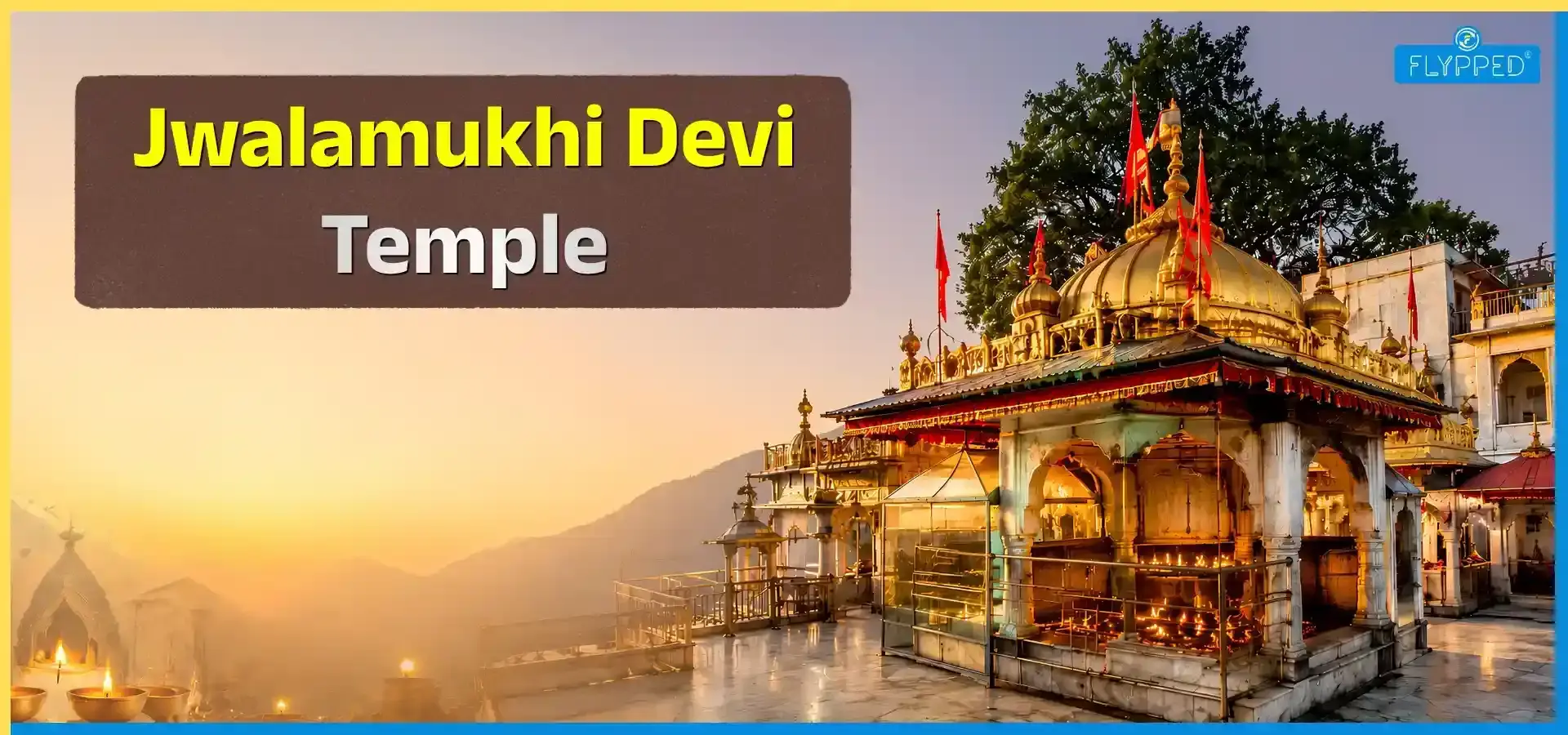
The temple features a traditional North Indian style of architecture with beautifully decorated entrances, a spacious courtyard, and intricately designed pillars.
The dome and parts of the temple are adorned with gold plating, adding to its grandeur.
Inside the temple complex, devotees can also find smaller shrines dedicated to different Hindu deities.
The peaceful surroundings, continuous chanting of prayers, and the glow of the eternal flames create a deeply spiritual environment for visitors.
Over the years, several rulers and devotees have contributed to the temple's renovation and maintenance, helping preserve its historical and religious significance.
Interesting Facts About Jwalamukhi Devi Temple
Jwalamukhi Devi Temple is surrounded by many fascinating facts that attract both pilgrims and tourists.
- The temple is one of the 51 sacred Shakti Peethas in Hinduism.
- Unlike most temples, there is no idol of the Goddess. Devotees worship the natural flames as her divine form.
- The eternal flames have been burning for centuries without any visible source of fuel.
- The temple is believed to be the place where Goddess Sati's tongue fell.
- Every year, lakhs of devotees visit the temple from different parts of India.
- The temple becomes especially crowded during Chaitra Navratri and Sharad Navratri.
- The mystery of the eternal flame continues to interest scientists as well as devotees.
- It is one of the most visited pilgrimage destinations in Himachal Pradesh.
These unique features make Jwalamukhi Devi Temple a place where faith, history, and mystery come together.
Travel Tips for Visitors
Planning your trip in advance can make your visit more comfortable and enjoyable.
Visit Early
Reach the temple early in the morning to avoid long queues, especially during weekends and festival seasons.
Wear Comfortable Clothing
Since visitors may have to walk and stand in queues, comfortable clothing and footwear are recommended.
Follow Temple Rules
Maintain cleanliness, respect the religious customs, and follow the instructions given by temple authorities.
Keep Essentials Handy
Carry drinking water, necessary medicines, and valid identification if required. During winter, warm clothes are recommended as temperatures can drop significantly.
Explore Nearby Attractions
If you have extra time, you can also visit nearby tourist attractions in Kangra district, such as Kangra Fort, Chamunda Devi Temple, Dharamshala, McLeod Ganj, and Masroor Rock Cut Temples.
Choose the Right Season
The months from March to June and September to November offer pleasant weather for sightseeing and temple visits.
Conclusion
Jwalamukhi Devi Temple is more than just a famous Hindu temple—it is a place where devotion, history, and mystery come together.
The temple's eternal flames, unique religious significance, and centuries-old traditions continue to inspire millions of devotees every year.
Whether you visit to seek the blessings of Goddess Jwalamukhi, explore the fascinating mystery of the eternal flame, or experience the peaceful atmosphere of one of India's most sacred Shakti Peethas, the temple offers a truly memorable experience.
A journey to Jwalamukhi Devi Temple is not only a pilgrimage but also an opportunity to witness one of India's most remarkable spiritual landmarks.
Its rich history, strong faith, and timeless traditions make it a destination worth visiting at least once in a lifetime.
Read More: