
Weakest Passports in the World: Why These Countries Rank the Lowest in 2026
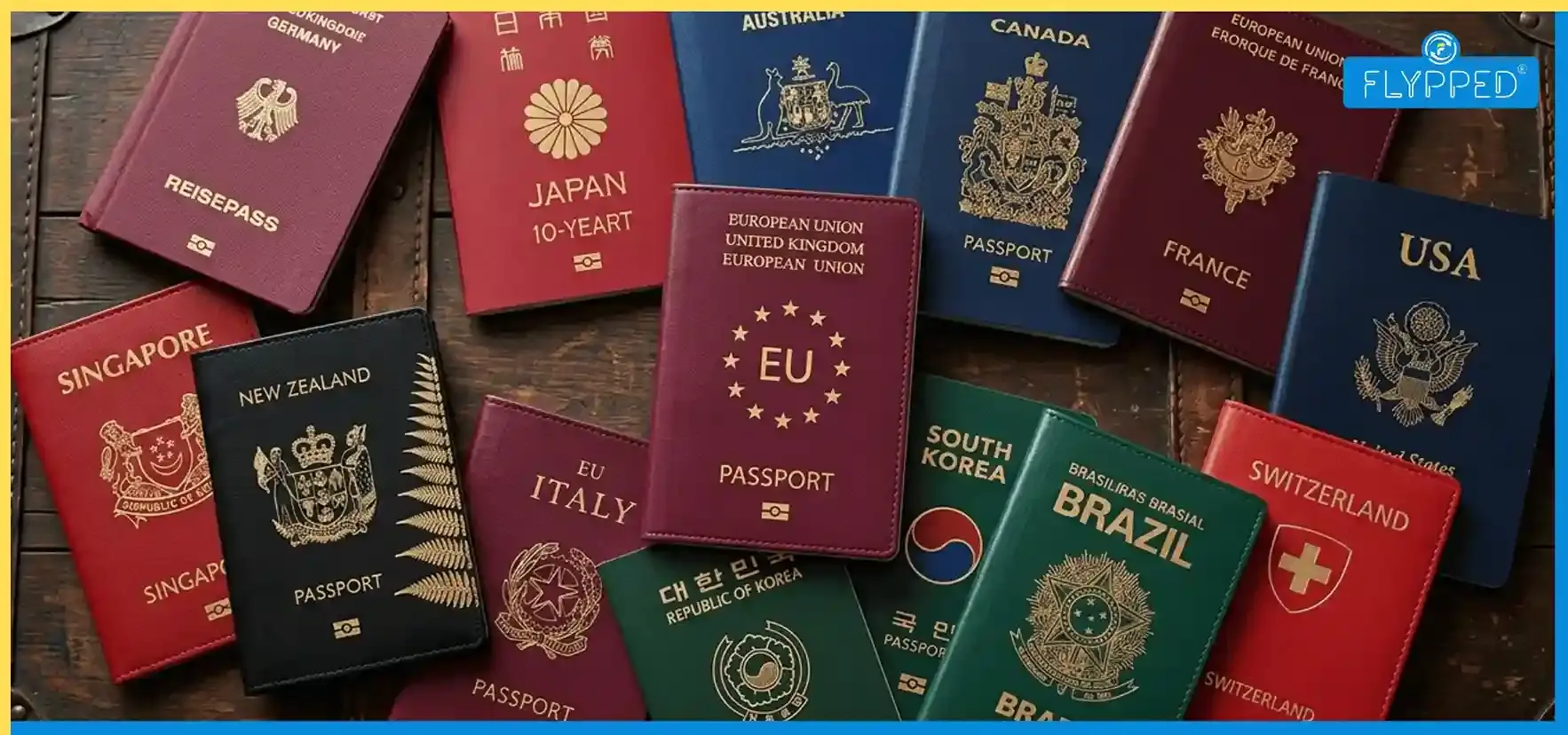
Passports are more than just an official identification document; they\'re a key to exploring countries. Not all passports allow you to travel anywhere in the world. Some let you stroll into 200 countries without so much as filling out a form, others leave their holders stuck in an endless cycle of visa applications, rejections and restricted borders. The Henley Passport Index, released by Henley & Partners, is updated monthly. The Henley Passport Index, which is based on exclusive data from the International Air Transport Association (IATA), ranks all 199 passports in the world based on how many of the 227 global destinations their holders can enter without a prior visa. This blog offers a closer look at the 10 weakest passports in the world as of 2026 and the reason behind their status.
What Makes a Passport Weak?
To understand a weak passport, examine what undermines its authority. Passport strength measures global trust—how many countries let your citizens cross without rigorous vetting. This trust hinges on several interconnected factors.
- Diplomatic Relationships: Visa-free agreements are reciprocal. Countries embroiled in conflict or diplomatic isolation lose such deals, restricting access.
- Political Stability: Countries with functioning governments, the rule of law and transparent institutions tend to build more international goodwill.
- Overstay & Immigration Risk: Nations monitor how often visitors overstay. Frequent violations trigger stricter controls.
- Economic Standing: Wealthier nations tend to have greater diplomatic leverage in negotiating access. They also give destination countries less reason to worry about economic migrants. A higher GDP per capita effectively signals low risk to border agencies.
- Security Concerns: Countries associated with terrorism, trafficking or serious organised crime face elevated scrutiny regardless of other factors.
In contrast, countries with the world’s most powerful passports:
- Singapore ranks 1st, offering visa-free access to 192 destinations.
- Japan & South Korea rank 2nd, with 188 visa-free destinations each.
- Germany & France 3rd & 4thenabling 185+ visa-free destinations
- UAE ranks 5th, enabling 184 visa-free destinations
Middle ground countries respond to a country\'s foreign policy, economic growth, and credibility, which are built over time with the international community. List of countries sitting on the middle ground in terms of passport strength:
- India ranks 75, enabling 55-56 visa-free destinations.
- China ranks 59th, enabling 141 visa-free destinations.
- Thailand 57th enabling 80+ visa-free destinations
- Brazil 17th enabling 170+ visa-free destinations
NOTE: Explore travel guides, destination ideas, travel tips, and latest updates for your next journey.
Top Weakest Passports in the World
Afghanistan
The Henley Passport Index ranks Afghanistan\'s passport 101st, granting visa-free access to only 24 countries. This position has remained unchanged for several years. Afghan passport holders face major challenges in international travel, with access to only 24 destinations without prior visa requirements.
Decades of conflict, the Taliban’s return in 2021, and a breakdown in diplomatic ties with Western nations contribute to Afghanistan\'s ranking. This reflects not only geopolitical tensions but also a humanitarian crisis that restricts many citizens\' ability to travel freely.
Syria
The Henley Passport Index ranks Syria 100th, granting access to only 26 countries. A decade-long civil war has weakened Syria’s diplomatic relationships and subjected its citizens to border scrutiny worldwide. Syrian passport holders face rejection in countries otherwise open to neighbouring nationalities. Current conflicts and refugee crises reinforce the Syrian passport’s restrictions.
Iraq
According to HPI, Iraq ranks 99th, granting visa-free access to only 29 countries. Over the years, the Iraqi passport has struggled to stay near the bottom of the Henley Index. With limited access to 29 countries, Iraqi citizens face significant travel barriers rooted in the country\'s prolonged history of conflict, Western sanctions and complex international relations. The Iraq passport ranking has seen minimal improvement over the years despite some diplomatic outreach, primarily because many countries still maintain strict visa requirements for Iraqi nationals due to security concerns.
Pakistan
Pakistan ranks 98th, with access to 31 destinations. The country has consistently ranked at the lower end of global indices, challenged by strained relations with Western countries, concerns over illegal immigration, and security restrictions. Despite government efforts towards more bilateral visa agreements, progress remains limited, and the gap with the Indian passport, ranked 78th with 56 visa-free destinations, is widening.
Yemen
Yemen shares the 98th rank with Pakistan. The ongoing civil war, which has been described as one of the world’s worst humanitarian crises, has made Yemen a country largely cut off from the international community. Yemen passport holders face restricted access due to both the security situation at home and the host countries\' reluctance to extend travel privileges to citizens of an actively conflict-ridden nation. With visa-free access to only 31 countries, global mobility for Yemeni nationals is deeply constrained.
Somalia
According to HPI, Somalia ranks 97th, granting visa-free access to 33 countries. Decades of state collapse, political instability and the continued threat from Al-Shabaab have kept Somalia firmly in the bottom tier of passport rankings. International confidence in Somalia\'s travel documentation remains low, with many countries demanding extensive documentation and background checks before granting entry. Somalia’s government has been slowly rebuilding institutions, but that process hasn’t yet translated into improved passport mobility.
Nepal
Nepal might come as a surprise on the list, given its popular reputation as a tourist destination. Nepal ranks 96th, enabling visa-free access to only 35 countries. The weak state of Nepal’s passport is due to its low per capita income, limited diplomatic leverage, and the perception of a high risk of overstaying in destination countries, which have kept its passport ranking suppressed. The asymmetry is notable, reflecting that millions of people travel to Nepal freely each year, but Nepali nationals face significant hurdles when travelling abroad.
Bangladesh
Bangladesh ranks 95th, enabling access to 37 visa-free destinations. Despite economic growth, its passport power remains limited. Challenges include irregular migration, overstays in Gulf countries and Europe, and a few bilateral agreements. Compared to India’s more diversified visa-access profile, Bangladeshi nationals have fewer options for trouble-free travel.
Eritrea/North Korea/Palestinian Territory
These three countries rank 94th, with limited access to 38 countries. Eritrea could be defined as the North Korea of Africa, a highly isolated, authoritarian state with almost no international integration. North Korea itself is self-isolated by design, with its citizens facing absolute restrictions on international travel, even domestically. The Palestinian Territory’s ranking reflects complex political realities surrounding statehood, recognition and movement restrictions at Israeli-controlled crossings.
Libya/Sri Lanka
Libya ranks 93rd, allowing limited access to 39 countries. Libya is still struggling with post-Gaddafi political fragmentation. Sri Lanka joins it at the same rank, reflecting the country’s recent economic collapse and the associated drop in international confidence among Sri Lankan travellers regarding overstay risks.
Summing Up
Rankings are based on the Henley Passport Index 2026, which draws on exclusive IATA data covering 199 passports across 227 destinations. Rankings are updated monthly and may change as countries adjust bilateral visa policies.
Read More:
- Top 10 Places to Visit Near Delhi for a Perfect Weekend Trip
- Best Mall in Delhi to Visit for a Perfect Weekend Plan
- 10 Beach Destinations in India for a Perfect Vacation
- Best Weekend Trips from Top Cities in India to Explore
- What are the top 5 best honeymoon places in india 2026
- Top Trekking Places Near Bangalore for Adventure Lovers
- Top Travel Packing Tips: Things to Carry for a Trip
- Manifestation: Faith, Action, or Just High-End Delusion?
- Evergreen Offbeat Holiday Destinations in India