Claude's COBOL Nuke: IBM Stock Implodes 13%, $40B Gone in Hours
Ever since reports emerged that Claude, an advanced AI system developed by Anthropic, would replace COBOL, a decades-old programming language, tremors have run through global markets.
This is because it still operates in the world’s financial and government structures. With news that Claude is becoming an alternative to IBM's AI technology, many investors are panicking, fearing that IBM's shares will nosedive, wiping nearly $40 billion off its market value in a short time.
But what must be known is the actual reason for this happening. Let’s find out further.
Why Is COBOL so Relevant?
COBOL is an old programming language that was developed in the 1950s. It remains prevalent in critical systems that serve banks, governments, large corporations, and insurance companies.
Several of these organisations depend on IBM’s mainframes and software services to maintain their COBOL-based systems with upgrades and maintenance.
For years, IBM has been heavily dependent on this technology, as it is the key source of its steady revenue.
Advancing COBOL systems are indeed very costly, risk-prone, and slothy. Hence, companies usually turn to IBM to resolve the problem rather than replace everything at once.
Changes Made By Claude
Claude has shown its prowess in efficiently reading COBOL codebases, explaining code in simple language, and converting to modern programming languages; it is swifter than human engineers.
Now, this has raised a serious concern: what if AI can modernise COBOL faster and cheaper, so companies won’t need long-term, high-cost service contracts from IBM?
It also seems as if COBOL, which was considered one of IBM’s most stable business pillars, appear fragile so suddenly.
How the Stock Market Responded
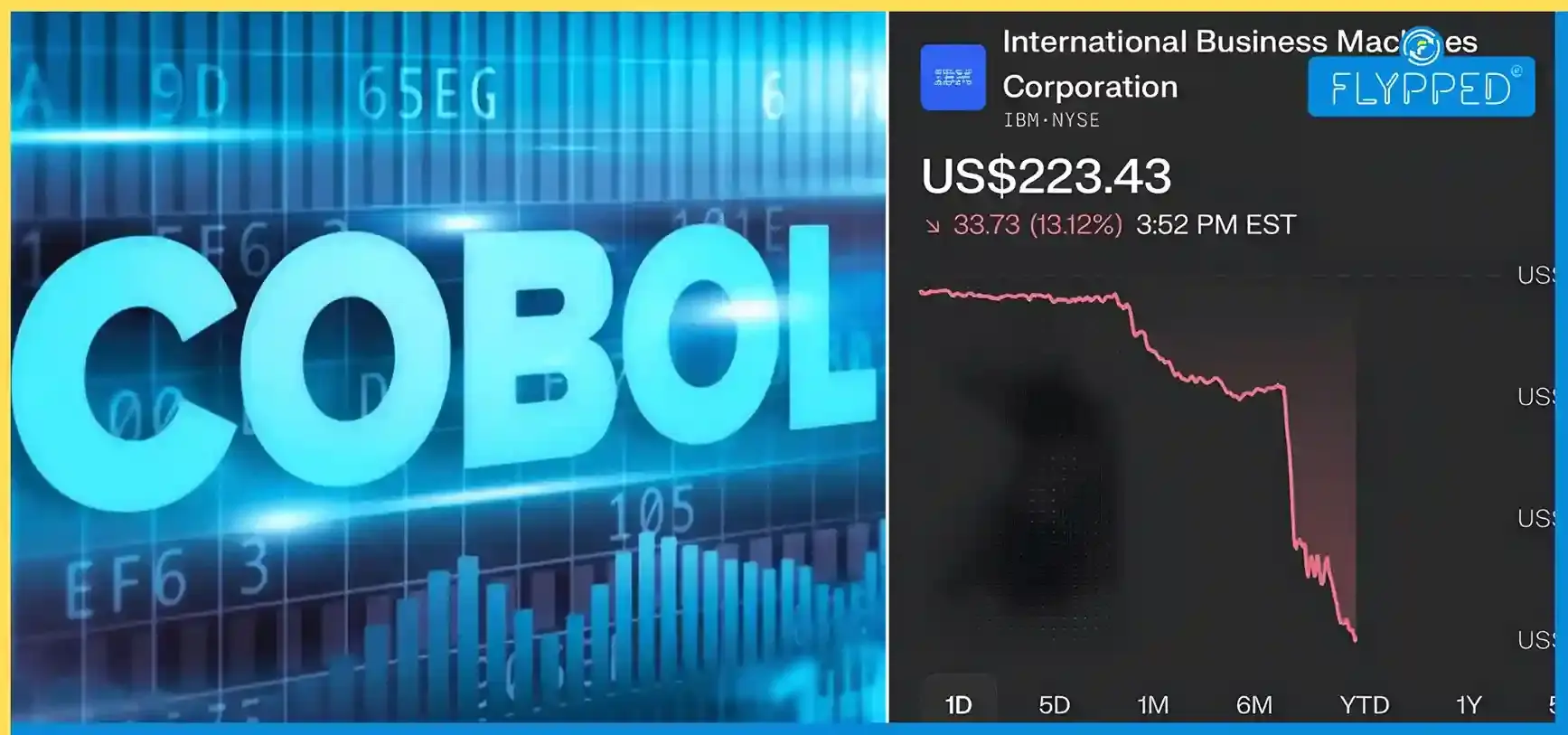
Following this breaking news, IBM witnessed a 13% drop in a single session, erasing around $40 billion from its market capitalisation.
This sell-off triggered fears that AI-driven automation could alter IBM’s legacy services business in insurance, government contracts, and banking.
According to market analytics, this moment is a ‘Wake-up call’ for organisations whose business is mainly dependent on outdated, hard-to-replace technology.
Is It an Indication of IBM’s End?
It cannot be said with certainty, even though the reaction was dramatic; experts say reality is more complex. Let’s know it by the number of factors.
First, if AI translates COBOL code make changes in real-world systems, there are risks involved.
Banks and governments can't make sudden changes, as they require testing, security checks, compliance approvals, and extended support.
Secondly, IBM itself is deeply invested in AI and automation. This company already provides AI-powered tools to advance legacy systems.
The difference now lies in speed. AI models like Claude are improving much faster than expected.
Thirdly, large institutions prefer trusted vendors for mission-critical systems. Hence, the decades-long relationships and infrastructure of IBM still exist.
What are investors panicking about with this news?
Besides current facts, stock markets also rely on expectations. The fear among investors is not just about IBM’s overnight collapse, but more about the long-dominant position in legacy system management becoming so vulnerable sooner than expected.
Bottom Line
The so-called ‘COBOL Nuke moment is a red alarm for IBM to adapt quickly, incorporate AI into its core settings, as the message is clear: AI disruption is there to stay in the market, and it is no longer theoretical.
Industries lacking skills and a slothful, adaptable approach from a contemporary perspective will now face extreme pressure.
Moreover, the incident also highlighted a broader trend: AI is no longer just assisting software engineers—it is starting to replace entire categories of specialised, high-cost technical work.
The raging technology has entered into various sectors and is on high demand for the industries. From the job perspective, it must be considered a new added skill.
For Hindi Reader, Please Click for aaj ki khabar.
Stay informed with smart business insights on Flypped
- Investing v/s Saving: What’s The Difference?
- The Freedom Map: Why Financial Literacy is Your Greatest Power Move
- Jan 28 Stock Watchlist: Vedanta, L&T, Maruti, Cochin Shipyard, Marico, Textiles
For more news updates, follow the Flypped Side of English News.