PCOS Is Now PMOS: Breaking Down the Biggest Update in Hormonal Health
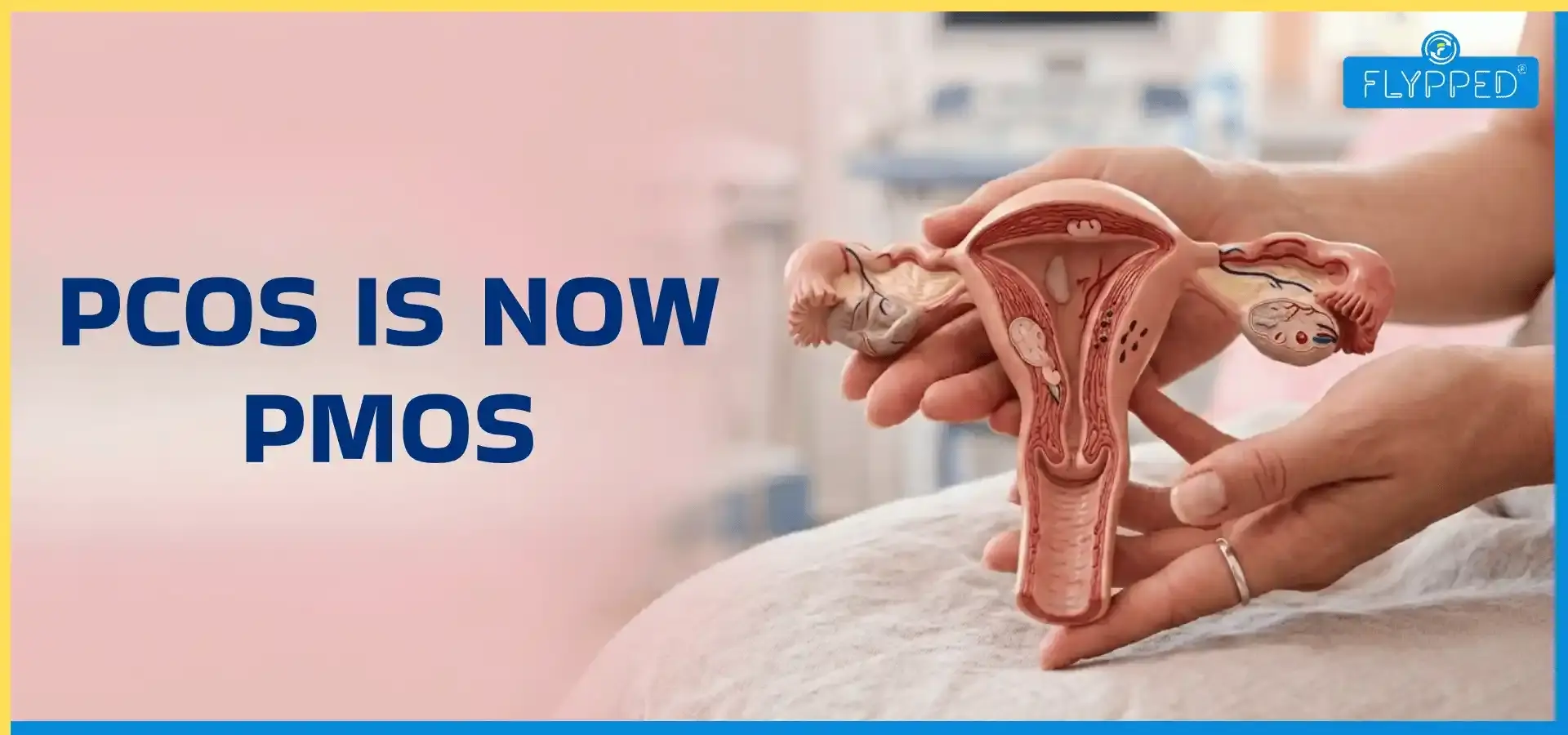
I remember sitting in a gynaecologist’s clinic at twenty and being told that I had PCOD. While discussing the symptoms only, she had a clear diagnosis for me. The treatment plan included weight-loss, lifestyle & dietary changes. For years, I abided by the suggestive plan, and the condition didn’t seem to be improving anyway. For years, I carried that label around and kept wondering how the ‘cyst’ conversation never explained the related symptoms like brain fog, fatigue, anxiety, acne and irregular menstrual cycle. In May 2026, PCOS/PCOD had officially been renamed. A global collaboration of doctors, researchers, and patients had spent over a decade building a case to nullify that term and hence PCOS is now PMOS. Why does this feel personal? Because a large number of young girls and women were subjected to misdiagnosis for years, this development finally shed light on the bigger picture. This blog is going to educate you about what PMOS is, the difference between PCOS & PMOS, its relevance to issues like fertility and mental health and more.
NOTE: Explore health and fitness news, workout guides, nutrition advice, and more from our latest updates.
What is PMOS & PMOS Full Form?
PMOS stands for Polyendocrine Metabolic Ovarian Syndrome. PMOS covers immediate areas which were neglected in prior terms.
- Poly-endocrine- this is a condition that involves multiple hormonal systems, not just the ovaries. Androgens, insulin, cortisol and thyroid function are all related to PMOS.
- Metabolic- fundamentally, it’s a metabolic disorder with insulin resistance at its core in many women.
- Ovarian- ovaries are a larger part of the story, but not the whole story.
- Syndrome- this is a cluster of symptoms, not a single disease with a single root cause.
The old term PCOS pointed straight to cysts. Usually, in ultrasounds, when follicles are detected (defined as small, normal regenerative structures because of the hormonal environment). Labelling them as cysts and naming the whole condition after it is scientifically misleading. Conventional ultrasound is now being replaced by a blood test measuring anti-Mullerian hormone (AMH).
PCOS is now PMOS, which is the most common hormonal disorder in women of reproductive age. It affects 1 in 8 women. In India, estimates suggest it affects between 9-22% of women, making it one of the most prevalent yet under-discussed health conditions in the country. A diagnosis of PMOS is made when a woman has at least 2/3 symptoms:
- Irregular menstrual periods
- Elevated testosterone or its symptoms like excess facial hair & acne
- A high number of antral follicles are visible in the ultrasound
Hence, as we have mentioned above, PMOS is so much more than these three criteria. Rather, it is a multisystem condition, which is exactly what the new name reflects.
PCOS Renamed PMOS: Why the Change Was Necessary
The Global Consortium, involving 56 leading academic, clinical and patient organisations, ran surveys that gathered responses from over 14,000 patients and healthcare professionals worldwide. The consensus was published in The Lancet on 12 May 2026. The term PCOS was inaccurate, and the inaccuracy had real consequences. It implied pathological ovarian cysts that most women didn\'t have. Followed by delayed diagnoses where a gynaecologist treats the periods, a dermatologist treats the acne, an endocrinologist treats the insulin resistance, and nobody is connecting the dots to stigma. The difference between PCOS and PMOS isn\'t just terminology. It\'s a reframing of the entire conversation from a structural ovarian issue to a complex hormonal-metabolic syndrome that deserves systemic attention.
PMOS Symptoms
One of the most consequential ways the old term failed us was how narrowly it framed the symptoms. PCOS made everything about periods and fertility. PMOS opens the door to much more realistic references.
Irregular periods or absent menstrual cycles are the most visible signs which led us to presume the possibilities of PMOS. Beyond this symptom, PMOS can show up as persistent acne, excess facial hair growth or body hair growth, hair thinning on scalp, unexplained weight gain, skin darkening around neck or underarms) a loud sign of insulin resistance, chronic fatigue and sleep disturbances.
Apart from these visible signs and symptoms, there exists a mental and emotional dimension of PMOS. Women with PMOS have higher rates of anxiety, depression and eating disorders than women without the condition.
The hormonal environment of PMOS can be defined with elevated androgens, disrupted cortisol levels, and insulin irregularity, directly contributing to mood swings and cognition. Recognising PMOS as a polyendocrine condition means acknowledging the impact of PMOS on the brain, too.
PMOS Mental Health Factor
On social media, we’d find many narratives circulating about mental health awareness among women dealing with PMOS. In contrast, our social circle’s narrative is totally different. The toll this condition takes on women is beyond any gauge. While undergoing diagnosis or treatment, women are not often educated about the connection between hormones and mental health. Metrics have consistently shown that anxiety and depression are more prevalent in women with PMOS than in the general population. Mental health screening is not a part of PMOS treatment care in most settings, particularly in India, where the condition itself is deeply underdiscussed.
PMOS & Fertility
Whenever PMOS comes in a picture of women’s life, one question arises: ‘Does this mean I can’t have children?’ This question is often asked in clinics or whispered into our search bars. The fear is understandable, but the reality is far more hopeful. Yes, PMOS affects fertility, but it does not make conception impossible for most women. Irregular ovulation is the primary challenge which could be conquered via lifestyle changes, medication and assisted reproductive approaches. Many women with PMOS conceive naturally, whilst others use an assisted approach.
Timely intervention is an important factor. Women who might have sought help for irregular periods or acne at a young age often don’t receive a diagnosis until they are trying to conceive. By then, the metabolic features of the condition worsen. Hence, diagnostic delay should be avoided.
PMOS in India: Why the Conversation Matters
India has one of the highest reported metrics of PMOS in the world, yet the condition remains embedded in a web of silence, shame, and systemic oversight.
For many Indian women, the first symptom that gets noticed is the visible one, like facial hair, skin changes, and weight gain, and these are too often filtered through a lens of aesthetics or personal failing rather than health. PMOS is a medical condition, not a lifestyle consequence. Without the proper term to name it accurately, without doctors who are equipped to look beyond the ovaries, and without cultural permission to talk openly about menstrual and hormonal health, millions of women in India are living with an undiagnosed, mismanaged condition that touches every aspect of their lives.
The renaming to PMOS is also an opportunity for Indian healthcare. When a condition is framed as polyendocrine and metabolic, it demands a multidisciplinary approach that brings together endocrinology, nutrition, mental health & gynaecology to work collaboratively. This kind of integration is exactly what most Indian women with PMOS currently lack.
There\'s also a generational dimension. Mothers who were told they had \'ovarian cysts\' may not have passed on a vocabulary of hormonal health to their daughters. Daughters who are now being told they have PMOS deserve better guidance, equipped with clarity over the subject.
Summing Up
As PCOS is now PMOS, name change alone can\'t fix a healthcare system. Women in India and across the world will continue to face delayed diagnoses, dismissive consultations, and inadequate treatment long after PMOS becomes the standard terminology. But language shapes understanding, and understanding shapes care. Moreover, women now have better terms and distinctions to navigate conditions collectively. PMOS is not a new condition. It is an old one, finally given a name that does it justice, and for the 1 in 8 women carrying this diagnosis in India and everywhere, that matters more than it might seem.
Read More:
- Diet Plan for Weight Gain
- Salicylic Acid Serum Benefits
- Jaggery Benefits
- Euthanasia in India
- Healthy Indian Breakfast Recipes
- Best 6 Day Gym Workout Schedule That Boosts Weight & Fat Loss
- Intermittent Fasting Diet Plan
- Soy Protein vs Whey Protein
- Top 10 Major Detox Water Benefits You Should Know
- What Are the Best Home Remedies for Cough and Cold
- Hyaluronic Acid Uses for Skin
Frequently Asked Questions
Find answers to common questions about this topic
PMOS stands for Polyendocrine Metabolic Ovarian Syndrome. This is a hormonal and metabolic condition that affects 1\/8 women, characterised by irregular periods, elevated androgens and insulin resistance.
In May 2026, a global consortium of medical organisations officially changed PCOS to PMOS. The name was published in The Lancet, a renowned medical journal.
PCOS and PMOS are the same condition; only the term differs. PCOS was highly focused on the ovarian cyst aspect of the condition, whilst PMOS\u2019s motive is to capture the essence of the condition holistically.
PCOS was considered scientifically inaccurate and harmful for the patients, whilst PMOS is driven by the evidence that the old name led to delayed diagnosis, fragmented treatments and false stigma around the subject.
PMOS doesn\u2019t have one clear cause. It usually happens because of a mix of things like hormone imbalance, insulin resistance (when the body doesn\u2019t use sugar properly), genetics, and lifestyle factors. These together affect periods, skin, weight, and overall health.