Positive Signs of Pregnancy: Early Symptoms, Healthy Tips and Medical Advice
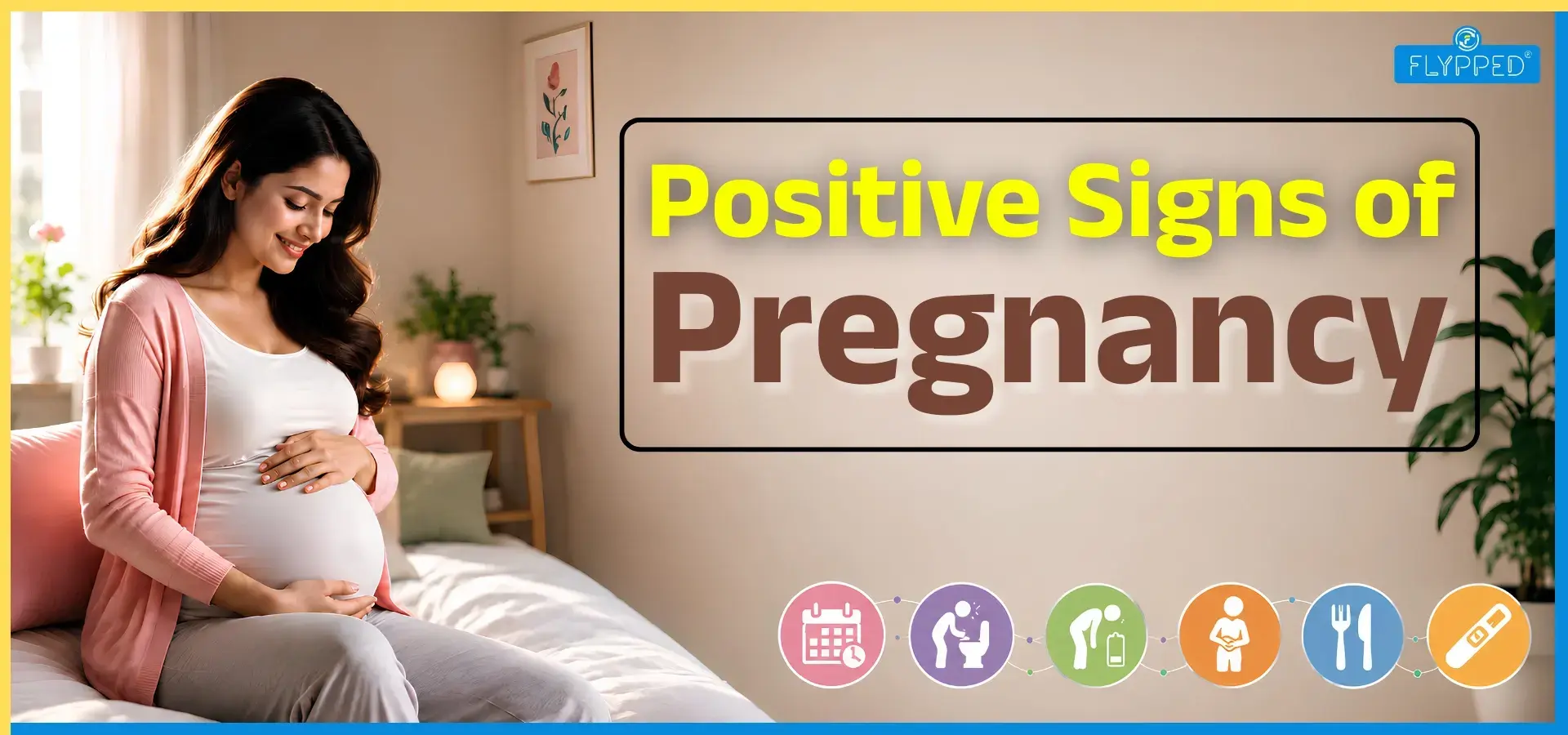
There\'s a particular kind of limbo that comes with wondering if you might be pregnant. You\'re analyzing every twinge, every wave of tiredness, every time your jeans feel a little snug. Is that a symptom or are you just overthinking it?
The truth is, your body usually does start sending signals early, sometimes even before a missed period. But because early pregnancy symptoms overlap so closely with PMS, it\'s easy to second-guess yourself right up until you\'re staring at a test stick.
NOTE: Explore health and fitness news, workout guides, nutrition advice, and more from our latest updates.
This blog walks through the real, medically recognized positive signs of pregnancy, how soon they tend to show up, how to tell them apart from your regular pre-period symptoms and when a symptom is actually a reason to call your doctor rather than wait it out.
What Are the Positive Signs of Pregnancy?
Positive signs of pregnancy are the physical and hormonal changes your body goes through once a fertilized egg implants in the uterus and pregnancy hormones start to rise. They range from the obvious signs like a missed period, a positive pregnancy test to the subtler ones, like a heightened sense of smell or mild cramping that feels different from your usual PMS ache.
None of these symptoms, on their own, confirms a pregnancy. Fatigue can mean you\'re just run down. Sore breasts can be a normal part of your cycle. That\'s exactly why doctors and pregnancy tests rely on measuring human chorionic gonadotropin (hCG), the pregnancy hormone your body starts producing once the fertilized egg implants. Still, learning to recognize the pattern of signs can help you decide when it\'s time to test.
How Soon Do Pregnancy Symptoms Start?
This is one of the most common questions people have and the honest answer is, it varies. Some early 1st month pregnancy symptoms like implantation bleeding or cramping can appear about one to two weeks after conception often right around the time you\'d expect your period. Others like fatigue or breast tenderness tend to build gradually over the first few weeks as pregnancy hormones climb.
The biological reason for the timeline is that after conception, it takes roughly seven to 10 days for the fertilized egg to implant in the uterine lining. Your body doesn\'t start producing meaningful amounts of hCG until implantation happens and hCG levels begin building once the fertilized egg implants in the uterus, about 6 to 10 days after conception. That\'s why almost nobody feels "pregnant" the day after conception. It is an indication that your body simply hasn\'t started the hormonal cascade yet.
What Happens After Fertilization?
Understanding the biology helps make sense of why symptoms show up when they do.
Once an egg is fertilized in the fallopian tube, it begins traveling toward the uterus while dividing into a small cluster of cells. Around a week to 10 days later, this cluster is identified as blastocyst which burrows into the uterine lining in a process called implantation. As it implants, it can cause tiny blood vessels in the uterine lining to bleed slightly which is where implantation bleeding comes from.
Implantation also triggers the placenta to start forming and the placenta begins releasing hCG almost immediately. HCG is the first pregnancy hormone the placenta makes after conception and it plays an important role in telling the rest of your body that you\'re pregnant, it signals your body to stop menstruating and to start producing more progesterone and estrogen. This hormonal shift is really the trigger behind almost every early pregnancy symptom on this list, from breast tenderness to fatigue to nausea.
From there, hCG increases quickly, almost doubling every three days for the first eight to 10 weeks of pregnancy which is also why symptoms tend to intensify rather than fade during the early weeks.
13 Positive Signs of Pregnancy You Should Never Ignore
1. Missed Period
For most people, this is still the symptom that prompts the actual test. Pregnancy hormones stop ovulation and menstruation, so a missed period is the most common and obvious sign of pregnancy. A late or missed period isn\'t proof on its own, factors like stress, excessive exercise and hormone imbalances can also cause you to miss a period, so it\'s worth pairing this symptom with a test.
2. Implantation Bleeding
Implantation bleeding is one of the more confusing early signs simply because it can look like the start of a period. It\'s thought to happen when the fertilized egg attaches to the lining of the uterus and it usually occurs around the time you\'d expect your period but it\'s lighter than menstrual bleeding. It typically shows up as light pink, brown or rust-colored spotting rather than a full flow and generally lasts anywhere from a few hours to about three days, compared with four to eight days for a typical period. About one in four pregnant women experiences implantation bleeding, so plenty of people never notice it at all.
3. Implantation Cramps
Alongside the light bleeding, some people notice mild, dull cramping low in the abdomen as the embryo settles into the uterine wall. Common accompanying symptoms include cramping, faint bleeding, headache, nausea and breast sensitivity. These cramps are usually much milder than period cramps and shouldn\'t be sharp, one-sided, or worsening and kind of pain warrants a call to your doctor rather than a wait-and-see approach.
4. Breast Changes During Pregnancy
Rising hormone levels affect breast tissue almost immediately. Breasts can become tender and swollen, a change that\'s temporary until your body adjusts to the increased hormone levels and the areolas may also darken and enlarge. This is often one of the earliest symptoms people notice, sometimes before they even think to take a test.
5. Fatigue During Early Pregnancy
If you find yourself needing a nap by mid-afternoon for no obvious reason, hormones are likely the culprit. This fatigue happens due to rising levels of progesterone and because your body is working extra hard to support the pregnancy, it can leave you feeling extremely tired. It\'s one of the most universally reported early symptoms and it can start well before a missed period.
6. Food Cravings in Early Pregnancy
Sudden specific cravings or equally sudden aversions to foods you used to love are a well-known early sign driven by the same hormonal shifts affecting your senses and appetite. Cravings can range from mild to oddly specific, and they often show up alongside a shift in what smells or tastes appealing at all.
7. Increased Sense of Smell
Many people notice that ordinary smells like coffee, perfume, cooking food suddenly feel overwhelming or nauseating in early pregnancy. This heightened sense of smell is thought to be linked to rising estrogen levels and it often travels hand-in-hand with nausea and food aversions.
8. Frequent Urination
Even before the uterus is large enough to physically press on the bladder, rising hCG increases blood flow to the pelvic area and kidneys, which means your bladder fills up faster. This is a symptom that often surprises people because it starts so early, well before there\'s any visible baby bump.
9. Mood Swings
The rapid rise in estrogen and progesterone can affect neurotransmitters in the brain leading to mood swings that can feel similar to (or more intense than) typical PMS irritability. Feeling weepy one hour and fine the next is common and on its own, isn\'t a cause for concern.
10. Constipation
Progesterone doesn\'t just support the pregnancy but it also relaxes smooth muscle throughout the body including in the digestive tract. That slower digestion is what leads to constipation in pregnancy and it\'s one of the less-talked-about but very common early symptoms. Staying hydrated, keeping up fiber intake and gentle movement can help manage it.
11. Mild Headaches
Hormonal shifts combined with changes in blood volume and blood sugar can trigger mild headaches in early pregnancy. These are usually manageable with rest, hydration and acetaminophen (after checking with your doctor) but a severe headache that doesn\'t improve is a different story, which we\'ll cover in the warning-signs section below.
12. Light Dizziness
As blood vessels dilate and blood pressure adjusts to support increased blood flow, some people feel lightheaded especially when standing up quickly. Mild or occasional dizziness is common in early pregnancy; frequent or severe dizziness, especially paired with pain or bleeding, needs medical attention.
13. Positive Pregnancy Test
This is the definitive sign. Pregnancy tests work by detecting hCG, the hormone your body produces once you\'re pregnant and you might get a positive result from an at-home test as early as 10 days after conception, though testing after a missed period gives a more accurate result. If you get a positive line, even a faint one, it\'s worth confirming with a follow-up test or a call to your provider.
PMS Symptoms vs Pregnancy Symptoms
This is where most of the confusion happens because early pregnancy and the days leading up to a period share a lot of the same hormonal territory as progesterone rises in both cases. Here\'s a general breakdown, though everybody\'s body behaves a little differently:
| Symptom | PMS | Pregnancy |
| Breast tenderness | Usually fades once your period starts | Tends to persist and intensify, with darkening areolas |
| Cramping | Often stronger, more period-like, resolves with bleeding | Milder, may come with light spotting rather than flow |
| Fatigue | Mild, improves once period begins | Often more intense and doesn\'t resolve after a few days |
| Nausea | Uncommon | Common, especially with smell sensitivity |
| Bleeding | Regular flow, red, lasts several days | Light spotting (if any), pink/brown, lasts hours to a few days |
| Mood changes | Common, tied to the days before your period | Common, but may persist beyond when your period was expected |
| Food cravings/aversions | Occasional, mild | Can be sudden and more pronounced |
The single most reliable way to tell the difference isn\'t any one symptom but timing and a test. If your usual PMS symptoms feel a little off, last longer than expected, or your period simply doesn\'t arrive, that\'s the moment to test.
What Are False Pregnancy Symptoms?
Not every early-pregnancy-like symptom means you\'re pregnant and not every missed period means the same either. False pregnancy symptoms (sometimes discussed alongside a rare condition called pseudocyesis) can occur due to stress, significant weight changes, hormonal imbalances like thyroid issues or PCOS, coming off hormonal birth control or even a strong emotional desire or fear of being pregnant. In these cases, someone might genuinely experience nausea, breast tenderness, bloating or even a missed period without an actual pregnancy underway. This is exactly why a pregnancy test measuring hCG, not just symptom-tracking is the reliable way to know what\'s actually happening.
When is the Best Time to Take a Pregnancy Test?
Timing matters more than people realize. The most accurate time to test is one to two days after a missed period, since this gives your body time to build up enough hCG for the test to detect. Testing too early is the most common reason for a false negative, if you take a test too soon it could come back negative even if you are pregnant, so if you get a negative result and then miss your period, it\'s worth testing again.
A few practical tips for at-home testing:
- Test first thing in the morning. Your urine is most concentrated in the morning, which gives the most accurate results.
- Don\'t test too far in advance. If your cycle is irregular, it\'s easy to test before implantation has even occurred.
- Confirm with your doctor. If you get a positive result, call a healthcare provider, since early prenatal care is important for keeping you and your baby healthy.
Healthy Pregnancy Tips After Seeing Early Signs
Once you suspect or confirm that you\'re pregnant, small habits in these early weeks can make a real difference:
- Start prenatal vitamin with folic acid. This is one of the most well-established recommendations for reducing the risk of neural tube defects in early development.
- Book that first prenatal appointment. Don\'t wait for symptoms to feel "serious" as early bloodwork and dating ultrasounds matter.
- Manage constipation proactively. Fiber-rich foods, water and light movement can ease this common early symptom before it becomes uncomfortable.
- Rest when your body asks for it. Early fatigue is your body doing real physiological work; it\'s not a sign of weakness.
- Avoid alcohol, smoking and unnecessary medications until you\'ve talked to your doctor about what\'s safe.
- Eat according to your cravings and aversions but keep meals balanced as nausea can make this tricky, so small, frequent meals often help more than three large ones.
- Track your symptoms including any bleeding, pain or changes, so you can give your doctor an accurate picture at your first visit.
When Should You Consult a Doctor Immediately?
Most early pregnancy symptoms, even the uncomfortable ones are normal. But a handful of symptoms cross the line from "annoying" to "call your doctor now." According to guidance from ACOG and other medical sources, you should seek care right away if you experience:
- Heavy bleeding: soaking through two pads in one hour, especially with severe pain or dizziness
- Bleeding with menstrual-like cramping or pain: if bleeding is heavy or happens along with pain similar to menstrual cramps, contact your ob-gyn right away
- Sharp, one-sided abdominal or shoulder pain: it can signal an ectopic pregnancy which is a medical emergency where the pregnancy grows outside the uterus, usually in the fallopian tubes and can include heavy bleeding, dizziness, and sharp pain in the stomach or shoulder.
- A severe headache that doesn\'t improve with rest or standard doses of acetaminophen.
- Fever of 100.4°F or higher, fainting or severe, persistent vomiting that prevents you from keeping fluids down
- Any bleeding you\'re unsure about should have be evaluated.
Final Thoughts
To sum up, light spotting, mild cramping and typical early fatigue are common and usually not dangerous. Heavy bleeding, severe or one-sided pain, high fever or symptoms that are rapidly getting worse are not something to wait out.
Disclaimer: This article is for general informational purposes only and is not a substitute for professional medical advice, diagnosis or treatment. Always consult your doctor or a qualified healthcare provider with any questions about your pregnancy or health.
Sources and References
- https://my.clevelandclinic.org/health/articles/9709-pregnancy-am-i-pregnant
- https://health.clevelandclinic.org/how-early-can-you-tell-if-you-are-pregnant
- https://healthcare.utah.edu/healthfeed/2026/02/bleeding-early-pregnancy-whats-normal-what-isnt-and-when-seek-care
- https://www.aafp.org/afp/2019/0201/p166-s1
Read More: