Agniveer Scheme New Update: Service Period Extended from 4 to 6 years
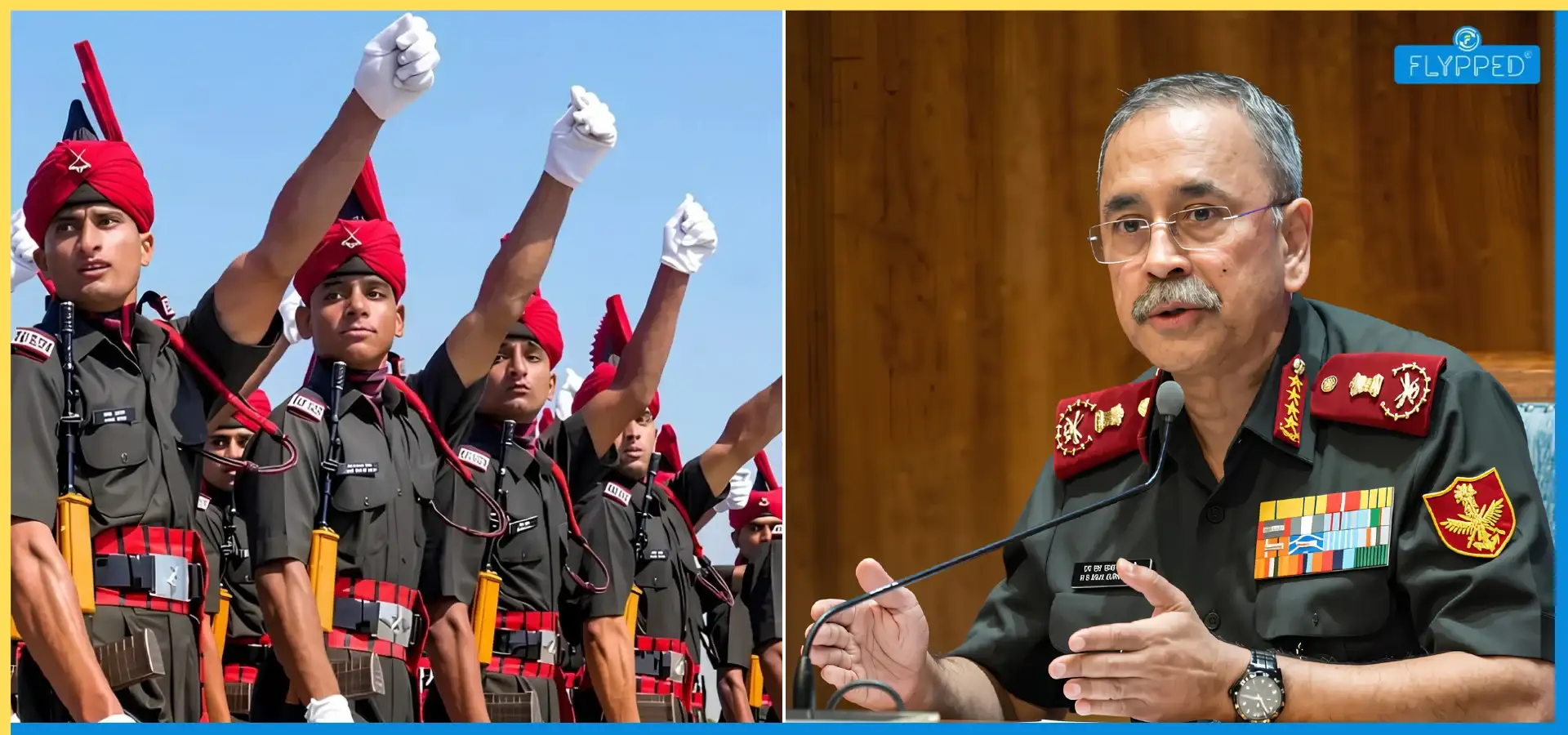
The Centre has announced that Agniveers can now serve up to six years under the Agnipath scheme (two years more than previously). Calling it a historic moment, CDS General NS Raja Subramani explained that the Cabinet's decision allows Agniveers to serve beyond the initial term. General Subramani also pointed out that the Agnipath scheme, which commenced on 14th June 2022, has already had regular performance reviews.
Agniveer Scheme New Update | What Did CDS General NS Raja Subramani Say
Subramani added that the feedback on the first batch of Agniveers (who are due to complete four years of service) has been "very positive". With these changes, 25% of the Agniveers selected on merit will now go into the regular forces. Those due to return to civilian life after four years can now serve two additional years. After that, those Agniveers who wish to continue will be considered for entry into the regular forces through the normal selection process as per the CDS.
NOTE: Stay informed with the latest breaking news, current affairs, top headlines, and Latest updates from across the globe.
Agniveer Scheme Changes: A Brief Overview
Agniveer selection criteria: Under the revised rules, Agniveers will get two chances to get selected in the armed forces. Let’s understand this with:
Round 1
25% Agniveer retention: No changes here. As before, up to 25% of each batch is selected for the regular cadre on merit.
Round 2
The remaining seventy-five per cent can choose to serve for two more years. After completion, they will be enrolled as regular soldiers, depending on their willingness and whether they meet the force's criteria. Hence, the door is open for the whole batch. But it shouldn't be taken as a guarantee. No one becomes permanent automatically, and how many will make it through depends on service demand and individual performance.
Beginning of Agniveer Scheme
Agniveer Scheme New Update: On 14th June 2022, the government introduced the Agnipath scheme to recruit people for non-officer posts differently. Rather than the traditional long-term approach, the scheme offers a fixed 4-year term. The aim is to build a younger force that is comfortable with new technology.
Recruits (the Agniveers) will receive military training before commencing their duties. Up to 25% of each batch can join the regular force on the basis of merit, performance, and service requirements, and will have the same terms as the other recruits.
The remainder will receive a one-time Seva Nidhi package, which will include their own contribution to the Agniveer Corpus Fund, a government matching contribution, and interest. The government has estimated the payout to be around Rs 11.71 lakh. The monthly pay starts at Rs 30,000 in the first year and increases to Rs 40,000 in the 4th year.
Recruits will receive 70% of their pay, and the remaining 30% will go into the corpus fund. They will also be entitled to Rs 48 lakh of non-contributory life insurance during their period of service. On completion of the 4-year term, those who leave will not be entitled to gratuity or pension.
Feedback on Agniveer is Positive: Defence Ministry
Agniveer Scheme New Update: The first batch of Agniveers is nearly at the end of their initial term. It's reported that over 18,300 Agniveers from this batch will have completed their four years by December 2026, and the services are now in the process of releasing those not selected to continue.
The MoD has said feedback on the Agniveers has been very positive regarding their fitness, morale, motivation, competitive spirit, discipline, and technical proficiency. The scheme has also been viewed as making recruitment more open and inclusive across districts and providing greater opportunities for women to join various branches of the forces.
Agniveer Two-Year Extension
Agniveer Scheme New Update: Agniveers spend four years learning to use the weapons, equipment and comms systems. If most leave after that time, the services lose trained personnel and have to start again with fresh recruits. Extending the term by two years would keep experienced members in longer, particularly in technical roles.
It also gives the services more time to assess each individual before deciding on a permanent posting. For the government, it addresses recruits' concerns while still achieving the fundamental objective of Agnipath: a younger, leaner force.
Benefits of Agniveer Scheme
The MoD says Agniveers who serve an additional two years will receive higher pay, a larger Seva Nidhi package, and seniority benefits. The government has not, however, disclosed the specifics of the new pay, the increased Seva Nidhi package or how seniority will be determined. It is also unclear what the rules will be for those who later join the regular cadre.
Balancing Experience, Recruitment, and Certainty
Agniveer Scheme New Update: Agniveers who take the extra two years will get higher pay, a bigger Seva Nidhi package, and seniority benefits, according to the Defence Ministry. The idea is to reward the longer commitment. The numbers aren't out yet. The government hasn't said what the new salary will be, how much the Seva Nidhi will go up, or how seniority will be counted. The terms for those who eventually join the regular cadre are also unclear.
Things Which Are Still Yet to Know
A lot still needs to be worked out, and several questions remain unanswered. How exactly will the six-year selection process work in reality? Will there be a new merit list, a separate assessment, or some other requirement for each service? How many will each service take? What are the rules for permanent posting?
Are there any changes to pay, Seva Nidhi or seniority? What will the terms of service, career path, and retirement benefits be for those moving from extended engagement to regular service? Will the Army, Navy, and Air Force all follow the same rules even though their manpower requirements will be very different?
Final Thoughts
In summary, the November 4 decision changes the fundamental principle of Agnipath. Previously, only a quarter of each group could go on to a permanent career after four years. Now every Agnipath has a greater opportunity to pursue a regular career (though, of course, a regular career is not guaranteed). The 75% who would have left after four years now get two more years’ service and another go at it.
Read More:
- What is aqi and how is it measured? what is a delhi aqi level?
- Mallikarjun kharge on modi: patna rally remark sparks bjp outrage, amit shah reacts
- Cjp anti-cec protests against gyanesh kumar draw global attention
- China tibet earthquake today: 16 dead, 65 injured in 7.0 magnitude quake
- Raihan vadra says bikaner house asked him to remove protest photographs from his exhibition
- Delhi police transfer cjp case to crime branch as saurav das and ashutosh ranka remain in jail