Indus Waters Treaty: Pak Minister Musadik Malik Issues Stern Warning to India
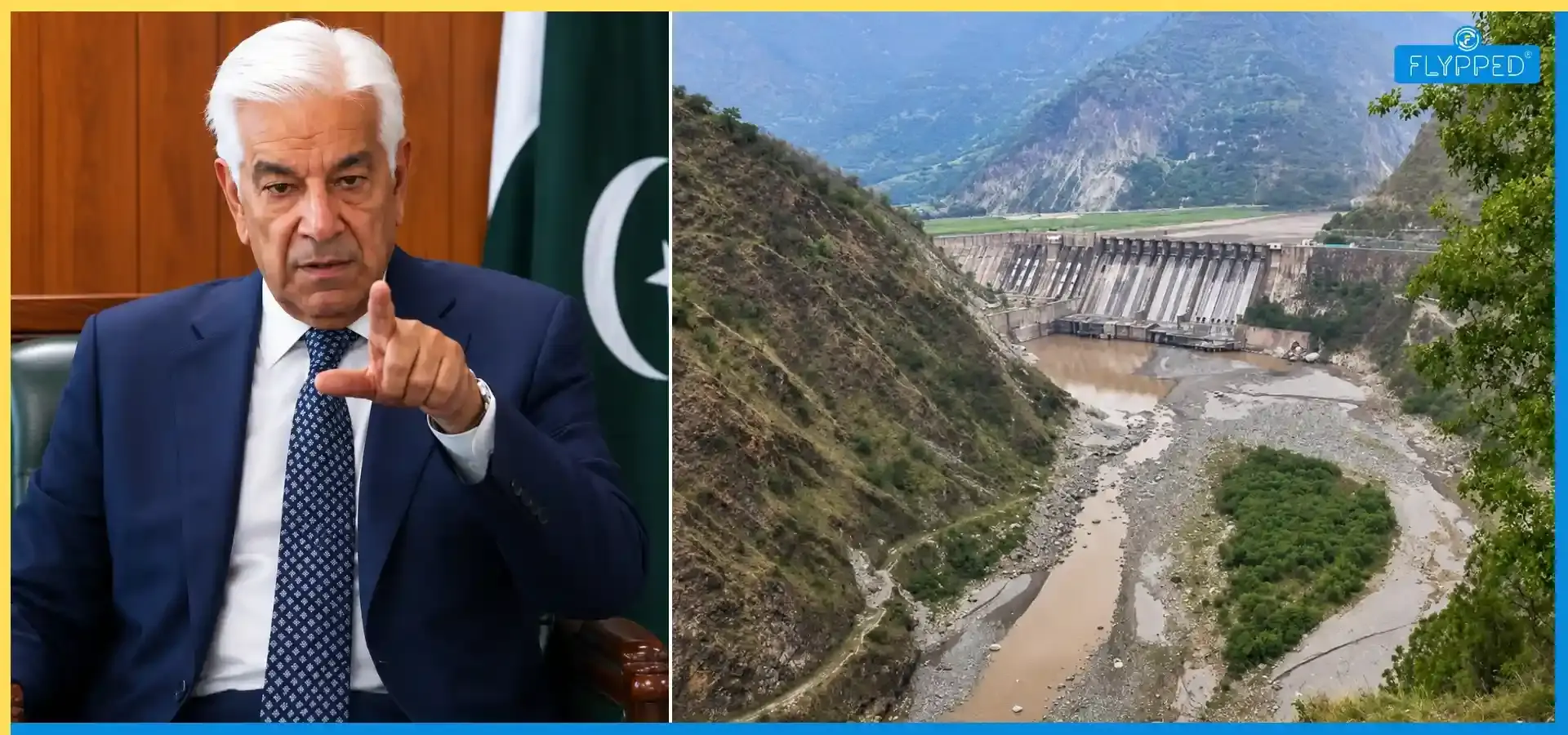
Indus Waters Treaty: Pakistan has issued a new warning amid growing water disputes with India. Climate Change Minister Musadik Malik said Islamabad would "cut off those hands" that tried to take Pakistan's share under the Indus Waters Treaty (IWT).
He made these comments as tensions over the long-standing water-sharing agreement increased, especially after New Delhi suspended the treaty following the 2025 Pahalgam terror attack.
Indus Waters Treaty: Pakistan Warns of Consequences Over Water Issue
Musadik Malik warns India: During a joint press conference with Information Minister Attaullah Tarar, Climate Change Minister Musadik Malik accused India of trying to control Pakistan's water supply.
He warned that there would be consequences if Pakistan's water rights were threatened.
A media report said Malik claimed the prime minister of a neighboring country was controlling the water supply and promised to prevent even a single drop from reaching Pakistan.
NOTE: Stay informed with the latest breaking news, current affairs, top headlines, and latest updates from across the globe.
Pakistan PM Tarar Issues Stern Water Rights Warning Against India
Pakistan Warns India: Pakistan PM Tarar gave his strongest warning at the press conference, saying anyone trying to take Pakistan's share of water would have to cut off their own hands. The Pakistani broadcaster and other news outlets reported his statement.
Clips of his remarks also appeared online, but their authenticity could not be confirmed. Malik also repeated that Pakistan is committed to protecting its share of water under the treaty. He said India would not be allowed to block water flows meant for Pakistan.
India Pakistan Water Dispute: Pakistan Minister Says Indus Waters Treaty Remains Legally Binding
Indus Waters Treaty: At the press conference, the Pakistani Information Minister emphasized that the Indus Waters Treaty remains legally binding and cannot be suspended, revoked, or changed by any one country.
Tarar said Pakistan's position on the Indus Waters Treaty has international support. He noted that India's decision to suspend the agreement has little support worldwide.
He also said the treaty is still in effect and that India's stance has not been accepted on any international platform.
Tarar added that Prime Minister Shehbaz Sharif and Chief of Army Staff Field Marshal Asim Munir have often said water is both the nation's lifeline and a red line.
To Dawn, Tarar said international law still protects Pakistan's rights under the treaty.
He said the people of Pakistan have a right to water, guaranteed by a legally binding treaty that both countries accepted and that remains in force today.
He said that Pakistan's view on the treaty has gained international recognition and repeated that the agreement cannot be revoked or changed by any single country.
Indus Waters Treaty: Pakistan Hosts First International Seminar on Indus Waters Treaty
Pakistani ministers announced that Islamabad would host, on Tuesday, what they called the first international seminar on the Indus Waters Treaty.
Tarar said legal experts, water specialists, and foreign delegates had already arrived in Pakistan for the conference.
He said the seminar would focus on Pakistan's rights under the treaty and discuss its technical and legal aspects.
The Indus Waters Treaty, brokered by the World Bank in 1960, sets the rules for how India and Pakistan share the Indus river system.
Indus Waters Treaty Under Strain Following India's Suspension
Indus Waters Treaty Latest News: Under the agreement, India controls the eastern rivers: Ravi, Beas, and Sutlej. Pakistan receives most of the water from the western rivers: Indus, Jhelum, and Chenab.
The treaty has survived wars and years of tension, but came under new pressure after India suspended it following the April 2025 Pahalgam terror attack, which killed 26 people.
India Pakistan Relations: India-Pakistan Tensions Rise Over Indus Waters Treaty Dispute
Indus Waters Treaty: New Delhi blamed Pakistan-backed terrorists for the attack and said the treaty would stay suspended until Pakistan "credibly and irrevocably" stopped supporting cross-border terrorism.
Islamabad denied these claims and has repeatedly challenged India's decision, warning against any attempt to change cross-border water flows.
Earlier, Defence Minister Khawaja Asif also warned that Pakistan could use military action if its water security was threatened.
Asif told the media that Pakistan would go to war with India if it believed its national security, including water security, was at risk.
India Defends Indus Treaty Stance Amid Escalating Tensions
Indus Waters Treaty Latest Update: India has defended its decision, saying the treaty no longer fits today's realities.
At the 62nd session of the United Nations Human Rights Council, India's First Secretary to the UN, Anupama Singh, said it was unreasonable for a country accused of sponsoring terrorism to expect continued cooperation under the treaty.
She said India's position on the Indus Waters Treaty is clear. She added that it does not make sense for a country accused of state-sponsored terror to demand the benefits of cooperation based on goodwill and friendship.
Indus Waters Treaty: Indian Official Dismisses Indus Treaty Claims and Urges Pakistan to Focus on Domestic Issues
Singh called the agreement outdated and argued that a treaty made in 1960 should not be seen as a permanent right.
She said it should not be free from accountability or ignore the major changes of the past sixty years.
She also urged Pakistan to focus on its own problems instead of bringing bilateral disputes to international forums.
India has repeatedly said that Jammu and Kashmir "was, is and will always remain an integral and inalienable part of India."
It has also accused Pakistan of using international platforms to distract from terrorism and its own domestic issues.
Read More:
- PM Modi Breaks Nehru's Record, Completes 4,399 Days as India's Elected PM
- Trump Warns Netanyahu Over Iran Strikes, Pushes Diplomacy to Avoid Regional War
- Israel Iran Conflict Escalates as Explosions Rock Tehran After Israeli Strikes
- Sanctions Threats Against India: Putin Praises Modi's Leadership and Sovereign Policy
- Trump Praises PM Modi, Signals Breakthrough in US-India Trade Talks
- Malviya Nagar Fire Incident: Gurugram Family's Delhi Trip Turns Fatal as Malviya Nagar Blaze Kills 8
- US Tariffs on India: USTR Targets 60 Nations Over Forced Labour Import Rules
- Trump Netanyahu News: Trump-Netanyahu Feud Escalates Amid Lebanon Crisis
- US Iran War Live: Airstrikes, Failed Talks and Rising Middle East Conflict Spark Global Alarm