
Nepal Floods Trigger India Alert: Himalayan floods leave hundreds missing in Nepal
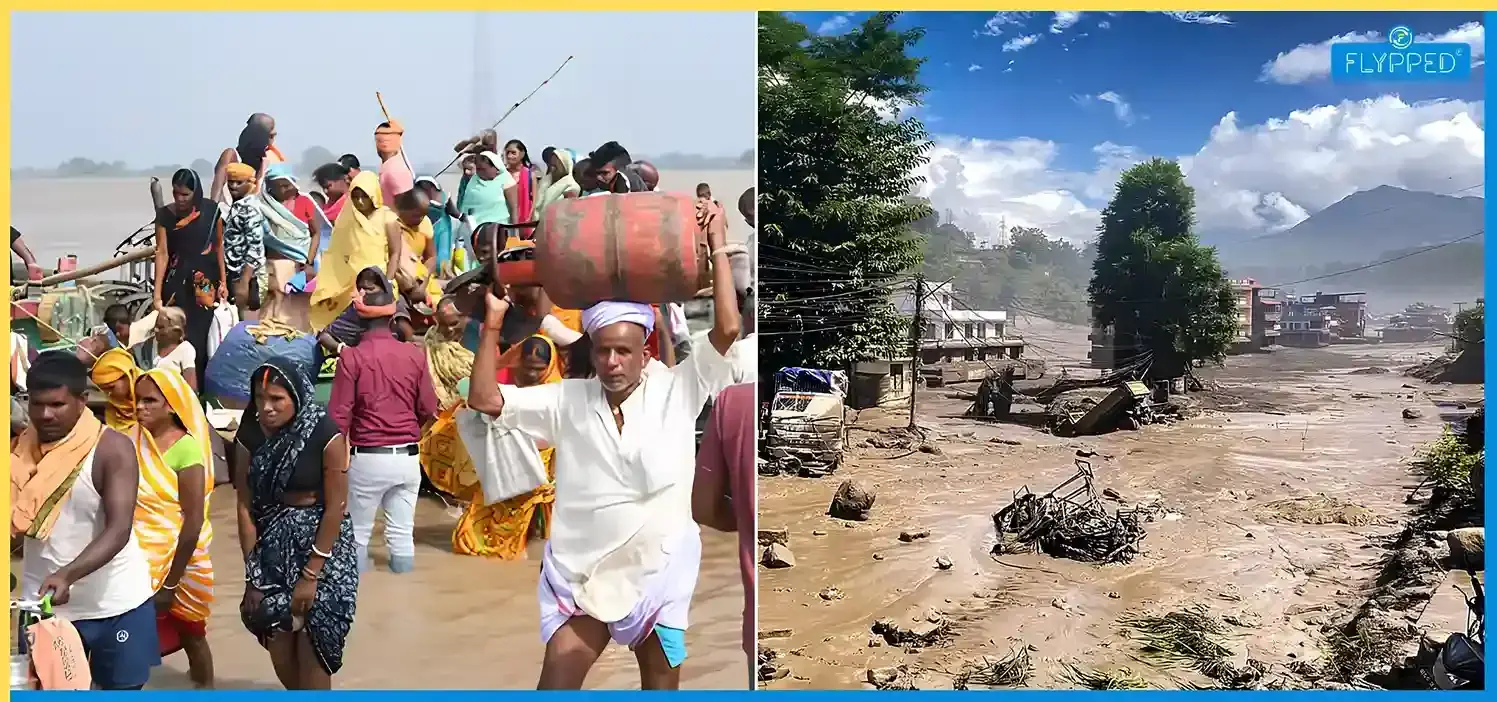
Nepal Floods Trigger India Alert: Intense flooding in Nepal's northern regions, bordering China, has resulted in heartbreaking loss of life and a desperate search for many missing individuals.
With the Himalayan rivers swelling, a significant Nepal Floods India Alert has been issued, placing northern Indian states on high alert.
This rapidly evolving situation, which began on Wednesday, August 26, 2026, has prompted a coordinated humanitarian response, with India extending aid to its neighbour and preparing for potential cross-border impacts.
NOTE: Stay informed with the latest breaking news, current affairs, top headlines, and latest updates from across the globe.
Nepal Floods Trigger India Alert: Lives Lost and Many Missing
The scale of the disaster in Nepal is staggering. More than 150 lives have been claimed by the relentless flooding, which has particularly ravaged the northern region adjacent to China.
The sudden surge in the Bhote Koshi River, impacting the Rasuwagadhi-Timure area around 9 AM local time on Wednesday, August 26, 2026, caused widespread destruction, affecting Rasuwa and parts of the neighbouring Nuwakot and Dhading districts.
The human toll goes beyond those confirmed deceased. Authorities report that 579 people remain untraced in Nepal, including 466 foreign nationals from 28 countries and 113 Nepalis.
On the other side of the border, Chinese authorities have reported three deaths and 265 people missing in Tibet's Gyirong county.
International Concern: Tourists Missing in Nepal
Nepal Floods Trigger India Alert: A significant number of those missing are international visitors. At least 133 Indian tourists are unaccounted for, many of whom were pilgrims heading to Mount Kailash.
The list of foreign nationals reported missing includes citizens from several countries:
- Australia
- The Netherlands
- The United States
- Malaysia
- The United Kingdom
- South Africa
- India (133 pilgrims)
This situation highlights the vulnerability of travellers in regions prone to flash floods in Himalayan rivers, especially during periods of heavy rain in Nepal.
| Category | Number Missing (Nepal) |
| Nepali Citizens | 113 |
| Foreign Nationals | 466 |
| Total Untraced | 579 |
India on High Alert: UP Bihar Uttarakhand Flood Alert
Nepal Floods Trigger India Alert: As floodwaters from Nepal approach the border, India has rapidly responded by issuing flood alerts in two northern states: Bihar and Uttar Pradesh.
This UP Bihar Uttarakhand flood alert is a critical measure to protect communities downstream.
Bihar has sounded an alert across nine of its northern districts, anticipating a significant rise in water levels in the Gandak and Kosi rivers due to heavy discharge from Nepal.
River Levels and Precautionary Measures: Gandak River Water Level
To manage the rising water level in the Gandak River, all 36 gates of the Gandak barrage in Bihar's Valmikinagar barrage have been opened as a precautionary measure.
This action aims to control the flow and prevent severe flooding in downstream areas.
National Disaster Response Force (NDRF) teams have been deployed and are on high alert in the border districts of Bihar and Uttar Pradesh, ready to respond to any emergencies.
The Union government is closely monitoring the evolving situation. According to inputs from the Central Water Commission (CWC), water levels in Nepal's reservoirs are decreasing, and the overall situation is under control, with "no panic-like situation" having arisen. This offers a degree of reassurance amidst the ongoing crisis.
Coordinated Response and Weather Outlook
Nepal Floods Trigger India Alert: In a gesture of solidarity, India is sending relief supplies, including medicines and rations, to Nepal.
This effort is part of the Humanitarian Assistance and Disaster Relief (HADR) initiative, showcasing the close ties and mutual support between the two nations during this crisis.
For those with family or friends in the affected areas, India has issued emergency helpline numbers: +977 985 131 6807 or +977 970 910 7500.
This Nepal flood latest news emphasises the importance of staying informed and connected.
Weather conditions in the region remain a factor. In Kaski, Nepal, as of Thursday, August 27, 2026, it's currently cloudy with a 6% chance of precipitation, temperatures around 66 °F (19 °C) with a heat index of 70 °F (21 °C), and 90% humidity.
Lighter Rains To Be Expected on Thursday
Nepal Floods Trigger India Alert: The forecast for Thursday indicates light rain during the day and night, with a 50% chance of rain during the day and 40% at night, and temperatures between 61 °F (16 °C) and 67 °F (19 °C).
Meanwhile, in India's Nagpur Division, as of Thursday, August 27, 2026, it’s cloudy with a 10% chance of rain, 83 °F (28 °C), feeling like 91 °F (33 °C), and 78% humidity.
The forecast suggests cloudy conditions during the day and partly cloudy at night, with a 35% chance of rain during the day and 10% at night, and temperatures ranging from 78 °F (26 °C) to 86 °F (30 °C).
While these specific locations aren't in the flood path, they illustrate the broader weather patterns influencing the region.
A devastating GLOF that occurred at the Nepal-Tibet border caused mudslides that resulted in the deaths of dozens of people and left hundreds missing. Let us know:
What is a GLOF?
At its core, a GLOF is an outburst flood triggered when a natural dam holding back a glacial lake fails. These lakes form as meltwater accumulates in depressions created by glaciers.
Rapid outflow of this meltwater can occur from various locations around the glacier, including its sides, front, or even beneath it.
The destructive power of a GLOF is immense, often leading to severe geomorphic changes and socioeconomic impacts.
These floods can develop quickly, typically within hours to days, dramatically increasing downstream river flows and flooding towns and critical infrastructure.
The Dynamics Behind a GLOF
Several factors can cause a glacial lake dam to fail, setting the stage for a GLOF. These triggers can be internal or external, often working together to compromise the dam's stability.
Triggers for a GLOF
Geological Instability
Sudden landslides or avalanches can displace large volumes of water, creating waves that may overflow or breach the dam.
Hydrological Stress
Intense rainfall or rapid snowmelt can boost water levels, putting pressure on the dam. Floods from upstream lakes can also add to this stress.
Seismic Activity
Earthquakes or cryoseisms can directly destabilise dam structures, leading to failure.
Glacial Processes
Melting ice that forms part of the dam can weaken its structure, while fragmentation of the glacier or the collapse of large ice masses into the lake increases the risk.
Dam Degradation
Long-term wear and erosion of the dam, or internal processes such as water seepage, can lead to failure. Moraine dams, which are often unstable, are particularly susceptible to rising water levels and sudden disturbances.
Read More:
- Mukesh Ambani's Biography
- BJP Organisational Reshuffle: Nitin Nabin Unveils New Team Featuring Smriti Irani, Ram Madhav
- JSSC CGL Exam Cancellation: Devendra Mahto ends Indefinite Hunger Strike
- Jharkhand Students Protest: Effigies of Hemant Soren, Rahul Gandhi and Tejashwi Yadav Burnt
- Ashokdham Temple Stampede: 7 Killed, Several Injured as Barricades Break in Bihar
- Petrol and Diesel prices on August 14: Get Today’s Rates in Delhi, Mumbai & Major Cities
- US Accuses India: India on Watchlist over China Tariff-Evasion Network
- PM Modi asks about Sukhbir Badal's Health Following ‘Kirpan Attack’ in Nanded
- Sheikh Rasheed praises Hafiz Saeed: Ex-Pakistan Minister Threatens India at LeT-Linked Event