12 Jyotirlinga Name and Place: Complete Pilgrimage Guide to Shiva Temples
Scattered across the length and breadth of India, the 12 Jyotirlinga temples stand as the most sacred shrines in all of the Shaivism. Millions of devotees undertake the 12 Jyotirlinga pilgrimage every year seeking blessings, liberation and a profound connection with Lord Shiva. But what exactly are Jyotirlinga, why are they precisely twelve and where are they located? This blog will guide covers all the Jyotirlinga, their significance and history and spiritual rewards associated with them.
What is Jyotirlinga? History and Story
Literal meaning of Jyotirlinga stands for light of Shiva, as ‘Jyoti’ refers to light or radiance and ‘linga’ refers to the iconic form of Lord Shiva. ‘The Lingam of Light’ is defined as a self-manifested column of infinite radiance through which Shiva revealed itself.
The 12 Jyotirlinga story originates in the Shiva Purana. According to the scripture, the god Brahma and Vishnu once fell into a fierce argument over who was the greatest among them. To settle the argument, Shiva manifested as an endless pillar of fire, a column of light with no beginning nor end. Brahma flew upward as a swan and Vishnu dug downward as a boar yet neither could find the pillar’s limit. Humbled with realisation both acknowledged Shiva as the supreme being. The twelve points on earth where that cosmic light of Shiva is said to have pierced through are the Jyotirlingas.
The 12 Jyotirlinga history is inseparable from the concept of Shiva as the infinite. Each temple does not merely house a Shiva idol instead it is considered the physical site where the divine light touched the earth.
12 Jyotirlinga Name and Place: The Complete List with States
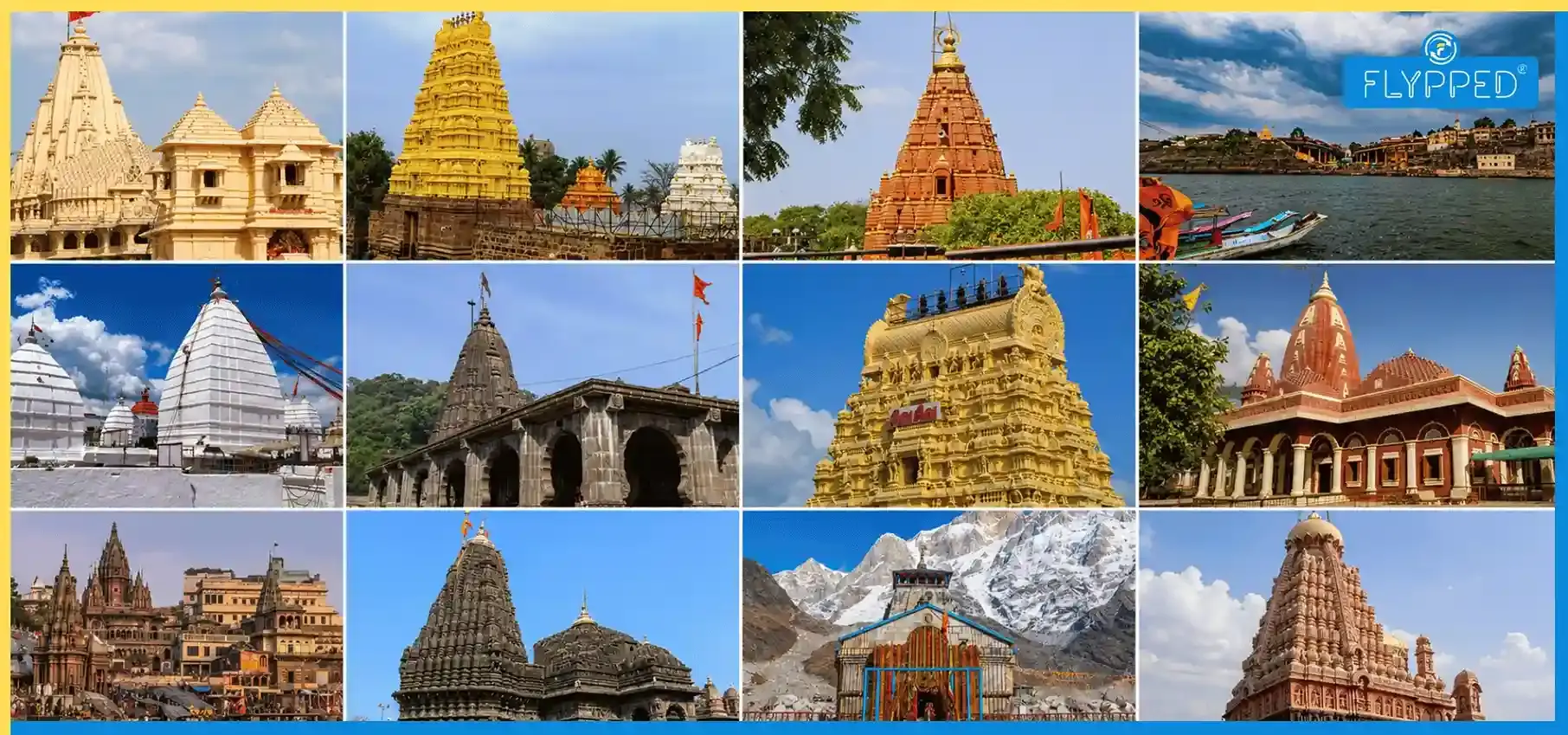
Below mentioned is authoritative list of 12 Jyotirlinga name with state:
| S. No | Jyotirlinga Name | Location | State |
| 1. | Somnath | Prabhas Patan, Verval | Gujarat |
| 2. | Mallikarjuna | Srisailam | Andhra Pradesh |
| 3. | Mahakaleshwar | Ujjain | Madhya Pradesh |
| 4. | Omkareshwar | Mandhata Island, Narmada River | Madhya Pradesh |
| 5. | Kedarnath | Kedarnath, Rudraprayag | Uttrakhand |
| 6. | Bhimashankar | Pune District | Maharashtra |
| 7. | Vishwanath (Kashi) | Varanasi | Uttar Pradesh |
| 8. | Trimbakeshwar | Nashik District | Maharashtra |
| 9. | Vaidyanath (Baidyanath) | Deoghar | Jharkhand |
| 10. | Nageshwar | Dwarka, Saurashtra | Gujarat |
| 11. | Ramanathaswamy | Rameswaram Island | Tamil Nadu |
| 12. | Grishneshwar | Verul, Aurangabad District | Maharashtra |
A Closer Look at Each Jyotirlinga Location & Temple
Somnath
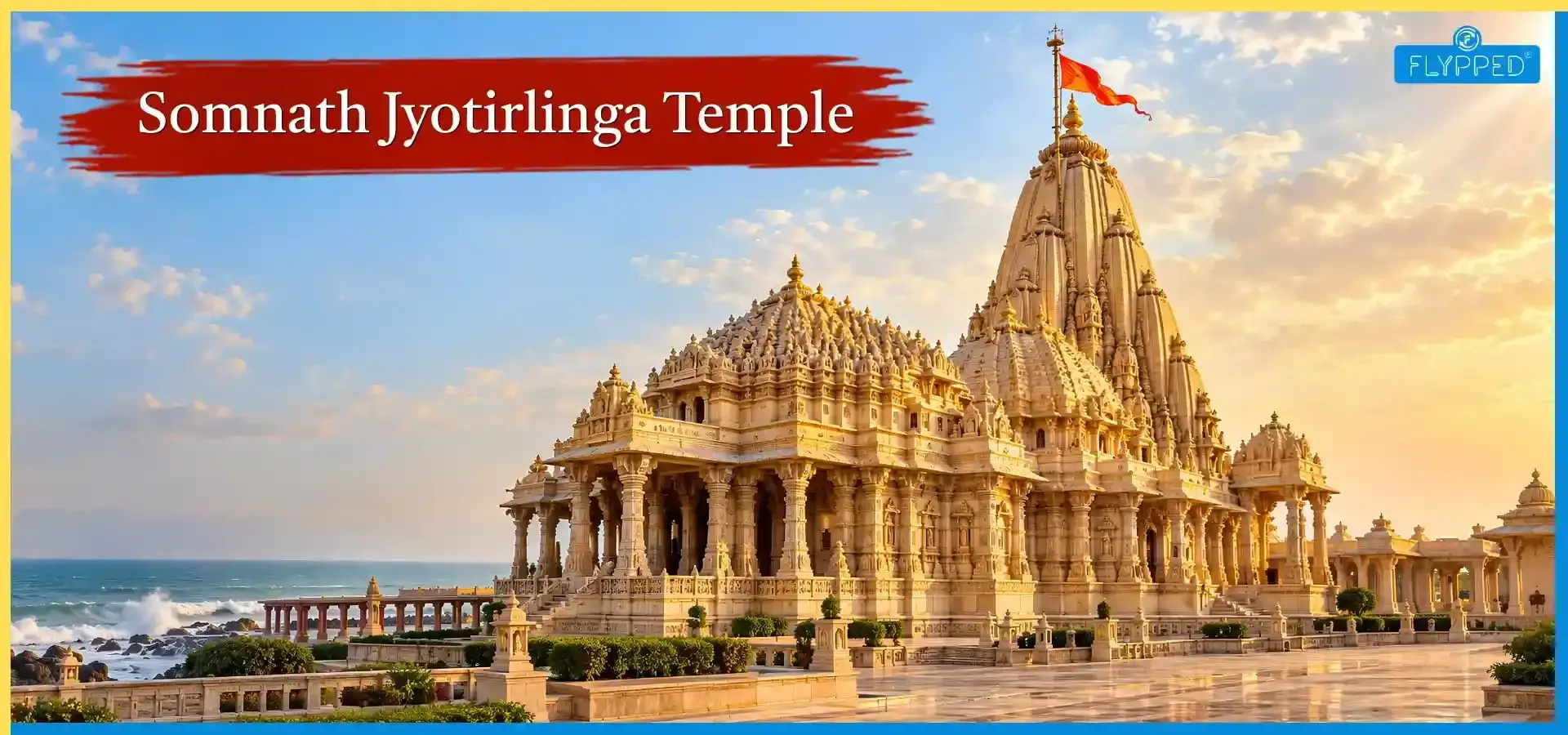
Situated on the western coast of Gujarat at Prabhas Patan, Somnath is considered the first among all Jyotirlinga temples in India. The temple has been destroyed and rebuilt seventeen times most famously looted by Mahmud Ghazni in 1026 CE and its present structure was consecrated in 1951. The sea facing Somnath is dedicated to the Moon God (Soma) who is said to have built the original temple in gold.
Mallikarjuna
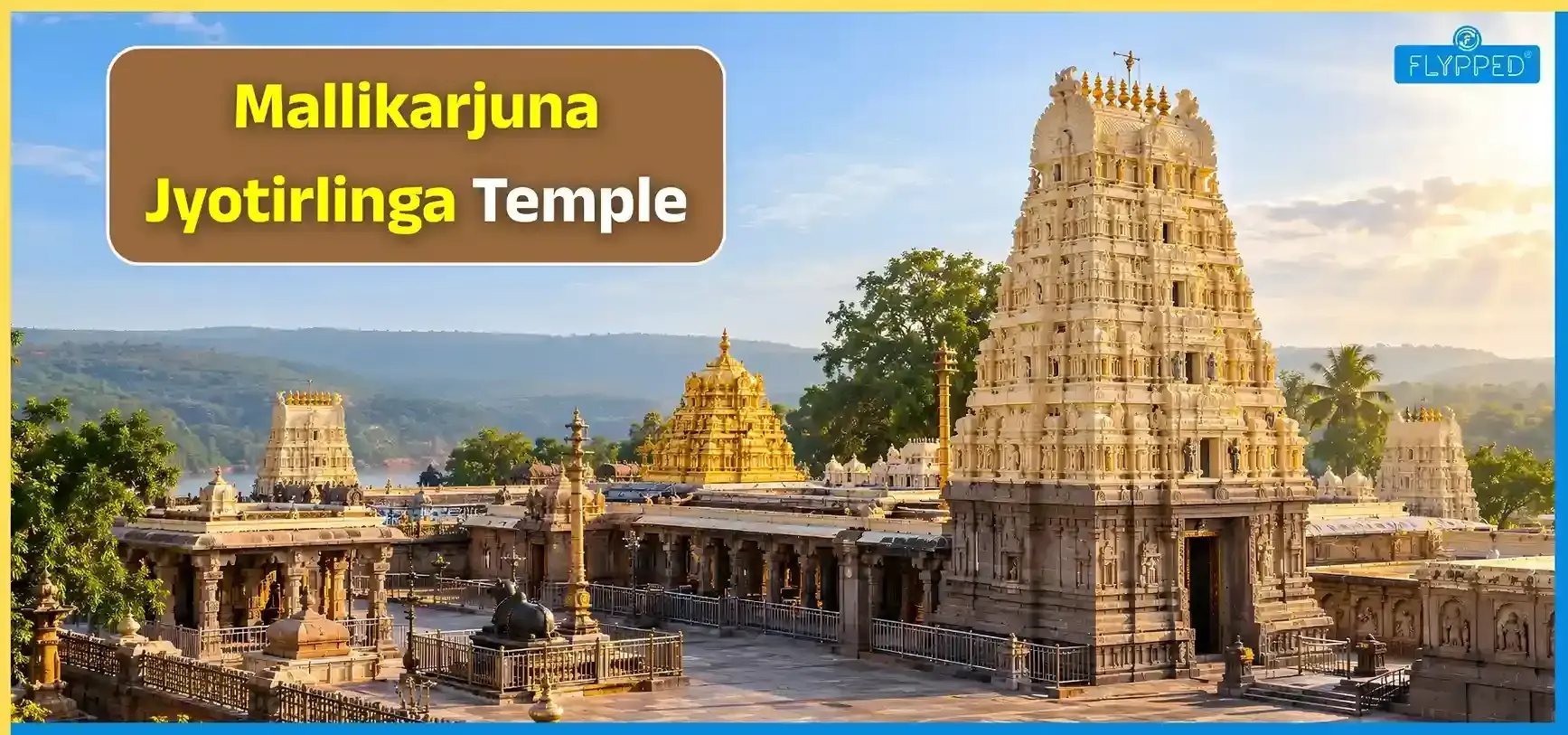
Perched atop the Nallamala Hills on the banks of the Krishna River, Mallikarjun at Srisailam is one of the most dramatic 12 Jyotirlinga locations. Here, Shiva is worshipped as Mallikarjuna and Parvati as Bhramaramba. It is simultaneously a Jyotirlinga and one of the 18 Shakti Peethas, making it doubly sacred.
Mahakaleshwar
Located in the ancient city of Ujjain, Mahakaleshwar is the only Jyotirlinga that is Dakshinmukhi (facing south, toward the realm of death). This gives it a unique power over time and mortality. The famous Bhasma Aarti performed at dawn using sacred ash, draws thousands of devotees daily. Mahakaleshwar is the presiding deity of Ujjain, on of the four sites of Kumbh Mela.
Omkareshwar
Sitting on the Mandhata Island in the middle of the sacred Narmada River, Omkareshwar takes its name from the shape of the island itself. When viewed from above, it resembles the sacred syllable Om. The twin shrines of Omkareshwar and Amareshwar sit on the island’s peaks. It is said that all rivers, after completing their journey, meet here spiritually to worship Shiva.
Kedarnath
At an altitude of over 3000 metres in the Himalayas, Kedarnath is the highest among all Jyotirlinga locations and the most demanding to reach. The ancient stone temple is believed to have been built by the Pandavas and restored by Adi Shankaracharya. The visiting months for the temple ranges for limited period of month, that is, May to November.
Bhimashankar
Located in the Sahyadri hills of the Pune district, Bhimashankar is surrounded by the Bhimashankar Wildlife Sanctuary which is home to endangered Indian Giant Squirrel. The temple is the source of the Bhima River, a major tributary of the Krishna. Its Nagara style architecture dates to the 18th century.
Kashi Vishwanath
The temple is located in Banaras is perhaps the most famous of all Jyotirlinga temples on India. It stands on the western bank of Ganga and has been a centre of spiritual learning of millennia. The current temple structure was built by Maratha queen Ahilyabai Holkar in 1780 CE. In 2021, the Kashi Vishwanath corridor was inaugurated connecting the temple directly to the Ganga ghats.
Trimbakeshwar
Located near Nashik at the source of the Godavari River, Trimbakeshwar is unique because the Shivalinga here has three faces (trimba means three) representing Brahma, Vishnu and Shiva. It is one of the key sites for Simhastha Kumbh Mela and Nashik Kumbh Mela. The river Godavari, one of India’s holiest rivers originates from Brahmagiri hill adjacent to the temple.
Vaidyanath
Located in Deoghar in Jharkhand. Vaidyanath Dham is also called Baidyanath, Shiva as the Lord of Physicians. According to the Shiva Purana, Ravana performed intense penance here to please Shiva. Deoghar hosts the Shravan Mela every year in the month of Shravan, during which millions of Kanwariyas (pilgrims) carry sacred Ganga water on foot from Sultanganj to offer at the lingam.
Nageshwar
Situated near Dwarka on the Saurashtra coast of Gujarat, Nageshwar is one of two Jyotirlingas in Gujarat (the other being Somnath). Naga means serpent, and Shiva here is worshipped as the lord of all nagas. The temple houses a colossal 25-metre statue of Shiva in a meditative posture outside its main shrine.
Ramanathaswamy (Rameshwaram)
On a small island in the Palk Strait between India and Sri Lanka, Ramanathaswamy at Rameswaram is both a Jyotirlinga and one of the four Char Dhams. According to the Ramayana, Lord Rama himself worshipped the Shivalinga here to atone for the sin of killing Ravana. The temple is celebrated for its magnificent 1,200-metre outer corridor which is the longest in any Hindu temple in the world supported by over 1,200 pillars.
Grishneshwar
The last of the 12 Jyotirlinga shrines, Grishneshwar is located at Verul near Aurangabad which now is known as Chhatrapati Sambhajinagar, Maharashtra just 1 km from the UNESCO World Heritage Ellora Caves. The current temple was rebuilt by Ahilyabai Holkar in the 18th century. Grishna or Ghushma was a devoted woman whose prayers to Shiva led to miraculous events, earning this shrine the name Grishneshwar.
12 Jyotirlinga Significance
- Geographical Spread: Jyotirlinga span India from Kedarnath in the Himalayas to Rameswaram in the deep south, from Somnath in the west to Vaidyanath in the east effectively sanctifying the entire subcontinent.
- Shiva’s Omnipresence: Altogether the twelve shrines symbolise Shiva’s infinite, omnipresent light across all directions and all of nature.
- Liberation Factor: Visiting all 12 shrines is believed to confer mukti (freedom from the cycle of birth and death).
Benefits of Visiting 12 Jyotirlingas
- Spiritual Merit: Also known as punya, each shrine visit is considered equivalent to conducting major vedic rituals. The Shiva Purana promises purification of past life is also associated with the same.
- Mental Peace & Clarity: The remote, natural settings of temples offer deep meditative experiences. Also, the physical demanding travel and trek in some and the satvik lifestyle of the pilgrimage are seen as purifying the body and mind.
- Cultural Immersion: The pilgrimage exposes travellers to India’s extraordinary architectural, linguistic and culinary diversity. While it is believed that many pilgrims report that sincere prayer at Jyotirlinga shrines leads to fulfilment of heartfelt wishes.
- Travel Factor: Most pilgrims complete the 12 Jyotirlinga yatra over 15-25 days. Flight, train and road connectivity exist for all major shrines except Kedarnath which requires a trek or helicopter.
Summing Up
From the Himalayan heights of Kedarnath to the island shrine of Rameswaram, each of these Dwadash Jyotirlinga temples carries thousands of years of devotion, architecture, mythology, and living tradition. Whether you are a Shiva devout seeking moksha, a history enthusiast tracing medieval temple architecture, or a traveller drawn to sacred landscapes, the Jyotirlinga pilgrimage offers an encounter with India that is both deeply ancient and timelessly alive.