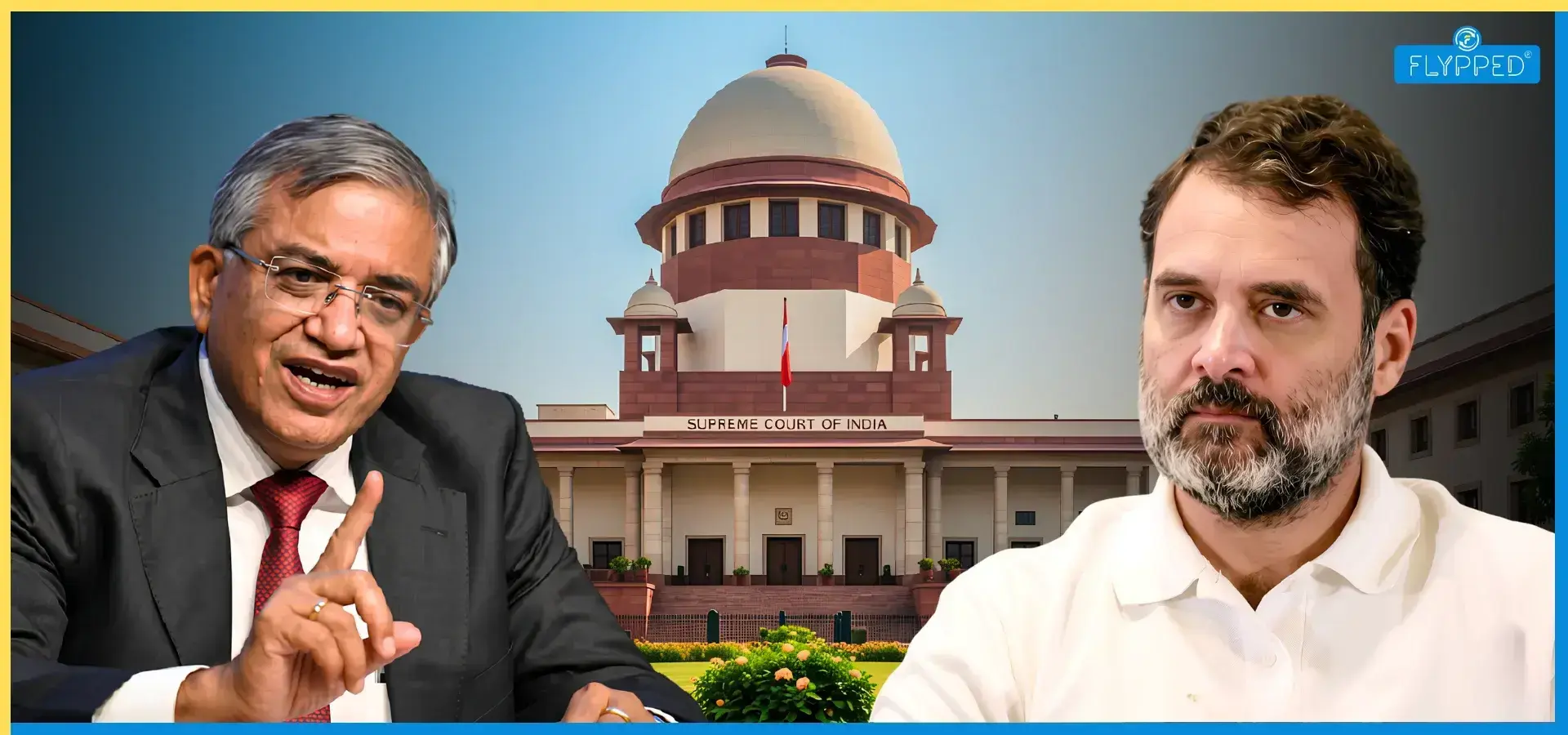
How Many Cases are Pending in India? Over 5.64 Crore Cases Await Justice
New Delhi: More than 5.64 crore cases are currently pending in courts across India, according to data shared by the Ministry of Law and Justice in the Rajya Sabha.
The figures are based on information available on the National Judicial Data Grid (NJDG) as of 16 July 2026.
The data covers the Supreme Court, High Courts, and District & Subordinate Courts.
It also shows that thousands of cases have been waiting for a decision for more than 30 years.
NOTE: Stay informed with the latest breaking news, current affairs, top headlines, and latest updates from across the globe.
How Many Cases are Pending in India: Data Reveals
When it comes to pending cases in the Indian judiciary, more than 5.64 crore cases are pending. Here’s a quick look.
- Supreme Court: 96,024 pending cases
- High Courts: 64,72,536 pending cases
- District and Subordinate Courts: 4,98,45,538 pending cases
Together, these courts have 5,64,14,098 pending cases across the country.
Nearly One Lakh Cases Pending in the Supreme Court
Supreme Court pending cases: As of 16 July 2026, the Supreme Court had 96,024 pending cases.
The data also shows that:
- 26 cases have been pending for more than 30 years.
- 558 cases are over 20 years old.
- 10,094 cases have been pending for more than 10 years.
- 24,611 cases are older than five years.
- 49,248 cases have been pending for more than one year.
Allahabad High Court Has the Highest Number of Pending Cases
How Many Cases are Pending in India: Among all High Courts, the Allahabad High Court has the highest number of pending cases at 12,28,353.
Other High Courts with large numbers of pending cases include:
- Rajasthan High Court – 6,96,348
- Bombay High Court – 6,57,813
- Madras High Court – 5,67,814
- Madhya Pradesh High Court – 4,90,363
- Punjab and Haryana High Court – 4,23,169
In total, High Courts across India have 64,72,536 pending cases.
Many High Court Cases Have Been Pending for Years
High Court pending cases: The government data also shows that many High Court cases have remained pending for a long time.
Across all High Courts:
- 80,660 cases are over 30 years old.
- 4,52,152 cases are more than 20 years old.
- 16,14,657 cases have been pending for over 10 years.
- 29,75,161 cases are older than five years.
- 52,43,328 cases have been pending for more than one year.
District Courts Handle the Largest Number of Pending Cases
How Many Cases are Pending in India: Most pending cases are in District and Subordinate Courts, where the total has reached 4,98,45,538.
States with the highest number of pending cases include:
- Uttar Pradesh – 1,19,46,397
- Maharashtra – 61,80,192
- West Bengal – 41,04,641
- Bihar – 37,62,813
- Rajasthan – 27,45,299
- Karnataka – 23,21,907
- Madhya Pradesh – 21,34,825
Thousands of Cases Are More Than 30 Years Old
Some court cases have been waiting for a decision for more than three decades.
Among District and Subordinate Courts:
- Uttar Pradesh has 37,394 such cases.
- West Bengal has 17,839.
- Maharashtra has 12,109.
- Bihar has 6,946.
- Odisha has 4,441.
Overall, there are 81,275 cases in these courts that have been pending for more than 30 years.
Judicial Reforms in India: What Is the Government Doing?
In its reply, the Ministry said that deciding and disposing of cases is the responsibility of the judiciary.
It also said that delays can happen for many reasons, such as the complexity of cases, the type of evidence involved, and the cooperation of lawyers, investigating agencies, witnesses and the people involved in the case.
The government listed several steps taken to help reduce pending cases:
- The eCourts Phase III Project (2023–2027) has been approved with a budget of ₹7,210 crore to improve digital court services.
- 775 Fast Track Special Courts, including 398 exclusive POCSO Courts, are working across 29 States and Union Territories. Together, they have disposed of 3,87,481 cases.
- Arrears Committees have been formed in all 25 High Courts and District Courts to focus on cases pending for more than five years.
- The government has introduced several legal reforms, including the New Criminal Laws, 2023, to support faster case disposal.
- It is also encouraging Alternative Dispute Resolution (ADR) methods and Lok Adalats to help settle disputes outside regular court proceedings.
Shortage of Judges in India
India\'s judiciary continues to face a significant shortage of judges, which is one of the major reasons for judicial delays.
- As of July 2026, around 23% of sanctioned judicial posts in district and high courts were vacant.
- In the High Courts, nearly one-third of sanctioned judge positions remained unfilled.
- Vacancies arise due to delays in appointments, retirements, transfers, and lengthy selection processes.
Key concerns:
- Heavy workload per judge.
- Longer waiting time for hearings.
- Reduced disposal rate of cases.
- Increased pressure on existing judges.
NJDG (National Judicial Data Grid) Pending Cases
How Many Cases are Pending in India: The National Judicial Data Grid (NJDG) is an online platform that provides real-time information on pending and disposed cases across Indian courts.
According to the Ministry of Law and Justice (March 2026):
| COURT | PENDING CASES |
| Supreme Court | 92,876 |
| High Courts | 63,98,686 |
District and subordinate courts account for the largest share of pendency, taking the overall backlog to more than 5 crore cases nationwide.
Reasons for Pending Court Cases
Case pendency is caused by multiple structural and procedural factors rather than a single issue.
Major reasons include:
- Vacant judicial posts leading to fewer judges handling increasing litigation.
- Frequent adjournments sought by parties or lawyers.
- Complex cases requiring extensive evidence and multiple witnesses.
- Delay in police investigations and filing of charge sheets.
- Poor court infrastructure and shortage of support staff.
- Government litigation, as governments are among the largest litigants.
- Stay orders from higher courts delaying proceedings.
- Low adoption of Alternative Dispute Resolution (ADR) such as mediation and arbitration.
- Slow digitization and administrative bottlenecks in some courts.
The Government has also stated that pendency depends on factors such as complexity of facts, quality of evidence, cooperation of advocates, witnesses, investigating agencies, litigants, infrastructure, and supporting staff—not merely the number of judges.
Impact of Pending Court Cases
A large backlog of cases has wide-ranging legal, economic, and social consequences.
On citizens
- Delayed justice for victims and accused.
- Increased litigation costs.
- Mental stress and uncertainty.
- Loss of public confidence in the justice system.
On businesses
- Delays in contract enforcement.
- Reduced investor confidence.
- Higher cost of doing business.
- Slower resolution of commercial disputes.
On governance
- Overburdened courts.
- Lower judicial efficiency.
- Delay in implementation of legal rights and government policies.
- On the economy
- Slower dispute resolution affects investments and economic growth.
- Property and commercial assets remain tied up in litigation for years.
The Supreme Court, High Courts, and government have therefore emphasized reforms such as filling judicial vacancies, expanding digital courts under the e-Courts Project, improving infrastructure, and promoting mediation and other ADR mechanisms to reduce pendency.
Judge to Population Ratio in India
India has only 22 judges per million people, a figure the Ministry of Law and Justice says is insufficient for timely justice.
Based on the 2011 Census population of 1.21 billion and the sanctioned strength of the Supreme Court, High Courts, and subordinate courts in 2026, the gap highlights the judiciary\'s staffing challenges.
The Supreme Court has a sanctioned strength of 34 judges, with 33 currently serving. In the High Courts, 814 judges are in position against 1,122 sanctioned posts, indicating a significant shortfall. District and Subordinate Courts, where most cases are heard, have 20,833 judges.
The 120th Law Commission Report recommended 50 judges per million people to improve case disposal and ensure quicker justice.
The pressure on courts is reflected in prison data. According to the NCRB, 389,910 undertrial prisoners were lodged in Indian prisons in 2023, while the government maintains that deciding pending cases rests with the judiciary.
To reduce delays, the government is promoting digitisation through the e-Courts Mission Mode Project and providing financial support to States and Union Territories to improve court infrastructure.
Between 2018 and 23 January 2026, 847 High Court judges were appointed, including members from SC, ST, OBC and minority communities, along with 130 women judges, reflecting gradual progress toward greater diversity.
Conclusion
The latest data shared in the Rajya Sabha shows that more than 5.64 crore cases were pending in courts across India as of 16 July 2026.
While District Courts account for the largest share of these cases, High Courts and the Supreme Court also continue to face a heavy workload.
The government says it has launched several initiatives to support faster case disposal, while noting that the actual disposal of cases is the responsibility of the judiciary.
Read More:
- Trump Tariffs Lawsuit: 25 US States Challenge Trump\'s India Tariffs in Court
- Nitin Nabin Reaction on Prashant Kishor Victory: Calls It ‘Unexpected’
- Nita Ambani Biography
- Mountaineer Nirmal Purja Loses Life in Avalanche on Broad Peak Summit
- PM Modi Forgives Students: Says \'They Need Guidance, Not Punishment\' After Jantar Mantar Protest
- Morocco Ceuta Migrant Crisis: Hundreds of Migrants Swim From Morocco to Spain\'s Ceuta Enclave
- Raghav Chadha Breaks Silence on NEET Paper Leak: Supports Anti-Paper Leak Bill
- US Military Launches New Strikes on Iran: Tensions Escalate After Jordan Attack
- Exam Bill Passed in Lok Sabha: Anti-Paper Leak Bill Gets Approval