
5 Elements of Nature (Panch Tatva): Meaning, Symbolism and Spiritual Importance
Introduction
Have you ever wondered what everything around us is made of? Ancient Indian philosophy explains that the entire universe, including humans, animals, plants, mountains, rivers, and even the stars, is made up of five basic elements, known as the Panch Tatva or the 5 Elements of Nature.
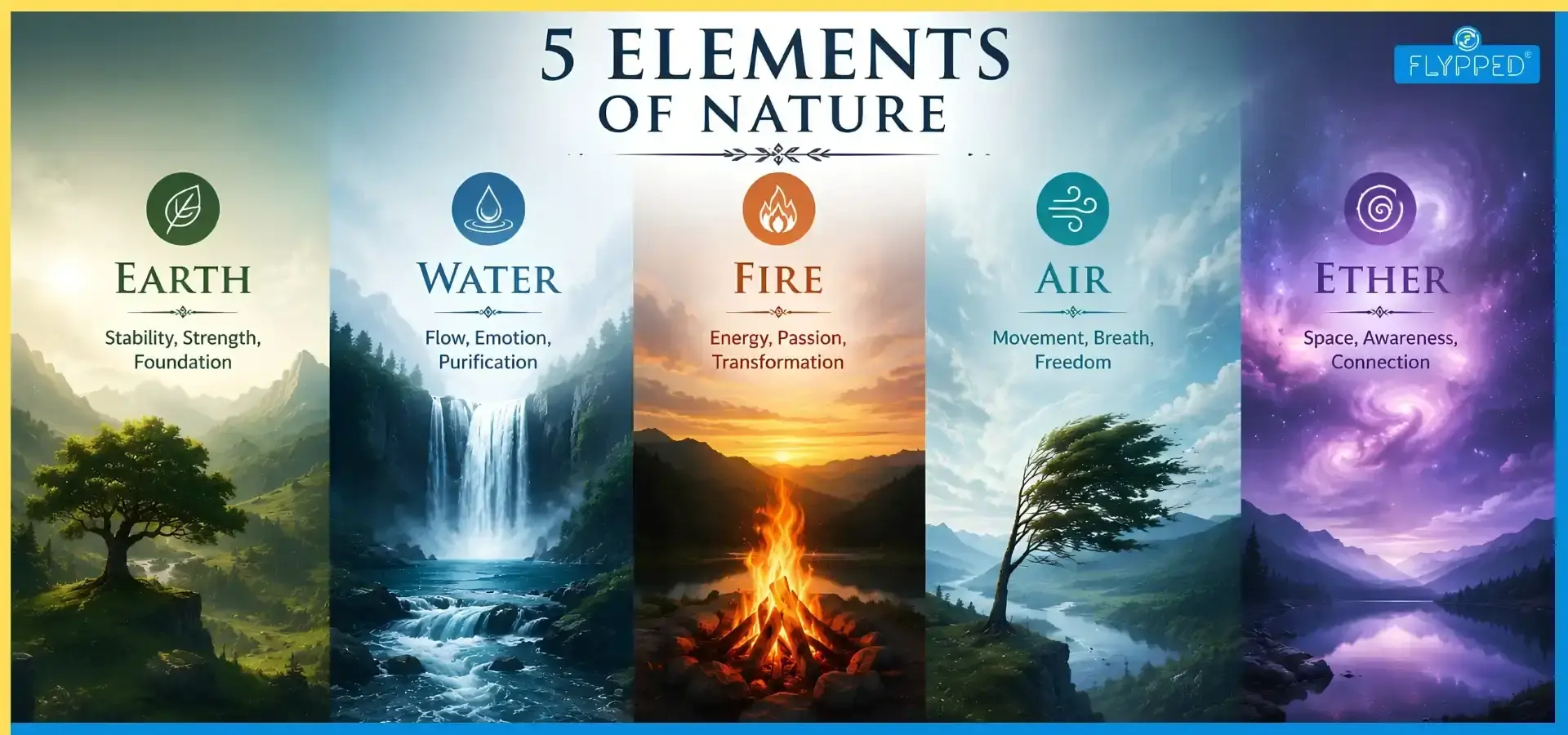
The Panch Mahabhutas comprise five essential elements: Earth (Prithvi), Water (Jal), Fire (Agni), Air (Vayu), and Ether (Akash). People believe these elements affect both our surroundings and our inner selves.
These elements are closely linked to nature and are seen as the building blocks of life. Each one has its own energy and helps keep our homes and lives balanced.
NOTE: Read spiritual insights, meditation tips, religious stories, and latest updates for mindful living.
By learning about the Panch Tatva, we can make our spaces feel more peaceful and positive, which supports both our environment and our emotions.
In this blog, we will look at what the Panch Tatva are, why they matter, and how they affect our homes and well-being.
We will also talk about each element and share simple ways to use them in daily life for more balance and harmony.
What Are the 5 Elements of Nature?
The Five Elements of Nature, also known as the Panch Tatva, are considered the fundamental building blocks of the universe in ancient Indian philosophy.
The word "Panch" means five, while "Tatva" means elements or principles.
The five elements are:
- Earth (Prithvi)
- Water (Jal)
- Fire (Agni)
- Air (Vayu)
- Space (Akash)
The Panch Tatva, or five elements, are central to Indian philosophy. Ancient teachings say that everything in the universe comes from these elements, which shape both our bodies and minds.
When these elements are balanced in our surroundings, they can influence our mood, energy, and health.
Each element has its own qualities and affects different parts of our lives, like our emotions, relationships, work, and spiritual well-being.
In Vastu Shastra, an old system of architecture and design, the Panch Tatva help create spaces that support health, prosperity, and peace.
By arranging our homes and environments to reflect these elements, we can invite more harmony and positive energy into our lives.
Earth Element Meaning (Prithvi)
The earth element stands for stability, grounding, and nourishment. It forms the base for all the other elements.
In our bodies, earth relates to our bones and teeth, which provide structure and support. When this element is in balance, we feel steady, secure, and rooted.
Symbolism of the Earth Element
The Earth element is associated with:
- Stability
- Strength
- Patience
- Security
- Growth
- Responsibility
These qualities remind us to stay calm, work hard, and remain grounded during both good and difficult times.
Earth Element in the Human Body
According to Ayurveda, the Earth element forms the body's solid structures, including:
- Bones
- Teeth
- Nails
- Muscles
- Skin
These body parts provide strength, shape, and protection.
Spiritual Importance
Spiritually, the Earth element teaches patience and gratitude. Just as nature grows slowly over time, people are encouraged to develop their goals through consistent effort rather than rushing toward success.
Many meditation and yoga practices encourage spending time in nature to feel more connected with the Earth.
Everyday Example
Simple activities can help people appreciate the Earth element, such as:
- Walking barefoot on grass
- Gardening
- Planting trees
- Hiking in nature
- Caring for plants
These habits also encourage respect for the environment.
Decorating House with Earth Elements
To add more of the earth element to your home, use natural materials like wood, stone, or clay.
Earthy colours such as brown, beige, or terracotta can help a room feel grounded.
Placing plants or stones in different corners brings a sense of stability and comfort.
Heavy furniture and solid features like stone walls can also make your space feel supportive and calm.
Water Element Symbol (Jal Tatva)
Many people think of water as a symbol for emotions, intuition, and creativity. It helps life flow and shapes our feelings.
Like it nourishes the earth, water also refreshes our bodies and minds. When water is balanced, it can support emotional well-being, abundance, and prosperity.
Rivers, lakes, oceans, rain, waterfalls, and even morning dew are all beautiful examples of the Water element in nature.
Symbolism of the Water Element
The Water element is commonly associated with:
- Purity
- Adaptability
- Calmness
- Compassion
- Emotional balance
- Renewal
Water has the ability to change its form. It can exist as liquid, ice, or steam while remaining the same substance. This teaches us the importance of adapting to changing situations in life.
Water Element in the Human Body
According to Ayurveda, the Water element is present throughout the body. It is connected with:
- Blood
- Saliva
- Sweat
- Tears
- Body fluids
Since the human body contains a large amount of water, staying hydrated is essential for normal body functions.
Spiritual Importance
Water is often used in spiritual ceremonies and religious rituals as a symbol of cleanliness and purification.
Many traditions believe that water washes away negativity and brings peace to the mind.
Holy rivers and sacred water bodies hold special importance in Indian culture because they symbolize purity and devotion.
Everyday Example
People can stay connected with the Water element by:
- Drinking enough clean water
- Conserving water
- Keeping rivers and lakes clean
- Avoiding water pollution
- Appreciating rainfall and natural water sources
These habits not only benefit individuals but also help protect the environment for future generations.
Things To Add
To bring the water element into your home, you could add a fountain, an aquarium, or even a small pond.
Mirrors can reflect the energy of water and support emotional balance.
Using blue colors or decorations with waves, flowing shapes, or circles can also help your space feel calm.
Fire Classical Element (Agni Tatva)
The fire element is connected to transformation, energy, and passion. It stands for action, willpower, and clear thinking.
Fire sparks our enthusiasm and drives us to go after our goals. When we handle it well, it helps us stay motivated, focused, and full of energy.
It also break up periods of stagnation, helping us grow and think more clearly.
Symbolism of the Fire Element
The Fire element represents:
- Energy
- Power
- Confidence
- Transformation
- Wisdom
- Determination
Just as fire transforms raw food into cooked food, it symbolizes positive change and personal growth.
Fire Element in the Human Body
According to Ayurveda, Agni is connected with digestion and metabolism. Traditional Ayurvedic teachings describe digestive fire as an important process that helps convert food into energy required by the body.
The Fire element is also associated with motivation, enthusiasm, and the ability to take action.
Spiritual Importance
Fire holds great importance in many Indian religious ceremonies. Sacred fire rituals, known as Yajna or Havan, symbolize purification, devotion, and the removal of negativity.
Fire is also viewed as a symbol of knowledge because light removes darkness, just as wisdom removes ignorance.
Everyday Example
People can maintain a healthy relationship with the Fire element by:
- Eating balanced meals
- Exercising regularly
- Spending time in natural sunlight
- Staying motivated toward their goals
- Practicing self-discipline
At the same time, traditional teachings suggest maintaining balance, as too much or too little fire may disturb harmony according to Ayurvedic beliefs.
Things To Add
To bring the fire element into your home, try adding lamps, candles, or other warm lights. Colours like red, orange, or yellow can also give your space a fiery touch.
Metal sculptures or copper decorations are another way to show fire’s energy.
The kitchen, especially the stove and oven, already connects to the fire element because it is a place where things are transformed and created.
Air Element (Vayu Tatva)
The air element is linked to movement, communication, and the flow of ideas. It connects to our breath and influences our lungs and nervous system.
Air brings us freedom, inspiration, and clear thinking. It helps us share our thoughts and connect with others.
This element also keeps us flexible and open to change, which supports our sense of personal freedom.
Symbolism of the Air Element
The Air element is associated with:
- Movement
- Freedom
- Communication
- Creativity
- Intelligence
- Change
Since air is always moving, it reminds us to remain flexible, open to new ideas, and willing to grow. It also symbolizes the importance of communication because sound travels through the air, allowing people to connect with one another.
Air Element in the Human Body
According to Ayurveda, the Air element supports several important body functions, including:
- Breathing
- Blood circulation
- Movement of muscles and joints
- Nervous system activity
Traditional Ayurvedic teachings believe that a balanced Air element supports both physical movement and mental alertness.
Spiritual Importance
In Yoga, breathing exercises, known as Pranayama, are considered an important way to improve awareness and calm the mind.
Controlled breathing is believed to help people focus better and reduce stress.
The Air element also reminds us to appreciate the gift of clean air. Planting trees, reducing pollution, and protecting forests are simple ways to care for this important element.
Everyday Example
You can stay connected with the Air element by:
- Practicing deep breathing exercises
- Spending time outdoors
- Walking in parks or gardens
- Keeping your surroundings clean
- Supporting efforts to reduce air pollution
These simple habits can help you appreciate the importance of fresh air in everyday life.
Things To Add
To bring more of the air element into your home, begin by letting in lots of fresh air. Open your windows, draw back the curtains, and let the breeze move through each room.
Try adding wind chimes or using fans to create a sense of movement and freedom.
Choose light fabrics and colours such as pale blue or white to make your space feel brighter and more open.
Keep your rooms neat and let in as much natural light as possible to keep the air flowing and give your home a lively feel.
Space / Ether Element (Akasha Tatva)
Ether stands for space, invisible energy, and the endless universe. It is the most subtle element and is connected to spirit and consciousness.
Ether forms the base that allows the other elements to exist and develop. It encourages spiritual awareness, intuition, and a sense of connection to the divine.
Ether also helps bring thoughts and desires to life by creating room for new ideas.
Symbolism of the Space Element
The Space element represents:
- Openness
- Awareness
- Silence
- Wisdom
- Infinite possibilities
- Freedom
Space teaches us that growth happens when we create room for new ideas, learning, and self-reflection.
Space Element in the Human Body
According to Ayurveda, the Space element is connected with:
- The mind
- Thoughts
- Consciousness
- Empty spaces within the body
Traditional beliefs suggest that this element supports awareness, creativity, and inner peace.
Spiritual Importance
The Space element plays a major role in meditation. Sitting quietly allows people to observe their thoughts without distraction.
Many spiritual traditions believe that silence helps individuals understand themselves better and develop inner wisdom.
The vastness of space also reminds us that humans are only a small part of a much larger universe.
This understanding encourages humility, gratitude, and respect for all living beings.
Everyday Example
Simple ways to connect with the Space element include:
- Spending a few minutes in silence each day
- Practicing meditation or mindfulness
- Looking at the night sky
- Taking breaks from electronic devices
- Making time for reflection and learning
These activities help create mental space and improve focus.
Things to Add
To bring the element of ether into your home, try creating open spaces so energy can flow easily. A simple, uncluttered design supports this feeling.
You might also add crystals or sacred symbols like Om or chakras to represent ether.
When your home feels balanced and clear, it becomes easier to connect with the transformative power of ether.
Balance of Five Elements in Life
To bring the Panch Tatva or 5 elements of nature into your home, focus on balancing the five elements.
Each one can make your space feel healthier, more peaceful, and positive. For earth, use materials like wood or stone, or add plants.
A small water feature can represent water, while warm lighting can stand for fire. For air, choose light fabrics, add mirrors, and keep the air flowing well.
Keeping your home open and simple helps the ether element move freely. You can also pick colours like earthy browns, blue, red, and green to match each element.
When you bring these elements together, your home can feel calmer and more energetic, supporting your body, mind, and spirit.
Many daily habits are believed to help maintain this balance, including:
- Eating a nutritious and balanced diet
- Drinking enough clean water
- Exercising regularly
- Practicing yoga
- Doing breathing exercises
- Sleeping well
- Spending time in nature
- Practicing meditation or mindfulness
Living in harmony with nature also helps us appreciate the importance of protecting the environment.
Conserving water, planting trees, reducing pollution, and using natural resources responsibly support the balance of the five elements around us.
5 Spiritual Elements and Their Role in Consciousness
5 elements of nature including Earth (Prithvi), Water (Jal), Fire (Agni), Air (Vayu), and Aether (Akasha) are more than just religious concepts.
Many people believe they are timeless truths. Our bodies, which we often see as our real selves, are actually temporary mixtures of these five elements.
We get these elements from nature when we are born, and when we die, our bodies go back to them.
No matter if we are cremated or buried, the outcome is the same: dust becomes dust again, and breath returns to the wind.
Even though we are all made from these five elements, one usually stands out in each person.
For example, someone might have more of the 'Air' element, while another person might be stronger in 'Water.' This main element shapes our natural habits and personality.
When people learn about their main element and live in balance with nature, they can find a special kind of success or self-realisation.
Sometimes, we sense things before they happen. What we call the 'Sixth Sense' is really our deep bond with nature.
As we begin to understand the elements within us, we develop a quiet but steady confidence that things will work out. This is a power with no limits.
Conclusion
The 5 elements of nature, also known as the Panch Tatva, have been an important part of Indian philosophy, Ayurveda, and Yoga for thousands of years.
Earth, Water, Fire, Air, and Space are believed to form the foundation of the natural world and symbolize different qualities that support life.
Each element has its own meaning. Earth represents stability, Water symbolizes purity and adaptability, Fire stands for energy and transformation, Air reflects movement and communication, while Space represents awareness and endless possibilities.
Together, these elements remind us that balance is essential for both nature and human life.
While modern science explains the universe through different principles, the Panch Tatva continue to hold cultural and spiritual importance.
They encourage people to respect nature, practice gratitude, and live a balanced lifestyle.
Understanding the meaning of the five elements can help us appreciate the close connection between ourselves and the environment.
By caring for nature and adopting healthy habits, we contribute to a more balanced and sustainable future.
Read More: