Top 10 Yoga Poses for Beginners With Their Benefits for a Healthy Body and Mind
Introduction
In this sedentary lifestyle, where people face stress and other health problems, yoga is the best workout exercise. This holistic practice has a positive impact on one’s body, mind, and soul.
Whether it's improving flexibility, building strength, losing extra body fat, or reducing stress, there are yoga poses for beginners that are easy to practice and can be an effective way to start your wellness journey.
Unlike high-intensity workouts, yoga is considered to be more suitable for all age groups, including those who have not practised it before.
If you are new to yoga, no need to push yourself into practising advanced poses from day 1, as there are simple yoga asanas that will help improve posture, balance, and overall mobility.
Doing it regularly, you will notice improvements in your physical health, mental clarity, and emotional well-being.
Today, in this guide, we will brief you on some easy yoga poses for beginners, their benefits, and practical tips to help you build a consistent yoga routine at home.
NOTE: Discover fashion trends, beauty tips, wellness advice, lifestyle guides, and latest updates.
Why Every Beginner Should Start Practicing Yoga
One of the reasons why yoga is considered as one of the best workouts is because it benefits you with several health benefits that extend beyond physical fitness.
In comparison to conventional exercises that center mainly on muscles, yoga combines movement, breathing techniques, and mindfulness to create a complete wellness practice.
Some of the key benefits of practicing yoga include:
- Improves flexibility and mobility
- Builds core and overall body strength
- Enhances posture and body alignment
- Reduces stress, anxiety, and mental fatigue
- Increases balance and coordination
- Boosts blood circulation and energy levels
- Promotes better sleep quality
- Supports healthy weight management
- Improves focus and concentration
One of the best things about yoga is you don’t require any costly equipment or a gym membership. All it requires is a yoga mat and calm environment to do it.
Things You Should Know Before Starting Yoga
Before you step on your yoga mat, keep these beginner-friendly tips in mind to ensure a safe and enjoyable experience.
Choose a Comfortable Space
Yoga cannot be expected in places that have distractions. Hence, you need to find a well-ventilated area where you can concentrate properly and make your sessions relaxing.
Wear Comfortable Clothing
Wear comfortable clothes to allow unrestricted movement. Don’t wear overly loose or overly tight clothes, as you will face difficulty doing certain basic yoga poses.
Use a Yoga Mat
Prefer a good-quality yoga mat with good grip and cushioning. It will help you prevent slipping and reduce pressure on the joints.
Focus on Your Breathing
Breathing is one of the key aspects of yoga. It requires inhaling and exhaling slowly through your nose. Controlled breathing improves oxygen flow, enhances relaxation, and helps in maintaining balance.
Don't Force Any Pose
Never consider your body similar to other beings, as everyone’s body is different. No need to exert pressure on yourself that brings you unbearable pain and makes you uncomfortable. Progress arises from patience and consistent practice.
10 Best Yoga Poses for Beginners
Below are the yoga poses names you should remember and practise them daily.
1. Child's Pose (Balasana)
Child's Pose is one of the yoga poses for beginners. It is the most relaxing yoga posture and serves as an excellent starting point for beginners. It gently stretches the back, hips, and shoulders while promoting deep relaxation.
How to Perform
- Kneel on your yoga mat.
- Sit back on your heels.
- Extend your arms forward.
- Lower your forehead to the mat.
- Breathe deeply for 30–60 seconds.
Benefits
- Relieves lower back tension
- Gently stretches hips and spine
- Reduces stress and anxiety
- Encourages deep breathing
- Improves flexibility
2. Mountain Pose (Tadasana)
Although it appears simple, Mountain Pose teaches proper posture and body alignment. It forms the foundation for many standing yoga poses.
How to Perform
- Stand with your feet together or hip-width apart.
- Keep your spine straight.
- Relax your shoulders.
- Engage your core muscles.
- Lift your chest while breathing steadily.
Benefits
- Improves posture
- Enhances balance
- Strengthens legs and core
- Builds body awareness
- Promotes better breathing
3. Downward-Facing Dog (Adho Mukha Svanasana)
One of the most recognizable yoga poses for beginners is Downward-Facing Dog stretches multiple muscle groups while strengthening the upper and lower body.
How to Perform
- Begin on your hands and knees.
- Lift your hips toward the ceiling.
- Straighten your arms and legs as much as possible.
- Press your heels gently toward the floor.
- Hold for 20–30 seconds while breathing evenly.
Benefits
- Stretches hamstrings, calves, and shoulders
- Strengthens arms and legs
- Improves blood circulation
- Relieves back stiffness
- Boosts overall flexibility
Beginner Tip: Slightly bend your knees if your hamstrings feel tight.
4. Corpse Pose (Savasana)
Often practiced at the end of a yoga session, Savasana allows the body and mind to fully relax and absorb the benefits of your practice.
How to Perform
- Lie flat on your back.
- Keep your arms comfortably by your sides.
- Relax your legs.
- Close your eyes.
- Focus on slow, natural breathing for 5–10 minutes.
Benefits
- Reduces stress hormones
- Lowers heart rate
- Improves mental clarity
- Promotes deep relaxation
- Helps restore energy
Many beginners underestimate this pose, but it's one of the most important parts of any yoga session.
5. Cat-Cow Pose (Marjaryasana–Bitilasana)
Cat-Cow Pose combines two gentle movements that improve spinal flexibility and reduce stiffness. It's especially beneficial for people who spend long hours sitting at a desk.
How to Perform
- Start on all fours.
- Inhale while arching your back and lifting your head (Cow Pose).
- Exhale while rounding your spine and tucking your chin (Cat Pose).
- Repeat slowly for 8–10 rounds.
Benefits
- Improves spinal mobility
- Relieves neck and back tension
- Strengthens core muscles
- Enhances posture
- Promotes better coordination between movement and breath
6. Warrior II (Virabhadrasana II)
Warrior II or Virbhadra asana is a powerful standing yoga pose for beginners. It helps you build lower-body strength while improving balance and stamina. It also enhances focus and confidence, making it an excellent addition to any beginner yoga routine.
How to Perform
- Stand with your feet about 3–4 feet apart.
- Turn your right foot outward and your left foot slightly inward.
- Bend your right knee until it forms a 90-degree angle.
- Extend both arms parallel to the floor.
- Gaze over your right fingertips and hold for 20–30 seconds before switching sides.
Benefits
- Strengthens the legs, hips, and shoulders
- Improves stability and endurance
- Enhances concentration
- Opens the hips and chest
- Boosts overall body coordination
7. Triangle Pose (Trikonasana)
Triangle Pose is also one of the yoga poses for beginners. It stretches the entire body while improving flexibility and posture. It is particularly effective for strengthening the legs and opening the hips.
How to Perform
- Stand with your feet wide apart.
- Turn one foot outward.
- Extend your arms sideways.
- Reach toward your front foot and place your hand on your shin, ankle, or the floor.
- Raise the opposite arm toward the ceiling and look upward.
- Hold for 20–30 seconds before changing sides.
Benefits
- Stretches the hamstrings and hips
- Strengthens legs and core
- Improves digestion
- Enhances balance
- Increases flexibility
8. Tree Pose (Vrksasana)
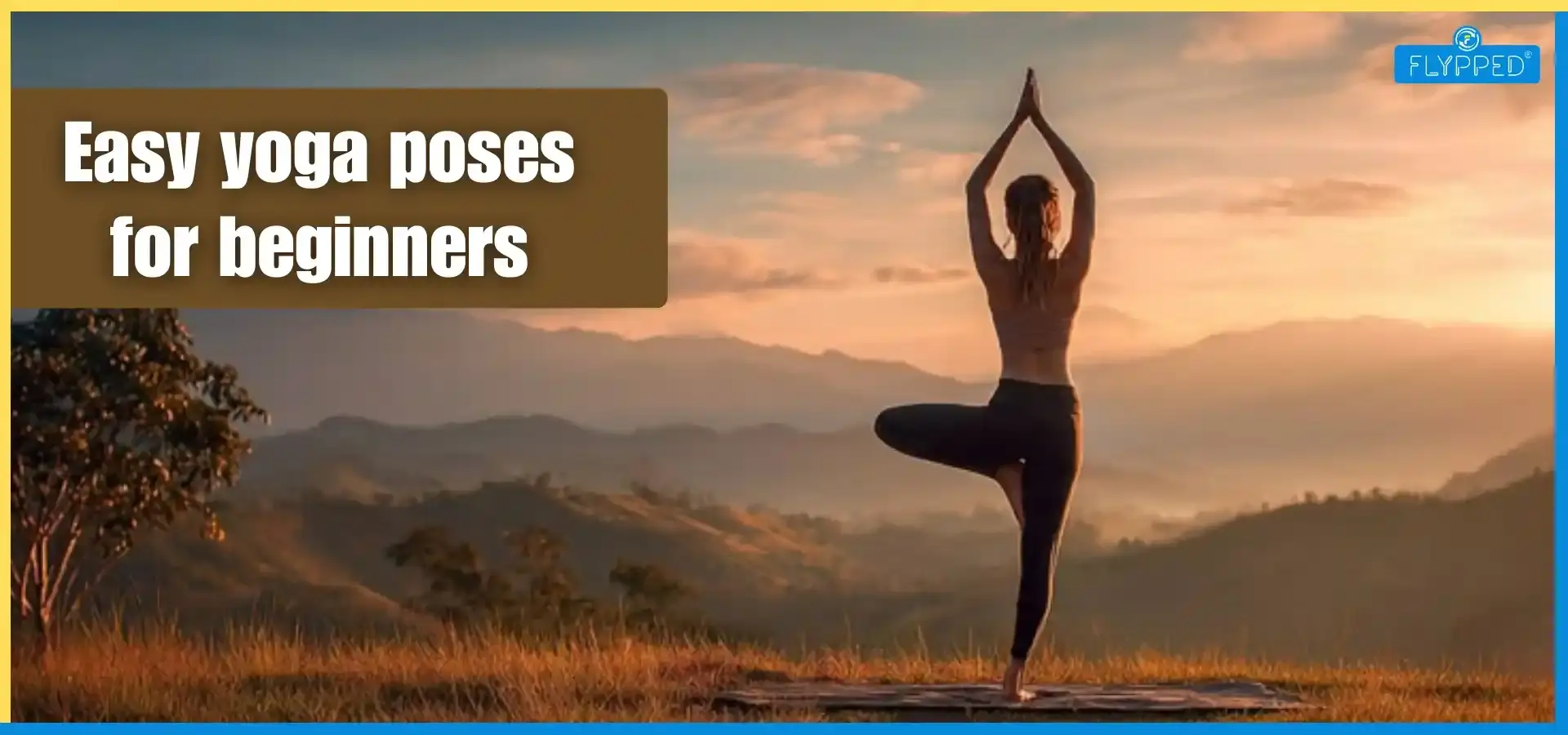
Tree Pose is one of the best balancing poses for beginners. It strengthens the legs while improving mental focus and body awareness.
How to Perform
- Stand straight with your feet together.
- Shift your weight onto one foot.
- Place the sole of the opposite foot on your inner calf or thigh (avoid the knee).
- Join your palms together at your chest or raise them overhead.
- Hold for 20–30 seconds and repeat on the other side.
Benefits
- Improves balance and coordination
- Strengthens ankles and legs
- Builds concentration
- Encourages better posture
- Enhances stability
9. Bridge Pose (Setu Bandhasana)
Bridge Pose gently strengthens the back while opening the chest and hips. What makes this one of the best yoga poses for beginners is that it benefits people who spend long hours sitting.
How to Perform
- Lie on your back with your knees bent.
- Keep your feet hip-width apart.
- Press your feet into the mat.
- Lift your hips upward.
- Interlace your fingers beneath your back if comfortable.
- Hold for 20–30 seconds.
Benefits
- Strengthens the back, glutes, and hamstrings
- Improves spinal flexibility
- Opens the chest
- Reduces lower back discomfort
- Supports better posture
10. Cobra Pose (Bhujangasana)
Cobra Pose is a gentle backbend that strengthens the spine and stretches the front of the body. It's especially helpful for improving posture.
How to Perform
- Lie on your stomach.
- Place your palms beside your shoulders.
- Press gently into your hands while lifting your chest.
- Keep your elbows slightly bent.
- Relax your shoulders and hold for 15–30 seconds.
Benefits
- Strengthens the spine
- Improves posture
- Opens the chest and lungs
- Increases spinal flexibility
- Helps relieve mild back stiffness
Yoga Asanas for Weight Loss – Can Beginners Lose Weight with Yoga?
Absolutely. While yoga may not burn as many calories as high-intensity workouts, regular practice contributes to sustainable weight loss by improving metabolism, building lean muscle, and reducing stress-related eating.
Beginner-friendly yoga poses that support weight management include:
- Warrior II
- Downward-Facing Dog
- Plank Pose
- Bridge Pose
- Cobra Pose
Combining yoga with a balanced diet, adequate hydration, and proper sleep can significantly improve weight-loss results over time.
Yoga Poses for Core Strength
Yoga Poses for Beginners: A strong core supports better posture, balance, and overall stability. Beginners can gradually develop core strength with these poses.
Plank Pose
A simple yet effective pose that strengthens the abdominal muscles, shoulders, and arms.
Boat Pose (Navasana)
This pose activates the core while improving balance and strengthening the hip flexors.
Dolphin Pose
Dolphin Pose strengthens the shoulders, arms, and abdominal muscles while improving flexibility.
Bridge Pose
Besides strengthening the back and glutes, Bridge Pose also engages the core muscles. Practice these poses consistently for improved stability and functional strength.
Yoga for Mental Health – Reduce Stress & Anxiety Naturally
Yoga is well known for its calming effects on the nervous system. Deep breathing combined with mindful movements helps lower stress hormones and promotes emotional balance.
Regular yoga practice may help:
- Reduce anxiety
- Improve mood
- Enhance concentration
- Lower stress levels
- Promote emotional resilience
Relaxing poses such as Child's Pose, Cat-Cow Pose, and Savasana are particularly effective for calming the mind.
Yoga for Better Sleep – Best Nighttime Yoga Routine
Struggling to fall asleep? Gentle yoga before bedtime can relax the body and prepare your mind for restful sleep.
With our hectic schedule, the one most important thing many people are getting affected is not getting the proper amount of sleep.
This leads to problems like insomnia. If you are also among those who are finding it hard to sleep, then doing a gentle yoga before bedtime will help in relaxing your body and prepare your mind for restful sleep.
A simple nighttime sequence includes:
- Child's Pose – 2 minutes
- Cat-Cow Pose – 2 minutes
- Bridge Pose – 2 minutes
- Cobra Pose – 1 minute
- Savasana – 5 minutes
Practicing this routine daily can help improve sleep quality and reduce nighttime restlessness.
Yoga Workout for Beginners – 20-Minute Daily Routine
You don't need an hour-long session to experience the benefits of yoga. Here's a simple 20-minute routine anyone can follow.
Warm-Up (5 Minutes)
- Neck rolls
- Shoulder rolls
- Gentle stretches
- Cat-Cow Pose
Standing Poses (5 Minutes)
- Mountain Pose
- Warrior II
- Triangle Pose
Stretching Poses (5 Minutes)
- Downward-Facing Dog
- Cobra Pose
- Bridge Pose
Relaxation (5 Minutes)
- Child's Pose
- Savasana
- Deep breathing
Weekly Routine for Beginners
| Monday | Full-body flexibility |
| Tuesday | Balance and posture |
| Wednesday | Core strengthening |
| Thursday | Relaxation and stretching |
| Friday | Full beginner sequence |
| Saturday | Gentle recovery yoga |
| Sunday | Meditation and breathing exercises |
Yoga for Beginners at Home – Simple Daily Practice Guide
Practicing yoga at home is convenient and budget-friendly.
To build a consistent habit:
- Practice at the same time each day.
- Start with 15–20 minutes.
- Follow beginner-friendly sequences.
- Listen to your body.
- Stay hydrated.
- Focus on steady progress rather than perfection.
Even a few minutes of daily practice can lead to noticeable improvements over time.
Common Mistakes Beginners Make During Yoga
With multiple unknowingly make mistakes that can hinder progress or increase the risk of discomfort.
Avoid these common errors:
- Holding your breath during poses
- Comparing yourself with others
- Skipping warm-up exercises
- Forcing difficult postures
- Ignoring proper alignment
- Practicing inconsistently
- Rushing through poses instead of holding them mindfully
Remember, yoga is about progress—not perfection.
Tips to Stay Consistent with Yoga Practice
Building consistency is the key to experiencing yoga's long-term benefits.
- Set realistic goals.
- Schedule your practice like any other appointment.
- Start with short sessions.
- Celebrate small improvements.
- Practice with friends or join online classes.
- Keep a yoga journal to track progress.
- Stay patient and enjoy the journey.
Over time, yoga will become a natural part of your daily lifestyle.
Conclusion
That wraps up our blog on yoga poses for beginners. We hope this guide has been helpful and motivates you to make these asanas a part of your daily routine.
Yoga is one of the safest and most rewarding forms of exercise for beginners.
Whether your goal is to improve flexibility, build strength, manage weight, sleep better, or reduce stress, these beginner-friendly yoga poses provide an excellent starting point.
The secret to success isn't mastering every pose overnight—it's showing up consistently. Begin with simple asanas, pay attention to your breathing, and progress at your own pace.
With regular practice, you'll not only become physically stronger but also enjoy greater mental clarity, emotional balance, and overall well-being.
Roll out your yoga mat, take a deep breath, and start your yoga journey today—one pose at a time.
Read More: