
US Strikes Iran Strait of Hormuz Missile Sites with 5,000-Pound Bombs
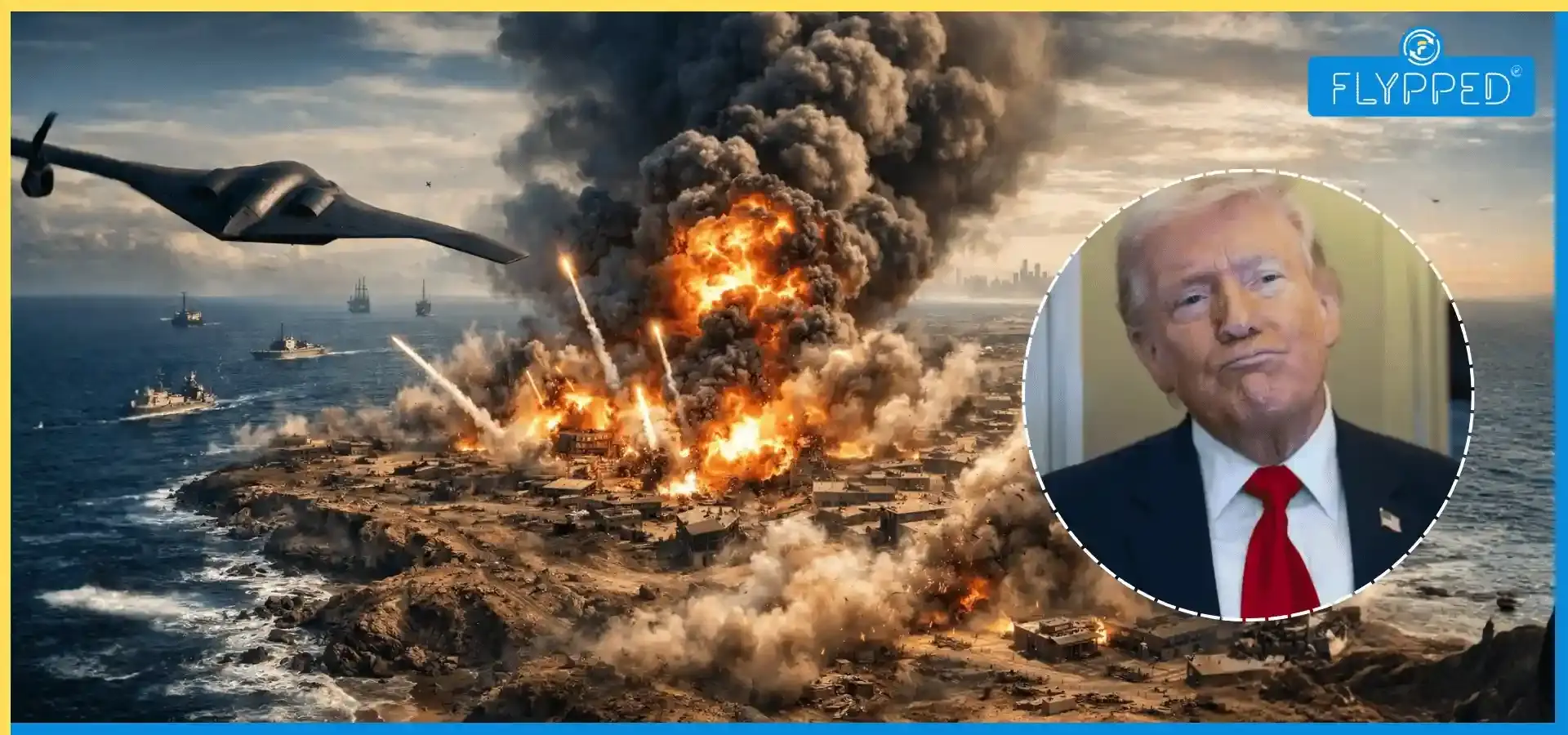
On Tuesday, the United States reportedly struck Iranian missile sites with 5,000-pound bombs. The attacks were said to have happened near the Strait of Hormuz, a key hotspot in the ongoing Iran-US war.
US Drops Bombs on Iran: Calls Iranian Missile Sites a Threat To Global Shipping
Describing the bombs as ‘deep penetrator munitions’, the United States reportedly stated that Iranian missile sites posed a threat to international shipping in the Strait.
Central Command stated on X: "US forces used several 5,000-pound deep penetrator munitions on hardened Iranian missile sites. These sites were along Iran's coastline near the Strait of Hormuz."
US-Iran Tensions: Alleged Air Raid Linked To Hormuz Closure
The alleged US air raid is connected to Iran’s closure of the Strait of Hormuz, a vital shipping route carrying one-fifth of global oil, and occurred after the US struck Iranian missile sites near the strait on Tuesday.
A post by Iranian Parliament speaker Mohammad Baqer Qalibaf on X reveals that, at the moment, it is hard to expect the Strait of Hormuz to return to its pre-war state.
In the Force Times report in 2022, the estimated cost of a bunker-buster bomb was around $288,000 each.
The effect of bombings seems weaker than the 30,000-pound bombs the United States reportedly dropped on Iranian nuclear sites last year.
Projectile Strikes Near Bushehr Nuclear Plant in Iran
According to information given to the IAEA, a projectile hit an area near Iran’s Bushehr nuclear power plant on Tuesday evening.
No serious damage to the plant or injury to the staff has been reported yet.
IAEA chief Rafael Grossi has appealed to practice maximum restraint to avoid the risk of a nuclear accident.
Iran Launches Fresh Strikes on Israel and Other Arab Countries
On Wednesday, following the US bombing of Iranian missile sites the previous day, Iran launched new strikes on Israel and other Arab countries.
Iran's attacks on Wednesday were a response to Israel's earlier attack that resulted in the deaths of two senior Iranian security officials, which preceded the US strike on Iranian missile sites.
Among the two deceased Iranian officials was Ali Larijani. He was reportedly one of the key figures in the ongoing war against the United States and Israel.
Larijani was described as close to Iran’s Supreme Leader, Ayatollah Ali Khamenei, who was killed. He was also close to Khamenei's son, Mojtaba.
According to Iran’s Fars news agency, American and Zionist regime fighter jets were said to have targeted him at a time when he was in his daughter’s house in the Pardis district, east of Tehran.
Israel claimed to have killed Larijani in an overnight raid. General Gholam Reza Soleimani, commander of the Basij unit, also reportedly died.
Iran’s Retaliation to the Killings by Israel
Iran reportedly launched multiple-warhead missiles at central Israel on Wednesday, retaliating for the killings.
Israel’s medical service reportedly claimed the deaths of two people in Ramat Gan, east of Tel Aviv.
Other Gulf nations, like Saudi Arabia and Kuwait, were also reportedly targeted by missile and drone attacks. Air defence systems reportedly intercepted these threats.
For Hindi Reader, Please Click for aaj ki khabar
Stay updated with the latest news on Flypped
- Bihar Rajya Sabha Election 2026: NDA Wins All 5 Seats
- Pakistan Airstrikes on Kabul: 400 Dead in Hospital Attack
- 11 Dead in Blaze at Odisha Government Hospital in Cuttack
For more news updates, follow the Flypped Side of English News
Frequently Asked Questions
Find answers to common questions about this topic
The US said the sites housed anti-ship missiles that threatened international shipping in the strategic waterway.
US forces used powerful 5,000-pound “bunker-buster” bombs designed to destroy hardened underground missile facilities.
The strait is one of the world’s most critical oil routes, with a large share of global energy shipments passing through it.
The strikes targeted sites believed to contain anti-ship cruise missiles capable of attacking naval vessels and commercial ships.
Any escalation near the Strait of Hormuz could disrupt shipping and oil supplies, potentially pushing energy prices higher worldwide.