
Morocco Ceuta Migrant Crisis: Hundreds of Migrants Swim From Morocco to Spain\'s Ceuta Enclave
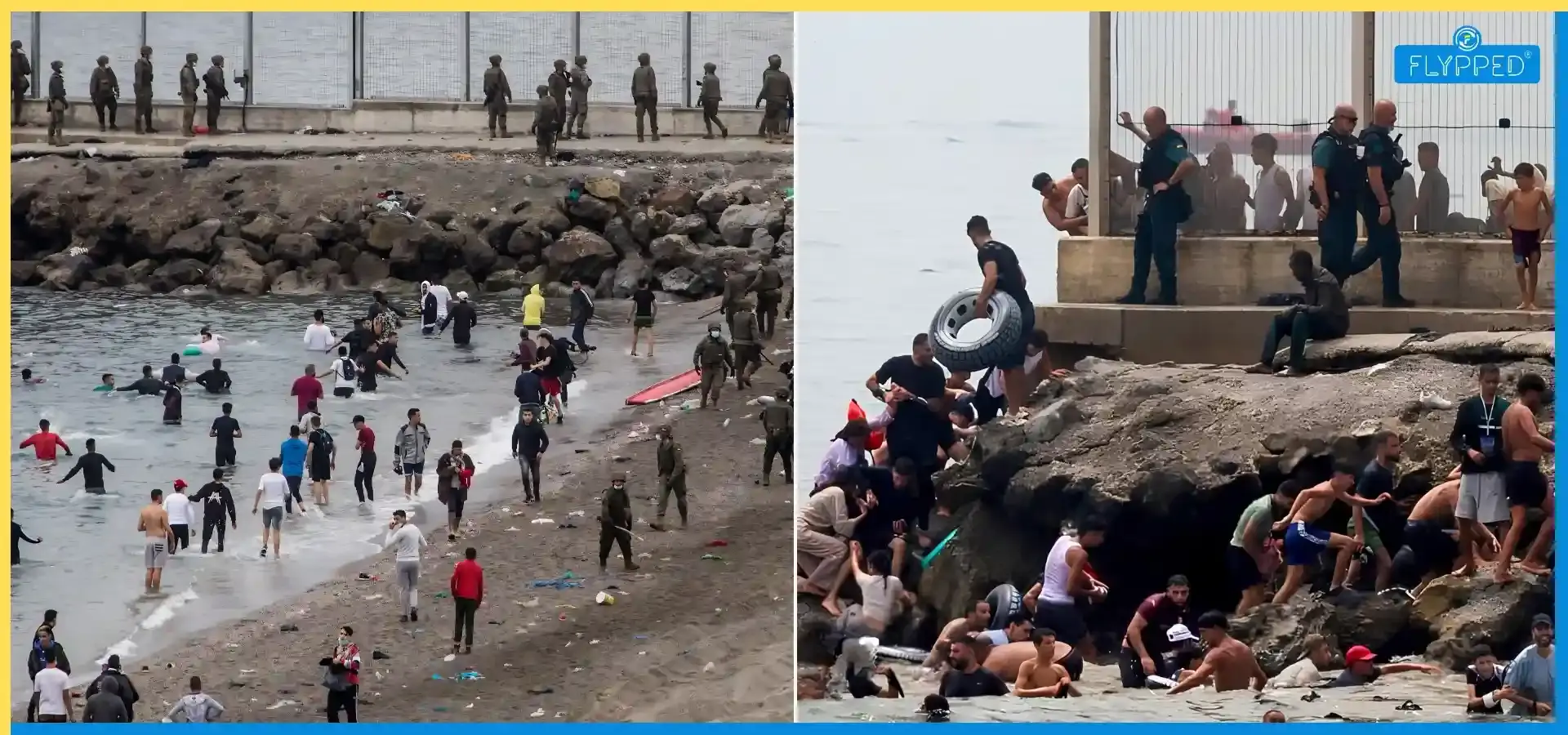
Morocco Ceuta Migrant Crisis: Good weather usually brings more migrants crossing the sea in summer, but Ceuta officials say even more people are swimming over this year.
On Wednesday, local authorities said hundreds of migrants are swimming from Morocco to the Spanish city of Ceuta. This increase is making it harder for border security to keep up.
Morocco Ceuta Migrant Crisis: Ceuta Struggles to Cope After 1,500 Migrants Arrive by Sea
Migrants enter Spanish enclave Ceuta: Juan Jesús Vivas, who leads Ceuta\'s government, said that in the past few days more than 1,500 migrants, including adults and children, have arrived by sea. He said the reception centres are now full and struggling to cope.
Vivas also said that some migrants have died during the crossing, and 60 bodies have been found at sea over the past year.
NOTE: Stay informed with the latest breaking news, current affairs, top headlines, and latest updates from across the globe.
Ceuta Migrant Crossing Latest News: Spanish Authorities Respond to Rising Sea Arrivals in Ceuta
Spain\'s Civil Guard, Maritime Rescue Service, and the Red Cross have used boats to rescue people from the water and bring them to Ceuta.
Interior Minister Fernando Grande-Marlaska told the Spanish TV channel laSexta that authorities are facing an unusual situation. He said officials are managing the crisis with their current resources.
Morocco to Ceuta Migrant Crossing: Spain Thanks Morocco for Migration Cooperation
Morocco Ceuta Migrant Crisis: On Wednesday, Grande-Marlaska thanked Moroccan officials for their help and said Spain and Morocco still have a good relationship.
He also said Moroccan authorities are working to stop more irregular migrants from leaving.
Spain Ceuta Border Migrant Crisis: Spain\'s Top Court Bars Immediate Return of Sea Migrants
Activists in Morocco and Ceuta say most people trying to cross are Moroccans, but a few Algerians who had been living in Morocco are also trying to reach Europe. Vivas criticised a recent Spanish Supreme Court decision.
The court ruled that migrants arriving by sea cannot be sent back to Morocco right away without due process, unlike those who cross into Spain by land, such as by climbing the border fence.
Migrants Enter Spanish Enclave Ceuta: Ceuta Border Crossings Raise Questions After Spain-Algeria Talks
Morocco Ceuta Migrant Crisis: Omar Naji, who leads the Moroccan Association of Human Rights in Eastern Morocco, wondered if the ruling led to more crossings.
According to Naji, most Moroccans probably had no idea about the legal ruling.
Naji said the recent crossings took place shortly after Spanish Prime Minister Pedro Sánchez met Algerian President Abdelmadjid Tebboune last week.
He said it was similar to the May 2021 border crisis, when more than 8,000 migrants crossed into Ceuta within two days.
Morocco–Ceuta Migrant Crisis: Explained
Morocco Ceuta Migrant Crisis: The Morocco–Ceuta migrant crisis refers to repeated incidents in which large numbers of migrants attempt to enter Ceuta, a Spanish enclave located on the northern coast of Africa, by crossing the border from Morocco.
Since Ceuta is part of Spain and the European Union (EU), it serves as one of the few direct land entry points into Europe from Africa.
In recent days, another significant rise in crossings has prompted Spain to strengthen security along the border.
Why is Ceuta Significant?
Ceuta is a Spanish autonomous city situated on the African continent and shares a short land border with Morocco.
Although geographically located in North Africa, it is politically part of Spain and the European Union.
For many migrants, reaching Ceuta represents the first step toward entering Europe in search of safety, employment, or a better quality of life.
What Triggered the Latest Migrant Surge?
Morocco Ceuta Migrant Crisis: The recent increase in arrivals has seen thousands of migrants attempting to reach Ceuta by swimming around coastal barriers or crossing through border areas.
In response, Spain has deployed additional police, Civil Guard personnel, and military support to reinforce border security.
The dangerous sea crossings have also resulted in casualties, underscoring the humanitarian challenges surrounding the crisis.
Why do Migrants Attempt to Reach Ceuta?
Several factors encourage migrants to use this route:
- Limited job opportunities and economic difficulties in Morocco and several African countries.
- Armed conflicts, political instability, and insecurity in migrants\' home nations.
- Ceuta\'s location as one of the closest entry points into the European Union.
- The hope of applying for asylum or eventually settling in mainland Spain and other European countries.
The 2021 Ceuta Migration Crisis
One of the most significant migration events occurred in May 2021, when around 8,000 people entered Ceuta within two days.
The surge coincided with a diplomatic dispute between Spain and Morocco after Spain allowed the Polisario Front leader, Brahim Ghali, to receive medical treatment.
The incident highlighted how political tensions between the two countries can influence migration flows along the border.
Spain\'s Response to Migrant Surge
To manage the situation, Spanish authorities have taken several measures, including:
- Deploying additional security personnel at the border.
- Increasing coastal surveillance and maritime patrols.
- Processing asylum applications while returning eligible migrants under existing agreements with Morocco.
- Strengthening cooperation with Morocco and the European Union on border management and migration control.
Why is the Issue So Sensitive?
The Morocco–Ceuta migrant crisis involves a complex mix of humanitarian, political, and security concerns.
While governments aim to secure the border and regulate migration, they must also address the safety and rights of people seeking protection.
The situation also affects diplomatic ties between Spain and Morocco and plays an important role in broader European debates on migration policy and border security.
Current Situation
Morocco Ceuta Migrant Crisis: The latest wave of crossings has placed additional pressure on Ceuta\'s reception facilities and security services.
Spanish authorities continue to monitor the border closely while working with Morocco to prevent further dangerous crossings and manage migration in accordance with national and international laws.
Read More:
- Skyroot Vikram-1 Launch: PM Modi Wishes Success Ahead of Launch
- Sonam Wangchuk Hunger Strike Day 21: Activist Shifted to Hospital by Police
- Sonam Wangchuk Hunger Strike Day 20 Doctors Warn of Organ Failure Risk During Protest Fresh Health Concerns
- Sonam Wangchuk Protest: Wangchuk Refuses to End Hunger Strike Despite Health Concerns
- Supriya Sule Delimitation Bill: NCP (SP) Demands Written Assurance on 50% Lok Sabha Seat Increase
- Graham Staines Murder Case: Convict Dara Singh May Walk Free Under Independence Day Remission
- US Russia Sanctions Bill: US Lowers Proposed Tariff to 100%, India and China Still in Focus
- Yemen Sanaa Airport Attack: Saudi Arabia Faces Houthi Strike After Airport Attack
- US Iran War Live Updates: Trump Announces Iran Blockade as Middle East Conflict Escalates