Trump Iran Negotiations: Trump Says US Is “Low-Keying” Iran Talks Amid Hormuz Deadlock
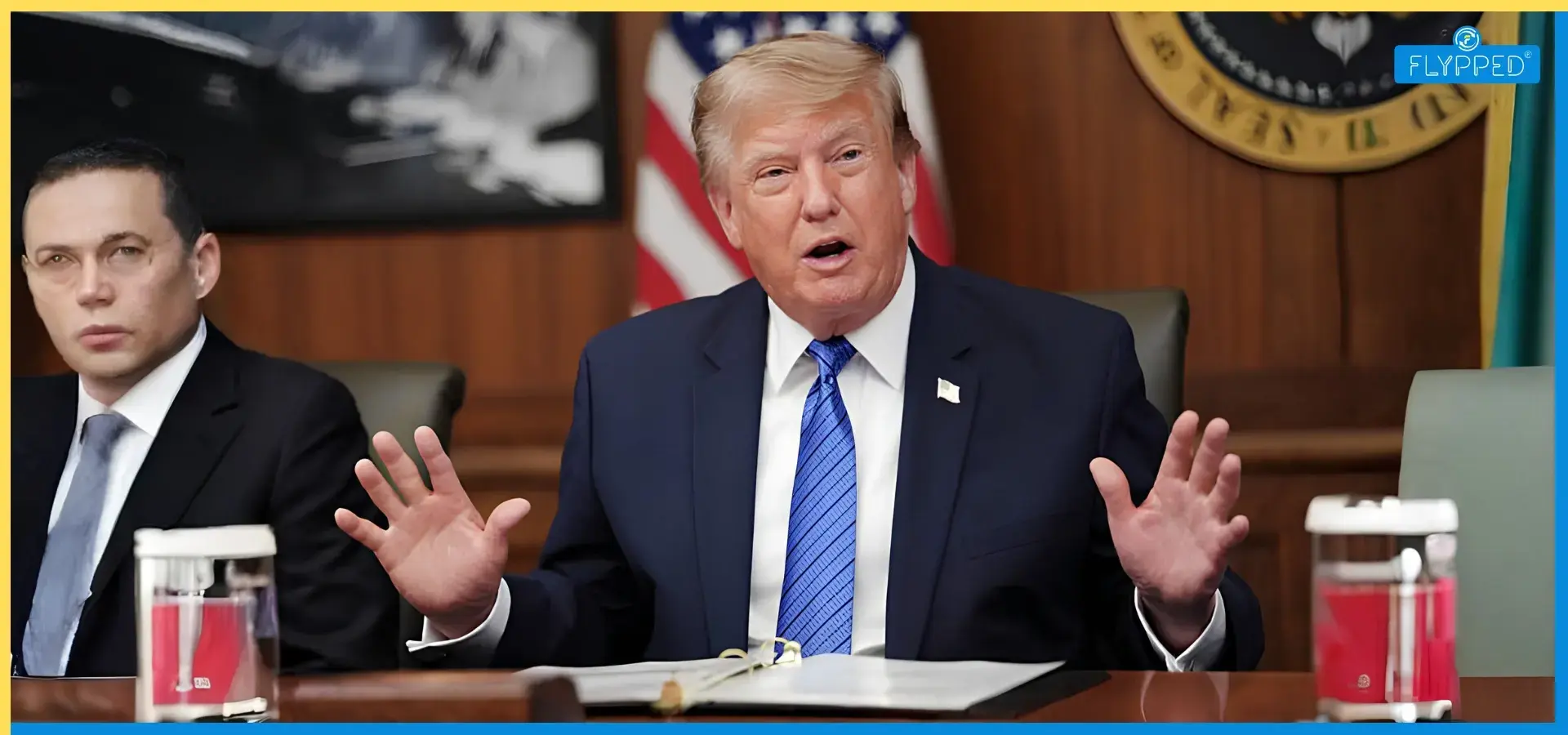
Trump Iran Negotiations: On Sunday, President Donald Trump of the United States stated that Iran's economy was in "very bad shape" and said that his administration would keep a close eye on economic pressure as efforts to reopen the Strait of Hormuz continued.
The US has said that it won't carry out any more military strikes, even though Iran had imposed strict conditions for reopening the strait.
NOTE: Stay informed with the latest breaking news, current affairs, top headlines, and latest updates from across the globe.
Trump Iran Negotiations: Keeping an Eye on Iran’s Rising Inflation
Iran-US Negotiations Latest Update: He stated that the United States was conducting its discussions with Iran in a low-key manner and engaging only in limited negotiations, while keeping an eye on Iran's rising inflation and deteriorating financial situation.
A week after making the threats, Trump spoke more calmly about the subject and said that everything would turn out all right, comparing the situation to a game of chess.
US blockade on Iran: Trump also stated that the U.S. naval blockade had made Iran's economic crisis worse, and Tehran has requested that the United States end the blockade of its ports and remove the oil sanctions before doing anything else.
Strait of Hormuz Deal: Trump Shows No Signs of Frustration with Iran’s Recent Demands
Trump Iran Negotiations: The report states that Trump showed no signs of frustration with Iran's most recent demands, even though they caused further delays in the reopening of the Strait of Hormuz.
Iran Oil sanctions: The strait, which handles about one-fifth of the world's oil and natural gas, has remained closed since the United States and Israel began their war against Iran on February 28.
The situation became more conducive to waiting and seeing what would happen, since oil prices had fallen and Americans were experiencing less economic pressure due to the war.
At the same time, Iran has denied having held direct negotiations with the United States.
Iran's Conditions for Talks: Iranian Foreign Minister States No Contact Between the Two Nations
Iran Talks over Hormuz: Recently, Iranian Foreign Minister Abbas Araghchi stated that the two countries were not in contact.
Tehran wishes for the United States to fulfil its obligations under the interim agreement reached in June before direct talks can resume.
Araghchi stated that both Iran and the United States were conveying their messages through intermediaries, and that, in the memorandum signed by the two countries, Iran had requested that the United States be compensated for the numerous attacks and had called for all blockades and sanctions to be lifted.
The United States has also been asked by Tehran to cease its activities against Iran and its allies in Lebanon, Palestine, Yemen, and Iraq.
Iran’s Big Demand: U.S. Must Change Before Strait Opens
Trump Iran Negotiations: According to Iran’s Revolutionary Guard spokesperson, Hossein Mohebbi, the closure of the Strait of Hormuz will remain until Iran’s demands are met.
Further, he said that the decision has no connection to dialogue between Iran and Oman.
Adamant in his stance, Mohebbi said the Strait of Hormuz will be reopened only when the US accepts Iran’s demands.
Iran Crisis Puts Trump Under Pressure to Find a Way Forward
Trump Latest News: President Trump is confronting a problem many presidents have faced: how an unexpected war can reshape a presidency.
Trump has acknowledged seeking an agreement to end the war in Iran, partly to avoid comparisons with former President Herbert Hoover, whose name became associated with the economic collapse of the Great Depression.
At the June G7 summit in France, Trump said he had studied presidents throughout history and did not want to be compared with Hoover.
His remarks showed how seriously he takes his presidential legacy and how he may be judged not only by the war but also by inflation and gas prices, and their impact on Americans' daily lives.
Trump grew up when Hoover was widely seen as an example of how not to handle difficult economic times. Hoover's belief that the government should largely stay out of the economy was later viewed by many as a major political mistake.
Presidential historian Tevi Troy, a former White House aide to George W. Bush, said Trump's comments reflect the influence of Hoover's negative reputation during his upbringing.
Trump is not the only Republican president to face such concerns. During the 2008 financial crisis, Bush reportedly warned congressional leaders that he did not want to be compared with Hoover.
Ronald Reagan also faced similar comparisons during the 1981-82 recession, but the association faded after the economy recovered.
Troy said Republican presidents facing serious economic problems are more likely to be compared with Hoover than Democratic presidents such as Jimmy Carter.
Fear Grips Over Trump’s Economic Risks Amid Prolonged Iran War
For Trump, the concern is particularly pressing as the war in Iran puts pressure on energy prices and inflation.
Diane Swonk, KPMG's chief economist, said recession risks are higher than before the war, though not extreme. She warned that the risks could rise if inflation continues.
However, Swonk said today's economy is very different from Hoover's era and has better tools to prevent a similar crisis.
Trump has long understood that his political success may depend on the economy, while a prolonged war could reshape his presidency in unexpected ways.
Read More:
- Xi Jinping Biography
- RBI New Loan Recovery Rules: RBI Bans Anonymous Calls and Introduces Stricter Recovery Rules
- Bhawana Kanth Top Gun Pilot: India's First Woman Fighter Combat Leader
- Tarun Tejpal Convicted in Rape Case: Former Tehelka Editor Found Guilty in 2013 Rape Case
- Sheikh Hasina Press Conference in India: Bangladesh Government Gets Upset
- Mark Zuckerberg Apologises Over Platform Errors Amid PM Row
- How Many Cases are Pending in India? Over 5.64 Crore Cases Await Justice
- Jeanine John Taele Probe: Modified AR-15 and Notebooks Found in Home Search
- Iran Political Crisis: Mojtaba Khamenei Gives 'Final Ultimatum' to Pezeshkian, Says Report