Exam Bill Passed in Lok Sabha: Key Highlights of the Anti-Paper Leak Bill
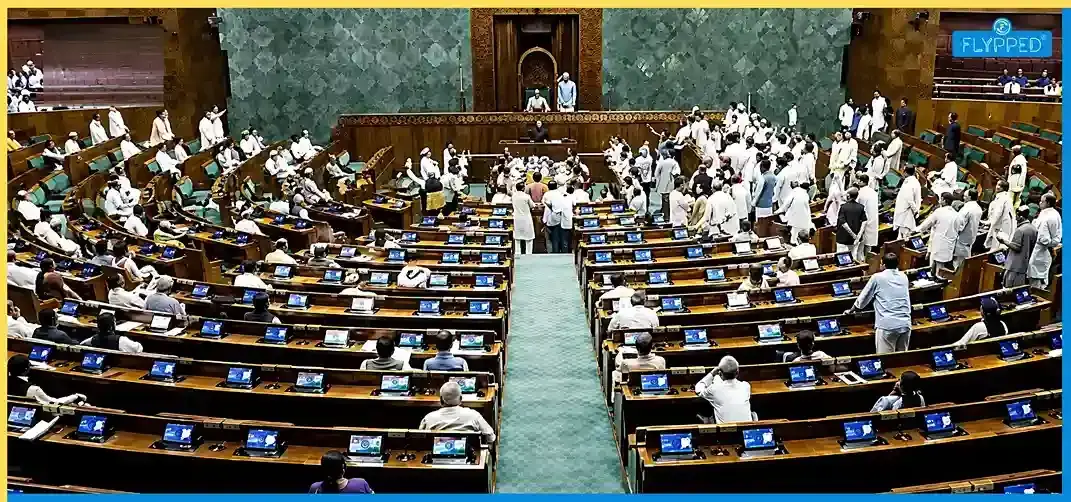
Exam Bill Passed in Lok Sabha: On Wednesday, the Lok Sabha passed the Public Examinations (Prevention of Unfair Means) Amendment Bill, 2026, by voice vote.
The new law introduces tougher punishments for paper leaks, including up to 10 years in prison and a Rs 50 lakh fine.
The Bill was passed while Opposition parties shouted slogans, following a heated debate about Rahul Gandhi's comments on police action against student protesters last week.
NOTE: Stay informed with the latest breaking news, current affairs, top headlines, and latest updates from across the globe.
Exam Bill Passed in Lok Sabha: Clears Exam Bill to Crack Down on Paper Leaks
Exam bill Latest News: Union Minister Jitendra Singh introduced the Bill on July 27, shortly after large student protests organised by the Cockroach Janta Party (CJP) led Dharmendra Pradhan to step down as education minister. The Bill now awaits approval from the Rajya Sabha.
The Bill proposes setting up fast-track courts in every state to handle paper leak cases and requires that investigations be completed within two months.
It also proposes stricter penalties for people who leak papers and targets organised groups involved in paper leaks, with fines up to Rs 10 crore.
Public Examinations Amendment Bill: Rahul Gandhi Hits Out After Exam Bill Clears Lok Sabha
Exam Bill Passed in Lok Sabha: The day after the Bill was passed, Rahul Gandhi said he would hold a press conference to discuss issues he claimed he had been denied the opportunity to raise in the House.
The Leader of the Opposition said that while the microphone could be turned off, the students' voices could not be silenced.
Anti-Paper Leak Bill: Lok Sabha Passes Exam Bill Amid Heated Row Over Rahul Gandhi's Claims
Competitive Exam Reforms: The Bill was passed after a heated debate in which Gandhi accused Union Home Minister Amit Shah of allowing the use of force against students during the CJP protest at Delhi's Jantar Mantar.
Gandhi claimed the Home Minister ordered security forces to fire on students and was responsible for their pellet injuries.
He also said that only the Home Minister or Prime Minister could approve such force. These statements led to protests from government MPs.
Parliamentary Affairs Minister Kiren Rijiju asked for proof, and BJP-led NDA MPs called Gandhi's claims baseless. Union Minister Jitendra Singh called Gandhi's allegations "factually incorrect."
He said no bullets were fired and no order to open fire was given during the protest. Singh explained that only tear gas was used and that only a magistrate, not the police, can order the use of firearms.
He also denied Gandhi's claim that Amit Shah travelled with a convoy of 30 vehicles. The new law follows a 36-day nationwide protest against the alleged NEET paper leak, led by the CJP.
Lok Sabha Passes Exam Bill: After Weeks of Protests, Government Agrees to Key NEET Demands
Exam Bill Passed in Lok Sabha: The protest started at Delhi's Jantar Mantar on June 20 and grew after activist Sonam Wangchuk began an indefinite fast on June 28.
Tensions peaked on July 20 when police stopped protesters marching to Parliament, leading to claims of excessive force, including the use of pellet guns against students.
Delhi Police denied using pellet guns, and the CRPF has not commented on the allegations involving the Rapid Action Force.
The protests ended on Saturday, July 25, after the government agreed to several main demands.
These included Pradhan's resignation, "maximum possible compensation" for families of NEET paper leak-related suicide victims, and the withdrawal of all FIRs filed by the Centre and state governments.
Salient Features of Anti-Paper Leak Bill: Know the Exam fraud penalties
- All state governments and Union Territory administrations can designate any sessions court as a special fast-track court to try offences under the proposed law.
- Special Fast Track Courts will hear cases daily, and trials must conclude within three months of the charge sheet being filed.
- The central government can create a special task force to investigate any offence. Investigations under this law must be completed within two months.
- State governments and UT administrations can also appoint special public prosecutors for these cases.
- Any judgment, sentence, or order can be appealed, and a bench of two High Court judges will hear the case. Appeals must be decided within three months of being accepted.
- Anyone found guilty of cheating in exams will face a jail term of at least 5 years and up to 10 years, plus a fine of up to Rs 50 lakh.
- For organised crimes, the bill sets a minimum sentence of seven years and a fine of up to Rs 10 crore.
Paper Leak Scandals Prompt New Public Exams Law
Exam Bill Passed in Lok Sabha: The government introduced the 2024 law following several paper-leak scandals. Before this, there was no law to address cheating or offences by organisations running public exams for the central government and its agencies.
The new exam cheating law is meant to stop unfair practices in these exams. It aims to prevent cheating and other dishonest actions in tests conducted by bodies such as the
- Union Public Service Commission (UPSC)
- The Staff Selection Commission (SSC)
- The railways
- Banking recruitment boards
- National Testing Agency (NTA)
Read More:
- Sonam Wangchuk Ends 26-Day Hunger Strike: Govt Promises Talks on Paper Leak
- PM Modi Action Against Paper Leaks: Announces Fast-Track Courts
- Dharmendra Pradhan slams Rahul Gandhi, Says He wants Headlines, Not Solutions
- US Strikes on Iran: Trump Targets Iran's Military, Including Bushehr and Tabriz
- 4 Indians Killed in Ukraine Ship Attack at Ukraine’s Odesa Port Amid Russia-Ukraine War
- CJI Surya Kant Cockroach Remark Trends Again Amid CJP Parliament March
- Donald Trump Biography
- Sonam Wangchuk's 3 Conditions to End Hunger Strike Written in Hospital Note
- Sonam Wangchuk Hunger Strike Day 20 Doctors Warn of Organ Failure Risk During Protest Fresh Health Concerns