Jagannath Puri Rath Yatra: History, Rituals, Significance & Why It Is Celebrated
Introduction
Jagannath Puri Rath Yatra is one of the most famous and sacred religious festivals in India. Every year, millions of devotees gather in Puri, Odisha, to witness this grand celebration.
The festival is known for its magnificent chariots, spiritual atmosphere, and the belief that anyone who sees the deities during the procession receives divine blessings.
Unlike many temple festivals where the deity remains inside the temple, the Jagannath Puri Rath Yatra allows devotees from all walks of life to have the darshan of the Lord as He travels through the streets.
This unique tradition has been followed for centuries and continues to inspire people from around the world.
NOTE: Read spiritual insights, meditation tips, religious stories, and latest updates for mindful living.
Jagannath Puri Rath Yatra 2026: Date
Jagannath Rath Yatra 2026 falls on Thursday, 16 July.
Hence, today, thousands of devotees will visit Puri to witness the grand procession, while millions celebrate across India and around the world.
Many people believe that seeing Lord Jagannath or helping pull the chariots brings blessings and spiritual merit.
Lord Jagannath
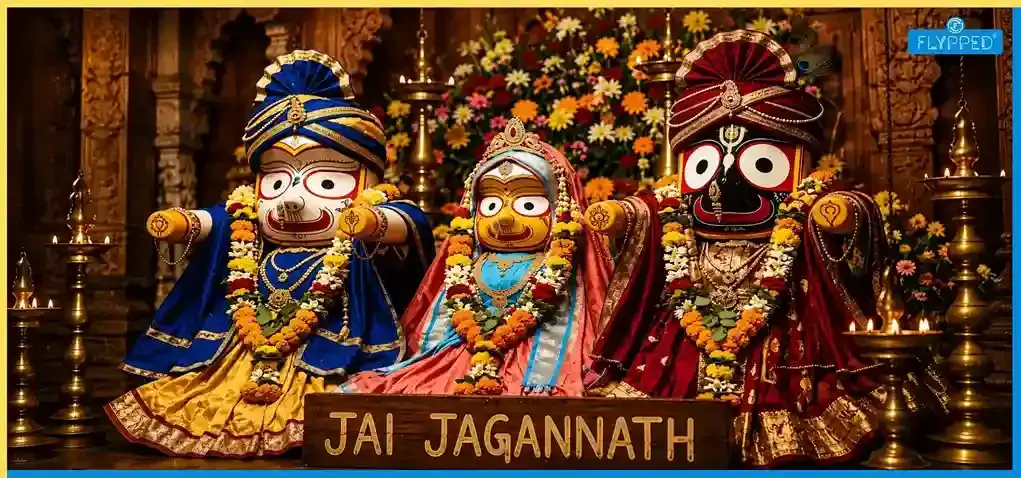
Lord Jagannath is worshipped as a form of Lord Vishnu or Lord Krishna. He is accompanied by his elder brother, Lord Balabhadra, and his sister, Goddess Subhadra.
The three deities are worshipped in the famous Jagannath Temple in Puri, Odisha.
One of the unique features of Lord Jagannath is His wooden idol, which differs from traditional stone or metal idols found in most Hindu temples.
The large round eyes and distinctive appearance symbolise the Lord\'s universal love and compassion for all living beings.
Devotees believe that Lord Jagannath is the protector of the universe and blesses everyone without discrimination.
His temple is one of the four sacred Char Dham pilgrimage sites in Hinduism.
Rath Yatra 2026
Rath Yatra 2026 is expected to attract millions of pilgrims and tourists from across India and abroad.
During the festival, the three deities are placed on beautifully decorated wooden chariots and pulled by thousands of devotees from the Jagannath Temple to the Gundicha Temple.
The festival is expected to include traditional rituals, devotional music, cultural performances, and large-scale religious gatherings.
Security, crowd management, and public facilities are also arranged extensively to ensure a smooth experience for devotees.
Pilgrims planning to attend should make travel and accommodation arrangements well in advance, as Puri experiences a huge influx of visitors during the festival.
Hindu Festivals
India celebrates numerous Hindu festivals throughout the year, each carrying its own religious, cultural, and spiritual significance.
Festivals like Diwali, Holi, Navratri, Janmashtami, and Rath Yatra strengthen the bond between faith, tradition, and community.
Among these celebrations, the Jagannath Rath Yatra holds a special place because it symbolises the Lord coming out of His temple to bless everyone.
It promotes equality, devotion, and the idea that divine grace is available to all people regardless of caste, background, or social status.
Odisha Rath Yatra
The Odisha Rath Yatra, held in the holy city of Puri, is considered the original and most significant Rath Yatra in the world.
Although similar festivals are celebrated in many cities across India and abroad, the Puri Rath Yatra remains the most revered.
Three massive wooden chariots are specially constructed every year using traditional methods:
- Nandighosha – Chariot of Lord Jagannath (Red & Yellow)
- Taladhwaja – Chariot of Lord Balabhadra (Red & Green)
- Darpadalana – Chariot of Goddess Subhadra (Red & Black)
Each chariot has its own unique design, colour, flag, and symbolic meaning.
Thousands of devotees pull these giant chariots with thick ropes, considering it a highly auspicious act.
Jagannath Rath Yatra History
The Jagannath Rath Yatra is an ancient festival rooted in Hindu traditions and customs.
Each year, people believe that Lord Jagannath, his brother Lord Balabhadra, and his sister Goddess Subhadra travel to the Gundicha Temple, which is considered their aunt’s home.
This trip is seen as the Lord leaving his temple to bless everyone, no matter who they are.
People in Puri have celebrated the Rath Yatra for hundreds of years, and it is still one of the oldest religious festivals.
Today, millions of pilgrims join in, making it one of the largest spiritual gatherings in India.
Significance of Jagannath Rath Yatra
The Jagannath Rath Yatra is not just a religious procession. Beyond this, it holds deep spiritual meaning and teaches values such as humility, equality, compassion, and devotion.
The festival stands for several important ideas:
- Divine blessings are for everyone, no matter their social background.
- The festival teaches that faith is stronger than ego.
- It also reflects the soul’s journey toward spiritual awakening.
- Prosperity is another theme. A special moment happens when Lord Jagannath leaves the temple to bless all devotees equally.
- This reminds us that divine grace is available to everyone.
Story Behind Jagannath Rath Yatra
According to popular belief, Lord Jagannath, along with Lord Balabhadra and Goddess Subhadra, visits the Gundicha Temple every year to meet His devotees and spend a few days there.
Another legend links the festival to Lord Krishna\'s desire to revisit his Vrindavan memories.
Some traditions also associate the journey with Goddess Subhadra, who expresses her wish to tour the city, accompanied by her brothers.
Regardless of the different versions, the central theme remains the same—the Lord willingly comes out to meet His devotees, making His blessings accessible to everyone.
After staying at the Gundicha Temple for several days, the deities return to the Jagannath Temple in a grand return procession known as Bahuda Yatra.
Jagannath Temple Rituals
The Jagannath Temple follows a highly organised daily schedule of rituals that has remained largely unchanged for centuries.
Some major rituals associated with the Rath Yatra include:
- Snana Purnima: The deities are ceremonially bathed with sacred water.
- Anavasara: The deities remain out of public view for a period following the ceremonial bath.
- Nabajaubana Darshan: Devotees receive the first glimpse of the rejuvenated deities.
- Pahandi: The ceremonial procession where the deities are carried to their respective chariots.
- Chhera Pahanra: The King of Puri performs the symbolic sweeping ceremony.
- Bahuda Yatra: The return journey to the Jagannath Temple.
- Suna Besha: The deities are adorned with magnificent gold ornaments.
- Niladri Bije: The deities re-enter the Jagannath Temple.
Each ritual has deep spiritual symbolism and reflects centuries-old traditions.
Importance of Jagannath Rath Yatra
The festival teaches valuable spiritual and social lessons that remain relevant even today.
Its importance includes:
- Strengthening faith among devotees.
- Promoting equality before God.
- Preserving India\'s rich cultural heritage.
- Encouraging community participation.
- Inspiring compassion, humility, and service.
The act of pulling the chariot is believed to bring spiritual merit and symbolise one\'s journey toward liberation.
Many devotees wait their entire lives for the opportunity to participate in this sacred event.
Jagannath Rath Yatra Tradition
The traditions surrounding the festival have been carefully preserved over generations.
Every year:
- New wooden chariots are built from specially selected sacred trees.
- Traditional artisans follow ancient construction methods.
- Rituals are performed according to centuries-old temple customs.
- Thousands of volunteers help manage the festival.
- Devotees sing bhajans and chant the names of Lord Jagannath throughout the procession.
The continuity of these traditions reflects the dedication of the temple administration, local communities, priests, and devotees who work together to maintain the sanctity of the festival.
Spiritual Significance of Rath Yatra
The Rath Yatra is often seen as a symbolic journey of the human soul toward God.
Spiritually, it teaches that:
- God is accessible to everyone.
- Devotion is greater than social status.
- Life itself is a journey toward spiritual realisation.
- Humility leads to divine grace.
- Collective worship strengthens faith and unity.
The movement of the chariot also represents overcoming worldly attachments and progressing toward inner peace and spiritual enlightenment.
For many devotees, simply chanting the Lord\'s name during the procession is considered an act of great spiritual merit.
Why is Jagannath Rath Yatra Celebrated
Jagannath Rath Yatra is celebrated to commemorate the annual journey of Lord Jagannath, Lord Balabhadra, and Goddess Subhadra from the Jagannath Temple to the Gundicha Temple.
The festival symbolises the Lord\'s love for his devotees and his willingness to step outside the temple so that everyone, including those unable to enter the shrine, can receive his blessings.
It also reminds people of the values of compassion, humility, equality, and devotion.
The celebration strengthens cultural traditions, brings communities together, and inspires millions to deepen their spiritual connection with the divine.
How to Celebrate Jagannath Rath Yatra at Home?
If you cannot travel to Puri, you can still celebrate Jagannath Rath Yatra at home with devotion.
Here are a few easy ways to make the festival special:
- Begin by cleaning and decorating your home temple. Offer fresh flowers, seasonal fruits, sweets, and bhog.
- Light a diya and incense sticks during your morning and evening prayers. You can chant Lord Jagannath’s name or sing devotional songs.
- Reading stories about Lord Jagannath with your family is another way to connect.
- Take time to pray and give thanks for your blessings. Even small, heartfelt acts of devotion can make the festival meaningful.
Conclusion
Jagannath Puri Rath Yatra is far more than a religious procession—it is a celebration of faith, devotion, equality, and cultural heritage.
Every aspect of the festival, from the construction of the majestic chariots to the sacred rituals and the enthusiastic participation of devotees, reflects centuries of living tradition.
The festival continues to inspire millions by reminding them that divine grace is available to everyone, regardless of social background or status.
Whether one participates in the procession, watches it from afar, or learns about its rich history and symbolism, the Rath Yatra offers valuable lessons about humility, service, unity, and unwavering devotion.
As one of India\'s most iconic religious celebrations, Jagannath Puri Rath Yatra remains a timeless expression of spirituality and continues to unite people from across the world in the shared celebration of Lord Jagannath\'s divine journey.
Read More: